
Top Mental Health IOP in Monmouth County NJ
Mental Health Help Is Closer Than You Think in Monmouth County

Mental Health IOP in Monmouth County NJ is a structured, flexible treatment program that gives you intensive therapy support — without requiring an overnight hospital stay.
Quick answer for Monmouth County residents:
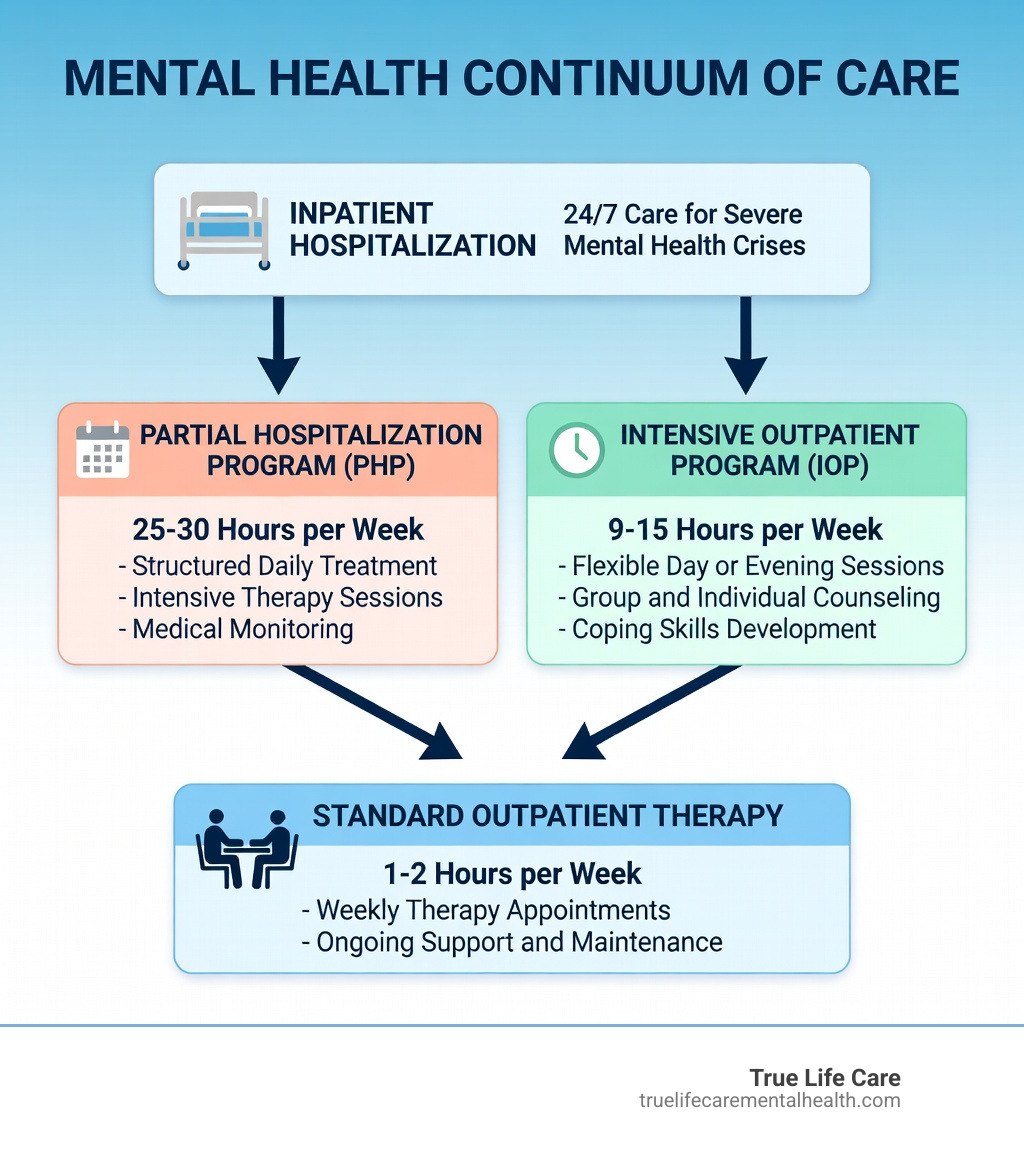
- What it is: An Intensive Outpatient Program (IOP) typically meets 3-5 days per week for 9-15 hours of therapy total
- Who it’s for: Adults, adolescents, children (ages 8+), and perinatal individuals with depression, anxiety, PTSD, bipolar disorder, and more
- What’s included: Group therapy, individual counseling, medication management, and family sessions
- Insurance: Most major plans accepted, including Horizon BCBS, Aetna, Cigna, and Medicaid
- How to start: A free screening call or assessment is usually the first step, with some programs starting within 48 hours
Monmouth County has a population of nearly 619,000 people. Mental health needs are real and widespread here. Yet many people don’t know where to start — or they worry that intensive treatment means putting life on hold.
It doesn’t.
An IOP lets you live at home, keep your job or school schedule, and still get the level of care that actually moves the needle. It sits between traditional weekly therapy and full hospitalization — making it the right fit for a lot of people who are struggling but don’t need round-the-clock care.
Whether you’re stepping down from a hospital stay or realizing that once-a-week therapy just isn’t enough, an IOP can be a turning point.
Mental Health IOP in Monmouth County NJ word guide:
Understanding Mental Health IOP in Monmouth County NJ
When we talk about a Mental Health IOP in Monmouth County NJ, we are referring to a specific “level of care.” In behavioral health, treatment isn’t one-size-fits-all. Some people need the 24/7 supervision of an inpatient hospital, while others do just fine with a one-hour therapy session every Tuesday.
An Intensive Outpatient Program (IOP) is designed for those in the middle. It serves two primary purposes:
- Step-Down Treatment: For individuals who have just completed a residential or Partial Hospitalization Program (PHP) and need continued support to prevent relapse as they reintegrate into daily life.
- Front-Line Intervention: For those whose symptoms have become too severe for traditional weekly therapy to manage, but who do not require the restrictiveness of a hospital.
In a county with 618,795 residents, the demand for community-based support is high. Facilities in Monmouth County focus on clinical stabilization—helping you get back to a baseline where you can function effectively at home and work. If you are wondering about the specific differences in time commitment, you can read our guide on Partial Hospitalization Program vs IOP.
An overview of NJ IOP treatment shows that the goal is to provide enough structure to keep you safe and progressing, while giving you the freedom to sleep in your own bed at night.
Who is the Ideal Candidate for Intensive Outpatient Care?
How do you know if a Mental Health IOP in Monmouth County NJ is right for you or a loved one? We often see individuals who are “white-knuckling” it through their day. They might be going to work or school, but their internal world is crumbling.
The ideal candidate is someone who:
- Experiences severe symptoms that interfere with daily functioning (e.g., unable to concentrate, frequent crying spells, or avoiding social situations).
- Has a stable and supportive living environment (IOP is not a housing program).
- Is not at immediate risk of harming themselves or others (which would require a higher level of care).
- Needs more than one hour of therapy a week to make progress.
There are significant benefits of NJ mental health treatment at this level, including the ability to practice new coping skills in real-time. For parents, this is often the level of care recommended for “school refusal” or when a child is struggling with severe bullying or social anxiety. For adults, it provides a way to address a mental health crisis without taking a long-term leave of absence from work. If you’re navigating these choices, our Monmouth County mental health guide can help you map out the local resources available to you.
Common Conditions Treated in a Mental Health IOP in Monmouth County NJ
IOPs in our area are equipped to handle a wide range of complex diagnoses. We don’t just treat the “blues”; we treat clinical conditions that require expert intervention.
- Major Depression: When sadness becomes debilitating. Learn more about how IOP for depression recovery can help you find hope again.
- Generalized Anxiety: Constant worry that keeps you from living. Discover strategies through IOP for anxiety management.
- PTSD: Healing from trauma requires a safe, structured environment. See how IOP for PTSD healing facilitates recovery.
- Bipolar Disorder: Managing the highs and lows through medication and behavioral therapy.
- OCD & ADHD: Addressing intrusive thoughts or executive dysfunction that disrupts your life.
Program Structure and Specialized Treatment Tracks
Structure is the backbone of any successful Mental Health IOP in Monmouth County NJ. Most programs require a commitment of 3 to 5 days per week, with sessions typically lasting about 3 to 3.5 hours. This adds up to 9–15 hours of clinical work weekly.
For many, morning sessions (such as 9:00 AM to 12:00 PM) are standard, but evening options are often available for working professionals. If traveling to a physical location is a barrier, virtual IOP for mental health has become a highly effective alternative, combining the same intensity of group therapy with the convenience of telehealth.
When it comes to the younger crowd, specialized tracks are essential. Teens face unique pressures—from social media to academic stress. Programs for them often include academic support to ensure they don’t fall behind in school. For parents looking for ways to help at home, SAMHSA provides great resources for supporting child mental health.
Specialized Mental Health IOP in Monmouth County NJ for Veterans and Families
Monmouth County is home to many veterans and their families, and we recognize that their needs are unique. Specialized tracks often include:
- Veteran Support: Focused on combat trauma, transition to civilian life, and “Veteran-Ready” clinical approaches.
- Perinatal Mental Health: Supporting individuals dealing with postpartum depression, anxiety, or the psychological challenges of pregnancy.
- Young Adults: There are specific young adult intensive programs that address the “failure to launch” syndrome and the transition to independence.
- Tween Programs: Tailored for ages 10-13, focusing on social skills, emotional regulation, and family communication.
Many facilities also offer school clearance assessments, helping students return to the classroom safely after a mental health crisis.
Evidence-Based Therapies and Medication Management
What actually happens during those 15 hours a week? It’s not just “sitting and talking.” We use evidence-based modalities that are scientifically proven to change brain patterns and behaviors.
- Cognitive Behavioral Therapy (CBT): Identifying and reframing the negative thought patterns that lead to destructive behaviors.
- Dialectical Behavior Therapy (DBT): A gold standard for emotional regulation, distress tolerance, and interpersonal effectiveness.
- Group Therapy: Perhaps the most powerful tool in an IOP. It reduces the isolation that mental illness creates. You realize you aren’t alone, and you gain feedback from peers who truly “get it.”
- Individual Counseling: One-on-one time to dive deeper into personal history and trauma that might not be appropriate for a group setting.
- Medication Management: Regular meetings with a psychiatrist or Advanced Practice Nurse (APN) to ensure your medications are working effectively with minimal side effects.
If you’re curious about the day-to-day details, you can read more about what an NJ IOP entails. We also specialize in co-occurring disorder treatment, which addresses both mental health and substance use issues simultaneously—because you can’t truly heal one without addressing the other.
Navigating Insurance and Admissions in Monmouth County
We know that “how much does it cost?” is usually the first question on everyone’s mind. The good news is that because IOP is a recognized clinical level of care, most major private insurance providers cover it. This includes Horizon Blue Cross Blue Shield, Aetna, Cigna, and UnitedHealthcare. Some local programs also accept Medicaid (NJ Family Care).
The admissions process is designed to be as low-stress as possible:
- Initial Screening: A brief phone call to see if the program is a potential fit.
- Clinical Assessment: A thorough evaluation by a licensed clinician to determine the appropriate level of care.
- Insurance Verification: The facility handles the “heavy lifting” of calling your insurance company to find out your coverage and out-of-pocket costs.
- Quick Entry: Some programs in Monmouth County have worked hard to reduce wait times, often getting patients started within 48 to 72 hours.
One common barrier to treatment is transportation. In Monmouth County, some providers offer round-trip transportation within a 15-mile radius, especially for adolescent programs, to ensure that getting to therapy isn’t another source of stress. If you are looking for localized help, we provide IOP services in Howell NJ and surrounding areas.
A common question we get is, “how long is intensive outpatient treatment?” While every journey is different, most participants stay in an IOP for 8 to 12 weeks before stepping down to standard outpatient therapy.
Frequently Asked Questions about Monmouth County IOPs
How does an IOP differ from a Partial Hospitalization Program (PHP)?
The main difference is intensity and time. A PHP is essentially a “day hospital.” You are in treatment for 5 to 6 hours a day, 5 days a week (25–30 hours total). It is for people who need a very high level of stabilization. An IOP is the next step down, usually meeting for 3 hours a day, 3 to 5 days a week. It allows more time for work, school, and family. You can learn more about choosing the right level of care here.
Is transportation available for IOP participants in Monmouth County?
Yes, many programs offer transportation services. This is particularly common for adolescent tracks, where “school-to-treatment” transport helps parents who work. Usually, this service is available within a specific radius (like 15 miles) from the facility.
Does insurance typically cover intensive outpatient mental health treatment?
In most cases, yes. Because IOP is an evidence-based medical necessity for many, major private insurers like Horizon and Aetna typically cover the bulk of the cost. Many facilities also have dedicated staff to handle claims processing and help you understand your financial responsibility before you start.
Conclusion
Recovery isn’t a straight line, and it isn’t something you have to do in isolation. A Mental Health IOP in Monmouth County NJ offers a middle path—one that provides the high-level clinical support you need while allowing you to stay connected to your life and your community.
At True Life Care Mental Health, we believe in a holistic approach. We don’t just look at a diagnosis; we look at the person. Through personalized treatment plans, expert psychiatric care, and a warm, supportive environment, we empower you to move toward long-term wellness.
If once-a-week therapy isn’t enough, or if you’re feeling overwhelmed by the weight of depression, anxiety, or trauma, don’t wait. You can start your mental health recovery in New Jersey today. Help is just a phone call away, and a better, brighter future is possible.