
What Is a Mental Health and Wellness Retreat — and Do You Need One?
Mental health and wellness retreats are structured, immersive programs that combine clinical therapy, holistic healing practices, and intentional rest to help people recover from burnout, anxiety, depression, trauma, and other mental health challenges. Unlike a standard vacation, these programs are designed to facilitate deep psychological healing and long-term behavioral change. In an era where the boundaries between work and home have blurred, these retreats offer a necessary sanctuary for the mind.
If you are looking for a quick overview, here is what you need to know:
- What they are: Residential or multi-day programs blending evidence-based therapy (CBT, DBT, EMDR) with holistic practices like yoga, mindfulness, and nature immersion.
- Who they help: Adults experiencing burnout, depression, anxiety, trauma, PTSD, grief, or complex conditions like schizophrenia.
- How long they last: Typically 4 to 30 days, with some intensive programs running longer to ensure stability.
- Insurance Coverage: True Life Care is an out-of-network provider and accepts PPO plans to help cover the clinical components of your stay.
- How they differ from therapy: Retreats offer immersive, full-day programming in a residential setting, rather than weekly outpatient appointments, allowing for a complete nervous system reset.
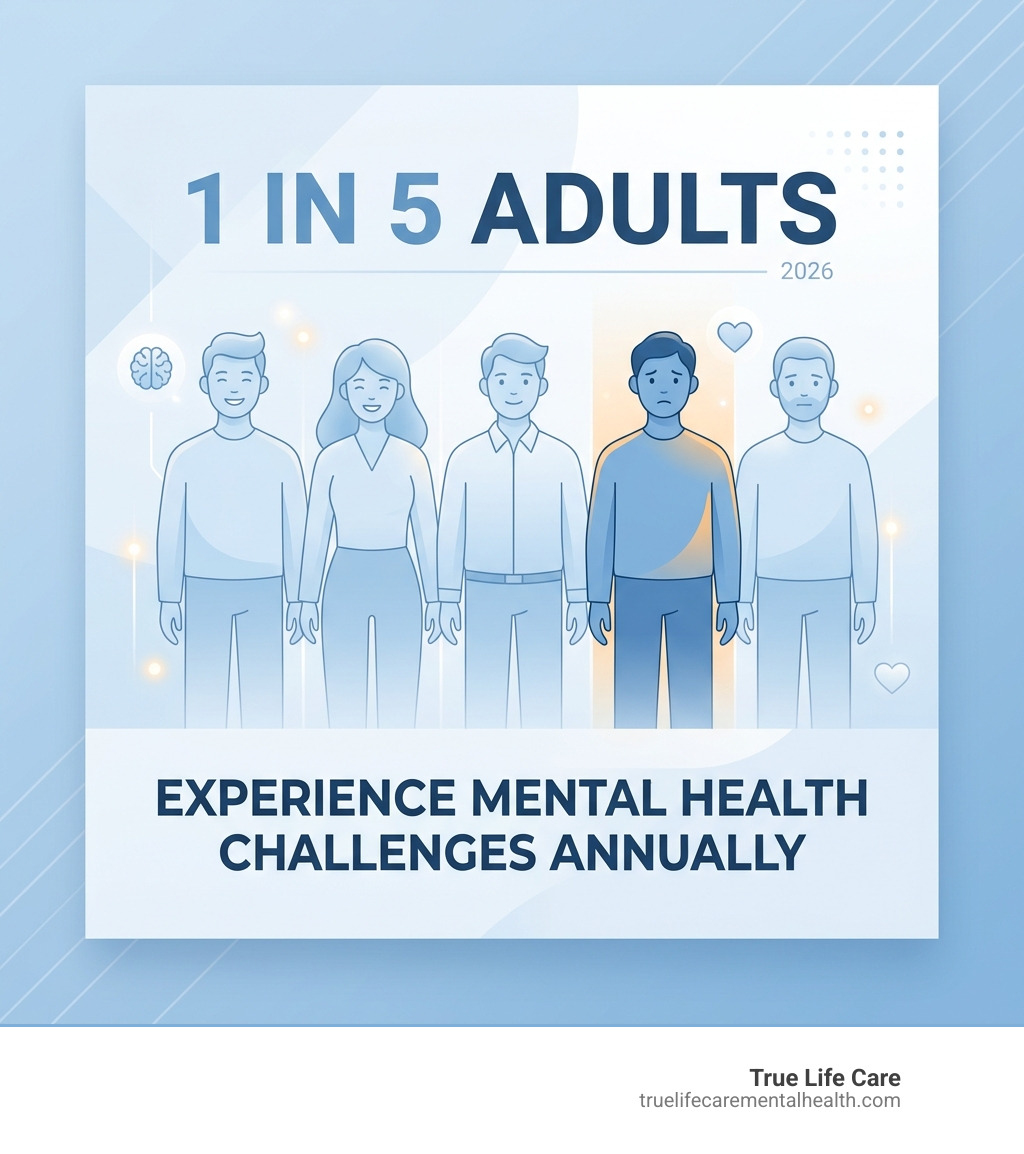
Modern life does not slow down on its own. Between relentless work demands, digital overload, and the weight of daily obligations, it is no surprise that nearly one in five adults in the United States struggles with a mental health challenge every year, according to the National Institute of Mental Health (NIMH). For many people in New Jersey and beyond, traditional weekly therapy simply is not enough to break the cycle of chronic stress or treatment-resistant depression. The physiological impact of chronic stress—often manifesting as elevated cortisol levels and a hyper-active HPA axis—requires more than a sixty-minute session to regulate.
That is where a mental health and wellness retreat becomes a genuine turning point. Rather than carving out one hour a week, a retreat offers days — sometimes weeks — of focused healing in an environment built entirely around your recovery. Research backs this up: intensive group retreat-style programs show significant, lasting improvements in both PTSD and depression symptoms, sustained months after the program ended. This is largely due to the “immersion effect,” where the brain is given the space to form new neural pathways without the constant interruption of daily triggers.
At True Life Care, located in Matawan, NJ and serving Monmouth County and the surrounding region, we understand that healing rarely happens in isolation. Our approach combines clinical excellence — including group therapy, depression treatment, and support for complex conditions like schizophrenia — with the restorative power of community and structured wellness programming. We are uniquely equipped to assist during psychiatric emergencies, providing a safe, monitored environment for those in crisis. As an out-of-network provider, we focus on delivering high-acuity care that prioritizes the individual’s long-term stability over short-term symptom management.
This guide covers 10 proven retreat models, what to expect day to day, how to navigate insurance, and how to choose the right fit for your needs.
Mental health and wellness retreat glossary:
- Behavioral Health Retreat
- Mental Health Treatment in Middlesex county NJ
- mental health retreat for depression
The Evolution of the Mental Health and Wellness Retreat in 2026
As we move through 2026, the landscape of mental health care has shifted dramatically. No longer seen as just a “luxury spa day,” the modern mental health and wellness retreat has evolved into a sophisticated residential model. These programs bridge the gap between a sterile hospital environment and a standard vacation, providing a “sacred pause” that allows the nervous system to reset. This evolution is a response to the global rise in mental health awareness, as documented by the World Health Organization (WHO). The integration of neurobiology into retreat programming has allowed for more targeted interventions that address the root causes of psychological distress.
In our busy corners of the world, from Bergen County to Passaic County, the demand for these spaces has skyrocketed. Nearly 30% of Gen Z and millennials are now prioritizing wellness “a lot more” than in previous years. This shift is driven by a need for Finding Freedom Exploring Trauma Recovery Retreats that offer more than just surface-level relaxation. Today’s retreats emphasize digital detox—setting aside phones to break the dopamine-loop of notifications—and often incorporate periods of “noble silence” to help participants reconnect with their inner selves. This silence is not merely the absence of noise, but a clinical tool used to reduce sensory overload and allow the prefrontal cortex to recover from the demands of constant decision-making.

Daily Structure at a Mental Health and Wellness Retreat
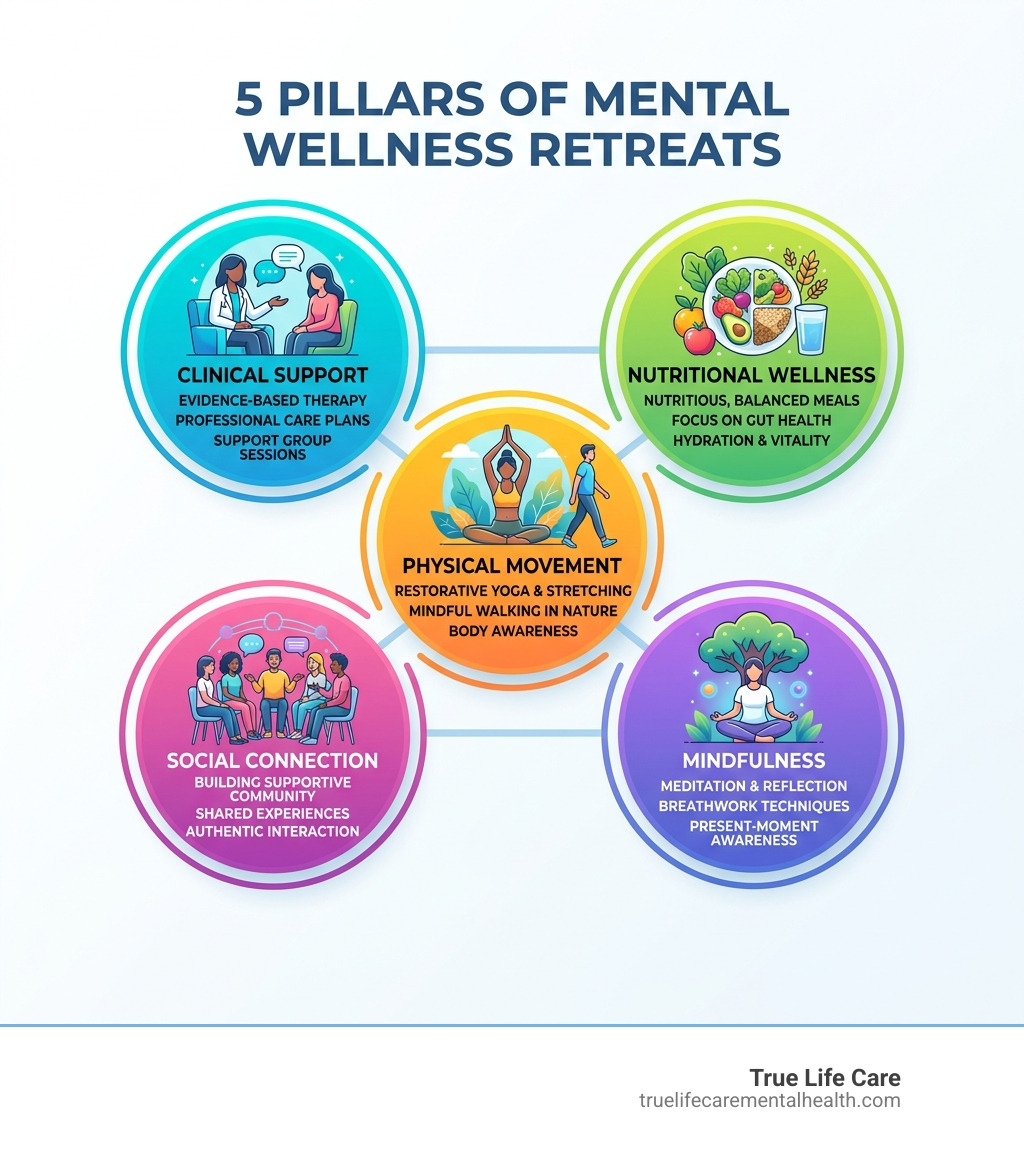
One of the most powerful elements of a retreat is the “daily rhythm.” In a world of chaotic schedules, a structured day provides safety. While every center is different, a typical day often looks like this:
- Morning Meditation: Starting the day with guided breathwork or mindfulness to quiet the “monkey mind” and set a calm intention. This practice helps regulate the autonomic nervous system before the day’s therapeutic work begins.
- Intensive Group Therapy: Engaging in deep, clinician-led sessions that address the root causes of distress. Group therapy is essential for breaking the isolation of depression and schizophrenia, providing a mirror for one’s own experiences through the stories of others.
- Nature Walks: Grounding the body through physical movement in natural settings to lower cortisol and improve mood regulation. This is often referred to as “ecotherapy,” where the environment itself acts as a co-therapist.
- Nutritional Workshops: Learning how diet impacts brain health, neurotransmitter production, and mood stability. Participants explore the gut-brain axis and how inflammation in the body can contribute to depressive symptoms.
- Restorative Sleep Protocols: Utilizing expert-guided techniques to fix sleep patterns, which are often the first casualty of chronic stress. This may include blue-light restriction, evening wind-down rituals, and cognitive behavioral therapy for insomnia (CBT-I).
- Evening Reflection: Journaling or group sharing to process the day’s insights and emotional breakthroughs before sleep. This ensures that the day’s lessons are integrated into the subconscious mind.
Therapeutic Modalities in a Mental Health and Wellness Retreat
A high-quality mental health and wellness retreat is built on a foundation of evidence-based clinical integration. We don’t just hope you feel better; we use proven tools to ensure you do. These modalities are delivered by licensed professionals who specialize in complex care. The intensity of a retreat allows for these modalities to be applied in a concentrated manner, often leading to breakthroughs that might take months in traditional outpatient settings.
Common modalities include:
- CBT (Cognitive Behavioral Therapy): Identifying and changing negative thought patterns that fuel anxiety and depression. In a retreat setting, CBT is applied to real-time experiences, allowing for immediate cognitive restructuring.
- DBT (Dialectical Behavior Therapy): Teaching four key skills: emotion regulation, mindfulness, distress tolerance, and interpersonal effectiveness. DBT is particularly effective for those struggling with intense emotional volatility.
- EMDR (Eye Movement Desensitization and Reprocessing): A specialized tool for processing trauma and PTSD by desensitizing the emotional charge of past events. Retreats provide the necessary “aftercare” space for the emotional processing that follows an EMDR session.
- Somatic Experiencing: Releasing “trauma” stored in the body through physical awareness and movement, helping to regulate the autonomic nervous system. This modality recognizes that the body often remembers what the mind tries to forget.
- Holistic Integration: Combining these with yoga, art therapy, and music therapy for a whole-person approach to healing. These creative outlets allow for the expression of emotions that may be difficult to verbalize.
For those interested in gender-specific care, our Womens Mental Health Retreats Ultimate Guide explores how these therapies are tailored to the unique emotional and physiological needs of women, including postpartum support and trauma recovery.
Core Benefits and Therapeutic Modalities
Attending a mental health and wellness retreat provides benefits that extend far beyond the duration of the stay. By removing the daily triggers of work and home, participants can build emotional resilience in a “controlled environment.” This allows for a deeper level of introspection and healing that is rarely possible in the midst of daily life. The retreat environment acts as a “social laboratory” where individuals can practice new ways of relating to themselves and others without the fear of judgment or the pressure of external expectations.
One of the most significant benefits is the power of social connection. In 2022, 29% of women reported receiving mental health services, nearly twice the rate of men. Retreats foster a sense of belonging that is often missing in our digital age. Authentic conversations in group therapy sessions help individuals realize they are not alone in their struggle with depression, anxiety, or schizophrenia. This shared experience is a cornerstone of the healing process at True Life Care, where we emphasize the importance of community in long-term recovery.

Mindfulness and Nature Immersion
Nature is often referred to as a “wise and gentle teacher” in the retreat setting. Whether it’s forest bathing in the woodlands of New Jersey or grounding techniques in a garden, environmental changes have a physiological impact. Spending time outdoors has been shown to lower blood pressure and reduce stress hormones like cortisol. This is often referred to as the “biophilia effect,” a concept explored by researchers at Yale University. The fractal patterns found in nature have a naturally calming effect on the human brain, inducing a state of “soft fascination” that allows the mind to rest.
For those struggling with persistent worry, learning to use nature as a co-facilitator in healing is a core part of the Escape The Worry Discover Your Perfect Anxiety Retreat experience. It’s about moving from a state of “survival” to one of “flourishing” by reconnecting with the natural world. This reconnection often leads to a profound shift in perspective, helping participants realize their place within a larger, interconnected system.
Clinical Excellence and Psychiatric Care
While the settings are beautiful, the clinical backbone is what creates lasting change. This includes medication management for those with complex needs and licensed facilitators who can navigate psychiatric emergencies if they arise. At True Life Care, we prioritize safety and clinical integrity above all else. As an out-of-network provider, we are able to maintain a high staff-to-client ratio, ensuring that every participant receives the individualized attention they require.
Our programs are led by experts who understand that mental health is a medical priority. We provide the same level of care you would find in a clinical setting but within a more nurturing, residential framework. This is particularly important for individuals managing schizophrenia or severe clinical depression, where consistent monitoring and expert intervention are required. The integration of psychiatric care with holistic wellness ensures that all aspects of the individual’s health are addressed simultaneously. You can read more in our Detailed Reviews Of The Top 10 Behavioral Health Retreats.
10 Proven Retreat Models for Lasting Healing
Choosing the right mental health and wellness retreat depends on your specific goals and clinical needs. Here is a comparison of the most effective models available in 2026:
| Retreat Model | Primary Focus | Best For |
|---|---|---|
| Clinical Therapeutic | Intensive psychiatric oversight & therapy | Depression, Bipolar, Schizophrenia |
| Nature-Based Healing | Outdoor immersion & grounding | Stress, Anxiety, Burnout |
| Luxury Professional | Executive burnout & high-end amenities | High-pressure professionals |
| Women-Only | Trauma, life transitions, empowerment | Postpartum, trauma recovery |
| Mindfulness-Based | Meditation, breathwork, MBSR | Chronic stress, emotional regulation |
| Trauma-Informed | EMDR, somatic work, nervous system | PTSD, childhood trauma |
| Psychedelic-Assisted | Guided clinical ketamine sessions | Treatment-resistant depression |
| New Year Immersive | Goal setting & cognitive restructuring | Life transitions, fresh starts |
| Intensive Psychotherapy | Concentrated 1-on-1 and group work | Rapid transformation, deep healing |
| Spiritual/Silence | Inner self-reflection & ego work | Spiritual crisis, deep contemplation |
1. Clinical Therapeutic Model
This model prioritizes medical safety and psychiatric expertise. It is ideal for individuals who need more than just a “break,” but rather a comprehensive diagnostic review and medication adjustment in a monitored environment. At True Life Care, our clinical model is designed to handle complex cases, including schizophrenia and severe depression, with 24/7 support. This model ensures that clinical progress is tracked with data-driven assessments.
2. Nature-Based Healing
Leveraging the “biophilia effect,” these retreats use the natural world to regulate the nervous system. Activities like forest bathing, walking meditation, and outdoor group therapy are central to the curriculum. This model is highly effective for reducing the physiological symptoms of chronic stress and helping participants find a sense of peace that is often elusive in urban environments.
3. Luxury Professional Retreats
Designed for those in high-responsibility roles, these retreats offer privacy and luxury amenities while addressing the specific roots of professional burnout. They provide a space for executives to decompress without the stigma often associated with traditional clinical settings. The focus is on sustainable high performance and emotional intelligence.
4. Women-Only Healing Spaces
With one in five women in the U.S. experiencing mental health challenges annually, these spaces focus on safety and shared experience. They address unique challenges like perinatal depression, perimenopausal mood shifts, and gender-specific trauma in a supportive, female-led environment. These retreats often incorporate workshops on boundary-setting and self-compassion.
5. Mindfulness-Based Stress Reduction (MBSR)
These are intensive programs focusing on the “science of the pause.” Participants learn to observe their thoughts without judgment, a skill that significantly reduces long-term anxiety. MBSR is an evidence-based approach that has been shown to change the brain’s response to stress, specifically by shrinking the amygdala and strengthening the prefrontal cortex.
6. Trauma-Informed Residential Care
These retreats provide a “holding environment” for deep trauma work. Using tools like EMDR and somatic experiencing, they help participants process past events that continue to impact their present lives. The focus is on creating a sense of safety in the body, allowing the nervous system to move out of a constant state of hyper-vigilance.
7. Psychedelic-Assisted Therapy (Clinical)
An emerging and highly effective model for treatment-resistant depression, these retreats use guided ketamine sessions within a strict clinical and therapeutic framework. The goal is to facilitate psychological breakthroughs that can then be integrated through traditional therapy. This model requires extensive preparation and integration sessions to ensure lasting change.
8. New Year Immersive
Often held in January, these retreats focus on “remembrance” over reinvention. They help participants move into the year with clarity, purpose, and a solid mental health plan, using cognitive restructuring to break old habits. It is a time for setting intentions that are aligned with one’s core values rather than external pressures.
9. Intensive Psychotherapy Retreats
These programs condense years of weekly therapy into a shorter, more concentrated timeframe. The intensity allows for the processing of root causes that are often skipped over in shorter sessions, making it ideal for those seeking rapid transformation. This model is particularly useful for those who have reached a plateau in their standard therapy.
10. Spiritual Meditation & Silence
Focusing on the inner self, these retreats often involve “noble silence.” By removing social interaction and digital distractions, participants are forced to confront and eventually quiet their inner critic, leading to profound spiritual and emotional insights. This model is about discovering the “still, small voice” within.
Regional Excellence in New Jersey
You don’t always have to travel across the globe to find world-class care. New Jersey offers some of the best landscapes and facilities for recovery. From the quiet woods of Morris County to the accessible centers in Bergen County and Passaic County, local residents have access to top-tier care. Our guide on Top Mental Health Retreats In Nj For A Refreshing Escape highlights the best local options for those in Hunterdon, Mercer, and Sussex counties. Staying local allows for a smoother transition back into daily life, as the environment remains familiar.
Global Destinations for Inner Renewal
While local care is excellent, some find that “distance” helps the healing process. Popular destinations include the desert landscapes of Tucson, Arizona, the lush forests of Tennessee, and the tropical sanctuary of Puerto Vallarta. Each location offers a unique environmental “frequency” that can aid in different types of recovery. For men specifically, destination retreats can provide a much-needed break from the pressures of their home environment, as explored in The 10 Best Mental Health Retreats For Men.
Specialized Care: Depression, Schizophrenia, and Group Healing
At True Life Care, we believe that specialized conditions require specialized environments. A mental health and wellness retreat is particularly effective for treating chronic depression and managing schizophrenia because it provides a consistent, supportive community that outpatient care simply cannot replicate. The residential nature of the program allows for real-time intervention and the observation of behavioral patterns that might be missed in a weekly session.
Group healing is at the heart of what we do. Seeing others navigate similar challenges—whether it’s the hallucinations associated with schizophrenia or the “heavy fog” of clinical depression—removes the stigma and shame that often prevent recovery. In a group setting, participants learn from each other’s experiences and build a network of support that lasts long after the retreat ends. This collective wisdom is a powerful catalyst for individual change.

Addressing Complex Mental Health Challenges
A retreat isn’t just for “mild stress.” It is a vital intervention for complex issues that require intensive clinical oversight. As an out-of-network provider, True Life Care focuses on high-quality, evidence-based interventions that address the following:
- Psychiatric Emergencies: Having a clinical team on-site means that if a crisis occurs, it is managed immediately by professionals. We are trained to stabilize individuals in distress and provide the necessary medical intervention without the need for immediate hospitalization in many cases.
- Schizophrenia Management: A residential model allows for 24/7 support and medication stabilization. We focus on helping individuals manage symptoms while improving their quality of life through social integration and cognitive therapy. This includes social skills training and vocational support.
- Postpartum Depression: Specialized support for new mothers is a priority, particularly for those in the Monmouth County area who may feel isolated during this transition. We address the hormonal, emotional, and social changes that accompany motherhood.
- Dual Diagnosis: Addressing both mental health and substance use simultaneously is essential for long-term recovery. Our integrated approach ensures that both conditions are treated with equal importance, recognizing that they often fuel one another.
Warning Signs You May Need Intervention:
- Disrupted pleasure in daily activities (anhedonia), where things that once brought joy now feel empty.
- Inability to perform work or academic tasks due to mental fog, lack of motivation, or cognitive decline.
- Significant changes in sleep or appetite that persist for more than two weeks, indicating a physiological shift.
- Persistent feelings of hopelessness, worthlessness, or “burnout” that do not improve with rest.
- Strained relationships due to emotional volatility, withdrawal, or a lack of empathy.
- Auditory or visual disturbances that interfere with daily functioning, which may indicate the onset of a psychotic episode.
For a deeper look at clinical depression care, visit our page on Mental Health Retreat For Depression.
Support for Monmouth County Residents
We are proud to serve our local community from our Matawan, NJ location. We specifically focus on helping Monmouth County residents access the care they need without the stress of long-distance travel. Our personalized care plans are tailored to the specific needs of our neighbors in Matawan, Boonton, Chester, Clifton, and the surrounding areas. By staying local, participants can more easily integrate the skills they learn into their daily lives while maintaining a connection to their home community. This local focus also allows for easier family involvement in the therapeutic process, which is often a key factor in successful long-term outcomes.
Practical Considerations and FAQ
Booking a mental health and wellness retreat is a significant decision that requires careful planning and a commitment to the process. Here is how to navigate the practical side of your journey toward healing.

How do I know if I need a mental health and wellness retreat?
If weekly therapy feels like “treading water” or if you are experiencing burnout that a weekend off won’t fix, a retreat is likely the right next step. If your daily functioning is impaired by depression, anxiety, or symptoms of schizophrenia, a residential model provides the intensive support needed to reset your life. It is an investment in your long-term stability and a way to prevent a more serious crisis down the road.
Are these retreats covered by PPO insurance plans?
Many clinical elements of a retreat—such as individual therapy sessions, group therapy, and psychiatric care—are often covered by insurance. True Life Care is an out-of-network provider and accepts PPO plans. This means that while we do not contract directly with insurance companies, your PPO plan may reimburse a significant portion of the clinical costs. We recommend calling your insurance provider to verify your specific benefits and out-of-network coverage. For more detail, see The Stress Free Guide To Mental Health Retreats Covered By Insurance.
What is the difference between a spa and a clinical mental health retreat?
A spa focuses on relaxation, pampering, and temporary stress relief. A clinical retreat focuses on “transformation,” “healing,” and “behavioral change.” While a retreat may have luxury amenities, the core of the program is evidence-based therapy led by licensed professionals, including psychiatrists and clinical social workers. The goal of a spa is to make you feel better for a day; the goal of a retreat is to give you the tools to live better for a lifetime.
How does True Life Care handle psychiatric emergencies?
Our facility is equipped to handle psychiatric emergencies with 24/7 clinical oversight. We provide a safe, monitored environment where medications can be adjusted and crises can be stabilized by expert staff. Our team is trained in de-escalation and acute psychiatric care to ensure the safety of all participants. This level of oversight is what distinguishes a clinical retreat from a standard wellness program.
Who is a good candidate for a residential wellness retreat?
Anyone struggling with depression, anxiety, PTSD, schizophrenia, or chronic stress who is ready to do the “deep work” of recovery. It is for those who need a higher level of care than outpatient therapy but do not require acute hospital detoxification. Candidates should be motivated to participate in group therapy and holistic programming. It is also an excellent option for those who have completed a higher level of care and need a “step-down” program to reintegrate into society.
What should I pack for a mental health retreat?
We recommend packing comfortable clothing suitable for movement and outdoor activities. You should also bring any current medications in their original packaging, a journal for reflection, and an open mind. Most retreats encourage a “digital detox,” so you may want to bring books or other non-electronic forms of entertainment. A detailed packing list is usually provided during the intake process.
Conclusion
A mental health and wellness retreat is more than an escape; it is an investment in your future. At True Life Care Mental Health, we are committed to a holistic approach that balances clinical excellence with compassionate, personalized care. Whether you are joining us at our Matawan, NJ location or seeking a refreshing escape elsewhere in the state, our goal is to empower you for long-term recovery and well-being. By choosing an out-of-network provider that specializes in intensive, residential care, you are prioritizing a level of clinical depth that is designed for lasting transformation.
Don’t wait for a crisis to prioritize your mind. The journey to mental wellness is not a destination but a continuous process of growth and self-discovery. If you’re ready to take the first step toward a healthier, more resilient version of yourself, explore our Top Mental Health Retreats In Nj For A Refreshing Escape and find the path that’s right for you. We are here to help you move from surviving to thriving, providing the support and expertise you need to reclaim your life.