
Understanding Mental Health Treatment in Ocean County New Jersey
Why Mental Health Treatment in Ocean County New Jersey Matters More Than Ever

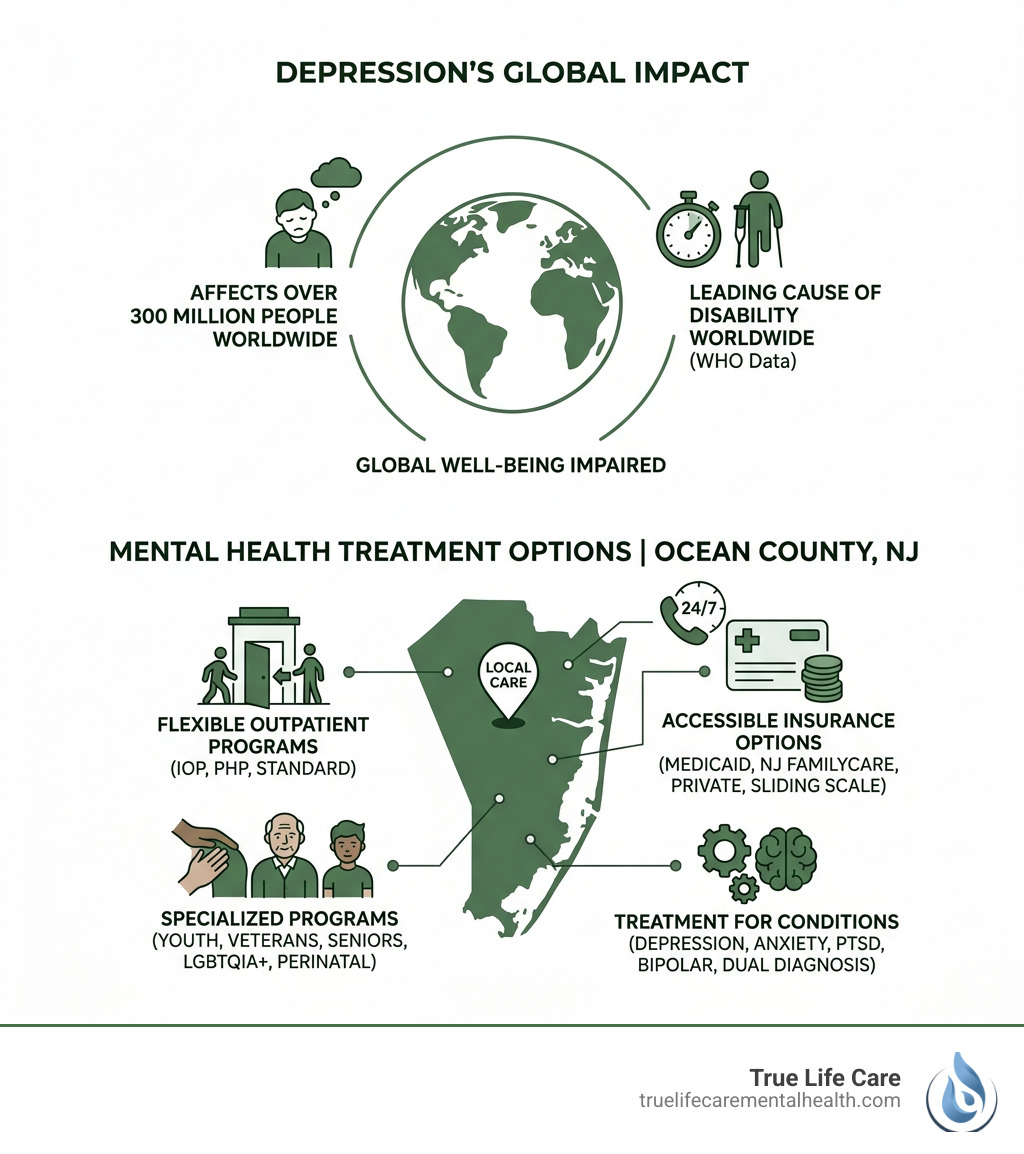
Mental health treatment in Ocean County New Jersey is more accessible than many residents realize — and getting the right help can be life-changing.
Here’s a quick overview of what’s available locally:
| What You Need | What’s Available in Ocean County |
|---|---|
| Flexible outpatient care | IOP, PHP, and standard outpatient programs |
| Crisis support | 988 Lifeline, 24/7 crisis lines, emergency referrals |
| Specialized programs | Veterans, youth, seniors, LGBTQIA+, perinatal |
| Insurance options | Medicaid, NJ FamilyCare, private insurance, sliding scale |
| Conditions treated | Depression, anxiety, PTSD, bipolar disorder, dual diagnosis |
Mental health doesn’t just affect how you feel. According to the World Health Organization, depression alone is the leading cause of disability worldwide, affecting more than 300 million people. That’s not a small problem.
Ocean County has grown rapidly over the past few decades. More families, more stress, and more demand for quality mental health services. The good news? Local providers have expanded to meet that need — offering everything from peer support groups to intensive clinical programs.
Whether you’re dealing with anxiety that won’t quit, depression that’s lasted for years, or a substance use issue layered on top of everything else, there are real, local options that fit your schedule and your budget.
You don’t have to figure this out alone.
Basic Mental Health Treatment in Ocean County New Jersey glossary:
Comprehensive Care Options for Mental Health Treatment in Ocean County New Jersey
When we look at the landscape of Mental Health Treatment in Ocean County New Jersey, the most important thing to understand is that “treatment” isn’t a one-size-fits-all term. In our region, care is structured like a ladder—you can step onto the rung that matches the intensity of what you’re experiencing.
For many of us, traditional “once-a-week” therapy is a great starting point, but sometimes life hits harder, and we need more support. That is where intensive outpatient options come in. These programs allow you to receive high-level clinical care during the day or evening while still sleeping in your own bed at night.
Partial Hospitalization Program (PHP)
A PHP is often described as “day treatment.” It is the most intensive form of outpatient care. You might spend five days a week at a center, participating in several hours of therapy, medication management, and group sessions. It’s a powerful alternative to inpatient hospitalization, especially for those who have a stable home environment but need significant clinical intervention to stay safe and functional.
Intensive Outpatient Program (IOP)
An IOP is a step down in intensity from PHP but a step up from regular counseling. These programs typically meet three to four days a week for about nine to fifteen hours total. The beauty of an IOP is its flexibility; many centers offer evening tracks so you can keep your job or stay in school while doing the hard work of recovery. You can find more info on local mental health programs to see how these schedules might fit your life.
Outpatient Counseling
This is the most common form of care, involving individual, family, or group therapy sessions. It is ideal for maintaining wellness, managing mild to moderate symptoms, and working through specific life transitions.
| Feature | Partial Hospitalization (PHP) | Intensive Outpatient (IOP) |
|---|---|---|
| Hours per week | 25–30 hours | 9–15 hours |
| Days per week | 5 days | 3–5 days |
| Medication Management | Frequent/Daily | Weekly or as needed |
| Best For | Severe symptoms, high risk | Moderate symptoms, transitioning from PHP |
Common Conditions Addressed in Local Programs
The providers in our community are well-versed in treating a wide spectrum of disorders. While everyone’s journey is different, common conditions treated include:
- Clinical Depression: More than just “the blues,” this involves a persistent loss of interest and a decreased ability to function.
- Generalized Anxiety Disorder (GAD): Chronic, exaggerated worrying about everyday life.
- PTSD: Often affecting our veterans and survivors of trauma, involving flashbacks and severe anxiety.
- Bipolar Disorder: Characterized by significant mood swings ranging from depressive lows to manic highs.
- Schizophrenia and Schizoaffective Disorder: Complex conditions requiring expert psychiatric “scripting” and long-term medication management.
According to scientific research on depression symptoms and disability, depression is not just sadness; it is a functional impairment that requires professional intervention to overcome.
Evidence-Based Therapeutic Approaches
We don’t just guess what works; we use science. Local centers prioritize evidence-based therapies, which are treatments that have been proven effective through rigorous research.
- Cognitive Behavioral Therapy (CBT): This helps you identify and change negative thought patterns that lead to self-destructive behaviors.
- Dialectical Behavior Therapy (DBT): Originally developed for personality disorders, DBT is now widely used for mood disorders. It focuses on mindfulness, emotional regulation, and distress tolerance.
- Trauma-Informed Care: This approach assumes that a person is more likely than not to have a history of trauma and tailors every aspect of care to avoid re-traumatization.
- Medication Management: For many, therapy alone isn’t enough. Expert psychiatrists provide evaluations and ongoing adjustments to ensure medications are working effectively with minimal side effects.
Before you dive in, it’s helpful to check out these 5 things to know before starting treatment to set yourself up for success.
Reason 1: Specialized Mental Health Treatment in Ocean County New Jersey for Veterans
Ocean County is home to a significant population of veterans who have served our country. We recognize that the transition from military to civilian life can be fraught with unique challenges, from PTSD to traumatic brain injuries.
One of the biggest reasons to seek Mental Health Treatment in Ocean County New Jersey is the availability of veteran-specific peer support. Many local programs employ Peer Support Specialists—individuals who are veterans themselves and have “walked the walk.” They provide a level of understanding that a civilian clinician might not fully grasp.
Specialized tracks for veterans often focus on:
- Dual Diagnosis: Treating both PTSD and substance use disorders simultaneously, as they frequently occur together.
- Moral Injury: Addressing the deep psychological distress that comes from actions (or inactions) that go against one’s moral code during service.
- Reintegration Support: Helping veterans navigate the “new normal” of family life and employment.
For those looking for more info on specialized NJ programs, there are resources dedicated to ensuring no veteran is left behind.
Support for Seniors and Youth
Our community doesn’t just focus on adults. We have robust systems for both ends of the age spectrum.
- Seniors: Aging brings unique stresses—loss of loved ones, health changes, and isolation. Senior success programs in Ocean County help older adults maintain their independence and mental sharpness.
- Youth and Adolescents: From bullying and school refusal to social media-driven anxiety, our youth are under immense pressure. Local “Ocean Academies” and therapeutic education programs help kids stay on track academically while getting the psychological help they need.
- Perinatal Wellness: New and expecting mothers often face postpartum depression or anxiety. Specialized perinatal programs offer a safe space for moms to heal.
- LGBTQIA+ Inclusive Care: Finding a provider who understands the specific stressors faced by the LGBTQIA+ community is vital. Local centers emphasize “respect and kindness,” ensuring that everyone feels welcomed and included.
Reason 2: Financial Accessibility and Legal Protections
A major barrier to care is often the “how do I pay for this?” question. In Ocean County, there is a concerted effort to make mental health care affordable.
Many local providers accept Medicaid and NJ FamilyCare, ensuring that even those with limited income can access high-quality psychiatric care and therapy. For those with private insurance, centers often handle all the “paperwork headache,” doing the insurance verification and claims processing for you.
If you don’t have insurance, don’t lose hope. Many non-profit and community-based organizations offer sliding scale fees based on your income, or even free peer-led services.
Navigating Insurance and Employment
We often hear from people who are afraid to get help because they fear losing their jobs. It is important to know your rights. The Family and Medical Leave Act (FMLA) is a federal law that can protect your job while you seek treatment.
- Job Protection: If you are eligible, FMLA provides up to 12 weeks of unpaid, job-protected leave for serious health conditions, which includes clinically diagnosed depression or anxiety.
- Confidentiality: You generally coordinate this through your HR department, and your medical details are kept private.
For more information on FMLA protections for mental health leave, you can consult the Department of Labor or your company’s handbook. Knowing these protections are in place can take the weight off your shoulders while you focus on getting better. If you’re looking for more info on treatment in Tinton Falls, local providers can often help guide you through these administrative hurdles.
Reason 3: Integrated Crisis Intervention and Support Resources
Sometimes, you can’t wait for an appointment next Tuesday. You need help now. Ocean County has an integrated network of crisis services designed to catch you when you fall.
- 988 Lifeline: This is the national “911 for mental health.” You can call or text 988 anytime, 24/7, to speak with a trained counselor.
- ASL Videophone Accessibility: For our Deaf and Hard-of-Hearing neighbors, the 988 Lifeline offers ASL videophone support during business hours, ensuring that crisis care is truly universal.
- 24/7 Local Crisis Lines: Many of the larger mental health organizations in Toms River and Bayville operate their own emergency lines, providing immediate intervention and referrals to stabilizing care.
- Involuntary Outpatient Commitment (IOC): For those with severe mental illness who may struggle with “anosognosia” (a lack of awareness that they are ill), Ocean County was one of the first in NJ to offer court-monitored outpatient programs. This provides a structured, compassionate alternative to being locked in a hospital.
Reason 4: Holistic Lifestyle Integration and Self-Help
Professional treatment is the engine of recovery, but lifestyle changes are the fuel. The best Mental Health Treatment in Ocean County New Jersey doesn’t just happen in a doctor’s office; it happens in your daily life.
We encourage a “whole-person” approach to wellness. This includes:
- Sleep Hygiene: Establishing a regular sleep routine is often the first step in stabilizing mood.
- Stress Management: Learning techniques like deep breathing, mindfulness, or yoga can help lower the cortisol levels that keep us in a “fight or flight” state.
- Exercise Routines: You don’t need to run a marathon. Even 30 minutes of moderate-intensity exercise, like walking along the boardwalk or through a local park, can release endorphins that act as natural antidepressants.
- Nutritional Support: What we eat affects how we feel. Many partial care programs in the area actually provide healthy meals (breakfast and lunch) because they know that stable blood sugar leads to stable moods.
- Peer-Led Wellness Groups: Sometimes, the best medicine is talking to someone who has been where you are. Peer groups allow you to share “pro-tips” for recovery in a non-clinical, warm environment.
Reason 5: Long-Term Recovery through Aftercare and Relapse Prevention
Recovery isn’t a destination; it’s a journey. One of the most convincing reasons to seek treatment locally is the emphasis on long-term aftercare.
For those with chronic depression (also known as persistent depressive disorder or dysthymia), symptoms can last for two years or more. This requires a marathon mindset, not a sprint. Relapse is not a sign of failure; it is often a part of the process. According to the research on chronic depression and dysthymia, consistent management can lead to long periods of remission.
Local programs focus heavily on:
- Relapse Prevention Planning: Identifying your “triggers” and having a written plan for what to do if symptoms start to flare up.
- Step-Down Care: Gradually moving from a PHP to an IOP, and then to traditional outpatient therapy, rather than just stopping treatment abruptly.
- Alumni Networks: Staying connected to the community that helped you get sober or mentally healthy.
You can find additional resources for preventing depression relapse through the NIMH to help you stay educated and empowered.
Frequently Asked Questions about Mental Health Treatment
How do I choose the right center for Mental Health Treatment in Ocean County New Jersey?
Choosing a center is a big decision. We recommend looking at:
- Clinical Credentials: Are the staff licensed (LCSW, LPC, Psychiatrists)?
- Insurance Compatibility: Do they take your specific plan, or offer a sliding scale?
- Specialized Tracks: Do they have programs specifically for your demographic (e.g., veterans or adolescents)?
- Transportation: Some local centers offer pick-up and drop-off services for their day programs, which can be a lifesaver if you don’t drive.
What is the difference between different levels of outpatient care?
The main difference is the intensity and time commitment. Traditional outpatient is usually one hour a week. IOP is about 9-15 hours a week. PHP is a full-time commitment, usually 25-30 hours a week. All of these allow you to live at home, which helps you practice the skills you learn in therapy in “real-time” within your community.
Can I receive treatment for both mental health and substance use?
Absolutely. This is called Dual Diagnosis or “co-occurring disorders” treatment. It is actually the gold standard of care. Because addiction and mental health issues are so often intertwined, treating one without the other is like trying to fix a car with a broken engine by only changing the tires. Integrated treatment plans address both simultaneously for the best results.
Conclusion
Finding the right Mental Health Treatment in Ocean County New Jersey is about more than just stopping the pain—it’s about building a life worth living. Whether it’s through the structured support of a PHP, the flexibility of an IOP, or the specialized care of a veteran’s track, help is closer than you think.
At True Life Care, we believe in a holistic, evidence-based approach that treats you as a person, not a diagnosis. From our expert psychiatric care to our warm, community-focused environment, we are here to empower you for the long haul.
Your better tomorrow starts with a single step today.