
Depression Treatment in Atlantic County NJ: What You Need to Know

Depression treatment in Atlantic County NJ is available through a range of programs — from weekly outpatient therapy to intensive day programs — offered by local clinics, hospital systems, and telehealth providers. At True Life Care, we extend our expert services to Atlantic County residents through our comprehensive virtual treatment programs, bridging the gap between our physical locations in Northern New Jersey and the South Jersey coast.
According to the National Institute of Mental Health, depression is a serious mood disorder that requires professional intervention. Here’s a quick overview of your main options:
- Outpatient therapy – Weekly or bi-weekly sessions with a therapist or psychiatrist
- Intensive Outpatient Program (IOP) – 9–15 hours per week; structured care while living at home
- Partial Hospitalization Program (PHP) – 25–30 hours per week; the most intensive non-residential option
- Medication management – Handled by psychiatrists or psychiatric nurse practitioners (PMHNPs)
- Telehealth – Virtual therapy and psychiatry for residents across Atlantic County
- Crisis and walk-in care – Same-day access for urgent mental health needs
Atlantic County has a large and growing need for mental health support. The region recorded the highest substance use treatment admission rates in all of New Jersey in 2021 — 2,704 per 100,000 residents. Depression frequently co-occurs with substance use, anxiety, and PTSD, making access to the right care especially important here.
The good news? There are 40+ psychiatrists in the county, and major insurers like Aetna, Cigna, and UnitedHealthcare are widely accepted. You have real options — and getting started is more straightforward than most people expect.
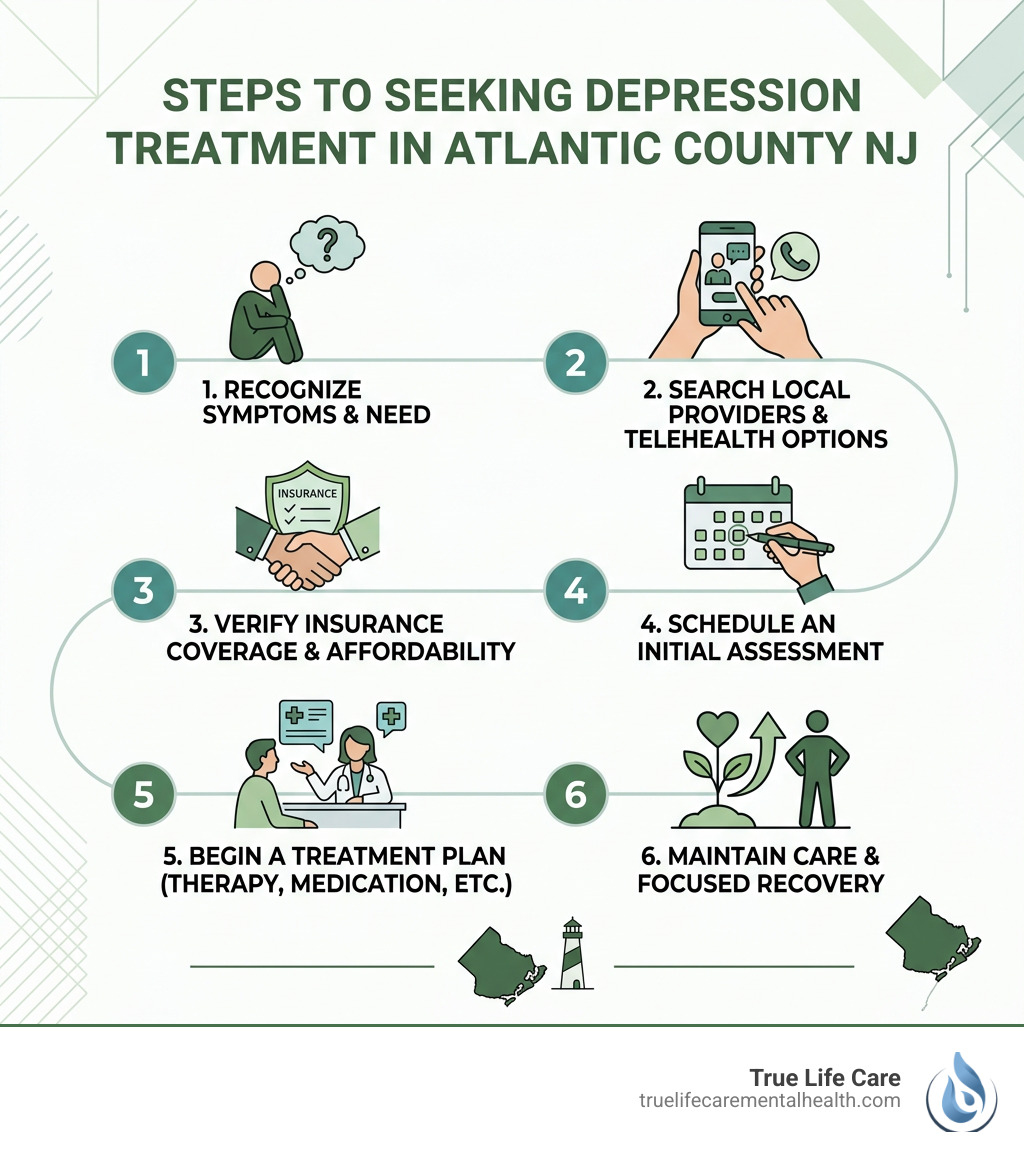
Depression Treatment In Atlantic County NJ terms simplified:
- Depression Treatment in New Jersey
- Major Depressive Disorder Treatment in New Jersey
- Depression Treatment in Somerset County NJ
Understanding Depression Symptoms and Types in Atlantic County
When we talk about depression, we aren’t just talking about having a “bad day” or feeling “the blues” after a rainy weekend on the coast. Depression is a complex mood disorder influenced by genetic, biological, environmental, and psychological factors. In Atlantic County, the unique mix of coastal lifestyle and economic stressors can influence how these symptoms manifest.
Common Types of Depression
Not every experience with depression looks the same. We often see several distinct types:
- Major Depressive Disorder (MDD): This involves a persistent sad mood or loss of interest in activities that lasts for at least two weeks. It impacts how you eat, sleep, and work.
- Persistent Depressive Disorder (PDD): Think of this as a long-term “low” that lasts for at least two years. It might not be as intense as MDD, but its longevity can be incredibly draining.
- Seasonal Affective Disorder (SAD): Very common in New Jersey as the days get shorter. It typically hits in the late fall and winter, often resolving when the sun returns in the spring.
- Treatment-Resistant Depression: This occurs when standard treatments, like basic talk therapy or first-line medications, don’t provide enough relief. Recognizing the signs of treatment-resistant depression early is vital so we can explore advanced options like TMS or specialized medication protocols.
Physical and Emotional Manifestations
Depression doesn’t just live in the mind; it shows up in the body. Many residents we speak with report physical symptoms before they even realize they are depressed. These can include:
- Stomach pains and digestive issues: The gut-brain connection is real.
- Sleep disturbances: Either sleeping too much (hypersomnia) or being unable to sleep (insomnia).
- Unexplained headaches or motor control difficulty: Feeling like your limbs are heavy or moving in slow motion.
- Emotional apathy: A feeling of being “numb” or “empty” rather than just sad.
Scientific research on behavioral health highlights that the mind is just as essential as the body in the healing process. Whether you are recovering from a physical injury or dealing with a mental health disorder, your mental state plays a massive role in your overall recovery.

Comprehensive Options for Depression Treatment in Atlantic County NJ
Finding the right Depression Treatment In Atlantic County NJ means matching the level of care to the severity of your symptoms. We believe in a holistic approach that empowers you for long-term well-being.
Psychiatric Care and Medication Management
For many, medication is a foundational tool. In Atlantic County, 100% of psychiatrists prioritize treating depression and anxiety. Medication management involves working with a psychiatrist or a Psychiatric Mental Health Nurse Practitioner (PMHNP) to find the right balance. It’s not about a “pill for every ill,” but rather using evidence-based medicine to stabilize brain chemistry so that therapy can be more effective.
Evidence-Based Therapies
We utilize several proven methods to help you navigate your journey:
- Cognitive Behavioral Therapy (CBT): This helps you identify and change negative thought patterns that lead to depressive feelings.
- Dialectical Behavior Therapy (DBT): Excellent for emotional regulation and developing coping skills for intense distress.
Intensive Programs: PHP and IOP
Sometimes, one hour of therapy a week isn’t enough, but a full hospital stay isn’t necessary. This is where Partial Hospitalization Programs (PHP) and Intensive Outpatient Programs (IOP) come in.
| Feature | Partial Hospitalization (PHP) | Intensive Outpatient (IOP) |
|---|---|---|
| Hours per week | 25–30 hours | 9–15 hours |
| Frequency | 5 days a week | 3 days a week |
| Duration | Full day sessions | Half-day or evening sessions |
| Best for | Severe symptoms needing stabilization | Stepping down from PHP or moderate symptoms |
| Living Situation | Live at home | Live at home |
Understanding how a partial hospitalization program helps you heal is key to choosing the right path. PHPs offer a highly structured environment that provides the intensity of inpatient care while allowing you to sleep in your own bed at night.
Holistic Approaches
We don’t just treat symptoms; we treat the whole person. Integrating mindfulness and yoga into your routine can significantly reduce stress and improve your mood. These holistic practices complement traditional clinical treatments by addressing the mind-body connection.
Specialized Programs and Dual Diagnosis Care
Addressing Co-occurring Disorders and Depression Treatment in Atlantic County NJ
In Atlantic County, the intersection of mental health and substance use is a significant concern. With the region recording 2,704 substance use treatment admissions per 100,000 residents, the need for dual diagnosis care is higher than ever.
Many people use substances to “self-medicate” the pain of untreated depression. Unfortunately, this often leads to a cycle of addiction that makes the depression even worse. If you find yourself in this position, you might wonder, “Should I go to rehab for depression?” The answer is often yes if substance use is hindering your ability to recover.
Our intensive outpatient programs for mental health are designed to treat both issues simultaneously. By addressing the underlying depression while providing relapse prevention strategies, we help you build a foundation for lasting sobriety and mental wellness.
Tailored Support for Different Demographics
Depression doesn’t discriminate, but it does look different across various groups:
- Depression in Men: Often goes undiagnosed because it may manifest as irritability or anger rather than sadness. Learn more about why depression in men is frequently overlooked.
- Young Adults: Facing unique pressures from social media, school, and career starts. We offer specialized young adult treatment to help this age group navigate these transitions.
- Perinatal Wellness: Specialized care for individuals facing mental health challenges during or after pregnancy.
- Adolescent Services: Programs specifically for children and teens who may be struggling with school refusal or social conflicts.
Navigating Costs, Insurance, and Local Resources
Accessing Depression Treatment in Atlantic County NJ: Insurance and Crisis Help
One of the biggest hurdles to starting treatment is the fear of the cost. However, most residents in Atlantic County have access to insurance that covers mental health services.
- Insurance Coverage: Approximately 91% of psychiatrists in the area accept Aetna and Cigna. About 80% accept UnitedHealthcare (UHC/UBH). Many also accept Medicaid, and some offer sliding scale fees to ensure care is accessible.
- Telehealth: About 53% of local providers offer both in-person and online sessions. This is a game-changer for those with transportation issues or busy schedules.
Emergency and Crisis Resources
If you or someone you love is in immediate danger, please do not wait for an appointment. Atlantic County has robust crisis intervention services:
- 988 Lifeline: Call or text 988 anytime for immediate support.
- Psychiatric Intervention Program: Available 24/7 through local hospital systems (like the AtlantiCare City Campus) for emergency psychiatric evaluations.
- Mental Health Urgent Care: Some locations in Atlantic City offer walk-in services Monday through Friday for adults 18+ who need stabilization but aren’t in a life-threatening emergency. You can also find resources through the Substance Abuse and Mental Health Services Administration (SAMHSA).
Frequently Asked Questions about Depression Treatment
How do I know if I need an IOP or a PHP?
The choice between an IOP and a PHP usually comes down to a clinical assessment. If your depression is making it nearly impossible to function at work or home, or if you are having thoughts of self-harm, a partial hospitalization program for mental health provides the necessary intensity to keep you safe and stable. If you can still manage some daily responsibilities but need significant support to stay on track, an IOP is likely the better fit.
Does insurance typically cover depression treatment in New Jersey?
Yes. Under the Mental Health Parity and Addiction Equity Act, insurance companies are required to provide coverage for mental health that is comparable to their coverage for physical health. Whether you have Aetna, Cigna, or another major provider, depression treatment in New Jersey is a covered benefit. We recommend checking your specific “out-of-network” benefits if you choose a provider who doesn’t take your plan directly, as you may still be eligible for reimbursement.
Are telehealth options available for residents of Atlantic County?
Absolutely. Telehealth has expanded rapidly, with nearly half of all psychiatrists in the area now offering virtual-only options. This is particularly helpful for those dealing with treatment-resistant depression who may need to consult with specialists located in other parts of New Jersey, such as Morris or Bergen County, without making the long drive.
Conclusion
The journey toward recovery from depression is rarely a straight line, but it is one you don’t have to walk alone. Whether you are looking for a highly structured PHP, a flexible IOP, or specialized dual diagnosis care, there is a path forward for you right here in New Jersey.
At True Life Care Mental Health, we are dedicated to providing personalized, evidence-based care that looks at you as a whole person—not just a diagnosis. While our physical offices are located in areas like Morris and Bergen County, our specialized telehealth services bring high-quality Depression Treatment In Atlantic County NJ directly to your home. Our holistic approach and flexible programs are designed to empower you to reclaim your life and achieve long-term well-being.
If you’re ready to take the first step toward a brighter, more stable future, we are here to help. Start your recovery today and discover the difference that compassionate, expert care can make.