
The Silent Crisis: Why Men’s Mental Health Retreats Matter More Than Ever
Mental health retreats for men are structured, immersive programs designed to help men address stress, depression, anxiety, burnout, and trauma — in a setting built specifically around how men heal best. In 2026, the need for these specialized spaces has never been more apparent. Men often face unique societal pressures that discourage the expression of vulnerability, leading to a “silent crisis” that manifests in physical illness, addiction, and isolation. This crisis is not just a personal struggle; it is a public health emergency that requires a dedicated, gender-responsive approach to healing.
Here’s a quick breakdown of what they offer:
- What they are: Residential or multi-day programs combining therapy, group work, and wellness activities in a focused environment.
- Who they’re for: Men dealing with depression, anxiety, burnout, trauma, schizophrenia, addiction, or simply feeling stuck.
- How long they last: Typically 3 to 30 days, depending on the program and your clinical needs.
- What makes them different from therapy: Immersive, distraction-free settings with peer support, experiential activities, and round-the-clock structure.
- Insurance: True Life Care is an out-of-network provider that works with PPO insurance plans.
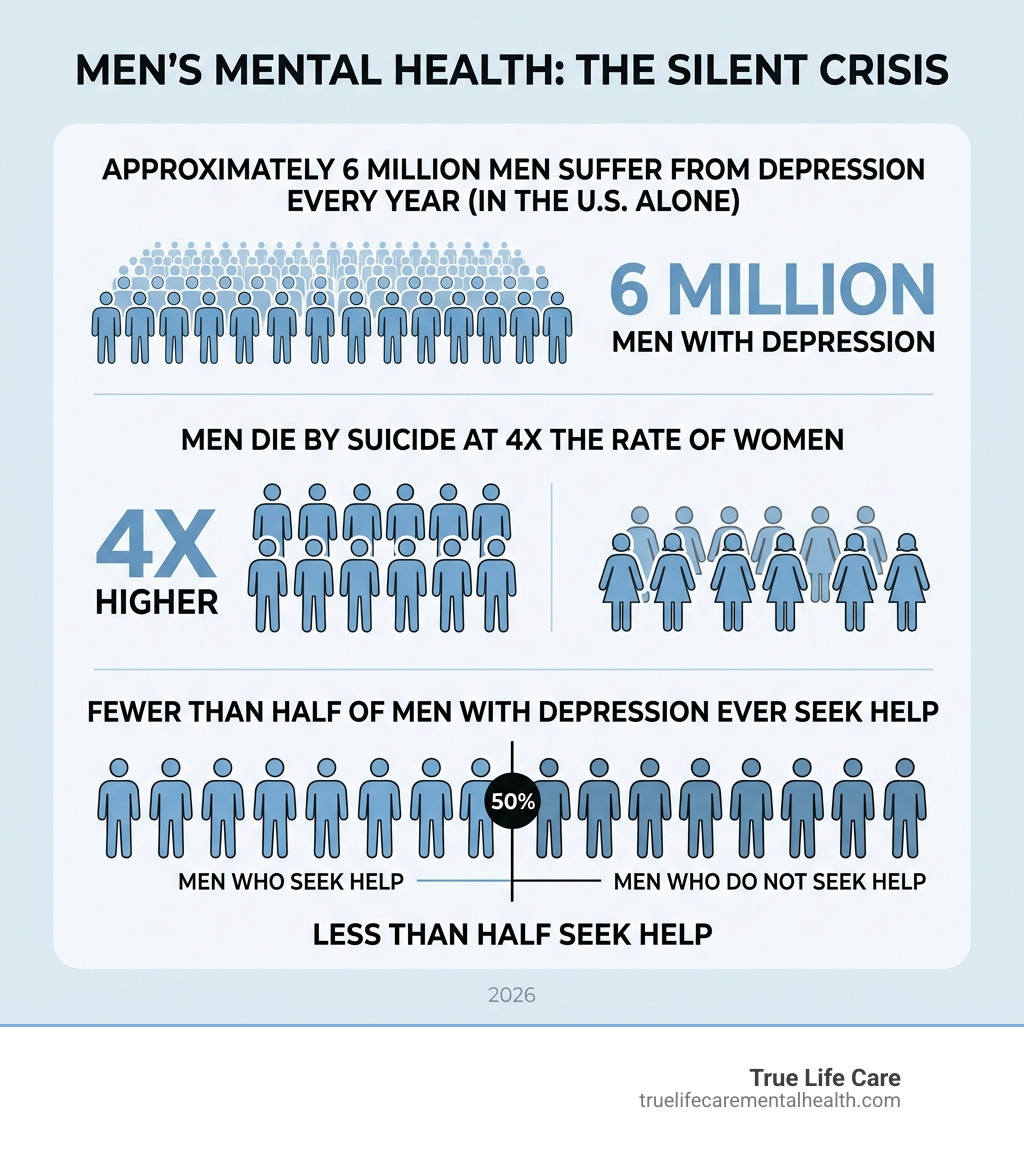
The numbers are hard to ignore. Approximately 6 million men suffer from depression every year in the United States alone. Yet fewer than half ever seek help. According to the National Institute of Mental Health (NIMH), men are less likely than women to have received mental health treatment in the last year. This gap is even more tragic when considering that men die by suicide at four times the rate of women. This disparity highlights a fundamental flaw in how we approach men’s wellness: the traditional medical model often fails to account for the “Stoic Fallacy,” the belief that enduring pain in silence is a virtue.
Why the gap? A big part of it is cultural. Men are taught — sometimes explicitly, often silently — to push through pain. To stay in control. To not talk about it. They are conditioned to believe that asking for help is a sign of failure rather than a step toward strength. This conditioning starts in childhood and is reinforced by media, workplace cultures, and even family dynamics. So they don’t speak up. Until they can’t anymore. The result is a buildup of internal pressure that eventually explodes into physical health issues, broken relationships, or severe psychiatric episodes.
That’s where men’s mental health retreats come in. They offer something traditional therapy often can’t: a dedicated space, away from daily life, where vulnerability isn’t weakness — it’s the whole point. Research published in the Journal of Alternative and Complementary Medicine found that retreat participants experienced meaningful reductions in both anxiety and depression symptoms. These programs provide a circuit breaker for the constant noise of modern life, allowing for deep healing and the development of emotional intelligence. By stepping away from the roles of provider, protector, and professional, men can finally reconnect with their authentic selves.
For men in New Jersey, including those in Monmouth County, True Life Care’s Matawan location offers clinical mental health care — including group therapy and depression treatment — for those who need more than a weekend getaway can provide. True Life Care is an out-of-network provider and accepts PPO plans. Whether you’re exploring a wilderness retreat, an emotional release program, or clinical care close to home, this guide covers the best options available in 2026. We focus on providing a comprehensive roadmap for men who are ready to take the first step toward a more balanced and fulfilling life.
Related content about mental health retreat for men:
- Behavioral Health Retreat
- Mental Health Treatment in Middlesex county NJ
- mental health retreat covered by insurance
The 10 Best Mental Health Retreats for Men (2026 Edition)
As we navigate April 2026, the landscape of men’s wellness has shifted toward more specialized, gender-responsive care. A mental health retreat for men is a vital circuit breaker for chronic stress and undiagnosed depression. Unlike a standard vacation, these programs are designed to facilitate deep internal work through Detailed Reviews Of The Top 10 Behavioral Health Retreats. These retreats are not about escaping life; they are about gaining the tools to face life with renewed vigor and clarity.

When we look at the top options for 2026, we see a blend of clinical excellence and holistic innovation. These retreats prioritize personal growth and holistic healing by removing the “mask” men often feel forced to wear in their professional and family lives. Below, we explore the ten most effective categories of retreats available today, each catering to different needs and personality types.
1. Clinical Psychiatric Retreats
These programs are designed for men dealing with severe conditions like schizophrenia or treatment-resistant depression. They provide a high level of medical oversight while maintaining a retreat-like atmosphere. For men in New Jersey, facilities like True Life Care in Matawan offer this clinical depth, focusing on stabilization and long-term wellness. These programs often utilize Cognitive Behavioral Therapy (CBT) and Dialectical Behavior Therapy (DBT) to help men manage complex symptoms in a supportive, non-hospital environment. True Life Care is an out-of-network provider and accepts PPO plans, ensuring that clinical excellence is paired with professional administrative support.
2. Wilderness and Adventure-Based Retreats
For men who find sitting on a couch in a therapist’s office intimidating, adventure-based retreats offer a “backdoor” to healing. These programs use the great outdoors as a therapeutic tool. Activities like rock climbing, white-water rafting, and mountain trekking are used to build resilience and foster brotherhood. The physical challenge mirrors the internal struggle, teaching men that they have the strength to overcome obstacles. Nature immersion helps recalibrate the brain’s dopamine levels, providing a natural reset for those suffering from burnout. The “biophilia hypothesis” suggests that humans have an innate connection to nature, and these retreats leverage that connection to lower cortisol levels and improve mood.
3. Intensive Emotional Release Programs
Sometimes, a man doesn’t need a “reset”—he needs a release. Intensive programs focus on processing “stored emotions.” There is a growing body of expert knowledge suggesting that unexpressed grief, rage, and trauma are literally stored in the body, leading to chronic pain and “unexplained” depression. These retreats provide a safe container for men to finally let go of these burdens through breathwork, somatic experiencing, and guided group dialogue. For those in the Northeast, finding Top Mental Health Retreats In Nj For A Refreshing Escape is the first step toward this deep emotional work. These programs often involve “bioenergetic” exercises designed to break through the muscular armor men build up over decades of stress.
4. Spiritual and Mindfulness Sanctuaries
Reconnecting with a higher purpose or a spiritual foundation is often the missing piece in a man’s recovery. These retreats focus on meditation, silence, and mindfulness practices. They are often located in forest sanctuaries or mountain ranges, providing a distraction-free backdrop for Finding Freedom Exploring Trauma Recovery Retreats. Men learn to quiet the internal critic and find peace in the present moment, which is essential for managing anxiety. By practicing “mindful awareness,” men can learn to observe their thoughts without being controlled by them, a skill that is invaluable in high-stress environments.
5. Equine-Assisted Therapy Centers
Working with horses requires a level of presence and emotional honesty that is hard to fake. Horses mirror a man’s internal state; if he is anxious or aggressive, the horse reacts. This provides immediate, non-judgmental feedback that helps men develop empathy, trust, and responsibility. Many of these programs utilize the “Hero’s Journey” framework, helping men see their struggles not as failures, but as necessary trials on their path to wisdom. Equine therapy is particularly effective for men who struggle with traditional verbal communication, as it relies on the limbic system’s ability to process non-verbal cues.
6. Veteran and First Responder Tactical Retreats
Particularly effective for those who have served in high-pressure roles, these activities use familiar environments to teach emotional regulation and mental fortitude. They focus on the unique traumas faced by veterans and first responders, providing a space where they can speak the same language as their peers. These retreats emphasize that seeking help is a tactical advantage, not a weakness. They often address “moral injury”—the psychological distress that results from actions, or the lack thereof, which transgress deeply held moral beliefs and expectations.
7. Holistic Wellness and Biohacking Retreats
These programs focus on the physical-mental connection. They often incorporate cold exposure (like ice baths), specific nutritional protocols, and sleep optimization to improve mental health. By regulating the nervous system through physical interventions, men can find relief from chronic stress and improve their overall cognitive function. The focus here is on the “gut-brain axis,” recognizing that a healthy body is the foundation for a healthy mind. Men learn how to use their physiology to influence their psychology, gaining a sense of agency over their mental state.
8. Creative Arts and Expression Retreats
While less traditional for men, creative retreats using music, art, or writing can be incredibly transformative. They allow men to express complex emotions that they may not have the words for. This form of healing is particularly useful for processing trauma and building a new sense of identity outside of work or family roles. Engaging in the creative process can trigger “flow states,” which are associated with increased happiness and reduced anxiety. It provides a safe outlet for the “shadow self” to be explored and integrated.
9. Fatherhood and Legacy Retreats
These retreats focus on the specific pressures of being a provider and a parent. They help men navigate the complexities of family dynamics, healing their own “father wounds” so they can show up more fully for their children. The focus is on building a lasting legacy of emotional health for future generations. By addressing intergenerational trauma, men can break the cycle of emotional unavailability and create deeper, more meaningful connections with their families.
10. Career Burnout and Executive Retreats
Designed for high-achievers, these retreats address the specific type of depression that comes from professional exhaustion. They focus on boundary setting, rediscovering passion, and decoupling self-worth from professional success. They provide a space for men to admit they are struggling without fear of professional repercussions. These programs often address “imposter syndrome” and the “loneliness at the top,” helping executives find a sustainable balance between their professional ambitions and their personal well-being.
The Core Components of a Mental Health Retreat for Men
What makes these programs effective isn’t just the location; it’s the framework. We believe that for a man to truly heal, the environment must support vulnerability as a form of strength. Key components include:
- Structured Therapeutic Activities: Moving beyond “talk therapy” into experiential exercises that engage the body and mind.
- Emotional Intelligence (EQ): Workshops that teach men how to identify and articulate feelings that have been suppressed for years.
- Resilience Building: Using physical and mental challenges to prove to oneself that they can handle life’s pressures without breaking.
- Faith-Based Growth: For many, reconnecting with a higher purpose is the missing piece in their recovery.
How a Mental Health Retreat for Men Fosters Brotherhood
Isolation is one of the biggest killers of men. Modern life has stripped away the “village,” leaving men to struggle with their burdens alone. A mental health retreat for men acts as a modern rite of passage. Through shared challenges—whether it’s an early morning hike or a difficult group dialogue—men build an unbreakable camaraderie. This peer support creates a safe space where “iron sharpens iron,” allowing for an inner reset that solo therapy often struggles to achieve. The bonds formed in these retreats often last a lifetime, providing a support network that continues long after the program ends.
Clinical vs. Holistic: Addressing Schizophrenia and Severe Depression
While wilderness and spiritual retreats are incredible for growth and stress management, some conditions require a higher level of clinical intervention. When dealing with schizophrenia or severe, treatment-resistant depression, a weekend in the woods is rarely enough. These conditions require a sophisticated blend of medical expertise and therapeutic support. True Life Care is an out-of-network provider that specializes in these complex cases, accepting PPO plans to facilitate access to high-level care.

At True Life Care, we bridge the gap between “retreat-style” comfort and high-level medical care. We understand that Depression In Men Why It Often Goes Undiagnosed because men often display non-traditional symptoms. Instead of sadness, a man might exhibit:
- Increased Anger and Irritability: Using rage as a shield for pain.
- Risky Behavior: Reckless driving, substance abuse, or gambling.
- Physical Ailments: Unexplained back pain, headaches, or digestive issues.
- Social Withdrawal: Pulling away from friends, family, and hobbies.
Treating Schizophrenia and Complex Disorders
Schizophrenia and other complex psychiatric disorders require expert psychiatric care. This includes precise medication management combined with evidence-based modalities like Cognitive Behavioral Therapy (CBT). Our goal is stabilization and long-term wellness. For men in New Jersey, having access to a facility that understands the masculine experience of these disorders is crucial. We provide a structured environment where men can receive the clinical support they need without feeling like they are in a sterile hospital ward. Our approach to schizophrenia involves helping the individual understand their symptoms, manage triggers, and build a life of purpose despite the challenges of the diagnosis. We focus on both the “positive symptoms” (like hallucinations) and the “negative symptoms” (like social withdrawal), ensuring a holistic recovery path.
Managing Psychiatric Emergencies
Mental health doesn’t always wait for a scheduled appointment. Psychiatric emergencies—such as suicidal ideation, acute psychotic episodes, or severe manic states—require immediate crisis intervention. For Monmouth County residents, our Matawan NJ location is equipped to assist during these critical moments. We focus on safety planning and stabilization, ensuring that the individual is protected while we develop a long-term recovery strategy. Our team is trained to handle these emergencies with the urgency and compassion they require, providing a lifeline for men and their families during their darkest hours. True Life Care is an out-of-network provider and accepts PPO plans, allowing families to focus on the emergency at hand rather than administrative hurdles.
Group Therapy and Peer Support
Whether in a clinical setting or a mountain retreat, group therapy remains a cornerstone of healing. Breaking the isolation of mental illness is half the battle. In our healing circles, men realize they aren’t the only ones hearing voices, feeling “numb,” or struggling to get out of bed. This shared experience fosters emotional regulation and provides a social connection that acts as a buffer against future relapses. Group therapy allows men to practice new social skills, offer support to others, and receive honest feedback in a safe, moderated environment. It is in these groups that men learn the language of emotion, transforming their internal experience from a source of shame into a source of connection.
Choosing the Right Mental Health Retreat for Men
With so many options available in 2026, how do you choose? It starts with an honest assessment of your current state. Are you looking for a preventative “reset,” or are you in the midst of a clinical crisis? Understanding the level of care you need is the first step toward a successful outcome. True Life Care is an out-of-network provider and accepts PPO plans, offering a range of clinical services that can be tailored to your specific needs.
Assessing Your Clinical Needs
If you are struggling with a dual diagnosis (mental health and addiction) or severe symptoms that interfere with daily life, you may need more than a retreat. Consider the following levels of care:
- PHP (Partial Hospitalization Programs): High-level care during the day while returning to a supportive environment at night. This is ideal for men who need intensive stabilization but want to remain connected to their community. It provides a structured daily routine that is essential for recovery.
- IOP (Intensive Outpatient Programs): Flexibility for men who need to maintain work or family commitments while receiving trauma-informed care. This allows for the integration of healing practices into daily life in real-time, ensuring that the lessons learned in therapy are applied in the real world.
- Psychiatric Evaluation: Ensuring that any underlying chemical imbalances or conditions like schizophrenia are addressed alongside behavioral changes. A thorough evaluation is the foundation of any successful treatment plan.
For more information on navigating these choices, see The Stress Free Guide To Mental Health Retreats Covered By Insurance.
Location and Environment
Geography matters. For many men in the Tri-State area, a local “urban sanctuary” or a coastal retreat in Monmouth County provides the perfect balance. Being close to home allows for easier transition back into daily life, while still providing the “getaway” feel necessary for a reset. True Life Care serves multiple locations including:
- Bergen, Passaic, and Morris County
- Matawan and Monmouth County
- Clifton, Montville, and Fair Lawn
- NYC and surrounding areas
The environment at our Matawan location is designed to be calming and professional, providing a sanctuary where men can focus entirely on their recovery. The proximity to the Jersey Shore also allows for “Blue Space” therapy, utilizing the natural calming effects of the ocean to enhance the healing process.
Post-Retreat Integration and Aftercare
The most dangerous day of a retreat is the day after it ends. Returning to the same stressors, the same toxic job, or the same strained relationships can quickly undo weeks of progress. Sustainable recovery requires a “battle plan” for the transition back to reality. This includes:
- Relapse Prevention: Identifying triggers and having a clear strategy for when they arise. This involves creating a “toolbox” of coping mechanisms.
- Community Calls: Staying connected with the men you met at the retreat to maintain the sense of brotherhood. Peer accountability is a powerful tool for long-term success.
- Local Therapy: Continuing the work with a provider who understands your journey and can provide ongoing support. True Life Care can help facilitate this transition.
- Lifestyle Changes: Implementing the sleep, nutrition, and mindfulness habits learned during the retreat. Small, consistent changes lead to lasting transformation.
Frequently Asked Questions about Men’s Retreats
Are mental health retreats covered by insurance?
This is one of the most common questions we hear. While many wellness-only retreats do not involve insurance, programs that include clinical components often do. True Life Care is an out-of-network provider and accepts PPO plans. We recommend a verification process to determine your specific coverage limits based on clinical necessity. This ensures that you can focus on your healing without the added stress of financial uncertainty. Our team is experienced in working with PPO providers to maximize your benefits for clinical care.
What is the difference between a retreat and a vacation?
A vacation is an escape; a retreat is an encounter. On vacation, you might use cocktails or distractions to forget your problems. At a mental health retreat for men, you face them. Retreats feature professional facilitation, structured emotional work, and specific goal setting. You don’t just return “relaxed”—you return transformed, equipped with new tools to handle life’s challenges. A retreat is an investment in your future self, whereas a vacation is a temporary pause.
How long do these programs typically last?
Duration varies by need:
- 3-5 Day Intensives: Best for a quick reset or addressing a specific issue like burnout. These are often focused on a single theme, such as stress management or fatherhood.
- 7-14 Day Programs: Allow for deeper emotional processing and habit formation. This duration is ideal for men dealing with moderate depression or anxiety.
- 30-Day Residential: Recommended for severe depression, addiction, or complex trauma recovery. This longer duration is often necessary for conditions like schizophrenia where stabilization and medication adjustment take time.
Can I bring my phone or laptop?
Most retreats encourage a “digital detox” to allow for full immersion in the healing process. However, clinical programs like those at True Life Care understand that some men may need to stay connected for family or urgent work matters. We work with each individual to establish a technology plan that supports their recovery while respecting their external responsibilities.
What should I pack for a men’s mental health retreat?
We recommend comfortable clothing suitable for both indoor therapy sessions and outdoor activities. A journal is highly recommended for processing thoughts and feelings. Most importantly, bring an open mind and a willingness to engage with the process. All clinical and therapeutic materials are typically provided by the facility.
Conclusion
The journey to mental wellness is not one a man should walk alone. Whether you are seeking a mental health retreat for men to rediscover your purpose or you need the clinical expertise of our team at True Life Care to manage depression or schizophrenia, help is available. We are dedicated to providing a space where men can heal, grow, and reclaim their lives. The transformation that occurs when a man finally decides to prioritize his mental health has a ripple effect, improving his relationships, his career, and his overall quality of life.
For those in Monmouth County and across New Jersey, our Matawan location provides a holistic, personalized approach to psychiatric care. We believe in the power of expert treatment combined with the strength of brotherhood. Don’t wait for a crisis to reclaim your life. From the quiet suburbs of Morris Plains to the busy streets of NYC, we are here to support your transition from surviving to thriving. True Life Care is an out-of-network provider and accepts PPO plans, making high-quality clinical care accessible for those who need it most. Our commitment is to walk with you every step of the way, from the initial assessment to long-term aftercare.
Start your journey to wellness today and discover the version of yourself you thought was lost. You have the strength to change, and we have the tools to help you get there. Your legacy of health starts with a single, courageous decision to seek support.