
When Two Struggles Collide: Recognizing Dual Diagnosis Symptoms
Dual diagnosis symptoms are signs that a person is dealing with both a mental health disorder and a substance use disorder at the same time.
Common dual diagnosis symptoms include:
- Mood swings that don’t improve with standard treatment
- Using alcohol or drugs to cope with anxiety, depression, or trauma
- Withdrawal from friends, family, and responsibilities
- Continuing substance use even when it clearly makes things worse
- Failed attempts to quit substances on your own
- Trouble concentrating, sleeping, or managing daily tasks
- Feeling hopeless, irritable, or emotionally out of control
- Physical symptoms like changes in appetite, energy, or sleep
- A history of mental illness and substance use in the family
These two conditions don’t just happen to exist side by side. Each one actively makes the other worse. Someone might drink to quiet the noise of depression — but alcohol is a depressant, so the depression deepens. Then the drinking increases. It becomes a cycle that’s very hard to break alone.
This is more common than most people realize. According to SAMHSA’s 2024 National Survey on Drug Use and Health, approximately 21.2 million U.S. adults had a co-occurring mental illness and substance use disorder. That’s not a rare edge case — it’s a widespread health crisis that often goes unrecognized and undertreated.
The tricky part? The symptoms of each condition can look almost identical to the other, making it genuinely difficult — even for professionals — to know what’s driving what.
If any of the signs above feel familiar, either for yourself or someone you care about, this guide is for you.
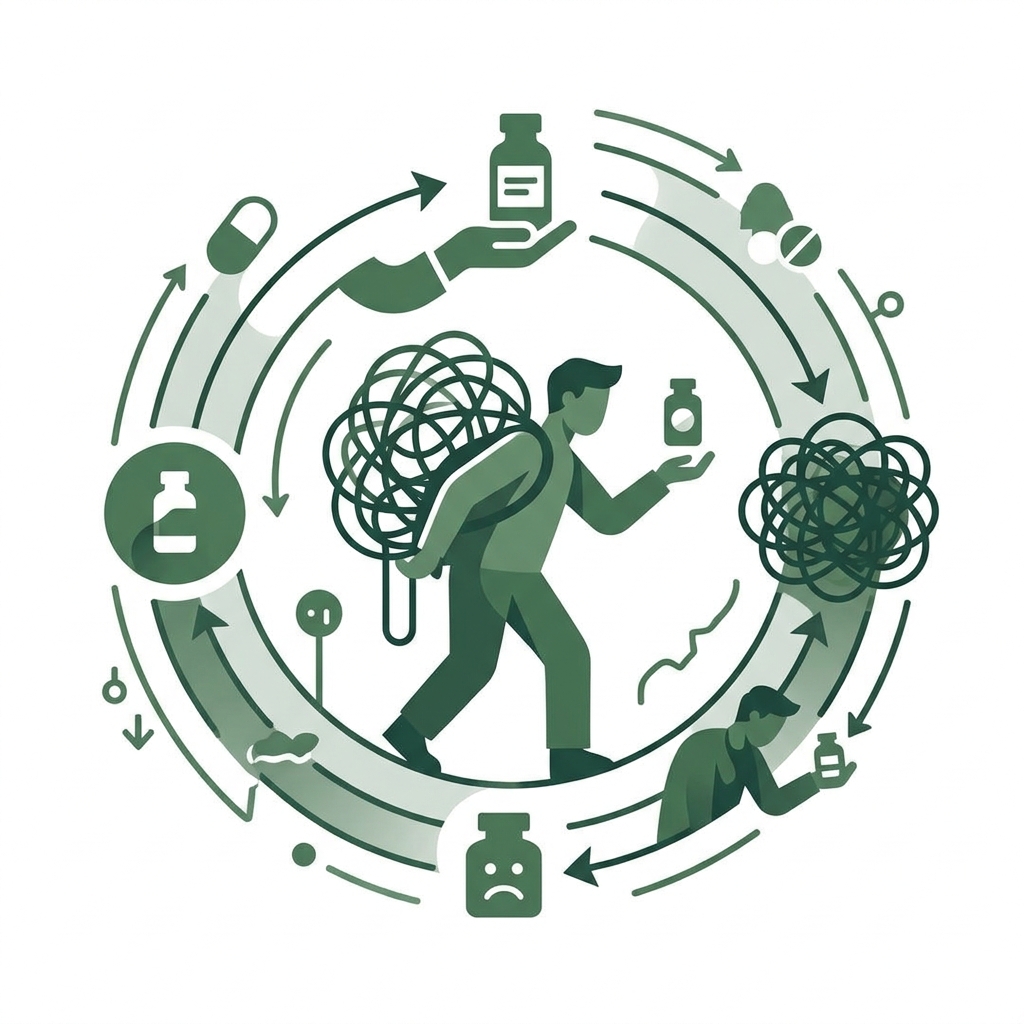
Understanding Co-Occurring Disorders and Prevalence
When we talk about a “dual diagnosis,” we are referring to what clinicians call “comorbidity” or “co-occurring disorders.” Essentially, it means an individual is navigating the choppy waters of a mental health condition (like bipolar disorder or PTSD) while simultaneously struggling with a substance use disorder (SUD).
In our experience at True Life Care Mental Health, we see how these two issues feed off each other. It’s rarely a simple case of one causing the other; rather, they are often intertwined like a knot that requires careful, expert untangling.
The scope of this challenge in the United States is staggering. In 2023, data showed that about 20.4 million U.S. adults were living with a dual diagnosis. By the time the 2023 National Survey on Drug Use and Health statistics were analyzed in 2024, that number had climbed to 21.2 million. This tells us that nearly 1 in 10 adults may be facing this “double trouble.”
The Diagnostic and Statistical Manual of Mental Disorders (DSM-5-TR) is the gold standard we use to identify these conditions. It helps us categorize the specific nature of both the mental health struggle and the addiction, which is vital because no two dual diagnoses look exactly the same. Whether you are in Bergen County, Morris County, or right here in Montville, NJ, understanding that this is a recognized medical condition—not a personal failure—is the first step toward healing. You can learn more info about dual diagnosis treatment to see how specialized care makes a difference.
Common Examples of Dual Diagnosis Pairings
While any mental health disorder can pair with any substance, certain combinations appear more frequently in clinical settings. Understanding these “best examples” helps us spot dual diagnosis symptoms earlier.
- Major Depression and Alcohol Use Disorder: This is perhaps the most common pairing. Many people use alcohol to “numb” the pain of depression, but since alcohol is a central nervous system depressant, it actually lowers serotonin levels, making the depression much deeper.
- Schizophrenia and Cannabis Use: Research suggests that about 47% of people with schizophrenia also have a substance use disorder. Cannabis is often used to manage the intense anxiety or “noise” of the condition, but it can actually trigger or worsen psychotic episodes.
- PTSD and Opioid Addiction: Those living with trauma often experience physical and emotional pain that feels unbearable. Opioids offer a temporary, dangerous escape from these intrusive memories.
- Bipolar Disorder and Stimulant Use: During a manic phase, an individual might seek out stimulants (like cocaine or meth) to “keep the high going,” or use them during a depressive crash to try and regain energy.
Regardless of the pairing, the result is the same: how substance use worsens mental health becomes a daily reality for the individual, creating a “vicious cycle” where symptoms of one disorder mask or amplify the other.
Which Disorder Typically Comes First?
One of the most frequent questions we hear at our New Jersey facilities is, “Which started first—the depression or the drinking?” The answer is rarely a straight line. The “temporal order” (the order in which they appear) varies for everyone.
- The Self-Medication Hypothesis: This theory suggests that people use drugs or alcohol to manage the symptoms of an undiagnosed or untreated mental health condition. For example, someone with social anxiety might start drinking heavily just to feel “normal” at gatherings.
- Substance-Induced Disorders: On the flip side, heavy substance use can actually trigger a mental health disorder in someone who was previously stable. Drugs can fundamentally change brain chemistry, leading to new symptoms of anxiety, paranoia, or depression.
- Shared Vulnerability: Sometimes, neither comes first. A person might have a genetic predisposition or have experienced environmental triggers (like childhood trauma) that make them vulnerable to both addiction and mental illness simultaneously.
Research on internalizing disorders and substance use indicates that in many youth, anxiety and depression appear before the substance use begins, highlighting the need for early mental health intervention.
Identifying the Most Common Dual Diagnosis Symptoms
Identifying dual diagnosis symptoms is notoriously difficult because the signs of drug withdrawal or intoxication often mimic the signs of a mental health crisis. For instance, if someone is irritable and can’t sleep, are they experiencing a manic episode, or are they withdrawing from stimulants?
This diagnostic complexity is why professional evaluation is so critical. To help you understand the overlap, we’ve put together a comparison of how these signs often present:
| Symptom Category | Mental Health Sign | Substance Use Sign |
|---|---|---|
| Mood | Persistent sadness or “flat” affect | Extreme highs followed by crashes |
| Social | Avoiding people due to fear or low energy | Avoiding people to hide use or find new “using” friends |
| Physical | Changes in appetite due to stress | Changes in appetite due to the drug’s effect |
| Behavior | Loss of interest in hobbies (anhedonia) | Neglecting hobbies to spend time/money on substances |
If you are unsure, looking at signs of drug use and addiction can help clarify part of the picture, but in a dual diagnosis, these signs are almost always amplified. Unpacking dual diagnosis help requires looking at the person as a whole, not just their symptoms.
Behavioral and Physical Dual Diagnosis Symptoms
The outward signs of a co-occurring disorder often manifest in how a person interacts with the world and how their body reacts to the internal strain.
Behavioral Signs:
- Social Withdrawal: You might notice your loved one stopping all communication, missing family dinners in Clifton or Ringwood, or isolating in their room for days.
- Erratic Behavior: Sudden outbursts of anger, unexplained euphoria, or high-risk activities (like reckless driving or spending) are major red flags.
- Financial Distress: If money is suddenly “missing,” bills go unpaid, or they are constantly asking for loans, it may indicate a growing substance problem paired with poor impulse control.
Physical Signs:
- Sleep and Appetite Changes: This could mean sleeping for 15 hours straight or not sleeping for three days. Similarly, rapid weight loss or gain is common.
- Tolerance and Withdrawal: Needing more of a substance to get the same effect, or getting physically ill (shaking, sweating, nausea) when they stop, are clear indicators of a substance use disorder.
- Secondary Health Risks: People with dual diagnosis are often at higher risk for physical health risks like Viral Hepatitis or HIV, particularly if they are using intravenous drugs or engaging in risky behaviors while impaired.
Cognitive and Emotional Dual Diagnosis Symptoms
The “internal” symptoms are often the most painful for the individual and can be the hardest for families to understand.
- Anhedonia: This is a clinical term for the inability to feel pleasure. When the brain’s dopamine system is hijacked by substances, the person may find it impossible to enjoy things they once loved, like a walk through a park in Sussex County or a favorite hobby.
- Memory and Concentration: “Brain fog” is common. They may struggle to follow a conversation, remember appointments, or perform simple tasks at work.
- Emotional Instability: One minute they may feel invincible, and the next, they are consumed by a sense of total hopelessness.
- Suicidal Ideation: The combination of a mental health struggle and the “depressant” effect of many substances can lead to thoughts of self-harm. This is a medical emergency.
If you recognize these mental health condition overviews in yourself or a loved one, please know that help is available and recovery is possible.

The Importance of Integrated Treatment for Dual Diagnosis Symptoms
In the past, the medical community treated these issues separately. A person would go to “rehab” for their addiction and then, once “sober,” they would go to a therapist for their depression. This approach rarely worked. Why? Because if you don’t treat the depression, the person will likely use substances again to cope with the pain. If you don’t treat the addiction, the mental health therapy won’t “stick” because the brain chemistry is constantly being disrupted.
Integrated treatment means treating both conditions at the exact same time, by the same team of experts. This is the core of what we do at True Life Care Mental Health. By coordinating care, we ensure that the “left hand knows what the right hand is doing.”
Success rates of combined programs are significantly higher than siloed treatments. About 50% of people with co-occurring disorders respond very well to these combined programs. Whether you are looking for dual diagnosis treatment centers in NJ or specialized outpatient care in Warren County, integrated care is the “gold standard.”
Treatment typically involves:
- Medical Detoxification: A safe, supervised environment to clear the body of substances while managing withdrawal.
- Inpatient or Residential Care: Intensive support for those who need a stable environment away from triggers.
- Outpatient Programs (PHP/IOP): Flexible options for those transitioning back to daily life in New Jersey or New York.
The Role of CBT and DBT in Recovery
Behavioral therapies are the “tools” we give our clients to help them rebuild their lives.
- Cognitive Behavioral Therapy (CBT): CBT helps individuals identify “stinky thinking”—those negative thought patterns that lead to substance use. For example, if a client thinks, “I’m a failure, so it doesn’t matter if I drink,” CBT helps them challenge that thought and replace it with a healthier one.
- Dialectical Behavior Therapy (DBT): DBT is fantastic for emotional regulation. It teaches “mindfulness” and “distress tolerance.” Instead of reaching for a pill or a bottle when they feel overwhelmed, a client learns how to sit with their emotions and use healthy coping mechanisms.
Current psychosocial intervention research supports these therapies as highly effective components of a long-term recovery plan.
Medication Management and Safety
Medication can be a literal lifesaver in dual diagnosis treatment, but it must be handled with extreme care. We use psychiatric medications to stabilize moods or reduce anxiety, alongside addiction medicines that can curb cravings.
However, there are significant risks to be aware of. For instance, there are adverse effects of combining benzodiazepines and opioids, which can lead to fatal respiratory depression. This is why professional supervision is non-negotiable.
Our psychiatric experts at True Life Care ensure that any medication prescribed is safe, monitored, and part of a larger plan. You can see how treatment programs help you heal by providing this safety net of medical expertise.
How to Support a Loved One with Dual Diagnosis Symptoms
Watching someone you love struggle with dual diagnosis symptoms is heartbreaking. You may feel like you are walking on eggshells, never knowing which “version” of the person you are going to get.
Here is how you can help:
- Offer Unconditional Support: Make it clear that you love the person, even if you hate the illness.
- Set Firm Boundaries: Support does not mean enabling. You can love someone without giving them money for drugs or lying to their boss for them.
- Encourage Professional Help: You cannot “fix” a dual diagnosis with love alone. It is a complex medical condition that requires experts.
- Take Care of Yourself: You can’t pour from an empty cup. Seek your own therapy or support groups.
Learning tips for helping a loved one stay sober is a great start, as is understanding the impact of dual diagnosis in NJ communities like ours.
Utilizing Support Groups and Peer Resources
Recovery doesn’t happen in a vacuum. Connecting with others who “get it” is vital for long-term success.
- Dual Recovery Anonymous (DRA): Unlike traditional AA or NA, DRA specifically welcomes people who are also managing mental health conditions and taking psychiatric medications.
- Social Support: Whether it’s a local meeting in Boonton or a group in NYC, peer support provides a sense of belonging that addiction often steals.
- Crisis Resources: If things reach a breaking point, the 988 Suicide & Crisis Lifeline is available 24/7. It is a vital resource for anyone in immediate distress.
Frequently Asked Questions about Co-Occurring Disorders
How is dual diagnosis diagnosed if symptoms overlap?
It takes time and expertise. Usually, we look for a period of sobriety (if possible) to see which symptoms remain once the substances are out of the system. We use the Diagnostic and Statistical Manual of Mental Disorders criteria, along with a deep dive into the person’s personal and family history. Screening tools like the PRISM (Psychiatric Research Interview for Substance and Mental Disorders) are also used to help differentiate between substance-induced symptoms and independent mental health disorders.
What are the risk factors for developing a dual diagnosis?
There are three main “buckets” of risk factors:
- Genetics: Addiction and mental illness both tend to run in families.
- Environment: Chronic stress, poverty, or living in an unstable environment can trigger both.
- Trauma: Common comorbidities research consistently shows that childhood trauma is one of the strongest predictors of future dual diagnosis struggles.
Can early intervention improve the prognosis?
Absolutely. The sooner we address the dual diagnosis symptoms, the less damage is done to the brain’s chemistry and the person’s life (relationships, career, health). Early, integrated intervention significantly improves the prognosis and recovery outlook, leading to higher success rates and lower chances of relapse.
Conclusion
At True Life Care Mental Health, we believe that no one is “broken” beyond repair. A dual diagnosis is a complex challenge, but with the right personalized treatment and a holistic approach, long-term wellness is within reach.
We are proud to serve our neighbors throughout New Jersey—from the quiet streets of Sussex County to the bustling centers of Mercer and Middlesex. Our mission is to empower you with expert psychiatric care and flexible programs (like PHP and IOP) that fit your life.
You don’t have to navigate this “double trouble” alone. Whether you are in Lake Hopatcong, Chester, or NYC, we are here to help you turn the page toward a brighter chapter. Start your journey at our facilities today.