
Mental Hospitals in NJ: What You Need to Know Before Seeking Help
Mental hospitals in NJ range from state-operated psychiatric facilities to private behavioral health centers and community crisis programs. Here is a quick overview of your main options:
| Type | Examples | Best For |
|---|---|---|
| State psychiatric hospitals | Ancora, Greystone Park, Trenton, Ann Klein | Long-term inpatient care, forensic cases |
| Private behavioral health centers | Various Accredited Facilities | Inpatient, detox, dual diagnosis |
| Crisis centers & hotlines | 988 Lifeline, Local PESS Units | Immediate crisis support |
| Outpatient programs (PHP/IOP) | True Life Care & others | Step-down care after inpatient |
Mental health challenges do not follow a schedule. They can hit suddenly, quietly, or over years of struggle. For many people in New Jersey, knowing where to turn is the hardest first step.
The good news? New Jersey has one of the most extensive networks of mental health care in the country. Whether you need emergency stabilization, long-term inpatient care, or flexible outpatient support, there are real options available to you.
This guide breaks down the major mental hospitals and behavioral health facilities across NJ – who they serve, what they offer, and how to access them – so you can make a confident, informed decision for yourself or someone you love.
Understanding the Different Mental Hospitals in NJ
When we talk about mental hospitals in NJ, it is important to understand that not every facility serves the same purpose. New Jersey’s mental health landscape is divided into three primary categories: state-operated hospitals, private behavioral health centers, and community-based crisis intervention services.
State psychiatric hospitals generally serve individuals who require longer-term stabilization or those referred through the legal system. Private behavioral health centers, on the other hand, often focus on acute (short-term) stabilization, medical detoxification, and specialized programs for specific age groups. Finally, crisis intervention services act as the “front door” to the system, providing immediate help during a psychiatric emergency.
For a deeper dive into how these systems interact, you can read our Exploring Nj Mental Institutions A Guide. If you are looking for localized resources, the Mental Health Services | Hunterdon County, NJ page offers excellent information for residents in that specific region.
Acute Inpatient vs. Residential Care
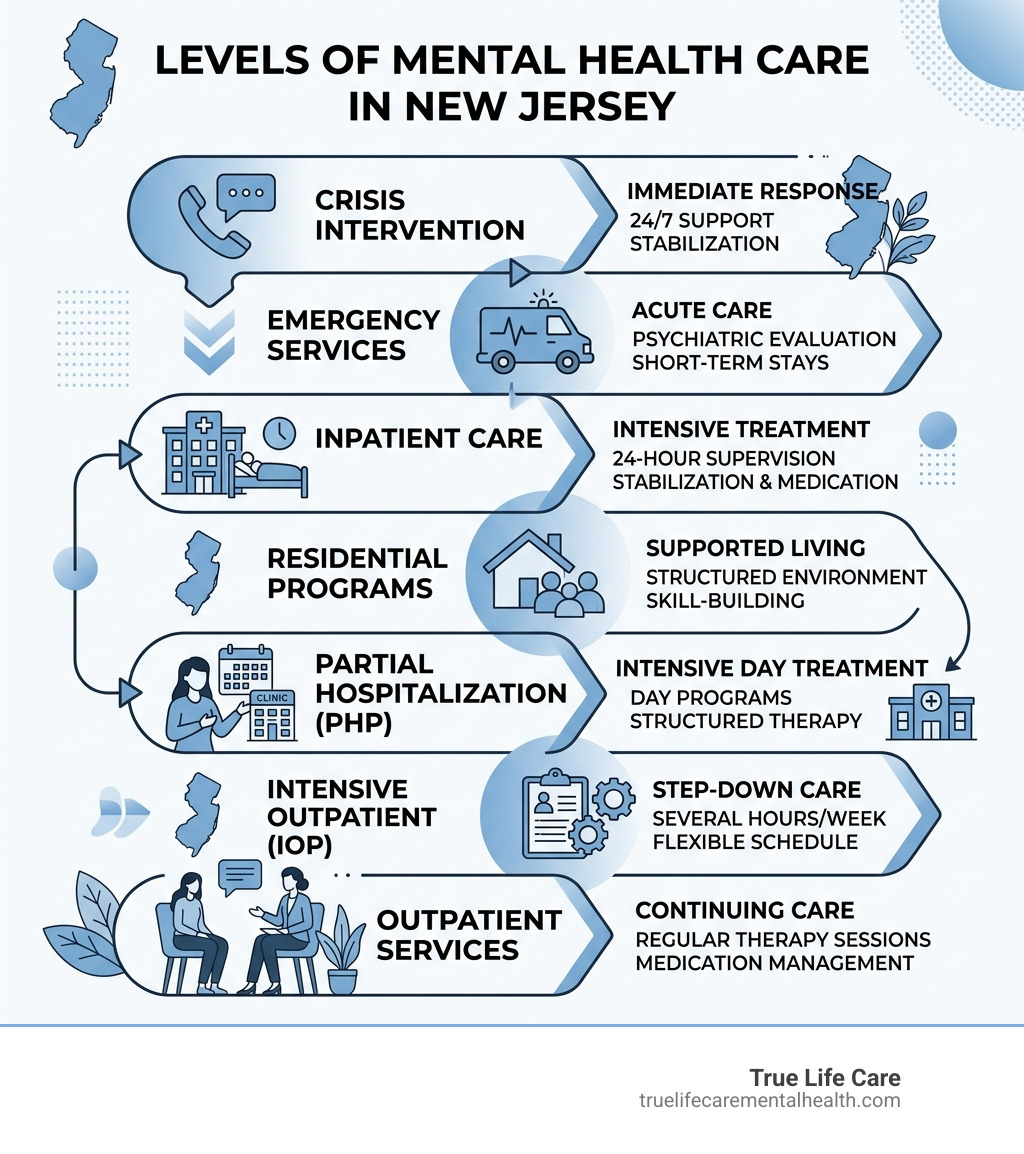
The distinction between acute inpatient care and residential care is vital. Acute inpatient care is designed for short-term, intensive treatment—usually when someone is in immediate danger to themselves or others. The goal here is stabilization.
Residential care or long-term rehabilitation is more about the “marathon” of recovery. These programs provide a structured environment where individuals can work on coping skills and relapse prevention over several weeks or months. Many mental hospitals in NJ also offer medical detox for those struggling with substance use alongside mental health issues. You can find more details on these variations in our guide to Mental Health Facilities New Jersey.
Specialized Outpatient Programs
Not everyone requires a hospital bed to get better. Many people find success through “step-down” programs like:
- Partial Hospitalization Programs (PHP): These offer full-day treatment (usually 5–6 hours) while allowing the individual to return home in the evening.
- Intensive Outpatient Programs (IOP): These are more flexible, typically involving 9–15 hours of therapy per week, making it easier to maintain work or school commitments.
State-Operated Mental Hospitals in NJ: Locations and Capacity
The New Jersey Department of Health operates four major inpatient psychiatric hospitals. These facilities are dedicated to a mission of wellness and recovery, serving a designated population across the state. They are often the primary choice for individuals requiring extended stays or specialized forensic care. You can learn more about the state’s role via the Integrated Health | Division of Behavioral Health Services website or check out our list of Top Inpatient Mental Health Facilities In Nj To Consider.
Ancora Psychiatric Hospital
Located on a massive 680-acre campus in South Jersey, Ancora Psychiatric Hospital is a 600-bed adult inpatient facility. It utilizes multidisciplinary teams—including psychiatrists, social workers, and nurses—to provide comprehensive care. Ancora features specialized units for acute and chronic psychiatric care, gero-psychiatric needs (for seniors), and dual diagnosis treatment for those with both mental illness and developmental disabilities.
Greystone Park Psychiatric Hospital
Greystone Park Psychiatric Hospital is a 506-bed facility that moved into a modern, state-of-the-art building in 2008. Beyond its clinical services, it is well-known for its APA-accredited psychology internship program. Greystone serves a large portion of the northern New Jersey population, providing a structured environment for recovery.
Trenton Psychiatric Hospital and Ann Klein Forensic Center
Trenton Psychiatric Hospital (TPH) is a 400-bed facility with a rich history dating back to the 1840s. It provides holistic care, focusing on individualized patient goals.
On the same grounds sits the Ann Klein Forensic Center, a specialized 200-bed facility. This center serves individuals who suffer from mental illness and are involved in the legal system, requiring a high-security environment for both treatment and public safety.
Leading Private Behavioral Health Centers and Specialized Services
While state hospitals handle long-term and forensic cases, private mental hospitals in NJ often lead the way in acute care and specialized behavioral health. These centers frequently hold high accreditations, such as the Joint Commission’s Gold Seal of Approval, and offer a more diverse range of therapeutic approaches. To see how these fit into the broader NJ landscape, visit Munificent Behavioral Hospitals.
Comprehensive Care Options
Private facilities in NJ focus on holistic well-being. This means they don’t just look at a diagnosis; they look at the whole person. Many high-quality private centers provide integrated medical and psychiatric services. This is crucial because physical health and mental health are deeply intertwined.
Specialized Programs for Youth and Adults
Age-specific care is a hallmark of top-tier private facilities.
- Youth & Adolescents: Specialized facilities across the state offer dedicated units for children and teens. These often include on-site schooling so students don’t fall behind academically while receiving treatment.
- Adults & Seniors: Specialized programs for older adults (geropsychiatry) focus on issues like dementia, depression, and late-life transitions.
- Dual Diagnosis: Many NJ centers specialize in treating co-occurring disorders, where mental health issues and substance abuse are treated simultaneously for a higher chance of long-term success.
Accessing Emergency Psychiatric Services and Crisis Support
In a crisis, every second counts. New Jersey has streamlined its emergency services to ensure that help is available 24/7. Whether you are in Bergen County or Middlesex County, there is a dedicated system ready to respond. You can find a full Directory of Morris County Mental Health Services for regional specifics, but some services are available statewide.
Immediate Intervention and Stabilization
The first line of defense is the 988 Suicide & Crisis Lifeline. By calling or texting 988, you are connected to trained counselors who can provide immediate support. In New Jersey, we also utilize Psychiatric Emergency Screening Services (PESS). These are mobile response teams or walk-in centers that can evaluate an individual and determine if hospitalization is necessary.
Alternatives to the Emergency Room
Many people default to the ER during a mental health crisis, but specialized crisis centers are often a better choice. They offer:
- Specialized Training: Staff are specifically trained in de-escalation and psychiatric stabilization.
- Cost-Savings: Crisis centers can be significantly less expensive than a traditional ER visit.
- Immediate Relief: New Jersey’s Children’s System of Care offers mobile response that can arrive on-site within one hour.
Navigating Admissions, Visiting Hours, and Discharge Planning
The process of entering or visiting one of the mental hospitals in NJ can feel overwhelming. Understanding the protocols helps reduce anxiety for both patients and their families.
Visiting Protocols for Mental Hospitals in NJ
Most facilities have strict but necessary visiting rules to maintain a therapeutic environment.
| Feature | Common Protocol |
|---|---|
| Scheduling | Most require 24-48 hours’ notice via a unit administrator. |
| Safety | Expect a security screening; items like cell phones are often restricted. |
| Virtual Visits | Many NJ hospitals now offer Zoom or FaceTime options. |
| Hours | Typically weekday evenings (e.g., 6 PM – 8 PM) and weekend afternoons. |
Leading behavioral health facilities emphasize that family involvement is a key predictor of recovery success. Always check the specific hospital’s website for the most current hours, as they can change based on unit needs.
Community Reintegration and Aftercare
Recovery doesn’t end when a patient is discharged. In fact, the first seven days after leaving a hospital are the most critical. Top mental hospitals in NJ employ social workers and discharge planners who ensure:
- A follow-up appointment is scheduled within 7 days.
- Medication supplies are provided or sent to a local pharmacy.
- Support systems, such as housing or outpatient therapy (PHP/IOP), are in place.
Frequently Asked Questions about Mental Hospitals in NJ
How to choose mental health support for adolescents in NJ?
Look for facilities that offer age-specific units (usually 12–17) and have an educational component that allows students to keep up with schoolwork. It is also important to choose a program that heavily involves the family in the therapeutic process.
How do I access 24/7 crisis support in New Jersey?
The fastest way is to call or text 988. For youth-specific crises, the Children’s System of Care (PerformCare) provides mobile response teams that can come to your home.
What is the difference between state and private mental hospitals in NJ?
State hospitals (like Greystone or Ancora) are typically for longer-term care or forensic cases. Private behavioral health centers usually handle acute stabilization, private insurance, and offer a wider variety of specialized outpatient programs.
Conclusion
At True Life Care, we believe that recovery is not just possible—it is expected. Navigating mental hospitals in NJ can be a daunting task, but you don’t have to do it alone. Whether you are looking for the intensive support of an inpatient facility or the flexibility of our personalized PHP and IOP programs, our goal is to provide evidence-based, holistic care that empowers you for the long haul.
We serve communities across New Jersey, from Bergen and Passaic to Hunterdon and Mercer counties. Our approach combines expert psychiatric care with a warm, supportive environment designed to treat the whole person, not just the symptoms.
If you or a loved one are ready to take the next step toward a healthier, more balanced life, we are here to help. Start your journey to wellness at our Mental Health Facilities New Jersey and discover a path forward built on compassion, respect, and proven clinical excellence.