
Trauma Informed Care NJ: Best 2026 Guide
Why Trauma-Informed Care NJ Matters for Your Recovery
Trauma informed care NJ is a specialized approach to treatment that recognizes how traumatic experiences affect your mental health, physical well-being, and daily life. If you’ve experienced trauma—whether from childhood adversity, violence, accidents, or other distressing events—this approach can help you heal without re-traumatization.
Quick Answer: What You Need to Know
- What it is: A treatment framework that asks “What happened to you?” instead of “What’s wrong with you?”
- Core principles: Safety, trust, choice, collaboration, empowerment, and cultural sensitivity
- Where to find it: NJ state agencies, schools, healthcare providers, and specialized treatment centers
- Who it helps: Anyone affected by trauma, including those with PTSD, anxiety, depression, or substance use disorders
- How to access: Contact NJ 211, your insurance provider, or a trauma-informed treatment center like True Life Care
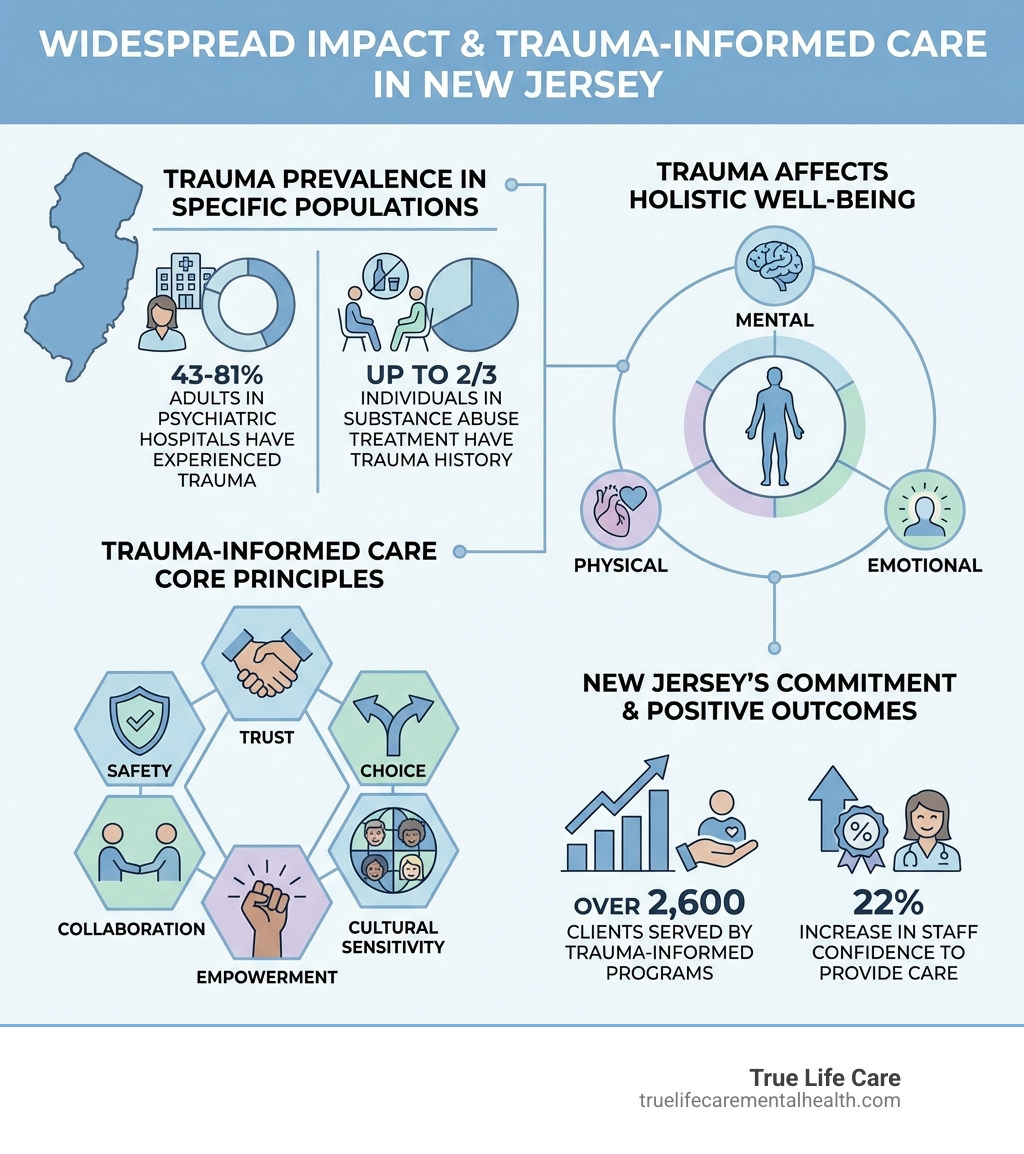
Trauma is far more common than most people realize. Research shows that 43-81% of adults in psychiatric hospitals and up to two-thirds of individuals in substance abuse treatment have experienced trauma. In New Jersey alone, state-funded programs have delivered trauma-informed care to over 2,600 clients in recent years.
The effects of trauma don’t just live in your mind—they affect your body, your relationships, and your ability to trust others. Traditional therapy approaches sometimes miss this connection, focusing only on symptoms rather than root causes. That’s why New Jersey has made a system-wide commitment to trauma-informed practices across schools, healthcare facilities, and community services.
This shift represents a fundamental change in how we understand and treat mental health and addiction. Instead of blaming individuals for their struggles, trauma informed care NJ recognizes that your reactions are normal responses to abnormal experiences. It creates safe spaces where you can heal at your own pace, regain control, and build resilience.
Whether you’re dealing with post-traumatic stress disorder (PTSD), addiction, anxiety, or the lasting effects of childhood adversity, understanding trauma-informed care can help you find the right support. This guide will help you steer your options in New Jersey and make informed decisions about your treatment.
Understanding the Foundations of Trauma-Informed Care
At its heart, trauma informed care NJ is about understanding. It’s about realizing that deeply distressing experiences can have long-lasting effects on a person’s physical, emotional, and psychological well-being. It’s not just about what happened, but how those events shaped who we are and how we interact with the world. This approach provides a more effective path to healing because it addresses the root causes of distress, rather than just the symptoms.

The Substance Abuse and Mental Health Services Administration (SAMHSA) defines a trauma-informed approach with three key elements:
- Realizing the prevalence of trauma: Understanding how common traumatic experiences are.
- Recognizing how trauma affects all individuals: This includes those receiving care and the workforce providing it.
- Responding by putting this knowledge into practice: Integrating this understanding into every aspect of service delivery.
This framework moves us towards a “strengths-based approach” and “healing-centered engagement,” where we focus on an individual’s resilience and capacity for growth, rather than just their wounds. It’s a vital shift, especially for those seeking mental health and addiction services across New Jersey.
What is Trauma-Informed Care?
Trauma, as defined by the American Psychological Association, is the emotional response to a terrible event. But it’s more than just an emotion; it’s a deeply distressing experience that can leave lasting marks. It can result from a single event, a series of events, or ongoing circumstances that an individual experiences as physically or emotionally harmful or threatening. What makes an event traumatic isn’t just the objective facts, but how each person internalizes the emotional experience.
Trauma informed care NJ is both an organizational and clinical approach. For an organization, it means making a commitment to change culture and policies to be sensitive to the impact of trauma. For individuals, it means understanding how trauma affects them and creating space for change. The ultimate focus is on creating safety, promoting healing, and acknowledging trauma’s pervasive impact on overall well-being. By doing so, we can help people in New Jersey not just cope, but truly thrive. For more insights into understanding child trauma, visit Understanding Child Trauma.
The Six Guiding Principles of a Trauma-Informed Approach
At the core of trauma informed care NJ are six guiding principles that shape every interaction and decision. These principles ensure that services are delivered in a way that promotes healing and avoids re-traumatization:
- Safety: This is paramount. It means creating both physical and emotional safety for everyone involved—clients and staff alike. Safe environments are welcoming, hospitable, and engaging, minimizing any potential triggers. It’s about ensuring individuals feel secure enough to begin their healing journey.
- Trustworthiness and Transparency: This involves building trust through clear, consistent policies and honest communication. It means being upfront about processes and decisions, maintaining appropriate boundaries, and minimizing the risk of re-traumatization by being predictable and reliable.
- Peer Support: Incorporating peer support acknowledges the healing power of shared experience. Connecting individuals with others who have faced similar challenges can foster a sense of community, validation, and hope, demonstrating that recovery is possible.
- Collaboration and Mutuality: This principle emphasizes an inclusive, rather than top-down, approach. It means fostering relationships where both clients and providers learn from each other. Treatment planning becomes a collaborative effort, respecting the individual’s expertise in their own life and current struggles.
- Empowerment, Voice, and Choice: This is about promoting resilience by ensuring individuals have input into their treatment decisions. It involves supporting autonomy, providing opportunities for participation, and fostering a belief in one’s own competence to grow and heal. It’s about helping individuals reclaim their power.
- Cultural, Historical, and Gender Issues: This principle recognizes that trauma can be deeply intertwined with cultural, historical, and gender contexts. It means providing care that is sensitive and responsive to these unique factors, avoiding stereotypes, and respecting diverse backgrounds to deliver truly individualized and effective support.
How Trauma-Informed Care Differs from Traditional Therapy
While traditional therapy often focuses on diagnosing and treating specific mental health conditions, trauma informed care NJ takes a broader, more holistic view. It acknowledges that many behaviors and symptoms are adaptive responses to trauma, not inherent flaws. Here’s a quick look at some key differences:
| Feature | Traditional Therapy | Trauma-Informed Care |
|---|---|---|
| Primary Question | “What’s wrong with you?” | “What happened to you?” |
| Focus | Symptom reduction, diagnosis-specific treatment | Holistic healing, safety, empowerment, root causes |
| Environment | May not explicitly consider trauma triggers | Designed to be safe, welcoming, and trigger-reducing |
| Provider Role | Expert, directive | Collaborator, facilitator, empathetic guide |
| Client Experience | May feel judged or re-traumatized | Empowered, respected, actively involved in decision-making |
| Treatment Planning | Often prescriptive, driven by diagnosis | Collaborative, individualized, flexible, client-led pace |
| Universal Precautions | Not always a central tenet | Assumes everyone may have a trauma history; universal screening |
Trauma informed care NJ prioritizes creating an environment where individuals feel safe enough to explore their experiences. This means considering physical spaces, staff interactions, and communication styles. We aim for universal precautions, meaning we approach every person with an understanding that they might have experienced trauma, and we adapt our services accordingly to avoid re-traumatization. This collaborative approach respects your autonomy and helps you regain control over your healing journey.
The Landscape of Trauma and Healing in New Jersey
New Jersey, like any state, has its share of residents impacted by trauma. The need for trauma informed care NJ is significant, driven by various factors, including the pervasive effects of Adverse Childhood Experiences (ACEs). It’s a reality that we, as a community, are increasingly recognizing and addressing.

Across New Jersey, mental health statistics reveal a clear picture: many individuals grapple with mental health challenges, often compounded by co-occurring disorders, where mental health issues intertwine with substance use. The link between substance use and trauma is particularly strong, with many turning to substances as a coping mechanism. The good news is that our state is actively acknowledging this issue and working towards comprehensive solutions.
The Impact of Adverse Childhood Experiences (ACEs) in New Jersey
Adverse Childhood Experiences (ACEs) are potentially traumatic events that occur before the age of 18. These aren’t just isolated incidents; they can be profound and shape an individual’s life trajectory. Examples of ACEs include experiencing violence or abuse, witnessing a household member struggle with substance use or mental health issues, or experiencing parental separation or incarceration.
The long-term health consequences of ACEs are well-documented, impacting physical, mental, and behavioral health well into adulthood. These experiences can fundamentally alter brain development, affecting how individuals learn, think, and behave. The Robert Wood Johnson Foundation offers valuable insights into this through The Truth About ACEs Infographic. To address this, New Jersey has launched initiatives like Actions 4 ACEs, a statewide effort to build awareness and empower adults to help impacted children heal.
Fostering Resilience with Positive Childhood Experiences (PCEs)
While ACEs highlight the challenges, Positive Childhood Experiences (PCEs) offer a powerful counter-narrative and a path to resilience. PCEs are experiences that build protective factors and foster healthy development. These include feeling connected to family and community, having a sense of belonging, and growing up in safe, stable, and supportive environments.
Fostering PCEs is crucial for preventing the negative impacts of ACEs and promoting healing. When children experience consistent love, support, and opportunities for growth, they develop the resilience needed to steer life’s inevitable challenges. This emphasis on nurturing positive experiences is a cornerstone of a truly healing-centered approach, as discussed in reports like Balancing Adverse Childhood Experiences (ACEs) with HOPE.
The Connection Between Trauma, Mental Health, and Substance Use Recovery
The relationship between trauma, mental health conditions, and substance use disorders is a complex but undeniable one, especially here in New Jersey. It’s not uncommon for individuals seeking mental health or addiction treatment to have a history of trauma. In fact, as mentioned earlier, a significant majority of those in substance abuse treatment have experienced trauma.
Often, substance use can begin as a coping mechanism—a way to self-medicate the pain, anxiety, or emotional dysregulation that stems from traumatic experiences. Unfortunately, this can lead to a vicious cycle, where the substance use itself creates more problems and layers of trauma. That’s why integrated treatment for co-occurring disorders is so vital. It means addressing both the trauma and the substance use simultaneously, rather than treating them as separate issues.
Furthermore, for those on the path to recovery, the detox process itself can be a vulnerable time, potentially triggering past trauma. This highlights the importance of a trauma-informed detox approach, which prioritizes safety, comfort, and emotional support to prevent re-traumatization. Understanding Why Trauma-Informed Detox is Critical for Long-Term Recovery can make a significant difference in an individual’s journey towards lasting well-being.
Finding the Best Trauma-Informed Care NJ Providers
Choosing the right provider for trauma informed care NJ can feel like a daunting task, but it’s a critical step toward healing. A good provider won’t just offer therapy; they’ll create an entire environment that supports your recovery, understanding that safety and trust are foundational.
When evaluating providers, consider these points:
- Staff Training: Are all staff, from administrative to clinical, trained in trauma-informed principles?
- Safe Environment: Does the facility feel physically and emotionally safe? Are triggers minimized?
- Collaborative Approach: Do they involve you in your treatment plan, respecting your choices and voice?
- Holistic View: Do they consider your overall well-being, including physical, emotional, and social aspects?
Recognizing the Signs and Symptoms of Trauma
Trauma manifests differently in everyone, but recognizing its signs and symptoms is the first step toward seeking help. These can be grouped into several categories:
- Emotional symptoms: You might experience persistent anxiety, depression, irritability, sudden mood swings, or a general sense of hopelessness. Anger outbursts, fear, and difficulty regulating emotions are also common.
- Behavioral symptoms: These can include avoidance of places, people, or activities that remind you of the trauma. You might also notice increased impulsivity, social isolation, or changes in sleep and eating patterns. Substance use can also be a behavioral symptom, as individuals may try to self-medicate.
- Physical symptoms: Trauma isn’t just in your head; it can affect your body too. Chronic fatigue, headaches, digestive issues, muscle tension, and chronic pain are common physical manifestations. You might also experience a heightened startle response or difficulty relaxing.
- Cognitive symptoms: Memory problems, difficulty concentrating, brain fog, and intrusive thoughts or flashbacks related to the traumatic event are frequent cognitive symptoms. You might also struggle with decision-making or feel detached from reality.
If you recognize these signs in yourself or a loved one, these are normal responses to abnormal experiences. Seeking trauma informed care NJ can provide the understanding and tools needed to process these symptoms and move towards healing.
How Quality Trauma-Informed Care NJ Treats PTSD and Other Conditions
Quality trauma informed care NJ offers a range of specialized therapies designed to help individuals process traumatic experiences and manage their symptoms effectively. These aren’t one-size-fits-all solutions; rather, they are custom to your unique needs and healing journey.
Some of the most effective and evidence-based therapies include:
- EMDR Therapy (Eye Movement Desensitization and Reprocessing): This structured therapy helps individuals process traumatic memories by focusing on them while engaging in bilateral stimulation (like eye movements). It can reduce the vividness and emotional charge of distressing memories. Learn more about EMDR Therapy for Trauma Recovery.
- Cognitive Behavioral Therapy (CBT): CBT helps you identify and challenge negative thought patterns and behaviors that developed as a result of trauma. It equips you with coping strategies to manage anxiety, depression, and other symptoms. We offer specialized Trauma-Focused Therapy for Adults.
- Dialectical Behavior Therapy (DBT): Often used for complex trauma, DBT focuses on teaching skills in mindfulness, emotional regulation, distress tolerance, and interpersonal effectiveness. It’s particularly helpful for managing intense emotions and improving relationships. Explore Dialectical Behavior Therapy for PTSD.
- Somatic Therapies: These body-centered approaches help release trauma stored in the body. Techniques like breathwork and mindful movement can help you reconnect with your physical sensations and discharge pent-up stress and tension.
- Art Therapy: A creative and expressive outlet, art therapy allows individuals to explore and process emotions and experiences that may be difficult to put into words. It can be a powerful tool for self-findy and healing. We offer Art Therapy for Trauma and Art Therapy Exercises for Trauma Recovery.
For those requiring more intensive support, inpatient treatment for PTSD is also an option. This provides a structured, safe environment where individuals can focus entirely on their recovery. Find more about Inpatient Treatment for PTSD.
How to Access Trauma-Informed Care NJ Services
Accessing trauma informed care NJ services can seem overwhelming, but New Jersey offers several pathways to support you. Here’s how you can begin:
- Start with a Primary Care Provider: Your family doctor can be a great first point of contact. They can assess your needs, offer initial guidance, and provide referrals to mental health specialists who practice trauma-informed care.
- Use NJ 211 for Community Resources: NJ 211 is a fantastic resource for connecting with various state and community services. You can dial 211 (or 1-877-652-1148) or use their text, email, and chat options for 24-hour information on local resources, including mental health support. Visit NJ 211 (Access to Community Resources) for more information.
- Contact the NJ Department of Human Services (DHS): The DHS oversees many mental health and addiction services in the state and can provide information on available programs and initiatives related to trauma-informed care.
- Check Your Insurance: Contact your insurance provider to understand your mental health benefits and find in-network trauma-informed care providers.
- Reach Out to Specialized Treatment Centers: Facilities like True Life Care specialize in trauma-informed approaches and can guide you through the assessment and treatment process.
Here’s a simplified list of steps to help you find a provider:
- Consult your doctor for referrals.
- Call or text NJ 211 for local resources.
- Verify your insurance coverage for mental health services.
- Research local treatment centers that explicitly state their commitment to trauma-informed principles.
- Ask about staff training and therapeutic modalities offered.
- Schedule an initial consultation to gauge comfort and fit.
New Jersey’s System-Wide Commitment to Healing
New Jersey is not just talking about trauma informed care NJ; it’s actively embedding it into the fabric of its systems. State agencies, educational institutions, and healthcare providers are all working to create a more supportive and healing environment for residents. This commitment reflects a growing understanding that addressing trauma is not just a clinical necessity, but a societal one.
Organizations like the NJ Department of Children and Families (DCF) and the Department of Human Services (DHS) play crucial roles in promoting these practices. Schools across the state are implementing initiatives to support students impacted by adversity. Professional development opportunities are expanding, ensuring that practitioners are equipped with the latest trauma-informed knowledge and skills. While challenges exist, the successes are evident: state-funded programs have served over 2,600 clients, and staff self-efficacy in providing trauma-informed care has increased by up to 22%.
Trauma-Informed Practices in New Jersey Schools
Our schools are on the front lines of addressing childhood trauma, recognizing that students bring diverse experiences—sometimes adverse or traumatic—that can impact their academic and social-emotional development. New Jersey has several initiatives aimed at creating trauma-sensitive and healing-centered school environments:
- Handle with Care NJ program: This program aims to improve communication between law enforcement and schools. If law enforcement is aware that a child has been exposed to a traumatic event, they can notify the school, allowing educators to provide support without knowing the details of the incident.
- DREAMS Program: Through a partnership with the NJ Department of Children and Families, the NJDOE supports the DREAMS Program, which offers trauma-informed and healing-centered training and resources to school districts throughout the state.
- NJ Tiered Systems of Support (NJTSS): This framework integrates trauma-informed support within broader multi-tiered systems, ensuring that students receive appropriate levels of intervention based on their needs.
- Restorative practices: These practices focus on fostering healthy relationships and positive discipline, helping to build safe learning environments and resolve conflicts in a way that promotes healing rather than punishment.
These efforts are part of a larger movement to establish supportive, positive, and relationship-centered learning environments for all students. You can explore more about these initiatives at Trauma-Informed & Healing-Centered Practices in NJ Schools.
The Role of State Agencies: DCF and DHS
The New Jersey Department of Children and Families (DCF) and the Department of Human Services (DHS) are pivotal in advancing trauma informed care NJ throughout the state.
- NJ Department of Children and Families (DCF): DCF is committed to trauma-informed practices, ensuring that their services for children and families are delivered with an understanding of trauma’s impact. Their Office of Resilience plays a key role in this, aiming to create a system that promotes healing and well-being. More details on DCF’s initiatives can be found at Trauma Informed Practices – DCF.
- NJ Department of Human Services (DHS): The DHS is actively working to infuse trauma-informed practices into the state’s mental health and addiction services. They have developed a “Blueprint for Action” adapted from SAMHSA’s toolkit, guiding the transition to a trauma-informed system. This includes promoting healing-centered workplaces and utilizing tools like the TRUST Assessment Tool, which helps organizations identify ways to promote inclusive, healing-centered practices. The DHS emphasizes that recovery from trauma is possible and that staff well-being is crucial to providing effective care. Learn more about their commitment at NJ Department of Human Services Trauma-Informed Care Initiative.
Training and Development for Professionals
For trauma informed care NJ to be effective, professionals must be adequately trained and supported. New Jersey offers various opportunities for individuals and organizations to deepen their understanding and skills in this critical area:
- Rutgers Certificate Program: Rutgers School of Social Work offers a Certificate Program in Trauma Response and Crisis Intervention. This program is designed for clinicians and practitioners from various disciplines who wish to improve their knowledge and skills in trauma response.
- Trauma-Focused Cognitive-Behavioral Therapy (TF-CBT) Web Training: TF-CBT is an evidence-based treatment for children and adolescents impacted by trauma. Web-based training programs, such as TF-CBTWeb, are available to help professionals gain certification in this specialized modality.
- NJ State Bar Foundation Trainings: The NJ State Bar Foundation provides Trauma Sensitive Schools trainings at no cost for NJ educators, further integrating trauma-informed approaches into the educational system.
The Division of Mental Health and Addiction Services (DMHAS) also offers extensive resources and training for providers, emphasizing that staff competence in trauma-informed services is vital. These initiatives ensure that the workforce across New Jersey is equipped to provide compassionate and effective care. For more information on training opportunities, visit DMHAS Trauma Informed Care (TIC) Trainings.
Frequently Asked Questions about Trauma-Informed Care in NJ
Is PTSD considered a disability?
Yes, Post-Traumatic Stress Disorder (PTSD) can be classified as a disability under certain conditions. If PTSD significantly interferes with an individual’s daily life and functioning—impacting their ability to work, engage in social activities, or perform daily tasks—they may be eligible for accommodations or support under disability classifications.
What are some common triggers for PTSD?
PTSD triggers are highly personal and can vary widely from one individual to another. However, common triggers often include sensory reminders of the traumatic event, such as specific sounds, smells, sights, or even tastes. Other triggers can be anniversaries of the trauma, discussions about similar experiences, or situations that evoke feelings of helplessness, fear, or lack of control, which can provoke intense emotional responses and discomfort.
What should I expect during my first trauma-informed therapy session?
During your first trauma informed care NJ therapy session, you should expect a strong focus on creating a sense of safety and trust. The therapist will likely explain the process, answer any questions you have, and collaborate with you on setting initial goals for your treatment. They will gather your history in a sensitive, non-judgmental way, understanding that you may not be ready to share all the details of your trauma immediately. The pace will be set by you, ensuring you feel empowered and in control, without any pressure to disclose more than you are comfortable with.
Your Path to Healing Starts Here
Choosing the right care is a critical step toward recovery from trauma. A trauma informed care NJ approach ensures that your experiences are validated and your healing journey is supported with safety, respect, and empowerment. By understanding what to look for in a provider and leveraging the growing resources in New Jersey, you can find a path to lasting well-being. True Life Care embodies these principles, offering expert, compassionate, and personalized treatment to help you reclaim your life. Find expert mental health care in New Jersey