
Mental Health Treatment in Middlesex county NJ 2026 Guide
Why Accessible Mental Health Care Matters in Your Community
Mental Health Treatment in Middlesex County NJ offers a comprehensive network of services spanning crisis intervention, outpatient therapy, intensive programs, and specialized care for all ages. Here’s what you need to know:
Quick Access Guide:
- Crisis Support: Call 988 (24/7) or NJ Hopeline at 1-855-654-6735
- County Referrals: Office of Human Services – 732-745-4186
- Wait Times: Less than 1 week for new client intake at county centers
- Who’s Eligible: Middlesex County residents ages 5 and up
- Treatment Types: Inpatient, Partial Care, Intensive Outpatient (IOP), Traditional Outpatient, Telehealth
Mental health conditions affect countless adults and families across New Jersey. The good news? Evidence-based research shows that with appropriate supports and services, mental health challenges are treatable, and achieving wellness and recovery is possible.
Middlesex County has built a robust continuum of care over decades. County-run mental health centers have decades of experience and employ numerous licensed clinicians including psychiatrists, advanced practice nurses, and therapists. They’re ready to help with depression, anxiety, PTSD, bipolar disorder, and more.
But navigating this system can feel overwhelming. Where do you start? What level of care do you need? How do you access services quickly? Whether you’re facing a crisis, seeking ongoing therapy, or supporting a loved one, understanding your options is the first step toward recovery.
This guide breaks down everything available in Middlesex County—from emergency response to specialized programs for teens and seniors, from individual therapy to family support groups. You’ll learn how to access care, what to expect from different treatment levels, and how integrated approaches address both mental health and addiction together.
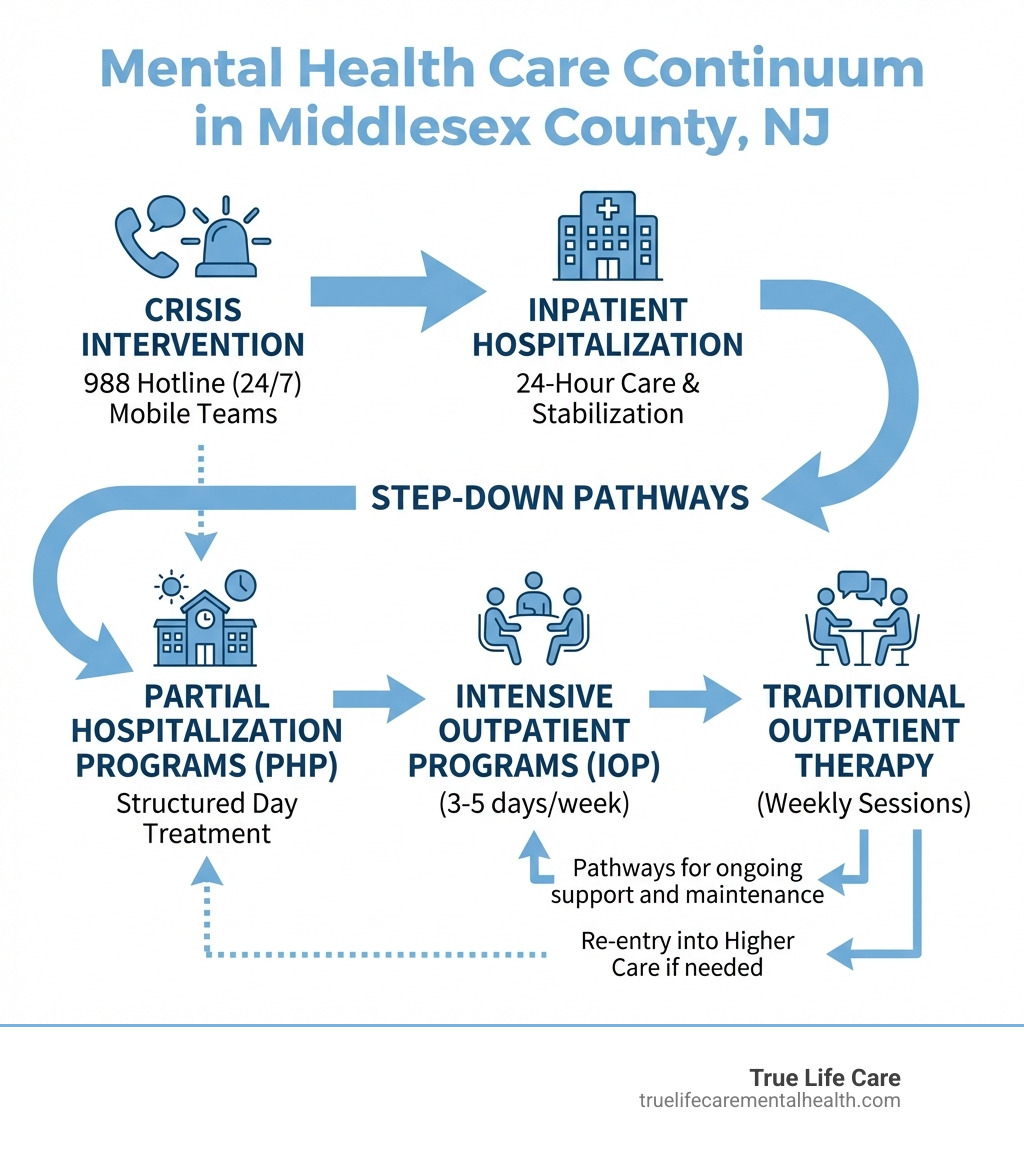
Understanding the Spectrum of Care in Middlesex County
Middlesex County, NJ, offers a robust and diverse spectrum of mental health services, ensuring that residents have access to the care they need. From immediate crisis intervention to long-term therapeutic support, the county is committed to providing pathways to wellness and recovery. The Division of Mental Health Services, under the Middlesex County Office of Human Services, acts as a clearinghouse for information, monitoring all mental health services and operating as a vital hub for referrals and community education.
Seeking help can feel like a maze, but the system is designed to be supportive and accessible. Many services, including county-run centers, report short wait times: often less than a week for a new client intake appointment and less than two weeks for an active client’s psychiatric appointment. This commitment to timely care is crucial when you or a loved one needs support.
Telehealth services have also become a cornerstone of modern mental health care in Middlesex County, offering flexibility and convenience. Many providers are actively providing services via telehealth platforms, including virtual groups and individual sessions. This means you can often access high-quality care from the comfort of your home, helping to remove barriers like transportation or scheduling conflicts.
What are the Different Levels of Care?
Understanding the various levels of mental health care is key to finding the right fit for your needs. A custom approach works best, recognizing that not everyone requires the same intensity of support. Here is a breakdown of the common levels of care available in Middlesex County:
| Level of Care | Intensity | Time Commitment | Ideal Candidate |
|---|---|---|---|
| Inpatient Care | Highest level of supervision and support | 24/7, typically short-term (days to weeks) | Individuals in acute crisis, at risk to themselves or others, or needing intensive stabilization. |
| Partial Hospitalization (PHP) | Highly structured, medical oversight | 5-7 days/week, several hours per day | Individuals needing intensive treatment but not 24/7 supervision; stepping down from inpatient or as an alternative to hospitalization. |
| Intensive Outpatient (IOP) | Structured, therapeutic focus | 3-5 days/week, 3-4 hours per day | Individuals needing significant support to manage symptoms and learn coping skills while maintaining daily responsibilities like work or school. |
| Traditional Outpatient Therapy | Flexible, individual/group sessions | 1-2 times/week, 1 hour per session | Individuals with stable symptoms seeking ongoing support, managing mild-to-moderate conditions, or maintaining long-term wellness. |
| Crisis/Hospital Diversion Services | Immediate, short-term intervention | As needed, usually short-term (hours to days) | Individuals experiencing an acute mental health crisis but who can be safely stabilized and linked to less intensive services without hospitalization. |
For example, county-run centers may offer an Outpatient Department and a Partial Care Program, providing a continuum of support for residents. Similarly, various providers in the area offer robust Intensive Outpatient Programs (IOP) that can be attended three or five days a week, offering flexibility to integrate treatment into your daily life.
Common Therapy Modalities and Approaches
When you engage in Mental Health Treatment in Middlesex County NJ, you will find a variety of evidence-based therapy modalities designed to help you process emotions, change thought patterns, and develop healthier coping mechanisms. Many leading providers in the county focus on treating the whole person, not just the symptoms.
Common modalities include:
- Individual Psychotherapy: One-on-one sessions with a licensed therapist, providing a safe and confidential space to explore personal challenges, develop insights, and work towards specific goals. It is an effective way to confront issues at their roots, whether they stem from anxiety, depression, or past trauma.
- Group Therapy: Led by a therapist, these sessions involve a small group of individuals sharing similar experiences. Group therapy fosters a sense of community, reduces feelings of isolation, and allows participants to learn from each other’s perspectives, developing coping and social skills in a supportive environment.
- Family Counseling: When mental health or addiction issues impact the family unit, family counseling can be invaluable. It helps mend strained relationships, restore trust, improve communication, and address underlying family dynamics that may contribute to distress.
- Cognitive Behavioral Therapy (CBT): A highly effective, goal-oriented therapy that helps individuals identify and challenge negative thought patterns and behaviors, replacing them with more positive and realistic ones. It is often used for depression, anxiety, and PTSD.
- Dialectical Behavioral Therapy (DBT): An adaptation of CBT, DBT focuses on teaching skills in four key areas: mindfulness, distress tolerance, emotion regulation, and interpersonal effectiveness. It is particularly useful for individuals struggling with intense emotions, self-harm, or personality disorders.
- Trauma-Informed Therapy: This approach recognizes the widespread impact of trauma and understands potential paths for recovery. It emphasizes physical and emotional safety, trustworthiness, peer support, collaboration, empowerment, and cultural responsiveness.
- Motivational Interviewing: A counseling approach that helps individuals resolve ambivalent feelings and insecurities to find the internal motivation they need to change their behavior.
- Medication Management: Often used as an adjunct to therapy, psychiatric medication can help manage severe symptoms of mental illness, allowing individuals to engage more fully in therapeutic work. Licensed psychiatrists and advanced practice nurses oversee medication, adjusting dosages as needed to support optimal outcomes.
Finding the Right Outpatient Mental Health Treatment in Middlesex County NJ
Finding the right outpatient Mental Health Treatment in Middlesex County NJ is a crucial step towards well-being. Outpatient services offer flexibility, allowing you to receive care while continuing with your daily life, work, or school. Many centers in the county employ licensed therapists, psychiatrists, and advanced practice nurses, supporting expert care.
When you seek outpatient treatment, you can expect a personalized approach. A detailed evaluation before treatment helps create an individual plan of care custom to your unique needs. This personalized care might include individual psychotherapy, group therapy, and medication management, all designed to address conditions such as:
- Depression
- Anxiety disorders
- Post-Traumatic Stress Disorder (PTSD)
- Bipolar disorder
- Personality disorders
- Obsessive-Compulsive Disorder (OCD)
- ADHD/ADD
- Trauma
- Marital and family issues
- Problems of daily living
At True Life Care, we champion a holistic approach to outpatient mental health and addiction treatment. Our Intensive Outpatient Programs (IOP) and Partial Hospitalization Programs (PHP) combine evidence-based therapy methods with personalized care plans. Our Middlesex County NJ services are part of a broader New Jersey network that includes locations across counties such as Bergen, Hunterdon, Mercer, Morris, Passaic, Sussex, and Warren, as well as multiple local communities.
We understand that every person’s journey is unique, which is why our programs are flexible and designed to support you in developing coping mechanisms and life skills for lasting recovery. Our clinicians provide expert psychiatric care alongside therapeutic support, with options for in-person and telehealth services where appropriate. The goal is to treat the whole person and empower you for long-term well-being with a compassionate team at your side.
Navigating Mental Health Treatment in Middlesex County NJ
Understanding the administrative backbone of mental health services in Middlesex County can help you access resources more effectively. The Middlesex County Office of Human Services plays a pivotal role, with its Mental Health Administration overseeing the planning, monitoring, and promotion of mental health services. They serve as a crucial clearinghouse for information and referrals, ensuring residents can connect with appropriate care.
Advocacy and consumer empowerment are also central to Middlesex County’s approach. The Middlesex County Mental Health Board, comprised of dedicated volunteers who live or work in the county, provides oversight, recommends funding, and acts as a forum for discussing priority concerns and consumer grievances. This ensures that the voices of those receiving services are heard and that the system remains responsive to community needs. Similarly, the Middlesex County Mental Health Professional Advisory Committee (PAC) brings together service providers, consumer representatives, and state liaisons to share best practices and address issues influencing the service delivery system.
What to Do in a Mental Health Crisis
When a mental health crisis strikes, knowing where to turn immediately can make all the difference. Middlesex County, like the rest of New Jersey, has robust systems in place for emergency response.

If you or someone you know is experiencing a mental health crisis, here are the vital resources:
- 988 Suicide & Crisis Lifeline: This national lifeline offers free, confidential, and 24/7 support. You can call or text 988 to connect with trained crisis counselors. They provide immediate assistance for those in emotional distress or facing a suicidal crisis. The 988 Lifeline also offers specialized support for veterans (press ‘1’), Spanish speakers (press ‘2’ or text AYUDA), and LGBTQI+ youth (press ‘3’ or text PRIDE). Deaf and Hard-of-Hearing individuals can access services via a dedicated videophone service through the ‘ASL Now’ button on the 988 website.
- NJ Hopeline (Suicide Prevention Hotline): For immediate support, call 1-855-654-6735. This hotline is another critical resource for suicide prevention.
- Mobile Crisis Outreach Response Teams (MCORT): These teams provide immediate on-site assistance for non-life-threatening mental health and substance use crises. Their primary goal is to de-escalate situations and stabilize individuals within the community, preventing unnecessary hospitalizations or law enforcement involvement. The 988 Lifeline can connect you to local mobile crisis services available in Middlesex County.
These services are available 24/7, 365 days a year, ensuring help is always just a call or text away.
Crisis Intervention Team (CIT) Program
A critical initiative improving how law enforcement responds to mental health crises in Middlesex County is the Crisis Intervention Team (CIT) program. This nationally acclaimed, best-practice jail diversion training program equips police officers and other first responders with specialized skills to de-escalate situations involving individuals experiencing a psychiatric crisis.
The CIT program is a 40-hour, five-day training that covers topics such as mental health conditions, addiction, crisis de-escalation techniques, and available community resources. The goal is to promote collaboration between criminal justice and behavioral health professionals, ensuring that individuals impacted by behavioral health challenges are linked to community supports rather than being funneled into the criminal justice system. This approach helps reduce injuries, minimizes the use of force, and promotes public safety. The Middlesex County Behavioral Health Justice-Involved Task Force actively works towards these goals, fostering trust and effective responses.
We believe that empowering law enforcement with these skills is a vital part of a comprehensive mental health support system. Information about these important CIT-NJ training programs is available through state and county resources.
Accessing County Resources and Directories
Navigating the landscape of mental health and addiction services in Middlesex County is made easier by comprehensive directories and resource hubs provided by the county. These resources are designed to be your starting point for finding the right support.
Here are some key county resources:
- Middlesex County Mental Health Services Directory: This directory is your go-to for a comprehensive list of mental health providers and services across the county. It often includes details on emergency services, inpatient and outpatient care, residential options, and specialized programs for various populations.
- Middlesex County Addiction Recovery Resource Directory: If you’re seeking help for addiction or co-occurring disorders, this specialized directory lists treatment centers, support groups, and other recovery resources within Middlesex County.
- Behavioral Health Tools and Resources: The county also provides an online hub for various behavioral health tools and resources. You can explore this valuable resource to find additional support and information at Behavioral Health Tools and Resources | Middlesex County NJ.
These directories serve as essential guides, helping us connect individuals to the specific services they need, whether it’s a crisis center, an outpatient therapist, or a support group.
Specialized Programs for Every Age Group
Mental health needs evolve throughout our lives. What a child needs differs significantly from what a senior might require. Middlesex County recognizes this, offering a variety of specialized programs custom to the unique developmental considerations and challenges faced by different age groups. We’re committed to ensuring that targeted support is available from childhood through our golden years.
Specialized Mental Health Treatment in Middlesex County NJ for Children and Teens
Children and adolescents often face unique mental health challenges that require specialized care. Early intervention is crucial, and Middlesex County provides several avenues for our younger residents.

- Services for Ages 5 and Up: Many facilities in Middlesex County serve residents starting from age 5. They offer individual and group psychotherapy, addressing issues like anxiety, depression, and behavioral concerns that can manifest in childhood.
- Access to Youth Mental Health Resources: For families seeking services for children and families, Perform Care is a key resource. You can reach them at 1-877-652-7624 to access referrals and support specifically designed for younger populations.
- School-Based Youth Services Program: Many initiatives highlight the importance of integrating mental health support directly into school environments. These programs can provide free services to help students with academic success, emotional well-being, and post-secondary planning.
- Adolescent Outpatient Programs: Various providers offer Adolescent Outpatient Programs specifically for teens aged 14 and over. These programs help young people learn proper coping mechanisms, identify substance use triggers, and develop healthy habits through private and group sessions. These programs are vital for addressing challenges related to emotional self-regulation and decision-making during these formative years.
Programs for Young Adults and Seniors
Life transitions can be tough at any age, but young adulthood and senior years bring their own set of unique mental health considerations. Thankfully, Middlesex County offers dedicated programs to support these vital groups.
For young adults, especially those navigating the transition to independent living or “aging out” of child-focused services, specific support is available. The Middlesex County Mental Health Services Directory lists “Aging Out/Young Adult Services,” recognizing the need for continued care during this critical period. NAMI Middlesex also fosters community among young adults with their Young Adult Club, offering recreational opportunities and fellowship, proving that mental health support isn’t just about therapy—it’s about connection too!
Our senior citizens are also well-cared for. Many county providers serve seniors, addressing common concerns like depression, anxiety, and social isolation. The Middlesex County Mental Health Services Directory includes “Geriatric/Older Adult Services,” ensuring that our older adults have access to custom mental health support. Beyond clinical care, services often address “problems of daily living” and “marital and family issues,” recognizing the holistic needs of seniors. We believe that everyone, regardless of age, deserves to live a life of dignity and emotional well-being.
Integrated Care for Co-Occurring Disorders and Family Support
We recognize that mental health challenges rarely exist in a vacuum. Often, they are intertwined with other issues, particularly addiction, and they profoundly impact families and loved ones. That’s why an integrated, holistic approach is so crucial in Mental Health Treatment in Middlesex County NJ. We aim to treat the whole person, understanding that a strong support system is fundamental to lasting recovery.
Addiction and Dual Diagnosis Treatment
The connection between substance abuse and mental health conditions is undeniable. Studies show that nearly 50 percent of individuals with a substance use disorder also experience a mental health disorder, a phenomenon known as dual diagnosis or co-occurring disorders. This cyclical relationship means that untreated mental health issues can fuel addiction, and substance abuse can worsen mental health symptoms.
Middlesex County offers specialized programs for integrated treatment, addressing both conditions concurrently for effective recovery. Many facilities provide Intensive Outpatient Programs (IOP) that specifically cater to both mental health and substance use disorders. These services often include:
- Individual Therapy: Allowing you to explore the roots of your addiction and mental health challenges in a private setting, utilizing therapies like CBT, DBT, Trauma-informed Therapy, and Motivational Interviewing.
- Group Therapy: Providing a supportive network where individuals can share experiences, reduce feelings of isolation, and develop coping skills alongside peers.
- Medication Management: For many, Medication-Assisted Treatment (MAT) is a vital component. MAT involves approved medications to reduce cravings and manage withdrawal symptoms, significantly aiding in long-term recovery when combined with therapy.
- Family Counseling: Healing strained relationships and improving communication within the family unit, which is often deeply affected by addiction and mental illness.
- Life Skills Classes: Teaching practical strategies for stress management, anger management, and navigating life transitions without resorting to harmful substances.
These integrated treatment plans are designed to help individuals confront addiction and mental health disorders simultaneously, paving the way for sustainable sobriety and improved emotional well-being.
Support for Families and Loved Ones
When someone you care about is struggling with mental illness, it affects everyone. We understand the unique challenges families and friends face, and Middlesex County provides invaluable resources through organizations like NAMI (National Alliance on Mental Illness) Middlesex. NAMI offers programs designed to educate, support, and empower those who care for loved ones with mental illness.
Here’s how NAMI Middlesex and NAMI NJ can help:
- NAMI Family-to-Family: This is an incredible 8-week education course specifically for families of adults living with mental illness. It provides practical information, coping strategies, and a supportive community.
- NAMI Basics: For parents and family members who care for youth (age 22 or younger) experiencing mental health challenges, NAMI Basics is a free, 6-session education program that offers essential knowledge and support.
- Coping Support Groups: NAMI Middlesex, often in partnership with Intensive Family Support Services (IFSS), offers coping support groups for families and friends. These bi-weekly evening meetings provide a safe space to share experiences and receive encouragement. You can register here for the NAMI Middlesex Coping Support Group for Families.
- Online Support Groups: NAMI NJ also offers online support groups, providing accessible support regardless of your location or schedule.
- Social and Recreational Opportunities: Beyond formal support, NAMI Middlesex offers opportunities for connection and fellowship, such as the Casual Outing Club for adults and the Young Adult Club for recreational activities.
These programs are vital for healing strained relationships, reducing feelings of isolation, and equipping families with the knowledge and tools to support their loved ones effectively. We believe that when families are supported, recovery is strengthened for everyone involved.
Conclusion
Middlesex County, NJ, stands as a guide of hope and support for individuals and families navigating mental health and addiction challenges. As explored above, the county offers a comprehensive and integrated system of care, from immediate crisis intervention via the 988 Lifeline and Mobile Crisis Outreach Response Teams, to a full spectrum of treatment options including inpatient, partial hospitalization, and intensive outpatient programs. Dedicated resources for children, teens, young adults, and seniors ensure that support is custom to every stage of life, while specialized dual diagnosis treatments address the complex interplay of mental illness and substance use.
The commitment to consumer empowerment, advocacy, and collaborative efforts between mental health professionals and law enforcement (through programs like CIT) further strengthens the county’s dedication to well-being. With accessible directories, robust NAMI programs for family support, and a focus on evidence-based, personalized care, residents have numerous pathways to recovery.
Taking the first step can be daunting, but the wealth of resources in Middlesex County is designed to meet you where you are. Mental health challenges are treatable, and achieving a state of wellness and recovery is not just a dream—it is an achievable reality.
At True Life Care, we are proud to be a part of this vital network, offering personalized, evidence-based mental health and addiction treatment in New Jersey. Our holistic approach, flexible programs (including PHP and IOP), and expert psychiatric care are designed to empower individuals for long-term recovery and well-being. We serve clients across New Jersey, including Middlesex County and nearby communities such as Morris Plains, Montville, Boonton, Clifton, Fair Lawn, and beyond.
If you are ready to explore care options for yourself or a loved one, True Life Care is here to support you on your journey toward recovery and well-being. To continue your exploration of top-tier mental health options, you can also explore top-rated mental health programs in NJ for a refreshing path to recovery.