
Why Depression Treatment in New Jersey Matters Now More Than Ever
Depression Treatment in New Jersey offers comprehensive, evidence-based care through a network of specialized providers, treatment centers, and programs designed to help adults overcome mood disorders and reclaim their lives.
Quick Overview of Depression Treatment Options in New Jersey:
| Treatment Type | Best For | Availability |
|---|---|---|
| Outpatient Therapy (CBT, DBT) | Mild to moderate depression | Statewide, including telehealth |
| Intensive Outpatient Programs (IOP) | Moderate depression while maintaining work/school | Multiple locations across NJ |
| Partial Hospitalization Programs (PHP) | Severe depression needing daily support | Major treatment centers |
| Medication Management | Chemical imbalance, treatment-resistant cases | Psychiatrists and APNs statewide |
| Advanced Treatments (TMS, ECT) | Treatment-resistant depression | Specialized treatment centers |
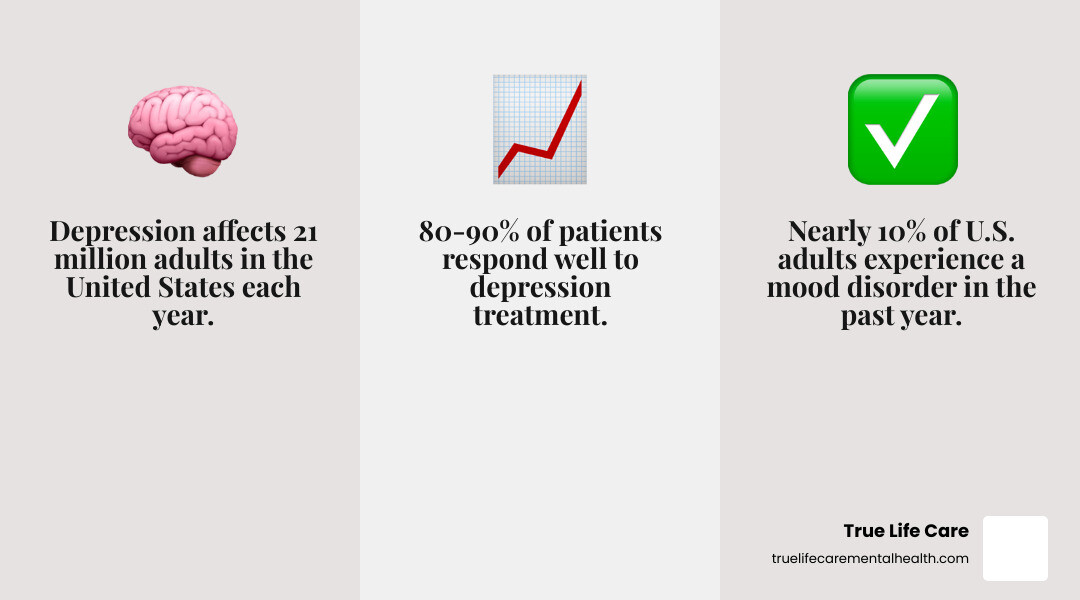
Depression affects 21 million adults in the United States each year, with nearly 10% of U.S. adults experiencing a mood disorder in the past year alone. In New Jersey, access to quality care has become more critical than ever.
The COVID-19 pandemic intensified mental health challenges across the state. Isolation, economic stress, and uncertainty drove depression rates higher, particularly among women, people of color, and young adults ages 18 to 25. Yet this crisis also sparked positive change—telehealth expansion, increased funding for mental health services, and reduced stigma around seeking help.
Here’s the encouraging news: 80-90% of patients respond well to depression treatment. Whether you’re dealing with persistent sadness, struggling to get out of bed, or finding it hard to concentrate at work, effective help exists right here in New Jersey.
From holistic, team-based approaches to specialized centers of excellence, New Jersey offers diverse treatment options. You’ll find evidence-based therapies like Cognitive Behavioral Therapy (CBT) and Dialectical Behavior Therapy (DBT), medication management, advanced treatments like Transcranial Magnetic Stimulation (TMS), and flexible programs that fit around your schedule.
This guide walks you through the top 10 depression treatments available in New Jersey, helping you understand your options and take the first step toward recovery.
Recognizing Symptoms and Seeking Depression Treatment in New Jersey

When we talk about depression, we aren’t just talking about “having the blues” or a bad day. In New Jersey, clinical depression (Major Depressive Disorder) is recognized as a serious medical condition that affects the mind and the body. Recognizing the signs is the first step toward healing. Common symptoms include:
- Persistent Sadness: A heavy, dark mood that doesn’t lift for at least two weeks.
- Fatigue: Feeling physically drained, even after a full night’s sleep.
- Sleep Disturbances: Insomnia or oversleeping (hypersomnia).
- Appetite Changes: Significant weight loss or gain unrelated to dieting.
- Suicidal Ideation: Recurrent thoughts of death or self-harm.
For many, these symptoms can be subtle at first. You might notice you’re taking more “sick days” or finding it impossible to concentrate at your job in Clifton or Fair Lawn. When these feelings persist, it’s time to look into signs of treatment-resistant depression and seek professional help. New Jersey residents can access a wealth of information through the Division of Mental Health and Addiction Services.
How is Depression Diagnosed?
Diagnosis in New Jersey follows the DSM-5 standards. A clinical assessment usually involves a physical exam to rule out thyroid issues or vitamin deficiencies, followed by a thorough psychiatric evaluation. To meet the criteria for Major Depressive Disorder, you must experience five or more symptoms for at least two consecutive weeks, representing a clear change from your previous level of functioning.
It’s also important to understand that depression isn’t one-size-fits-all. Understanding different types of depression, such as Seasonal Affective Disorder (SAD) or Persistent Depressive Disorder (PDD), helps us tailor the right treatment plan for you.
The Impact of Recent Events on NJ Mental Health
The last few years have been a rollercoaster for Garden State residents. The isolation of the pandemic led to a spike in anxiety and mood disorders. However, the Official Site of The State of New Jersey notes that this has also led to a massive expansion in telehealth. Today, whether you are in a rural part of Sussex County or a busy neighborhood in Bergen County, accessing a therapist is more convenient than ever.
Top 10 Evidence-Based Depression Treatments
We believe in using what works. “Evidence-based” means these treatments have been scientifically tested and proven to help people recover. When looking for 5 of the best depression treatments in NJ, you’ll find that the most successful outcomes often come from a combination of the following methods.
1. Cognitive Behavioral Therapy (CBT)
CBT is often considered the “gold standard” of psychotherapy. It focuses on the relationship between your thoughts, feelings, and behaviors. If you are seeking help in Morris County, you’ll find many clinicians specializing in this method. CBT helps us identify “cognitive distortions”—those negative thought loops like “I’m a failure”—and replace them with more balanced, realistic perspectives.
2. Dialectical Behavior Therapy (DBT)
Originally developed for borderline personality disorder, DBT has proven incredibly effective for depression, especially when intense emotions are involved. It teaches four main skill sets:
- Mindfulness: Staying present in the moment.
- Distress Tolerance: Getting through a crisis without making it worse.
- Emotional Regulation: Learning how to change emotions that you want to change.
- Interpersonal Effectiveness: Communicating your needs and setting boundaries.
3. Medication Management
Sometimes, the brain’s chemistry needs a little help to find its balance. Antidepressants like SSRIs (Selective Serotonin Reuptake Inhibitors) or SNRIs (Serotonin-Norepinephrine Reuptake Inhibitors) are commonly prescribed. It’s vital to weigh the pros and cons of antidepressants with a board-certified psychiatrist. If you’re wondering how to get medication for depression, the process typically starts with a psychiatric evaluation to ensure the prescription matches your specific symptoms.
4. Transcranial Magnetic Stimulation (TMS)
For those who haven’t found relief through traditional therapy or medication, TMS is a game-changer. It is a non-invasive procedure that uses magnetic fields to stimulate nerve cells in the brain regions involved in mood control. Because it’s non-invasive, you can drive yourself home right after a session at a New Jersey specialized center.
5. Holistic and Complementary Therapies
We know that a healthy body supports a healthy mind. Many Depression Treatment in New Jersey programs now integrate:
- Yoga and Meditation: To lower cortisol levels and improve focus.
- Art and Music Therapy: For those who find it easier to express emotions creatively.
- Nutrition Counseling: Because what we eat directly impacts our brain health.
Support for these methods is often found through community organizations like NAMI NJ.
6. Group Therapy and Peer Support
Isolation is depression’s best friend. Group therapy breaks that isolation by connecting you with others who truly understand what you’re going through. In New Jersey, resources like the NJ Peer Recovery Warm Line provide non-crisis support from people with lived experience. You can also find peer-led support groups throughout the state.
7. Family and Couples Counseling
Depression doesn’t just affect the individual; it affects the whole family. Counseling can help your loved ones understand that your lack of energy isn’t laziness—it’s a symptom. We work on communication skills and relationship dynamics to build a stronger support system at home.
8. Dual Diagnosis Treatment
It is very common for depression to co-occur with substance use disorders. People often use alcohol or drugs to “self-medicate” their pain. If you’re asking, “Should I go to rehab for depression?“, the answer is often yes if substance use is involved. Integrated care treats both conditions simultaneously, which is the only way to ensure long-term recovery.
9. Intensive Outpatient Programs (IOP)
An IOP is perfect for those who need more support than a once-a-week therapy session but don’t require 24/7 supervision. You might attend sessions 3 to 5 days a week for several hours while still living at home and maintaining your job in Boonton or Montville. Learn more about how an IOP helps you heal.
10. Partial Hospitalization Programs (PHP)
A PHP is our highest level of outpatient care. It provides a structured environment during the day—usually 5 to 6 hours a day, 5 days a week—offering intensive therapy and medical supervision. This is an excellent “step-down” for those leaving inpatient care or a “step-up” for those who need significant stabilization. See how a PHP helps you heal.
Navigating Levels of Care for Depression Treatment in New Jersey
Choosing the right level of care can feel overwhelming. We generally look at a “continuum of care,” where the intensity of treatment matches the severity of the symptoms.
| Level of Care | Hours Per Week | Best For |
|---|---|---|
| Outpatient | 1–3 hours | Maintaining daily life with mild symptoms. |
| IOP | 9–15 hours | Moderate symptoms; requires skill building. |
| PHP | 25–30 hours | Severe symptoms; requires daily stabilization. |
| Inpatient | 24/7 | Crisis situations; risk of self-harm. |
Specialized Programs and Crisis Intervention
New Jersey offers specialized support for specific groups who may experience depression differently:
- Postpartum Depression: Specialized care for new mothers dealing with hormonal shifts and the pressures of parenthood.
- Veterans: Programs like NJ Vet to Vet offer peer support for those who have served.
- Caregivers: Resources like Care2Caregivers support those caring for family members with dementia, a role that often leads to caregiver burnout and depression.
Crisis Resources and Emergency Services
If you or a loved one is in immediate danger, please do not wait. New Jersey has a robust network of screening centers and emergency services.
- 988 Suicide & Crisis Lifeline: Call or text 988 anytime.
- NJ Peer Recovery Warm Line: 1-877-292-5588 for empathetic, non-crisis listening.
- Department of Human Services: Check their treatment FAQ for a list of county-based screening centers.
Financial Assistance and Insurance Coverage
We believe financial problems should never stand in the way of mental health. Most major Depression Treatment in New Jersey centers, including our partners, accept a wide range of insurance plans, including:
- Aetna
- BlueCross BlueShield
- Cigna
- UnitedHealthcare
- Medicaid
Many facilities also offer sliding scale fees or financial assistance for those who are uninsured.
Frequently Asked Questions about Depression Treatment
How long does it take for depression treatment to work?
While some people feel a “lift” after a few therapy sessions, medication typically takes 4 to 6 weeks to reach full effect. Most intensive programs (IOP/PHP) last between 4 to 12 weeks, depending on individual progress.
What is the difference between sadness and clinical depression?
Sadness is a natural reaction to loss or disappointment and usually fades with time. Clinical depression is a persistent state that interferes with your ability to work, sleep, and eat, lasting at least two weeks.
Can I receive depression treatment while working?
Absolutely. Our IOP and outpatient programs are specifically designed to allow residents in places like Morris Plains or Chester to receive high-quality care in the evenings or during the day while maintaining their professional responsibilities.
Conclusion
Recovery is not just possible—it is expected. With an 80-90% success rate for those who seek treatment, the odds are in your favor. Whether you choose the intensive support of a PHP or the flexibility of an IOP, the most important step is the first one.
At True Life Care Mental Health, we are dedicated to providing the personalized, evidence-based care you need to thrive. From initial assessments to long-term aftercare planning, we are with you every step of the way. If you’re ready to reclaim your life, explore your options for Depression Treatment in New Jersey today. Your journey to wellness starts here.