
Depression Treatment in Somerset County NJ: Best of 2026
Why Finding the Right Depression Treatment Matters in Somerset County
Depression Treatment in Somerset County NJ includes a range of options from outpatient counseling to intensive programs, with services available through local providers, hospitals, and specialized mental health centers that accept most major insurances.
Depression doesn’t look the same for everyone. For some people in Somerset County’s high-achieving, well-educated community, it shows up as a persistent lack of motivation, struggling to get out of bed despite having a good job and a supportive family. For others, it’s a constant, low-grade sadness that makes connecting with loved ones feel impossible, creating a sense of isolation even when surrounded by people.
Somerset County has a unique demographic profile. With one of the highest percentages of college graduates in New Jersey and a per capita income of $86,468, many residents are high-functioning individuals. This environment can create immense pressure to succeed, and with that pressure comes a stigma against showing vulnerability. Many may not recognize their own depression or feel they “should” be able to handle it alone, viewing it as a personal failing rather than a medical condition.
But depression is a medical condition that affects all aspects of life, regardless of education or income. The good news? Somerset County offers accessible, evidence-based treatment options that fit into busy schedules and respect the privacy many residents value.
Quick Overview of Your Options:
- Outpatient Therapy: Consists of weekly or bi-weekly individual, family, or group sessions with psychiatrists, psychologists, or licensed therapists. It’s ideal for ongoing support and managing mild to moderate symptoms while maintaining your daily routine.
- Intensive Outpatient Programs (IOP): A step up from traditional therapy, offering 9-15 hours per week of structured treatment. This allows you to receive more comprehensive care while still living at home and managing work or family responsibilities.
- Partial Hospitalization Programs (PHP): The most intensive form of outpatient care, providing 25-30 hours per week of comprehensive daytime treatment. It’s designed for those with moderate to severe depression who need daily support to stabilize and develop coping skills.
- Crisis Services: For immediate, urgent needs, 24/7 emergency support is available through Psychiatric Emergency Screening Services (908-526-4100) and the national 988 Suicide & Crisis Lifeline.
- Support Groups: Free, peer-led meetings through organizations like NAMI Somerset and DBSA Somerset offer a sense of community and shared understanding. These are available both virtually and in-person.
Whether you’re experiencing your first depressive episode or managing a long-term condition like bipolar disorder, finding the right level of care matters. The challenge isn’t just getting help—it’s finding treatment that works for your specific situation, accepts your insurance, and allows you to maintain your responsibilities while healing.
Understanding the Landscape of Depression in Somerset County
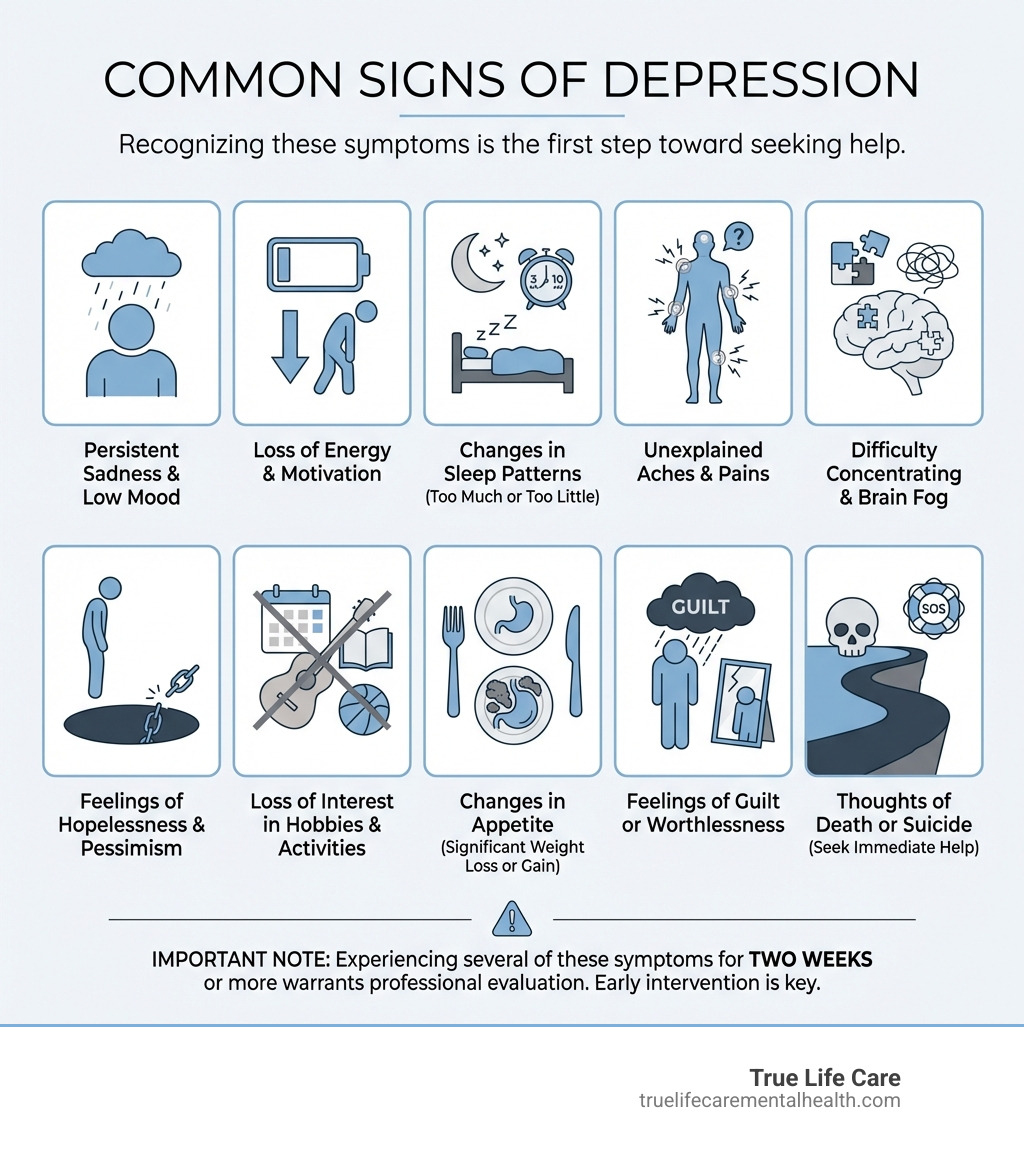
Depression is more than just feeling sad; it’s a serious and complex mood disorder that can affect how you feel, think, and handle daily activities. According to the National Institute of Mental Health, it is one of the most common mental disorders in the United States. For residents of Somerset County, recognizing the symptoms of depression and potential mania is the first step toward seeking effective Depression Treatment in Somerset County NJ.
Common symptoms of depression include:
- Persistent sadness, anxiety, or “empty” mood: A feeling that doesn’t go away, even when good things happen.
- Feelings of hopelessness or pessimism: Believing that nothing will ever get better and that there’s nothing you can do to change your situation.
- Irritability: Feeling easily annoyed or angered, often over small things.
- Loss of interest or pleasure in hobbies and activities: Things you once enjoyed, like hobbies or spending time with friends, now feel like a chore.
- Decreased energy or fatigue: A profound sense of exhaustion that isn’t relieved by sleep, making even simple tasks feel monumental.
- Moving or talking more slowly: A noticeable physical and mental slowdown that others may comment on.
- Restlessness or trouble sitting still: An inner feeling of agitation or being on edge.
- Difficulty concentrating, remembering, or making decisions: Brain fog that impacts work, school, or daily planning.
- Changes in appetite or weight: Significant weight loss when not dieting or weight gain from increased cravings and overeating.
- Thoughts of death or suicide, or suicide attempts: These are serious symptoms that require immediate help.
- Unexplained aches or pains: Headaches, cramps, or digestive problems without a clear physical cause that do not ease with treatment.
In some cases, depression can be part of a broader mood disorder like bipolar disorder, which also involves episodes of mania. Mania, often characterized by an liftd or irritable mood, can present with symptoms such as:
- Increased activity or energy: Feeling unusually “wired” or hyperactive.
- Reduced need for sleep: Feeling rested after only a few hours of sleep.
- Racing thoughts: A fast, uncontrollable flow of ideas.
- Rapid speech: Talking so quickly that others can’t keep up.
- Inflated self-esteem or grandiosity: An unrealistic belief in one’s own abilities or importance.
- Increased risk-taking behavior: Engaging in impulsive activities like spending sprees, reckless driving, or unsafe sex.
Depression exists on a spectrum. Some individuals may experience high-functioning depression, where they continue to meet daily obligations but struggle internally with significant emotional pain. Other individuals may experience severe symptoms that significantly impact their ability to function. Learning more about different types of depression can help you better understand your experience and find the right treatment.
Often, depression can co-occur with other mental health conditions or substance use disorders. It’s common for individuals with depression to also struggle with anxiety, post-traumatic stress disorder (PTSD), or turn to alcohol or drugs to cope with their symptoms. Recognizing these interconnected issues is crucial for developing a comprehensive and effective treatment plan that addresses all aspects of a person’s well-being.
Navigating Your Options for Depression Treatment in Somerset County NJ
Once you recognize the signs, the next step is exploring the diverse options for Depression Treatment in Somerset County NJ. Finding the right fit is paramount, and thankfully, Somerset County offers a variety of resources designed to provide personalized, evidence-based care.

Whether you’re looking for ongoing support or more intensive care, the goal is to find a treatment plan that addresses your unique needs. At True Life Care Mental Health, we believe in a holistic approach, empowering individuals for long-term recovery and well-being. We understand that finding the right mental health facility can be overwhelming, which is why we’re committed to guiding you through your options in New Jersey. Learn more about mental health facilities in New Jersey.
Finding the Right Professional for Depression Treatment in Somerset County NJ
Somerset County offers a range of qualified mental health professionals who can help with depression. Understanding the roles of each can help you make an informed decision:
- Psychiatrists: These are medical doctors (MDs or DOs) specializing in mental health. They are uniquely qualified to diagnose mental health conditions, prescribe and manage medications, and may also provide psychotherapy. In Somerset County, you’ll find psychiatrists in both private practices and clinic settings. Those in private practice often spend more time with patients (30-60 minutes per session) but may be out-of-network with insurance. Clinic psychiatrists are more commonly in-network but typically offer shorter, 15-minute appointments focused on medication management.
- Psychologists: Psychologists hold doctoral degrees (Ph.D. or Psy.D.) in psychology and specialize in providing psychotherapy (talk therapy). They cannot prescribe medication in New Jersey but are experts in various evidence-based therapeutic approaches like Cognitive Behavioral Therapy (CBT) and Dialectical Behavior Therapy (DBT). They also conduct psychological testing and assessments.
- Therapists (LCSW, LPC): Licensed Clinical Social Workers (LCSW) and Licensed Professional Counselors (LPC) hold master’s degrees and are highly skilled in providing individual, group, and family therapy. They help clients develop coping strategies, process emotions, and address underlying issues contributing to depression. They are often the primary providers of talk therapy in outpatient, IOP, and PHP settings.
Many professionals in New Jersey offer both talk therapy and medication management, or work collaboratively to ensure comprehensive care. For more information on finding the right expert, check out our guide on top mental health professionals in New Jersey. If medication is part of your treatment plan, understanding how to get medication for depression is a useful resource.
Levels of Care: Structuring Your Recovery
The journey to recovery is rarely a straight line, and different levels of care are available to meet varying needs for Depression Treatment in Somerset County NJ. We offer flexible programs designed to support you at every stage. Understanding these levels can help you and your provider decide on the best path forward.
| Level of Care | Hours per Week | Ideal Candidate |
|---|---|---|
| Outpatient Therapy | 1-2 hours | Individuals with mild to moderate symptoms who are functioning well but need ongoing support and coping skills. |
| Intensive Outpatient (IOP) | 9-15 hours | Those needing more structure than weekly therapy or who are transitioning from a higher level of care. Ideal for individuals who can maintain daily responsibilities but require more intensive treatment. |
| Partial Hospitalization (PHP) | 25-30 hours | Individuals with moderate to severe symptoms who need comprehensive daily treatment to prevent hospitalization but can safely return home at night. |
Effective Therapies and Approaches Offered Locally
Effective treatment for depression often involves a combination of therapy and, in some cases, medication. Somerset County providers offer several evidence-based approaches:
- Cognitive Behavioral Therapy (CBT): This goal-oriented therapy helps you identify and change negative thought patterns and behaviors that contribute to depression. A therapist helps you develop practical skills to challenge distorted thinking and respond to situations more effectively. Learn more about Cognitive Behavioral Therapy in NJ.
- Dialectical Behavior Therapy (DBT): Originally developed for borderline personality disorder, DBT is now widely used for depression, especially when it involves emotional dysregulation. It teaches skills in four key areas: mindfulness, distress tolerance, emotion regulation, and interpersonal effectiveness. Explore DBT Therapy in NJ.
- Group Therapy: Participating in therapy with others who have similar experiences can reduce feelings of isolation and stigma. Group sessions, facilitated by a therapist, provide a supportive environment to practice new skills and gain different perspectives.
- Medication Management: For many, antidepressants can be a crucial tool to correct chemical imbalances in the brain, alleviating symptoms and making therapy more effective. A psychiatrist or psychiatric nurse practitioner will work with you to find the right medication and dosage, with regular follow-ups to monitor progress and side effects.