Why Addiction Therapy in New Jersey Matters

Addiction therapy NJ offers hope and real solutions for anyone struggling with substance use disorders. If you’re looking for help, here’s what you need to know:
Quick Guide to Finding Addiction Therapy in New Jersey:
- State Resources: The Division of Mental Health and Addiction Services (DMHAS) maintains a searchable directory of licensed treatment providers
- Treatment Levels: Options range from detoxification to intensive outpatient programs (IOP) and long-term residential care
- Insurance Coverage: Most major insurance plans are accepted, with over 25% of addiction funding through Fee-For-Service networks
- Success Rates: Programs like IOPs report 97% of clients experiencing lasting relief 6 months after completion
- Flexible Scheduling: Many programs offer evening and weekend sessions to accommodate work and family
Addiction is a treatable disease, not a moral failing. New Jersey provides a diverse range of evidence-based treatment options to meet you wherever you are in your recovery journey. Whether you struggle with alcohol, opioids, or other substances, specialized programs exist to address your unique needs.
The journey starts with recognizing the signs and taking that first step. Many people feel overwhelmed or isolated, but you’re not alone. New Jersey’s treatment landscape includes everything from intensive residential programs to flexible outpatient therapy that fits your daily responsibilities. Centers across the state integrate proven therapies like Cognitive Behavioral Therapy (CBT) and Eye Movement Desensitization and Reprocessing (EMDR) with holistic approaches like mindfulness and yoga. Taking the first step can feel daunting, but thousands in New Jersey have found their path to healing and built fulfilling lives in recovery.
Understanding the Landscape of Addiction Therapy NJ
Addiction is a complex mental health condition where an individual has difficulty controlling their use of a substance or behavior, leading to compulsive actions and harmful consequences. This can manifest as substance abuse (alcohol, other drugs) or behavioral addictions like compulsive gambling.
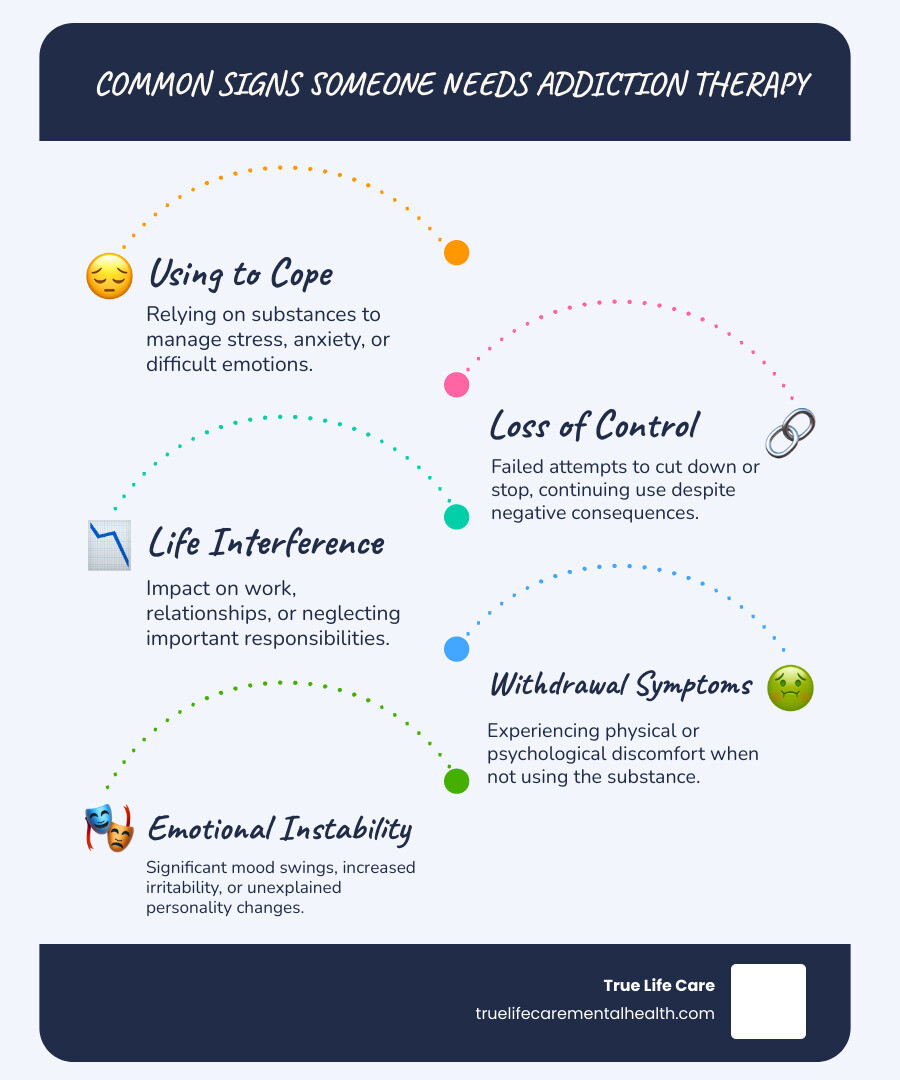
Recognizing the signs that someone might benefit from addiction therapy NJ is a crucial first step. Common indicators include:
- Using substances to cope: Relying on alcohol or drugs to manage stress or emotional pain.
- Relapse despite prior treatment: Returning to substance use after completing treatment, signaling a need for adjustment.
- Struggling with unresolved trauma: Using substances to numb the pain of past traumatic experiences.
- Emotional or psychological challenges: Experiencing severe anxiety, depression, or mood instability.
- Impact on daily life: Neglecting responsibilities at work, school, or home due to substance use.
- Developing increased tolerance: Needing more of a substance to achieve the same effect.
- Withdrawal symptoms: Experiencing physical or psychological distress when not using the substance.
- Continued use despite harm: Persisting in substance use despite serious health, financial, or relationship problems.
When these signs appear, professional help is often essential. New Jersey is committed to providing accessible, effective care. The Division of Mental Health and Addiction Services (DMHAS) is the state’s authority for substance use disorder treatment, prevention, and recovery support. DMHAS sanctions a full continuum of care through independent providers, using the American Society of Addiction Medicine (ASAM) patient placement criteria to ensure individuals receive the appropriate level of care.

Why Specialized Programs are Essential
The journey to recovery is unique, which is why specialized programs are essential. They move beyond a one-size-fits-all approach to provide treatment that is custom to the individual.
Here’s why specialized programs make a difference in addiction therapy NJ:
- Custom Treatment Plans: We create individualized treatment plans based on comprehensive assessments of your substance use history, mental health, and personal circumstances.
- Addressing Root Causes: Specialized programs focus on treating the root causes of addiction, such as underlying trauma, mental health conditions, or life stressors, rather than just the symptoms.
- Dual Diagnosis (Co-occurring Disorders): It’s common for substance use disorders to co-occur with conditions like anxiety, depression, or PTSD. Specialized programs offer integrated treatment that addresses both issues simultaneously for a “whole-person” approach.
- Higher Success Rates: Personalized, evidence-based care often leads to higher success rates. For instance, some New Jersey IOPs report that 97% of clients experience lasting relief six months after completion.
- Sustainable Recovery: By addressing all aspects of an individual’s well-being—physical, emotional, and psychological—specialized programs aim for sustainable, long-term recovery by building healthy coping mechanisms and life skills.
The Critical Link Between Trauma and Addiction
There is a profound connection between addiction and trauma. Trauma is a distressing experience that overwhelms an individual’s ability to cope. For many, these experiences remain unresolved, influencing behaviors and emotional well-being.
The link is undeniable:
- Co-occurring Disorders: Trauma and addiction frequently coexist. Many individuals turn to substances to numb the pain, anxiety, or distress caused by unresolved trauma.
- Numbing Emotional Pain: Substance use can create a dangerous cycle where addiction worsens the emotional toll of trauma. Without healthy coping strategies, substances become a temporary, destructive escape.
- Trauma-Informed Care: Effective addiction therapy NJ recognizes this link. Trauma-informed care creates a safe, supportive environment where individuals can process their experiences without judgment.
- Integrated Treatment Approach: Treating addiction without addressing underlying trauma often results in relapse. An integrated approach, where trauma therapy is a core component of addiction treatment, is essential for sustainable recovery.
- Breaking the Cycle: Specialized trauma and addiction therapy programs empower individuals to face their past while building healthier coping mechanisms, fostering lasting healing and recovery.
A Guide to Addiction Treatment Programs in New Jersey
New Jersey provides a full continuum of care for addiction therapy NJ, guided by the American Society of Addiction Medicine (ASAM) criteria to match individuals with the right level of care. The journey often includes:
- Detoxification: The vital first step where the body rids itself of substances under medical supervision. Medically-assisted detox is the safest way to manage withdrawal symptoms.
- Residential Treatment: For those needing a highly structured environment, this involves living full-time at a facility with 24/7 care and intensive therapy for 30, 60, or 90 days.
- Outpatient Care: This category includes several levels of care that allow individuals to live at home while attending scheduled therapy, offering flexibility to balance treatment with daily responsibilities.

Partial Hospitalization Programs (PHP)
Partial Hospitalization Programs (PHPs), or Partial Care (PC), are an intensive form of outpatient care. They provide structured, comprehensive treatment for those who need more support than standard outpatient programs but don’t require 24/7 medical supervision.
In a PHP:
- Intensive Daytime Treatment: You’ll spend several hours a day, multiple days a week, at the facility, providing a high level of support for your recovery.
- Structured Support: PHPs offer a highly structured daily schedule of therapies, educational sessions, and group activities, which is crucial for those needing more support than a typical outpatient program.
- Transition from Inpatient Care: PHPs are an excellent “step-down” option for individuals who have completed residential treatment and are ready for more independence.
- Daily Therapy Sessions: These programs integrate individual counseling, group therapy, and family therapy to focus on relapse prevention and coping skills.
How Intensive Outpatient Programs (IOPs) Work in NJ
Intensive Outpatient Programs (IOPs) offer a flexible yet structured approach to addiction therapy NJ. They are ideal for individuals stable enough to live at home but who still require substantial support to maintain sobriety.
Here’s how IOPs typically function in New Jersey:
- Flexibility for Work and Family: A primary benefit of IOPs is their flexible scheduling, with morning, evening, or weekend sessions that allow you to continue with work, school, or family life.
- 9-18 Hours Per Week: IOPs typically involve 9 to 18 hours of group therapy per week, spread across 3 to 5 days, providing a robust support system.
- Group Therapy: Group sessions are a cornerstone of IOPs, offering a safe space to share experiences, learn from peers, and develop a sober community.
- Individual Counseling: IOPs usually include weekly one-on-one counseling to explore personal issues and develop personalized coping strategies. Family therapy may also be available.
- Continuity of Care: IOPs are suitable for those starting their recovery or stepping down from inpatient care, providing an environment to apply learned skills in real-life situations.
| Feature | Partial Hospitalization Programs (PHP) | Intensive Outpatient Programs (IOP) |
|---|---|---|
| Intensity | High; comprehensive daytime treatment, often 5 days/week | Medium-High; significant structured support, typically 3-5 days/week |
| Hours per Week | Generally 20-30+ hours | 9-18 hours |
| Schedule | Full daytime commitment, structured daily activities | Flexible; often mornings, evenings, or weekends to accommodate daily life |
| Living Situation | Lives at home or in sober living, commutes to facility | Lives at home or in sober living, commutes to facility |
| Ideal For | Stepping down from inpatient, needing intensive structured support | Balancing treatment with work/school/family, strong relapse prevention |
| Therapies | Individual, group, family therapy, educational workshops, holistic | Individual, group, family therapy, educational workshops, holistic |
| Support Level | Highest level of outpatient support | Strong support with more independence |
| Duration | Varies, typically several weeks to months | Varies, often 6-10 weeks, but can be longer |
Outpatient Programs (OP)
Outpatient Programs (OPs) offer the most flexible level of addiction therapy NJ. They are designed for individuals who are stable in their recovery but still benefit from ongoing support. OPs are often a “step-down” from IOPs or for those with mild substance use disorders.
Key aspects of Outpatient Programs include:
- Continued Support: OPs provide a consistent source of support to help individuals steer the challenges of long-term recovery.
- Maintaining Sobriety: The focus is on maintaining sobriety, developing advanced coping skills, and integrating recovery principles into daily life.
- Less Intensive Schedule: OPs have a significantly less intensive schedule, often just one or two therapy sessions per week, allowing for maximum flexibility.
- Relapse Prevention: A critical component is relapse prevention, equipping individuals with tools to manage cravings and high-risk situations.
- Community Integration: OPs encourage connection to local sober communities, fostering a strong support network outside of formal therapy.
Evidence-Based and Holistic Therapies Available in NJ
In New Jersey, a wide array of therapies are used in addiction therapy NJ to address the multifaceted nature of substance use disorders. Our approach at True Life Care emphasizes personalized, evidence-based methods combined with holistic practices and expert psychiatric care to heal the whole person.
These therapies include:
- Individualized Therapy: One-on-one sessions with a qualified therapist allow for deep exploration of personal issues, underlying trauma, and specific triggers in a confidential space.
- Group Addiction Therapy: Group sessions foster a sense of community and shared experience, providing an opportunity to learn from peers and practice social skills in a supportive environment.
- Family Therapy: Addiction impacts the entire family. Family therapy involves loved ones in the recovery process to heal relationships, improve communication, and build a support system.
- Medication-Assisted Treatment (MAT): MAT combines FDA-approved medications with counseling. This approach is highly effective for opioid use disorder, as it helps manage cravings and withdrawal symptoms.
The Role of Evidence-Based Therapies like CBT and EMDR
Evidence-based therapies are the cornerstone of effective addiction therapy NJ, as they are proven effective through scientific research.
- Cognitive Behavioral Therapy (CBT): CBT is a highly effective therapy that helps individuals identify and change negative thought patterns and behaviors contributing to substance use. By developing healthier coping mechanisms, clients can gain control over their impulses.
- Eye Movement Desensitization and Reprocessing (EMDR): EMDR is particularly effective for individuals whose addiction is linked to trauma. It helps process distressing memories and reduce their emotional impact, lessening the urge to self-medicate.
- Dialectical Behavior Therapy (DBT): DBT is another powerful therapy that teaches skills in mindfulness, distress tolerance, emotion regulation, and interpersonal effectiveness. It’s beneficial for those with intense emotions and co-occurring mental health conditions.
Other therapies we might use include Rational Emotive Behavioral Therapy (REBT) and Motivational Interviewing (MI).
Incorporating Holistic and Psychiatric Care
A holistic approach to addiction therapy NJ addresses the mind, body, and spirit, which is essential for long-term well-being.
- Mindfulness Practices: Integrating practices like mindfulness helps individuals develop greater self-awareness, manage stress, and reduce cravings.
- Yoga and Meditation: These practices are incorporated to promote physical health, emotional balance, and mental clarity. Many New Jersey treatment centers, including those in Morris Plains, integrate these practices.
- Expert Psychiatric Evaluation: Given the high rate of co-occurring mental health conditions, expert psychiatric evaluation is vital. Our psychiatric team can assess for conditions like depression, anxiety, PTSD, and ADHD, providing diagnoses and medication management.
- Managing Co-occurring Mental Health Conditions: Integrated treatment for dual diagnosis ensures that both addiction and any underlying mental health issues are addressed concurrently, preventing a cycle of relapse.
- Healing the Whole Person: By combining traditional therapies with holistic approaches and psychiatric support, we empower individuals for long-term recovery and sustainable life changes, helping them build a fulfilling life.
Navigating Your Path to Recovery in New Jersey
Starting the path to recovery can present challenges like stigma and financial concerns. We understand these problems and are here to help you find addiction therapy NJ. Many people fear judgment, which can prevent them from seeking help. We strive to create a non-judgmental, compassionate environment where everyone feels safe.
Financial concerns can also be a barrier. Understanding insurance and state-funded options is crucial, and we’ll discuss this in our FAQ. The key is finding a program that aligns with your needs. New Jersey’s official addiction services are an excellent starting point. You can find comprehensive information at the Department of Human Services | Addiction Treatment Services.
Finding Qualified Addiction therapy NJ Professionals
Finding the right therapist or program is a critical step. Here’s how to find qualified addiction therapy NJ professionals:
- Use State Resources: The New Jersey Division of Mental Health and Addiction Services (DMHAS) provides a searchable directory of NJ treatment providers. You can search by county (such as Bergen County, Hunterdon County, Mercer County, Middlesex County, Morris County, Passaic County, Sussex County, and Warren County), services, and funding.
- Look for Specific Credentials: When vetting therapists, look for professionals with specialized training in addiction. Key credentials include LCADC (Licensed Clinical Alcohol and Drug Counselor), LPC (Licensed Professional Counselor), LCSW (Licensed Clinical Social Worker), and LMFT (Licensed Marriage & Family Therapist).
- Consider Therapeutic Approaches: Inquire about a therapist’s expertise in evidence-based techniques like CBT, EMDR, DBT, or trauma-informed care.
- Inquire About Insurance and Cost: Always verify if a provider accepts your insurance and understand the costs involved before committing.
- Initial Consultation: Many therapists offer a free initial call. Use this opportunity to gauge rapport and determine if they are a good fit.
We are proud to offer personalized, evidence-based mental health and addiction treatment in New Jersey, with a team of experts dedicated to your recovery.
What to Expect from Addiction therapy NJ
Knowing what to expect can help ease anxieties. The process is designed to be supportive, confidential, and custom to your needs.
Here’s a general overview:
- Initial Call: Your journey begins with a confidential phone call. This is your chance to ask questions and discuss your situation with our compassionate intake specialists.
- Confidential Assessment: Next, a comprehensive clinical assessment helps our team understand your substance use history, co-occurring conditions, and treatment goals. This is crucial for creating your personalized treatment plan.
- Insurance Verification: During admissions, we will help you verify your insurance benefits to ensure transparency regarding coverage and costs.
- Personalized Treatment Plan Development: Based on your assessment, our team will collaborate with you to create an individualized treatment plan that outlines the therapies and programs that will best support your recovery.
- A Supportive Environment: Throughout your treatment, you can expect a safe, calming, and judgment-free environment. Our staff are dedicated to providing trauma-informed care, ensuring you feel respected and supported.
Frequently Asked Questions about Addiction Therapy in NJ
We understand you have questions as you explore addiction therapy NJ. Here, we address some common inquiries.
How does insurance coverage work for addiction therapy in New Jersey?
Navigating insurance can feel complicated, but many options make addiction therapy NJ accessible.
- Most Major Insurance Accepted: Many treatment centers, including ours, accept most major insurance plans, which may cover a significant portion of your treatment costs. Always verify your specific benefits with the provider.
- State-Funded Programs: New Jersey’s DMHAS oversees state-funded services for individuals who may not have private insurance. The DMHAS directory can help you find providers who offer these options.
- Fee-For-Service (FFS) Network: Over 25% of addictions funding in New Jersey is through a Fee-For-Service (FFS) Network, designed to promote client retention in care.
- Verifying Benefits with Providers: The easiest way to understand your coverage is to contact the treatment center directly. Our admissions team can assist with a confidential insurance verification, explaining your benefits and any out-of-pocket costs.
What is the difference between inpatient residential treatment and an outpatient program?
The primary distinction between inpatient and outpatient programs in addiction therapy NJ is the level of supervision and living arrangement.
-
Inpatient Residential Treatment: This is the highest level of care, where individuals live at the facility 24/7.
- 24/7 Care: You have constant access to medical and therapeutic staff.
- Structured Environment: The day is planned with therapy and activities in a controlled environment away from triggers.
- Focus: Ideal for severe addictions or complex co-occurring disorders.
- Duration: Typically 30, 60, or 90 days.
-
Outpatient Programs (including PHP and IOP): These programs allow you to live at home while attending scheduled therapy.
- Flexibility: You can maintain work, school, and family responsibilities.
- Levels of Intensity: Programs range from Partial Hospitalization (PHP) with 20-30+ hours/week to Intensive Outpatient (IOP) with 9-18 hours/week, and General Outpatient (OP) with 1-9 hours/week.
- Real-World Application: Allows you to apply coping skills in your daily life with immediate support.
The American Society of Addiction Medicine (ASAM) criteria are used by providers to determine the most appropriate level of care for an individual’s needs.
How long does addiction therapy take?
There is no set timeline for addiction therapy. Recovery is a highly individualized journey, and the duration of addiction therapy NJ varies depending on several factors.
- No Set Timeline: Recovery is an ongoing process, not a destination. Treatment should be expected to last several months or longer.
- Varies by Individual Needs: The length of treatment is influenced by the severity of the addiction, the presence of co-occurring disorders, personal history, and response to treatment.
- Program Durations: While initial programs like residential treatment may last 30-90 days, or IOPs for 6-10 weeks, this is often just the first phase. Ongoing support is crucial.
- Long-Term Support: Ceasing substance use is the first step. Lasting behavioral change requires ongoing therapy to maintain abstinence and develop new coping mechanisms.
- Recovery as an Ongoing Process: Neuroscience shows that recovery involves the brain regaining control over the impulse to use substances. This process takes time and sustained effort, making recovery a continuous journey of growth and self-management.
Conclusion: Begin Your Journey to Wellness
The path to recovery can feel daunting, but recovery is possible. New Jersey offers a wide range of compassionate and effective addiction therapy NJ options to support you. From intensive inpatient care to flexible outpatient programs, and from evidence-based therapies like CBT and EMDR to holistic approaches, our state provides comprehensive support.
Addiction is a treatable disease, and seeking help is a sign of strength. The first step is the most crucial one on your journey to wellness. We are here to guide you, offering personalized, evidence-based mental health and addiction treatment with a holistic approach and expert psychiatric care. We empower individuals for long-term recovery, helping you build a life filled with hope and purpose.
Find out more about our mental health and addiction programs in New Jersey