
Primary Options for a Mental Health Crisis Hotline NJ Residents Rely On
When faced with an acute behavioral or emotional crisis, knowing which number to call can save lives. New Jersey offers a robust network of state-supported emergency numbers designed to provide immediate relief, safety planning, and local service connection. The cornerstone of this system is the national 988 Suicide & Crisis Lifeline, paired with state-specific programs like the New Jersey Hopeline.
Both services operate 24 hours a day, 7 days a week, 365 days a year. They are completely free, confidential, and accessible via phone call, text message, or web chat. For comprehensive state resource listings, residents can consult the Division of Mental Health and Addiction Services | Hotlines and Helplines page, or learn how to access a mental health crisis support line find immediate help now.
Navigating the Mental Health Crisis Hotline NJ System for 988 Lifeline
When you dial or text 988 from a New Jersey area code, your call is automatically routed to one of four designated in-state call centers. The primary 24/7/365 hub is operated by Rutgers Health University Behavioral Health Care (UBHC), supported by regional centers including Caring Contact, Contact of Mercer County, and the Mental Health Association in New Jersey.
Rutgers UBHC employs over 150 dedicated crisis professionals, staffing up to 30 workers during peak call hours—which consistently fall between 6 p.m. and 3 a.m. On average, a crisis counselor handles 12 interactions per shift, offering compassionate de-escalation for individuals in severe distress.
Key features of the 988 system in New Jersey include:
- Multi-Language Support: Callers can access live translation services in over 240 languages.
- Spanish Language Direct Line: By pressing “2” during the automated prompt, callers connect directly to Spanish-speaking crisis counselors.
- Veterans Crisis Line: Pressing “1” or texting 838255 routes military service members and veterans directly to Department of Veterans Affairs responders.
- Text and Chat Options: Individuals who feel uncomfortable speaking out loud can text 988 or visit 988lifeline.org to chat online.
Key Numbers for Mental Health Crisis Hotline NJ Support
Alongside 988, the NJ Hopeline (1-855-654-6735) serves as New Jersey’s dedicated statewide peer support and suicide prevention hotline. Operated 24/7, the NJ Hopeline provides immediate emotional de-escalation, supportive listening, and custom safety planning.
If local lines experience sudden spikes in volume, automated national backup routing ensures no call goes unanswered. Every conversation focuses on listening without judgment, reducing acute distress, and connecting the caller to community-based care.
How New Jersey’s Crisis Response System Works During Psychiatric Emergencies
New Jersey’s Division of Mental Health and Addiction Services (DMHAS) structures its crisis response around three core concepts: Someone to Contact (988), Someone to Respond (Mobile Crisis Outreach Teams), and A Safe Place for Help (Screening Centers and Stabilization Centers).
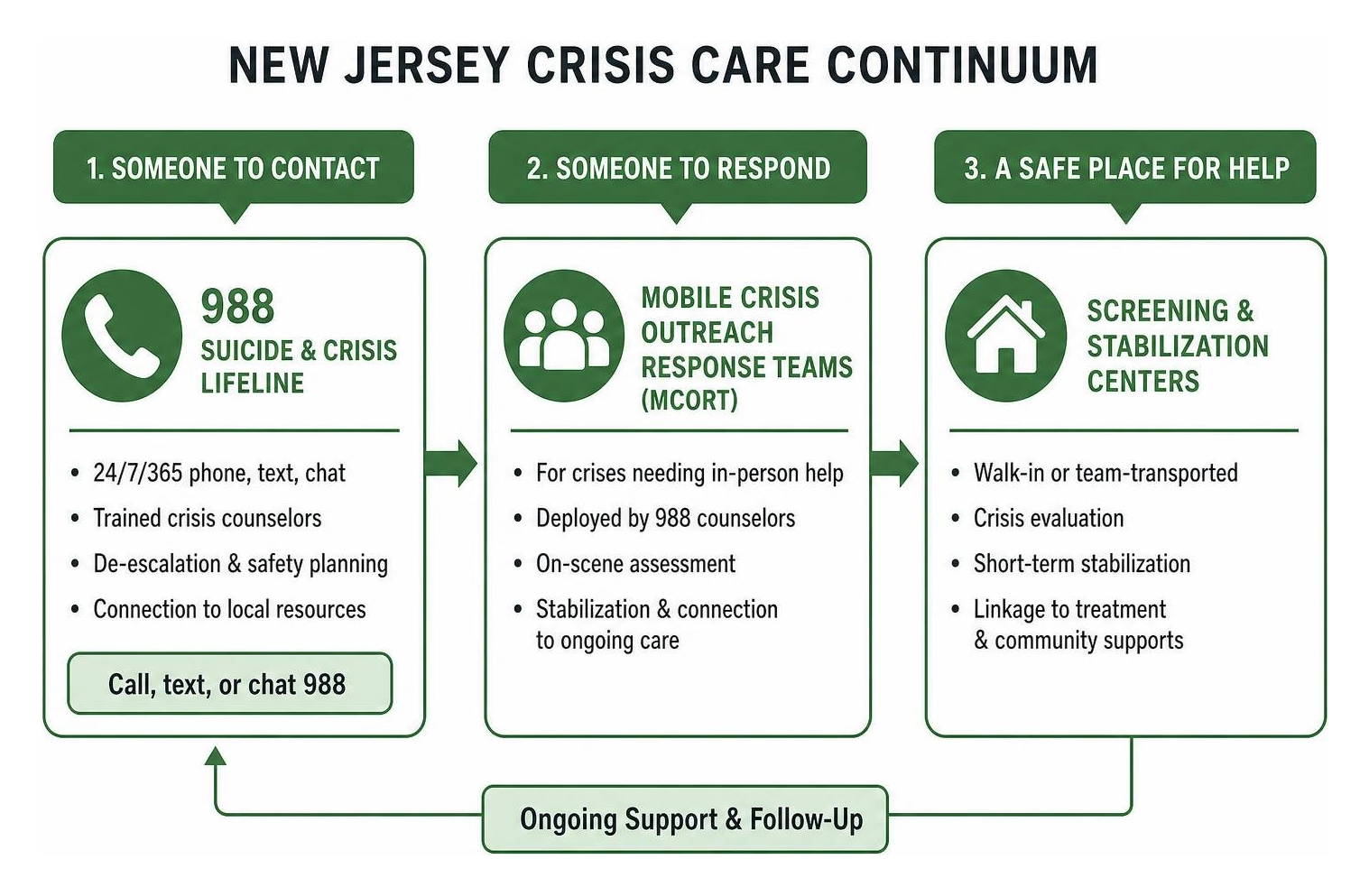
When non-escalated hotline support is insufficient for psychiatric emergencies, the state deploys specialized community-based resources. Understanding how these emergency resources interact helps families navigate scary situations. For additional guidance, review emergency mental health services in new jersey get help now and read about how As 988 Demand Rises, Rutgers Remains at the Center of New Jersey’s Crisis Response | Rutgers Health.
Dispatching Mobile Crisis Outreach Response Teams
For adults aged 18 and older experiencing an acute behavioral crisis that cannot be resolved over the phone, 988 counselors can dispatch a Mobile Crisis Outreach Response Team (MCORT).
MCORT deployments follow specific criteria:
- Evaluation: 988 crisis centers are the exclusive authorized entities permitted to evaluate and dispatch adult MCORT units in New Jersey.
- Team Structure: Each field unit typically consists of a bachelor’s-level mental health professional and a certified peer support specialist, supervised remotely by a master’s-level clinician.
- In-Person Stabilization: Teams arrive at the individual’s location to assess safety, de-escalate emotional distress, and coordinate urgent community referrals without unnecessary police involvement.
Psychiatric Emergency Screening Services and Local County Centers
When an individual presents an immediate danger to themselves or others, or experiences severe psychotic decompensation, acute care moves to designated Psychiatric Emergency Screening Services (PESS) units. Located within designated regional hospitals across New Jersey’s 21 counties, PESS units conduct formal psychiatric evaluations to determine whether voluntary or involuntary short-term hospitalization is required. To review regional locations, see our guide on top 10 psychiatric emergency screening locations in nj.
Additionally, New Jersey has expanded Crisis Receiving and Stabilization Centers (CRSCs). CRSCs provide short-term (under 24 hours), voluntary, non-hospital behavioral health stabilization for adults regardless of insurance status or ability to pay.
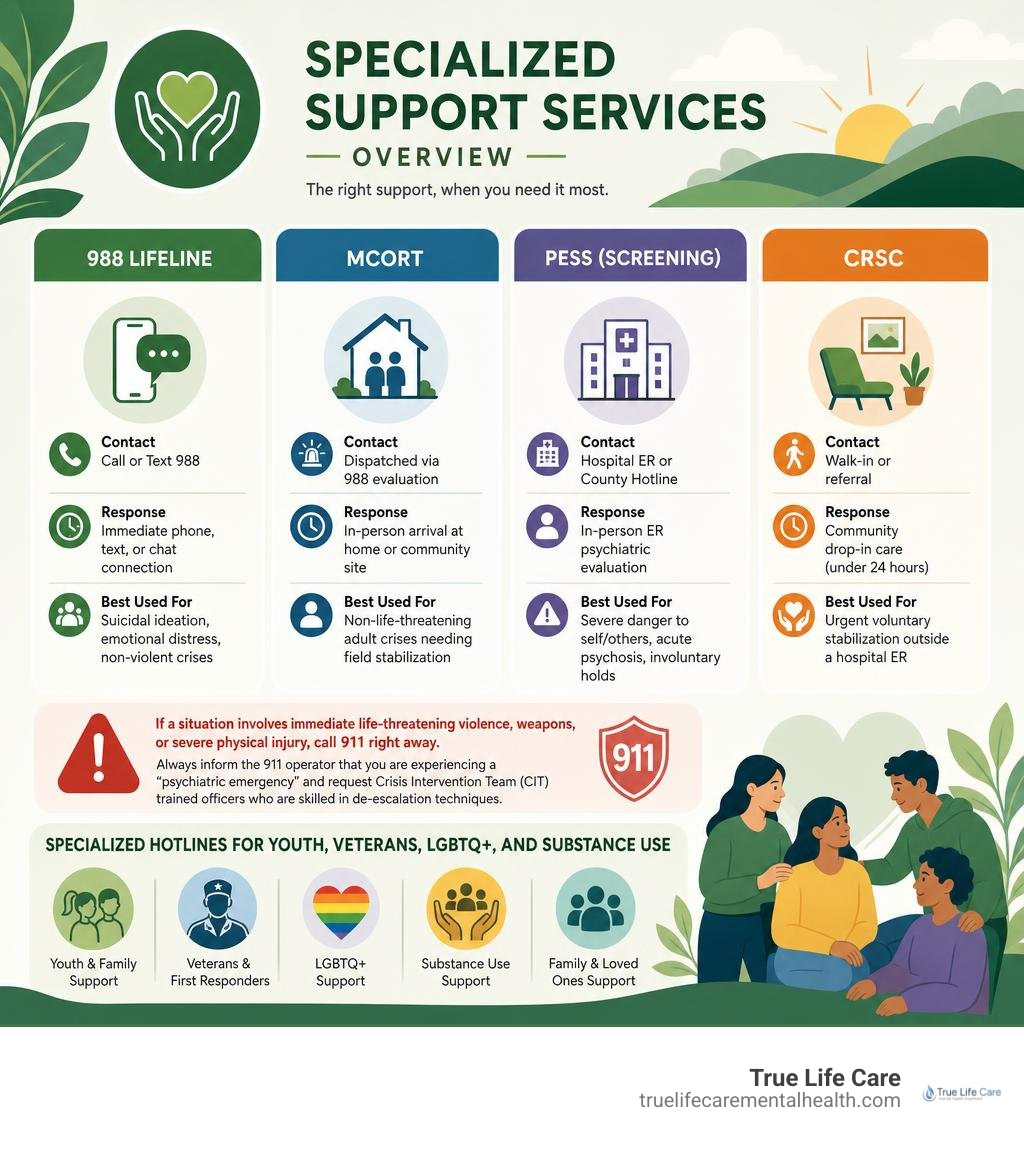
| Service Type | Primary Contact Method | Response Time / Format | Best Used For |
|---|---|---|---|
| 988 Lifeline | Call or Text 988 | Immediate phone, text, or chat connection | Suicidal ideation, emotional distress, non-violent crises |
| MCORT | Dispatched via 988 evaluation | In-person arrival at home or community site | Non-life-threatening adult crises needing field stabilization |
| PESS (Screening) | Hospital ER or County Hotline | In-person ER psychiatric evaluation | Severe danger to self/others, acute psychosis, involuntary holds |
| CRSC | Walk-in or referral | Community drop-in care (under 24 hours) | Urgent voluntary stabilization outside a hospital ER |
If a situation involves immediate life-threatening violence, weapons, or severe physical injury, call 911 right away. Always inform the 911 operator that you are experiencing a “psychiatric emergency” and request Crisis Intervention Team (CIT) trained officers who are skilled in de-escalation techniques.
Specialized Hotlines for Youth, Veterans, LGBTQ+, and Substance Use
Not every mental health crisis looks the same. Specific populations face unique stressors, which is why New Jersey funds specialized helplines staffed by professionals and peers with specific domain training.

Whether you need support for an adolescent, a veteran relative, or a loved one struggling with addiction, these specialized channels provide targeted aid. For more details on managing sudden behavioral shifts, visit the Mental Health Association’s page About Our Call Center or explore our guide on what to do when a mental health crisis strikes.
Dedicated Youth and Family Crisis Resources
Adolescents experience mental health challenges at alarming rates; roughly 141,000 New Jersey youth aged 12 to 17 face a major depressive episode annually, and 36% receive no care. To address youth crises, New Jersey maintains dedicated youth infrastructure:
- PerformCare NJ (Children’s System of Care): Serving youth through age 20, PerformCare is accessible 24/7 at 1-877-652-7264. They can dispatch Mobile Response and Stabilization Services (MRSS) directly to a home, school, or community site within one hour of notification. Following initial dispatch, MRSS provides up to eight weeks of stabilization services to keep youth safely in their homes.
- 2NDFLOOR Youth Helpline: Available 24/7 at 1-888-222-2228 (call or text), 2NDFLOOR offers dedicated, anonymous support for New Jersey youth and young adults aged 10 to 24 to discuss bullying, depression, daily stressors, or relationships.
Specialized Peer Support and Demographics-Specific Lines
New Jersey also funds targeted lines tailored to specific career backgrounds, identities, and medical needs:
- Substance Use Support:
- ReachNJ (1-844-732-2465): A 24/7 addiction helpline answered live within 30 seconds, connecting residents to local treatment regardless of insurance status.
- NJ Connect for Recovery (1-855-652-3737): Dedicated support for family members and friends navigating a loved one’s substance use disorder.
- First Responders & Veterans:
- Vet2Vet (1-866-838-7654): 24/7 peer counseling answered by former military service members.
- Cop2Cop (1-866-267-2267): Confidential peer support answered by retired law enforcement officers and licensed clinicians for first responders.
- LGBTQ+ Youth Support:
- TrevorLifeline (1-866-488-7386) & Trans Lifeline (1-877-565-8860): Specialized, crisis intervention for LGBTQ+ youth and transgender individuals.
- Deaf & Hard of Hearing Support:
- ACCESS Video Phone: Direct American Sign Language (ASL) crisis support via video call, alongside standard TTY relay services accessed by dialing 711 then 988.
Non-Emergency Peer Support and Behavioral Health Warm Lines
It is vital to distinguish between a crisis hotline (for immediate danger or de-escalation) and a warm line (for non-crisis emotional support, peer connection, and resource navigation). Warm lines offer friendly, non-judgmental telephone support before a situation escalates into an emergency.
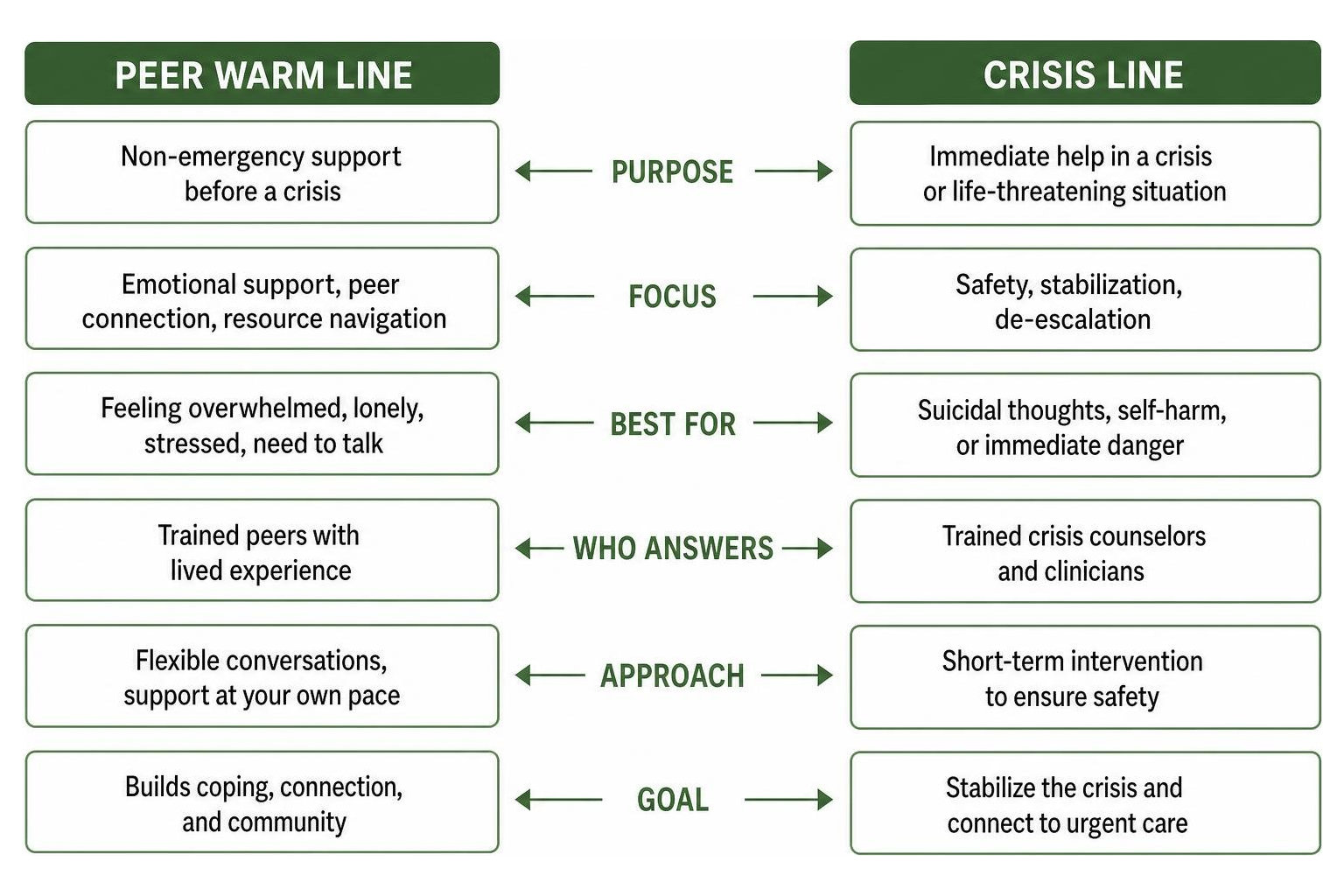
Warm lines are ideal for individuals managing chronic conditions like depression or schizophrenia who need someone to talk to during lonely hours. To explore peer navigation options, check New Jersey Mental Health Cares or read our article on how to help someone who is suicidal.
NJMentalHealthCares and Referral Services
NJMentalHealthCares is the state’s flagship behavioral health information, referral, and supportive counseling line. Reached at 1-866-202-HELP (4357) (or TTY 711), it operates daily from 8:00 a.m. to 8:00 p.m.
Staffed by trained behavioral healthcare specialists, NJMentalHealthCares provides:
- Comprehensive mental health screenings using clinical assessment tools.
- Direct referrals to local outpatient therapy, legal aid, housing assistance, and partial care programs.
- Supportive counseling and structured telephone case management with follow-up calls to ensure individuals successfully link to services.
Peer Recovery WarmLine and Community Guidance
For personal peer-to-peer connection, the Peer Recovery WarmLine (1-877-292-5588) offers non-crisis emotional support provided entirely by peer specialists with personal lived experience in mental health recovery.
Operating under the International Peer Support model, specialists work with callers to construct practical Wellness Recovery Action Plans (WRAP). Operating hours are:
- Weekdays: 8:00 a.m. – 10:00 p.m.
- Weekends: 5:00 p.m. – 10:00 p.m.
- Holidays: 3:00 p.m. – 10:00 p.m.
What to Do During a Local Behavioral Emergency in Monmouth County
When a mental health crisis occurs locally in Monmouth County, having a clear action plan reduces panic. Emergency calls in towns like Matawan, Monmouth Beach, or Freehold require rapid decision-making regarding safety, local screening, and professional clinical care.

For detailed examples of urgent situations, read our resource on behavioral emergency examples you need to know. True Life Care Mental Health actively assists Monmouth County residents at our Matawan, NJ location, helping families stabilize acute situations during psychiatric emergencies and rebuild wellness through structured outpatient care.
Identifying Severe Distress, Depression, and Schizophrenia Escalation
Recognizing the early warning signs of psychiatric decompensation allows families to intervene before safety is compromised:
- Severe Major Depression: Deep withdrawal, expressing feelings of worthlessness, giving away personal possessions, drastic sleep changes, or subtle statements about “wanting it all to end.”
- Schizophrenia & Acute Psychosis: Hearing voices (auditory hallucinations), intense paranoia, uncharacteristic hostility, visual hallucinations, disorganized speech, or sudden inability to manage basic personal hygiene.
- Substance-Induced Crises: Extreme agitation, confusion, loss of consciousness, or erratic risky behaviors triggered by alcohol or substance misuse.
If your loved one exhibits these warning signs, remove potential safety hazards (such as firearms or unneeded medications) from the home, keep your voice calm and low, and contact 988 or Monmouth County’s local screening center at Monmouth Medical Center (732-923-6999).
Transitioning from Acute Stabilization to Ongoing Healing and Outpatient Care
A crisis hotline call or hospital screening visit is designed to stabilize immediate safety—it is not a long-term cure. Once acute distress is de-escalated, individuals need structured clinical care to address root causes, manage symptoms, and prevent future emergencies.
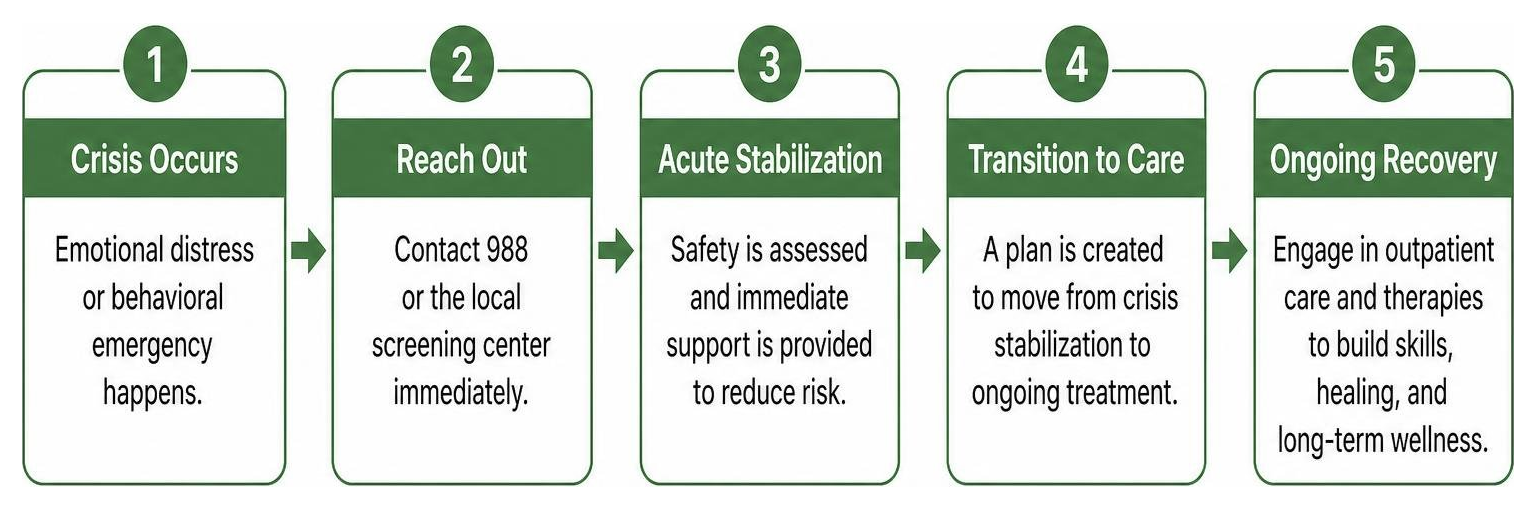
At True Life Care Mental Health in Matawan, NJ, we bridge the gap between crisis stabilization and long-term recovery. Our comprehensive, evidence-based continuum includes:
- Partial Hospitalization Programs (PHP): Intensive daytime clinical support offering psychiatric management and structured daily therapy without overnight hospital stays.
- Intensive Outpatient Programs (IOP): Flexible group and individual therapy sessions structured around school, work, or family obligations.
- Group Therapy & Peer Healing: Guided group sessions focused on shared healing, emotional regulation, schizophrenia management, and clinical depression recovery.
- Custom Psychiatric Care: Dedicated medication management and evidence-based modalities like CBT and DBT tailored to individual goals.
We are an out-of-network provider and accept PPO plans, allowing Monmouth County families to access quality, personalized care without delay.
Frequently Asked Questions About Mental Health Hotlines in NJ
Are mental health crisis hotlines in NJ free and confidential?
Yes, absolutely. Hotlines like 988, the NJ Hopeline, 2NDFLOOR, and ReachNJ are completely free of charge, available regardless of health insurance status, and strictly confidential. Counselors operate under stringent federal and state privacy protocols. Information is only shared in rare circumstances where there is an immediate, life-threatening risk to safety.
What happens when you call 988 in New Jersey?
When you call 988, you hear a brief automated message giving options (e.g., Press 1 for Veterans, Press 2 for Spanish). While connected, music plays briefly until a trained crisis counselor at a local NJ call center answers. The counselor listens, de-escalates emotional distress, conducts a quick safety assessment, and provides local treatment referrals or dispatches mobile crisis teams if evaluated as necessary.
How do I get immediate help for a youth or adolescent in crisis?
For youth and teens up to age 20, contact PerformCare NJ at 1-877-652-7264. PerformCare can dispatch a Mobile Response and Stabilization Services (MRSS) team directly to your home or community site within one hour. Adolescents can also independently text or call the 2NDFLOOR Youth Helpline at 1-888-222-2228 for 24/7 confidential support.
Conclusion
Navigating a mental health crisis can feel overwhelming, but no family in Monmouth County or across New Jersey has to walk that path alone. By utilizing the mental health crisis hotline nj system—whether dialing 988 for immediate crisis de-escalation, calling ReachNJ for substance support, or reaching out to a peer warm line—immediate relief is always a phone call away.
Hotlines provide essential immediate stabilization, but lasting recovery requires structured, compassionate, ongoing care. True Life Care Mental Health is dedicated to helping Monmouth County residents at our Matawan, NJ location. Our team stands ready to assist families during psychiatric emergencies, guiding individuals through severe depression treatment, schizophrenia care, personalized psychiatric care, and transformative group therapy.
We operate as an out-of-network provider and accept PPO plans to keep high-quality behavioral healthcare accessible. If you or a loved one need help transitioning from a crisis to sustained health, explore our resources to get help for mental health and start your healing journey today.