Trauma Treatment in New Jersey: What You Need to Know
Trauma treatment New Jersey residents can access spans a wide range of evidence-based options — from EMDR and CBT to group therapy and holistic care — at facilities across the state, including True Life Care’s Matawan location serving Monmouth County. Our facility is an out-of-network provider and accepts PPO plans, ensuring that those seeking high-quality, specialized care can utilize their insurance benefits to access life-changing support. We focus on providing a clinical environment that prioritizes the individual’s unique history and psychological needs, moving beyond generic care models to offer something truly transformative.
Here are the 5 most effective trauma treatments available in New Jersey:
- EMDR (Eye Movement Desensitization and Reprocessing) – Uses bilateral stimulation to reprocess traumatic memories and reduce emotional distress. This method is particularly effective for those who have found traditional talk therapy insufficient for their needs.
- Cognitive Behavioral Therapy (CBT) and Prolonged Exposure – Helps confront and reframe trauma-related thoughts and fears. By addressing the cognitive distortions that follow a traumatic event, patients can regain a sense of agency and safety.
- Dialectical Behavior Therapy (DBT) – Builds emotional regulation and distress tolerance skills for complex trauma. DBT is essential for individuals who experience intense emotional volatility or self-harming urges as a result of their past experiences.
- Trauma-Informed Group Therapy – Provides peer support and collective healing in a safe, structured setting, which is a cornerstone of our Matawan program. Group dynamics allow for the breaking of isolation and the building of community.
- Holistic and Expressive Arts Therapies – Includes yoga, meditation, art therapy, and somatic approaches for whole-person healing. These therapies address the physiological storage of trauma within the body’s nervous system.
Trauma is more common than most people realize. Research shows that 60–75% of people in North America experience a traumatic event at some point in their lives. Yet many people in New Jersey go without proper support for months or even years. In the fast-paced environment of the Garden State, the pressure to “keep moving” often leads individuals to suppress their experiences, which only deepens the psychological impact over time. The culture of the Northeast often emphasizes resilience and “toughing it out,” but clinical trauma requires more than just willpower; it requires professional intervention and a safe space to process the unthinkable.
That gap has real consequences. Untreated trauma doesn’t just fade on its own. It can show up as anxiety, depression, sleep problems, relationship breakdowns, or even substance use. For some, it develops into full PTSD. For others, it quietly erodes quality of life without an obvious label. In more severe cases, trauma can exacerbate or even trigger symptoms of schizophrenia and treatment-resistant depression, requiring a highly specialized clinical approach. When trauma is left unaddressed, the nervous system remains in a state of constant high alert, leading to physical exhaustion and a breakdown of the immune system. This is why comprehensive care is not just a luxury, but a medical necessity for long-term health.
The good news? Effective, evidence-based trauma treatment is available across New Jersey — and recovery is absolutely possible. Whether you’re dealing with a single traumatic event, years of chronic stress, or a co-occurring condition like depression or schizophrenia, there are structured programs designed to meet you where you are. True Life Care accepts PPO plans as an out-of-network provider, helping make quality care accessible for those ready to start their journey toward healing in Monmouth County. Our team is dedicated to navigating the complexities of trauma with you, providing a roadmap from crisis to stability.
This guide breaks down the best trauma treatment options in New Jersey, who they’re for, and how to find the right fit for your specific needs. We will explore the science behind these treatments and how they are implemented in a clinical setting to ensure the best possible outcomes for our patients.
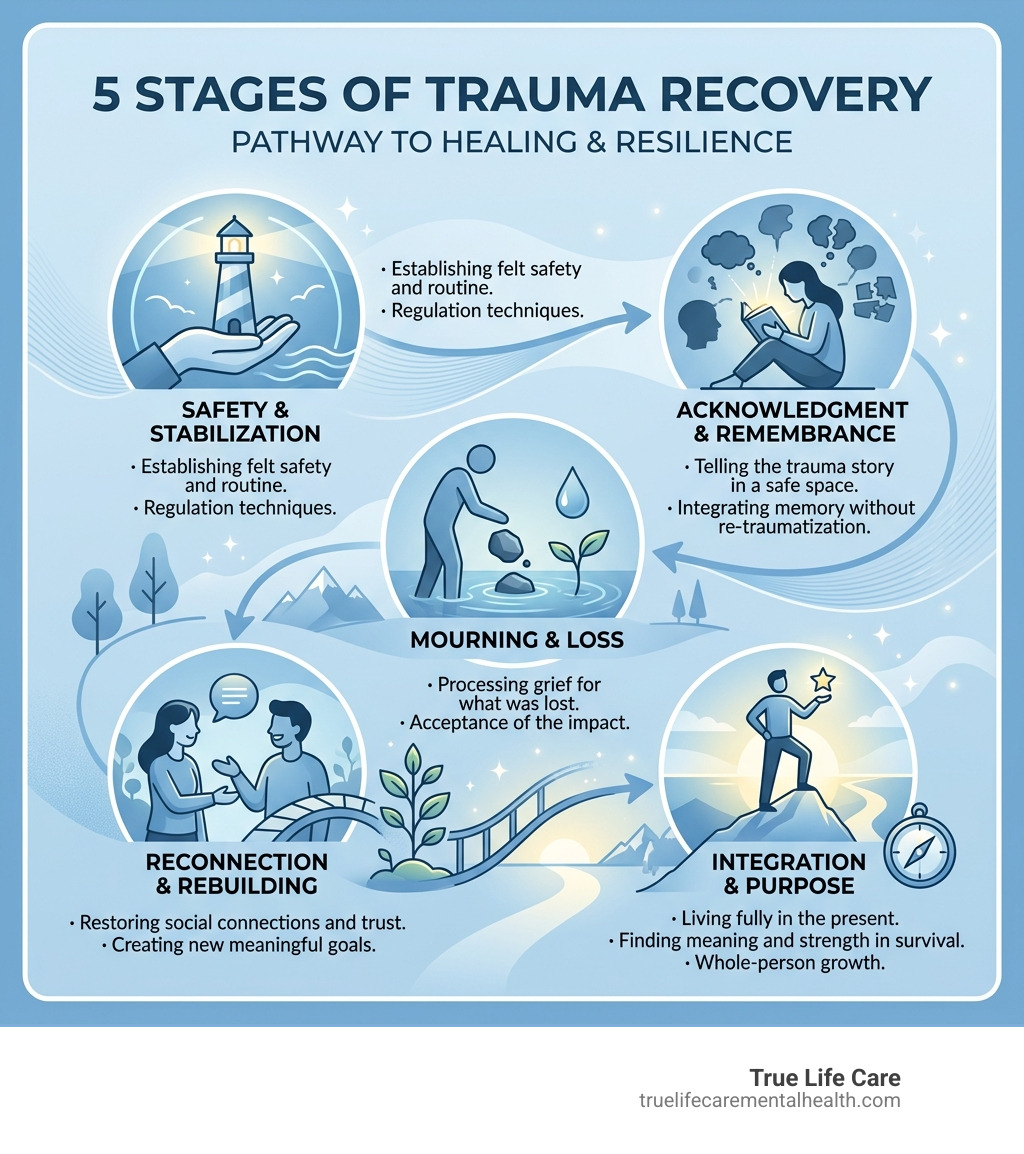
Trama Treatment New Jersey glossary:
Understanding Trauma and PTSD in the Garden State
Living in New Jersey means navigating a high-energy, often high-stress environment, but it also means having access to some of the nation’s leading mental health resources. To find the right Trama Treatment New Jersey offers, we first have to understand what we are dealing with. Trauma isn’t just “one thing.” It is a broad term describing a person’s response to a stressful, scary, or threatening event that overwhelms their ability to cope. It is not the event itself that defines trauma, but the internal psychological and physiological response to that event. This response can vary wildly from person to person, influenced by genetics, previous history, and the level of support available immediately following the incident.

In our experience, New Jersey residents face a variety of traumatic experiences. These range from acute trauma (a single stressful event like a car accident, a violent crime, or a natural disaster) to chronic stress (prolonged exposure to events like domestic abuse, community violence, or workplace bullying). There is also Complex PTSD (C-PTSD), which often stems from long-term repeated trauma, such as childhood neglect, ongoing interpersonal violence, or systemic oppression. Understanding the root causes of PTSD is the first step toward reclaiming your life and moving toward a state of lasting healing. C-PTSD, in particular, requires a nuanced approach because it often impacts the very core of a person’s identity and their ability to trust others.
The symptoms of trauma can be overwhelming and often impact daily functioning, making it difficult to maintain employment or healthy relationships in Monmouth County and beyond. The biological impact of trauma involves the amygdala, the hippocampus, and the prefrontal cortex. When trauma occurs, the amygdala (the brain’s alarm system) becomes overactive, while the prefrontal cortex (the rational center) becomes underactive. This creates a state where the individual is constantly reacting to perceived threats that may not be present in the current environment. You might experience:
- Hypervigilance: Always being “on guard” or feeling like danger is around every corner, even in safe environments. This can lead to chronic exhaustion and physical tension.
- Flashbacks: Feeling as though the traumatic event is happening all over again in the present moment, often triggered by sights, sounds, or smells. These are not just memories; they are full-body re-experiences of the original event.
- Emotional Dysregulation: Sudden outbursts of anger, deep shame, or intense anxiety that seem difficult to control and can lead to social isolation. This often stems from the brain’s inability to modulate emotional responses.
- Avoidance: Staying away from people, places, or activities that remind you of the event, which can severely limit your quality of life and lead to a shrinking of one’s world.
It is important to note that everyone reacts differently to stress. This is why some people wonder why some survivors develop PTSD after sexual assault and others don’t. Factors such as biological resilience, the presence of a support system, and the ability to process the event early on play massive roles. There is no “right” or “wrong” way to feel after a traumatic event, but when these symptoms persist for months or worsen over time, professional intervention becomes essential. Organizations like The Middlesex County Center for Empowerment provide vital support, but many find that clinical, evidence-based therapy at a specialized facility is what finally breaks the cycle of pain. At True Life Care, we focus on the intersection of these symptoms with other conditions, ensuring that if a patient is also struggling with depression or schizophrenia, their trauma treatment is integrated and comprehensive. We recognize that trauma can be the “engine” driving other psychiatric symptoms, and by addressing the engine, we can provide more effective relief for the entire clinical picture.
5 Effective Evidence-Based Trama Treatment New Jersey Options
When you are looking for help, you want to know that the methods being used actually work. In mental health, we call these “evidence-based” treatments. This means they have been rigorously studied and proven to reduce symptoms of trauma and PTSD. At True Life Care, we believe in clinical excellence and trauma focused therapy for adults. Whether you are looking for trauma and PTSD therapists in Bergen County, NJ or seeking care at our Matawan location in Monmouth County, these five modalities represent the gold standard of care. Each of these treatments addresses a different aspect of the trauma response, from the cognitive to the somatic.
1. Eye Movement Desensitization and Reprocessing (EMDR)
EMDR is often described as one of the most innovative and effective forms of trauma therapy. Unlike traditional talk therapy, EMDR doesn’t require you to describe your trauma in graphic detail, which can be a relief for those who find verbalizing their experience too overwhelming. Instead, it uses bilateral stimulation—usually through guided eye movements, taps, or tones—to help your brain reprocess stuck memories. We often explain EMDR by comparing it to REM sleep. During REM sleep, your brain processes the day’s events and moves them into long-term storage. EMDR mimics this process, allowing EMDR therapy for trauma recovery to help “unstick” traumatic memories that have been stored in a raw, emotional state in the amygdala. This leads to a significant reduction in emotional distress, allowing you to remember the event without feeling the intense physical and emotional pain associated with it. The goal is not to forget, but to transform the memory so it no longer controls your present life.
2. Cognitive Behavioral Therapy (CBT) and Prolonged Exposure
CBT focuses on the connection between your thoughts, feelings, and behaviors. For trauma survivors, CBT helps identify and restructure negative beliefs like “It was my fault,” “I am permanently broken,” or “The world is entirely unsafe.” These “stuck points” prevent natural recovery. A specific type of CBT often used is Prolonged Exposure (PE). This involves gradually and safely confronting the memories and situations you’ve been avoiding. By facing these fears in a controlled environment with a trained clinician, the brain learns that the “danger” is no longer present, which leads to a massive reduction in fear and avoidance behaviors. This process helps the prefrontal cortex regain control over the emotional centers of the brain. You can learn more about how we implement these strategies in our trauma focused therapy for adults 2/ program, which emphasizes the gradual building of safety and mastery over one’s environment.
3. Dialectical Behavior Therapy for Complex Trama Treatment New Jersey
For those dealing with complex trauma or C-PTSD, traditional methods sometimes need a boost. This is where Dialectical Behavior Therapy (DBT) shines. DBT was originally designed for intense emotional dysregulation and is incredibly effective for trauma survivors who feel “flooded” by their emotions or who struggle with interpersonal relationships. Dialectical behavior therapy for PTSD focuses on four key skill areas: Mindfulness (staying present), Distress Tolerance (getting through a crisis without making it worse), Emotion Regulation (understanding and changing emotions), and Interpersonal Effectiveness (communicating needs and boundaries). These skills are essential for those who also struggle with the mood swings associated with depression or the cognitive challenges of schizophrenia. DBT provides a concrete toolkit for managing the “storms” of trauma, allowing patients to build a life that feels worth living.
4. Trauma-Informed Group Therapy and Healing
There is a unique power in realizing you are not alone. Trauma can be incredibly isolating, making you feel like no one could possibly understand what you’ve been through. This isolation often breeds shame, which is the primary barrier to healing. Trauma-informed group therapy breaks that isolation. In a group setting, peers share their experiences and support one another’s growth under the guidance of a clinical facilitator. This collective healing creates an environment of safety and trust that is difficult to replicate in individual sessions. It allows participants to practice interpersonal skills, receive validation from others who truly “get it,” and witness the progress of their peers, which provides hope. In New Jersey, group therapy is a vital component of our Intensive Outpatient Programs (IOP) in Matawan, offering a middle ground between individual sessions and residential care. The shared journey of healing in a group setting often accelerates progress, as participants learn that their reactions are normal responses to abnormal events.
5. Holistic and Expressive Arts Therapies
Sometimes, words aren’t enough. Trauma is often “stored” in the body and the subconscious mind, making it hard to reach through talking alone. This is why we integrate art therapy for trauma into our care models. Through mending minds with masterpieces trauma informed art exercises, survivors can express emotions that are too difficult to verbalize, using color, shape, and texture to process their internal world. In addition to art, holistic practices like yoga, meditation, and somatic experiencing help regulate the nervous system. These methods teach the body how to move from a state of “fight or flight” back into a state of “rest and digest.” By focusing on the breath and physical sensations, patients can learn to ground themselves when triggered, providing a comprehensive approach to whole-person healing that addresses the physical, emotional, and spiritual aspects of recovery. This integrated approach ensures that the body and mind heal in tandem, reducing the likelihood of physical ailments often associated with chronic trauma.
Specialized Care for Co-occurring Schizophrenia and Depression
At True Life Care, we recognize that trauma rarely travels alone. Many individuals seeking Trama Treatment New Jersey are also navigating other serious mental health challenges. When trauma intersects with conditions like schizophrenia or treatment-resistant depression, the care must be even more specialized. The presence of trauma can often complicate the clinical picture, making standard treatments for schizophrenia or depression less effective if the underlying traumatic stress is not addressed simultaneously. For example, a person with schizophrenia may experience hallucinations that are themed around their past trauma, or a person with depression may find that their lack of motivation is actually a “freeze” response from a traumatic event.
For those dealing with a dual diagnosis, we provide integrated psychiatric care at our Matawan facility. Managing symptoms of schizophrenia requires a delicate balance of medication and therapeutic support, especially when trauma-induced paranoia or hallucinations are present. We offer an essential guide to schizophrenia treatment in NJ to help families understand the path to long-term stability. Our approach ensures that the patient feels safe and supported while addressing the complex neurobiological aspects of their condition. We utilize specialized CBT for psychosis alongside trauma-informed care to help patients distinguish between past trauma and current symptoms, fostering a sense of reality and safety.
Similarly, trauma can often lead to deep, persistent depression that doesn’t respond to standard antidepressants. This “trauma-based depression” requires a focus on healing the nervous system and reprocessing the events that led to the depressive state. It is not just a chemical imbalance; it is a response to a world that feels fundamentally unsafe or hopeless. By addressing the underlying trauma while simultaneously treating the depressive symptoms through group therapy and individual counseling, we can help individuals achieve breakthroughs they never thought possible. If you are looking for specialized trauma and PTSD treatment centers in Mercer County, NJ, it is vital to find a facility like ours that understands these complex interactions and provides a path toward true healing and functional recovery. Our clinical team is trained to look for the “why” behind the symptoms, ensuring that we are treating the root cause rather than just the surface-level behaviors.
Navigating Levels of Care and Insurance in Monmouth County
Choosing the right level of care is just as important as choosing the right therapy. Not everyone needs a residential stay, but many need more than a once-a-week therapy session to make significant progress. At our Matawan, NJ location, we serve Monmouth County residents by offering flexible programs tailored to individual needs. Our facility is designed to be a sanctuary for healing, providing a structured environment where patients can focus entirely on their recovery while still maintaining a connection to their home and community. This “real-world” integration is vital for practicing the skills learned in therapy in the environment where they are most needed.
We also understand that crises don’t happen on a schedule. Whether it’s a psychiatric emergency or a sudden realization that a veteran needs immediate support, we are here to help. Veterans and PTSD understanding the need for immediate care is a priority for our team, as reintegration can often trigger dormant trauma. Veterans face unique challenges, including moral injury and the difficulty of transitioning from a high-stakes military environment to civilian life in New Jersey. In the event of a psychiatric emergency, our team is trained to provide rapid stabilization and transition patients into the appropriate level of intensive care, ensuring safety and continuity of treatment throughout the entire process.
Comparison of Care Levels
| Level of Care | Description | Best For |
|---|---|---|
| PHP (Partial Hospitalization) | Full-day treatment (5-6 hours) while living at home. Includes psychiatric oversight and intensive therapy. | Severe symptoms requiring intensive daily structure and psychiatric monitoring to prevent hospitalization. |
| IOP (Intensive Outpatient) | Half-day treatment (3 hours) several times a week. Focuses on skill-building and group support. | Balancing recovery with work, school, or family life in Monmouth County while receiving high-level care. |
| Outpatient Care | Individual or group sessions once or twice a week. Focuses on maintenance and long-term growth. | Maintaining progress, preventing relapse, and ongoing healing after completing more intensive programs. |
When it comes to accessing care, we strive for transparency. True Life Care is an out-of-network provider and we accept PPO plans. This allows patients with PPO insurance to access our specialized trauma, schizophrenia, and depression programs. We recommend contacting our team for a quick insurance verification to see how your specific plan can support your journey. Our goal is to remove the administrative barriers to care so you can focus on what matters most: your health and well-being. We believe that high-quality clinical care should be accessible to those who have the appropriate insurance coverage, and we work diligently to help you understand your benefits from day one.
Accessing Trama Treatment New Jersey for Veterans and Survivors
New Jersey has specific resources for those who have experienced targeted trauma. This includes veteran reintegration programs and specialized support for survivors of violent crimes. We believe that everyone deserves a safe space to heal, regardless of their background. Whether you are seeking a PTSD treatment center New Jersey for military-related trauma or looking for LGBTQ+ inclusive support, the right program is out there. Many people find that an intensive outpatient program PTSD treatment can help you heal by providing the tools needed to manage triggers in real-time while remaining connected to their community and support systems in Matawan and the surrounding areas. This level of care allows for a gradual transition back into full daily functioning without the abruptness of leaving a residential facility.
Frequently Asked Questions about Trauma Recovery
How do I know if I need professional trauma therapy?
If you find that memories of a past event are interfering with your ability to work, sleep, or maintain relationships, it is time to seek help. Other signs include feeling constantly “on edge,” experiencing unexplained physical pain, or using substances to numb your emotions. If your symptoms haven’t improved after a few months, professional Trama Treatment New Jersey can provide the tools you need to move forward. This is especially critical if you are also experiencing symptoms of depression or schizophrenia, as trauma can worsen these conditions significantly. Seeking help is not a sign of weakness; it is a proactive step toward reclaiming your life and ensuring your long-term health.
What is the difference between EMDR and traditional talk therapy?
Traditional talk therapy (like psychodynamic therapy) often focuses on gaining insight into your past and talking through your feelings. While valuable, it can sometimes be slow for trauma because it relies on the verbal centers of the brain, which often “shut down” during traumatic events. This is why some people feel they are “talking in circles” without feeling better. EMDR is a specialized technique that focuses directly on how the brain stores traumatic memories. It uses physical “bilateral stimulation” to help the brain reprocess the event, often leading to faster symptom relief for PTSD than talk therapy alone. It is particularly effective for those who find it difficult to put their experiences into words or who feel overwhelmed by the prospect of detailed storytelling.
Does insurance cover trauma treatment in New Jersey?
Yes, most major insurance plans cover trauma and mental health treatment as part of their behavioral health benefits. At True Life Care, we are an out-of-network provider and accept PPO plans. Many of our clients find that their PPO insurance allows them to access our comprehensive PHP and IOP programs in Matawan. We provide a seamless insurance verification process to help you understand your benefits before you begin, ensuring you can start your treatment with peace of mind regarding your coverage. We are committed to helping you navigate the insurance landscape so that you can focus on your clinical progress.
Can group therapy really help with deep-seated trauma?
Absolutely. Group therapy is one of the most effective ways to heal from trauma because it addresses the isolation and shame that trauma often creates. In a trauma-informed group, you are surrounded by others who understand your struggles, providing a level of validation that is difficult to find elsewhere. It also allows you to practice social skills and emotional regulation in a safe, controlled environment, which is vital for long-term healing and reintegration into daily life in Monmouth County. Seeing others succeed in their recovery can also provide a powerful sense of hope and motivation that is unique to the group experience.
How long does trauma treatment usually take?
Recovery is a highly individual process and there is no set timeline. Some individuals may see significant symptom reduction in a few months of intensive treatment (like PHP or IOP), while others may benefit from ongoing outpatient support for a year or more. The goal of Trama Treatment New Jersey at True Life Care is to provide you with the tools to manage your symptoms independently. We focus on sustainable progress rather than quick fixes, ensuring that you have a solid foundation for long-term wellness. Your clinical team will work with you to adjust your treatment plan as you reach your goals.
Conclusion
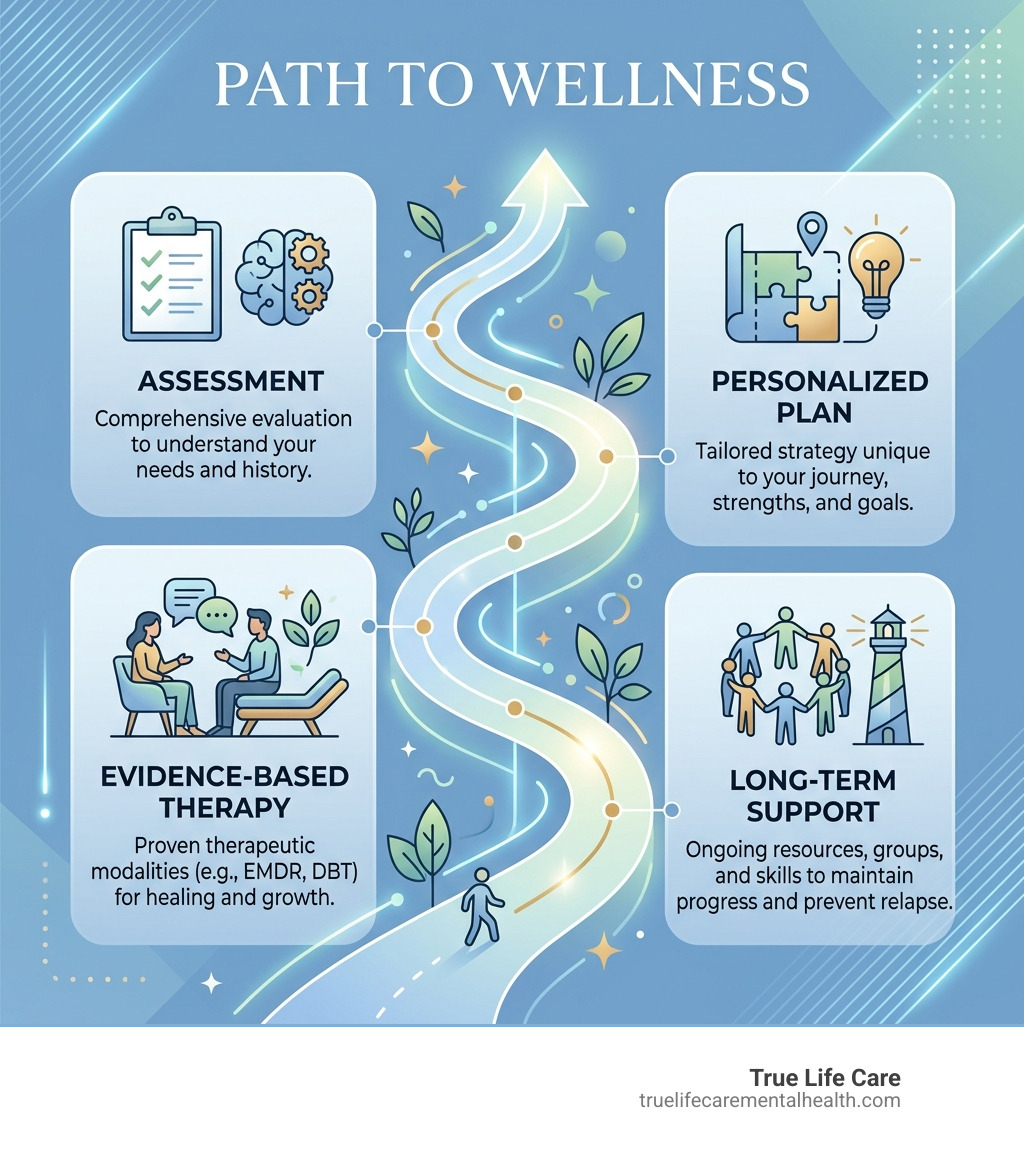
Healing from trauma is not a linear journey, but it is one you don’t have to take alone. New Jersey offers a wealth of resources, from advanced EMDR and DBT to supportive group environments and holistic arts. At True Life Care, we are proud to offer a holistic approach that empowers individuals for long-term recovery and well-being. Our focus on integrated care for trauma, schizophrenia, and depression ensures that every aspect of your mental health is addressed with expertise and compassion. We understand that the path to wellness involves the whole person—mind, body, and spirit.
Our Matawan, NJ location is dedicated to helping Monmouth County residents and those throughout the state find stability and peace. Whether you are dealing with the aftermath of a recent event, the heavy weight of childhood trauma, or a psychiatric emergency, we are here to help. By accepting PPO insurance and operating as an out-of-network provider, we make it possible for you to prioritize your mental health and access the high-quality care you deserve. Our facility provides a safe, professional, and nurturing environment where you can begin the hard work of healing with the support of a dedicated clinical team.
If you’re ready to take the first step toward a life defined by healing rather than hurt, we invite you to check out our buyers guide for the best trauma informed care NJ providers and reach out to us today. Your future is waiting, and it is brighter than your past. Let us help you navigate the path to wellness with a personalized plan designed for your unique journey. Recovery is not just about surviving; it is about thriving and reclaiming the joy and purpose that trauma may have taken away. We are here to walk that path with you, every step of the way.