
Recognizing the Warning Signs of a Mental health crisis
#
A mental health crisis is any situation where a person’s thoughts, feelings, or behaviors put them — or others — at risk of harm, or leave them unable to function in daily life. It can happen to anyone, even people already in treatment with a professional care team.
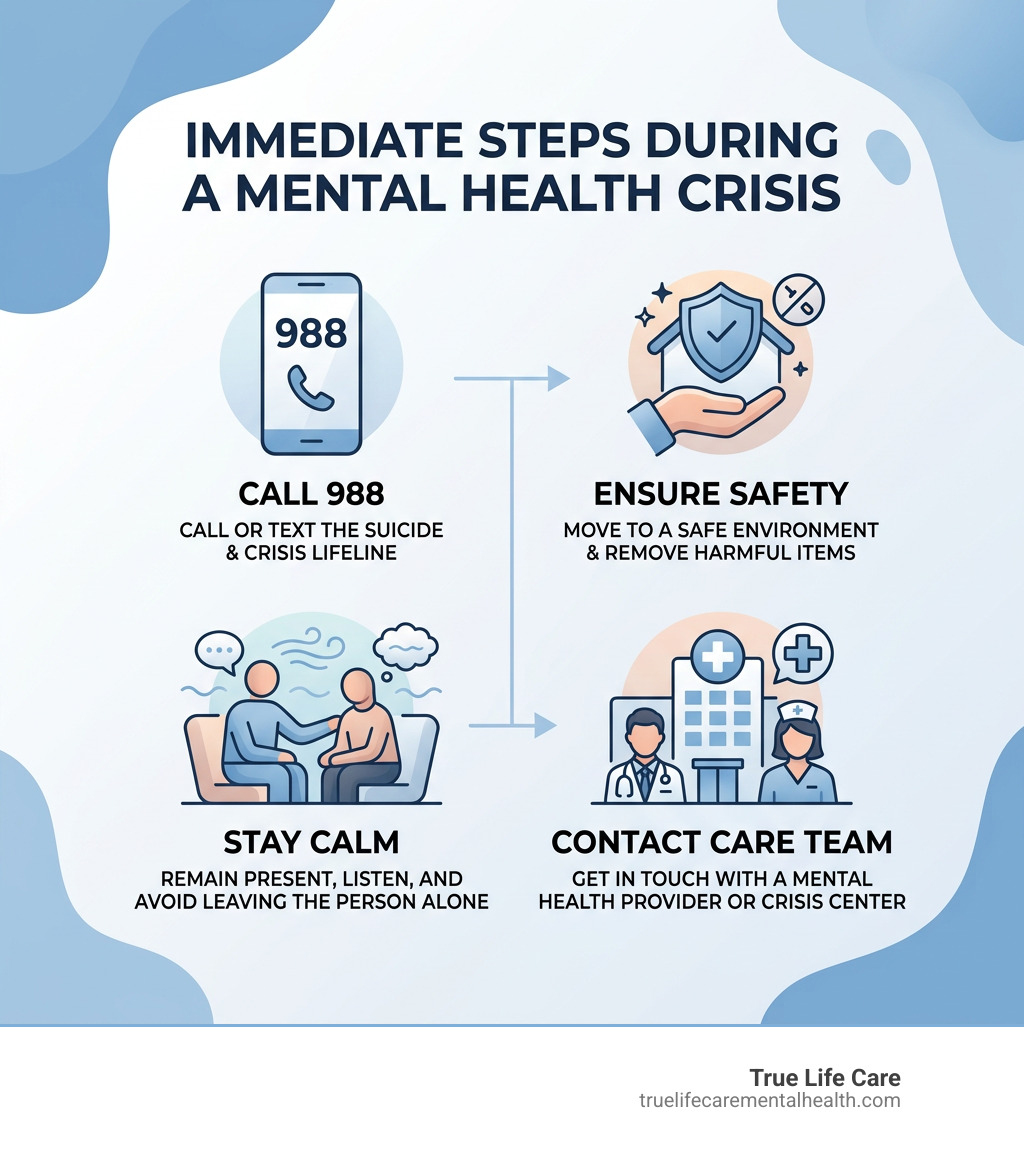
If you or someone you know is in crisis right now:
- Call or text 988 (Suicide & Crisis Lifeline) — free, confidential, 24/7
- Call 911 if there is immediate danger to life
- Move to a safe environment — remove access to weapons or harmful items
- Stay calm and present — don’t leave the person alone
- Contact a mental health provider or crisis center as soon as it is safe to do so
Crises are unpredictable by nature. As the National Alliance on Mental Illness (NAMI) puts it: when mental illness is present, the potential for crisis exists — and it can strike even when treatment plans are being followed.
In the U.S., more than 59 million adults live with a mental illness. Nearly half receive no treatment at all. That gap means many families are caught off guard, unsure what to do in the critical first moments.
This guide walks you through everything — from spotting early warning signs, to getting immediate help, to planning for long-term recovery.
Recognizing a Mental health crisis early can be the difference between a manageable situation and a tragedy. Often, the signs aren’t as dramatic as they appear in movies; they can be subtle shifts in behavior that signal the brain and body are working against a person’s goals.
Behavioral and Emotional Red Flags
When we talk about a crisis, we are looking for a significant departure from someone’s “normal.” This is why loved ones are often the first to notice. Common warning signs include:
- Inability to function: This might look like someone stopping their basic hygiene, failing to eat, or being unable to get out of bed for work or school.
- Withdrawal: Abruptly cutting off friends, family, and social activities. If a social butterfly suddenly cocoons themselves, take note.
- Excessive Anxiety or Mood Swings: Intense, uncontrollable worry, or rapid shifts between high energy and deep despair.
- Impulsive or Risky Actions: Engaging in dangerous behaviors, such as reckless driving or increased substance use, which often serves as an attempt to self-medicate or escape emotional pain.
- Pattern Shifts: Notable changes in sleep (insomnia or oversleeping) and eating habits.
- Self-Harm Thoughts: Talking about wanting to die, feeling like a burden, or being preoccupied with death. This includes suicidal ideation, which can be active (having a plan) or passive (wishing for sleep that doesn’t end).

When to Seek Professional Intervention
It is a common misconception that you should wait for a “rock bottom” moment to seek help. In reality, the best time to act is the moment you realize someone’s safety or ability to function is at risk. We believe in being proactive rather than reactive. Knowing when to seek a professional mental health intervention is crucial. If the person is expressing hopelessness or you notice a sudden, inexplicable “calm” after a period of deep depression (which can sometimes indicate they have made a decision to self-harm), seek professional help immediately.
Understanding the Prevalence
You are not alone in this. According to Scientific research on mental illness prevalence, approximately 23.1% of U.S. adults (59.3 million people) experienced Any Mental Illness (AMI) in 2022. Even more striking is that nearly 50% of U.S. adolescents will experience a mental disorder at some point in their lives. These numbers highlight that a Mental health crisis is a public health reality, not a personal failure.
Immediate Response and Professional Resources
When a crisis hits, the atmosphere can feel electric with tension. Your primary goal is safety—for the person in crisis and for yourself.
Safety First: De-escalation Techniques
De-escalation is an art form that requires you to go against your natural “fight or flight” instincts. If someone is agitated, your own calm is your greatest tool.
- Stay Calm: Speak in a soft, low, and steady voice. Avoid shouting or using an authoritative tone, which can escalate the situation.
- Active Listening: Let them speak without interruption. Use “reflective listening” by saying things like, “It sounds like you’re feeling very overwhelmed right now.” This validates their feelings without necessarily agreeing with their reality.
- Environment Safety: Quietly remove potential “means” of harm. This includes firearms, sharp objects, or unprescribed medications. Reducing stimulation—like turning off a loud TV or asking extra people to leave the room—can also help lower the “emotional temperature.”
- Avoid Confrontation: Now is not the time to argue about their logic or tell them they are “acting crazy.” Instead, focus on their immediate feelings and safety.
If you are supporting someone through a dark moment, it’s helpful to review specific strategies on how to help someone who is suicidal.
Navigating a Mental health crisis with Professional Support
In New Jersey and across the nation, there are robust systems designed to catch you when you fall.
- 988 Suicide & Crisis Lifeline: This is the gold standard for immediate help. You can call or text 988 Suicide & Crisis Lifeline 24/7 to speak with a trained counselor. It is free, confidential, and available in English and Spanish.
- SAMHSA National Helpline: For those dealing with co-occurring substance use disorders, SAMHSA provides a 24/7 treatment referral and information service.
- FindTreatment.gov: This is a comprehensive FindTreatment.gov tool to locate providers in your specific area, including those who accept Medicaid or offer sliding scale fees.
- Local New Jersey Resources: For those in our backyard, we recommend familiarizing yourself with emergency mental health services in New Jersey. In New Jersey, we have a unique system of “Screening Centers” in every county that provide 24/7 psychiatric assessments.
Specialized Services for Vulnerable Populations
Not every crisis looks the same, and some groups face unique challenges that require specialized care.
- Veterans Crisis Line: Veterans can call 988 and press “1” or text 838255 to reach the Veterans Crisis Line. This connects them with responders who understand military culture and the specific traumas associated with service.
- LGBTQ+ Support: Youth in the LGBTQ+ community can reach out to specialized lines like The Trevor Project, which provides crisis intervention for those facing discrimination or family rejection.
- Youth Services: In New Jersey, parents can call PerformCare (877-652-7624) for the Children’s System of Care. They can dispatch mobile response units to your home within an hour to stabilize a child in crisis.
- Tribal Resources: SAMHSA offers specific Tribal Response grants and resources to ensure culturally competent care for Indigenous communities.
- Homelessness and Justice-Involved Programs: For those without stable housing or those interacting with the legal system, specialized crisis teams work to divert individuals from jails into treatment centers.
Preparation and Post-Crisis Recovery
The best time to plan for a Mental health crisis is when things are calm. Think of it like a fire drill; you don’t want to be reading the instructions while the smoke is rising.
Proactive Tools: The NAMI Approach
NAMI’s “Navigating a Mental Health Crisis” guide is an essential resource. We recommend every family creates a “Crisis Toolkit” containing the following:
- Portable Treatment Record: A document listing diagnoses, current medications (and dosages), names of doctors/therapists, and past treatments that were effective (or ineffective).
- Crisis Plan: A “Who to Call” list and a set of instructions for when the person is no longer able to make safe decisions for themselves.
- Relapse Plan: A document that identifies “triggers”—like stress at work or lack of sleep—and outlines the steps to take when early warning signs reappear.
Crisis Plan vs. Relapse Plan
| Feature | Crisis Plan | Relapse Plan |
|---|---|---|
| Focus | Immediate safety and stabilization | Long-term maintenance and prevention |
| When to Use | During an active emergency | When early warning signs (triggers) appear |
| Key Info | Emergency contacts, hospital preference | Coping skills, therapy schedule, trigger list |
| Goal | To prevent harm and get into treatment | To avoid reaching a crisis state again |
Caregiver Self-Care and Boundaries
Supporting someone in a Mental health crisis is exhausting. You cannot pour from an empty cup.
- Set Boundaries: It is okay to say, “I can support you, but I cannot be your only source of help.”
- Burnout Prevention: Seek your own therapy or join a support group for caregivers.
- Physical Health: Don’t skip your own sleep, meals, or exercise. Your resilience is what allows you to be a stable anchor for your loved one.
Long-Term Recovery After a Mental health crisis
Once the immediate danger has passed, the “real” work of recovery begins. This often involves a transition from emergency care to a more structured treatment environment.
- Inpatient Admission: In some cases, a short stay in a psychiatric hospital is necessary for stabilization. This allows for 24/7 monitoring and medication adjustments.
- Treatment Expectations: Recovery isn’t a straight line. Expect some “two steps forward, one step back” moments.
- Family Involvement: We find that treatment is most successful when the family is involved in discharge planning. This ensures the home environment is supportive and that everyone understands the next steps.
- Understanding Costs: Medical bills shouldn’t be another crisis. Educate yourself on IMH emergency charges and what to expect to avoid financial surprises.
- Holistic Recovery: At True Life Care, we believe in treating the whole person. This includes flexible programs like Partial Hospitalization Programs (PHP) and Intensive Outpatient Programs (IOP). These allow individuals to receive high-level expert psychiatric care during the day while returning to the comfort of their own homes in the evening.
Frequently Asked Questions
What is the difference between 988 and 911 during a crisis?
Think of 988 as the “Mental Health First Responders.” When you call 988, you are connected to a trained counselor who can talk you through the distress. In many areas, 988 can also dispatch mobile crisis teams that consist of mental health professionals rather than police officers.
911 should be reserved for life-threatening emergencies—such as an active suicide attempt or a situation where someone has a weapon. While law enforcement is increasingly trained in crisis intervention, their primary role is safety and scene control. If you call 911, explicitly state: “This is a mental health emergency. Please send a Crisis Intervention Team (CIT) officer if available.”
How can I de-escalate a mental health crisis at home?
The key is to reduce the “emotional load” in the room.
- Stay Calm: If you get angry or scared, the person in crisis will mirror that emotion.
- Give Space: Don’t crowd the person; physical distance can feel safer.
- Use Short Sentences: A brain in crisis cannot process complex instructions. Keep it simple: “I am here. You are safe. Let’s sit down.”
- Listen More, Talk Less: Sometimes, just being a witness to their pain is enough to lower the intensity.
Does insurance cover emergency mental health admissions?
Yes, thanks to Mental Health Parity laws, most insurance plans are required to cover mental health emergencies at the same level they cover physical health emergencies.
- Medicaid/CHIP: Provides robust coverage for crisis services and inpatient stays.
- Private Insurance: Coverage varies by plan, but emergency stabilization is typically covered.
- Financial Barriers: If you are uninsured, many New Jersey counties have “charity care” programs at hospitals to ensure you aren’t denied life-saving treatment due to an inability to pay.
Conclusion
The “unpredictability” of mental illness is perhaps its most difficult trait, but it is not a reason to lose hope. A Mental health crisis is a medical emergency, much like a heart attack, and it requires a swift, compassionate, and professional response.
By educating our communities in Bergen, Morris, and Passaic counties—and beyond—we can reduce the stigma that often prevents people from seeking help. Stigma is born from a lack of education; when we understand that the brain is an organ that can get sick, we can treat these crises with the urgency and dignity they deserve.
At True Life Care, we are committed to providing that dignity. Whether through our PHP and IOP programs or our expert psychiatric care, we offer a holistic path forward. You don’t have to navigate this storm alone.
For more information on our services and how we can support your recovery journey, visit us at https://truelifecarementalhealth.com/. We are here to help you move from crisis to connection, and from struggle to strength.