
When You Need Help Now: What a Mental Health Crisis Support Line Can Do for You
A mental health crisis support line is a free, confidential service that connects people in emotional distress with trained counselors — available 24 hours a day, 7 days a week, 365 days a year. Here’s what you need to know right now:
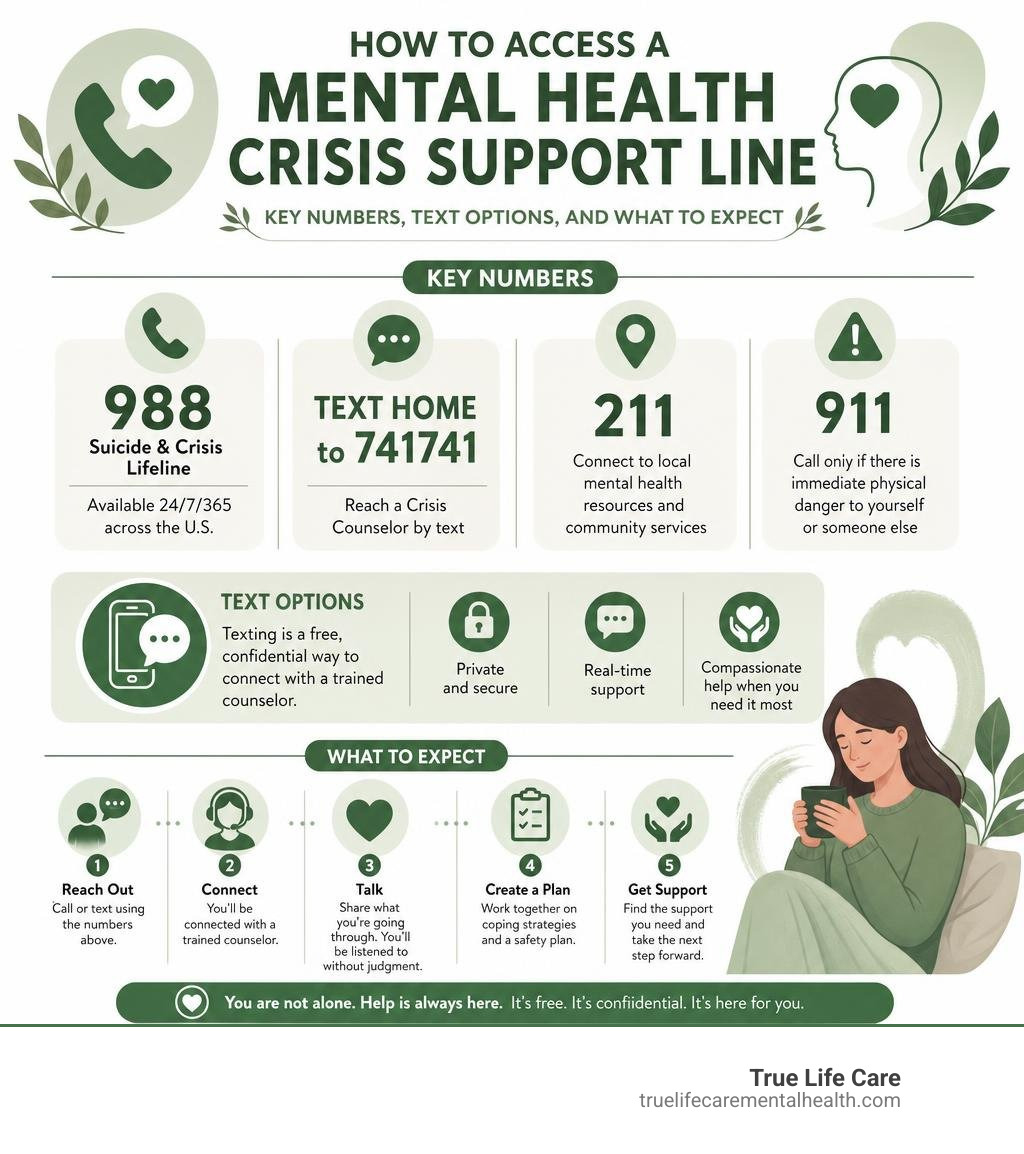
- Call or text 988 — the national Suicide & Crisis Lifeline, available across the U.S. at any hour
- Call 911 only if there is immediate physical danger to yourself or someone else
- Text HOME to 741741 to reach a Crisis Text Line counselor via text message
- Call 211 to find local mental health resources and community services in your area
- Crisis lines are always free — no insurance required
When everything feels like it’s falling apart, knowing where to turn can make all the difference. A mental health crisis doesn’t announce itself with a neat warning label. It can arrive as a wave of panic at 2 a.m., a moment of despair that feels impossible to survive, or a quiet, frightening thought that won’t go away. For many people in New Jersey and across the country, a crisis support line is the first lifeline they reach for — and often, it’s exactly what keeps them safe.
One caller to a distress line described it this way: speaking with a counselor helped them feel genuinely heard, giving them the strength to stay present for their children when they felt they had no other options. That kind of impact — immediate, human, and real — is what these services are built to provide.
In 2024 alone, the CMHA Edmonton Distress Line answered over 11,000 calls, with more than 20% directly related to suicide. In the United States, the 988 Suicide & Crisis Lifeline fields millions of contacts each year, with most callers reporting that they feel less suicidal, less overwhelmed, and more hopeful after speaking with a counselor. These aren’t just statistics — they reflect real moments where a phone call changed the outcome.
This guide covers everything you need to know: how crisis lines work, who they serve, what to expect when you call, and how to use them to help a loved one. If you or someone you care about is struggling right now — in Monmouth County, throughout New Jersey, or anywhere in the country — support is closer than you think.
Understanding the Role of a Mental Health Crisis Support Line
A mental health crisis support line serves as a vital bridge between acute emotional suffering and immediate, compassionate stabilization. Unlike traditional medical channels, these lines are specifically designed to address the psychological, emotional, and behavioral aspects of a crisis. They provide a critical safety net for individuals experiencing overwhelming distress, offering immediate access to clinical guidance and emotional grounding when it is needed most.
When you connect with a support line, you are not speaking to an administrative operator or a generic call-center agent. You are paired with a trained crisis counselor whose primary goal is to listen without judgment, help de-escalate your emotional state, and collaborate with you on a safety plan. These professionals are trained in crisis intervention theories, active listening, and risk assessment, ensuring that every interaction is handled with the utmost clinical care and empathy. The core services of these helplines include:
- Immediate Crisis Intervention: Utilizing evidence-based psychological de-escalation techniques to help you ground yourself when feelings of anxiety, panic, or despair become too heavy to carry.
- Suicide Prevention: Direct, specialized support for individuals experiencing suicidal ideation, self-harm urges, or intrusive thoughts of ending their life.
- Compassionate Emotional Support: Offering a safe, validating environment to discuss life challenges, including severe grief, relationship distress, trauma triggers, loneliness, or overwhelming stress.
- Local Resource Referrals: Connecting you to local outpatient care, community mental health centers, peer support groups, and long-term stabilization programs.
One of the most common questions people ask is: How does a crisis line differ from emergency services like 911?
Understanding this distinction is critical, especially when determining what to do when a mental health crisis strikes. While 911 is built to dispatch physical emergency responders (such as police, paramedics, or firefighters) to a scene of immediate medical or physical danger, a crisis line focuses entirely on emotional and psychiatric triage. This specialized focus allows individuals to receive targeted mental health support without the added stress of physical emergency interventions unless absolutely necessary.
According to the SAMHSA 988 FAQ, the vast majority of calls to the 988 Lifeline are successfully resolved over the phone or text without needing any physical emergency dispatch. By calling a dedicated mental health line first, you avoid unnecessary law enforcement dispatch or emergency room visits, ensuring that your immediate care is handled by mental health professionals rather than general first responders.
How to Access Immediate Help and What to Expect

Accessing a mental health crisis support line is simpler and more versatile than ever before. Responders recognize that during an emotional emergency, picking up the phone to speak out loud can sometimes feel too difficult. Because of this, modern crisis networks offer multiple modalities of communication, ensuring you can reach out in whatever format feels safest and most comfortable for you.
All of these primary channels are available 24 hours a day, 7 days a week, 365 days a year:
- The 988 Suicide & Crisis Lifeline: You can call or text 988 from any phone in the United States to be automatically routed to a local crisis center. If you prefer to communicate via a web browser, you can access their live chat service at 988lifeline.org.
- The Crisis Text Line: If you prefer texting over calling, you can text HOME to 741741 to connect with a trained volunteer crisis counselor. This service is also available through WhatsApp and web chat. You can learn more about how this digital platform operates by visiting the Crisis Text Line.
- The 211 Network: While not a direct crisis response line, dialing 211 connects you to local community resource specialists who can help you locate housing assistance, utility support, food pantries, and local mental health clinics that offer community-based care.
To help you understand which number is best suited for your immediate situation, we have put together a quick-reference comparison table:
| Service | Primary Number / Contact | Best Used For | What Happens |
|---|---|---|---|
| 988 Lifeline | Call or Text 988 | Suicidal thoughts, severe depression, anxiety, substance use crises, or emotional distress. | Connects to a trained crisis counselor for de-escalation, safety planning, and local referrals. |
| Crisis Text Line | Text HOME to 741741 | Stress, loneliness, relationship issues, anxiety, or self-harm where texting is preferred. | Text-based support with a trained volunteer counselor; conversations typically last 15–45 minutes. |
| 911 Emergency | Call 911 | Immediate physical danger, active self-harm in progress, medical emergencies, or physical safety threats. | Dispatches police, paramedics, or fire services to your physical location immediately. |
| 211 Community | Call 211 | Finding local support programs, housing, food security, outpatient therapy, or general utility assistance. | Connects to a community resource specialist who provides local program referrals. |
What Happens When You Contact a Mental Health Crisis Support Line?
It is completely natural to feel nervous about reaching out to a crisis line. Knowing exactly what happens behind the scenes can demystify the process and help you take that brave first step.
When you call 988, you will first hear a brief automated greeting that offers a few options (such as connecting to specialized veterans or Spanish-language services). While you wait, you will hear comforting hold music. On average, calls, texts, and chats to the 988 Lifeline are answered in under a minute.
Once connected, a trained crisis responder will introduce themselves. They will speak to you in a warm, calm, and non-judgmental tone. The counselor will:
- Listen to your story: They will give you the space to explain what you are going through, whether it is severe depression, panic, or thoughts of self-harm.
- Assess your safety: They will gently ask questions to understand if you are in immediate physical danger or if you have a plan to hurt yourself. This is a standard safety protocol designed to keep you safe, not to judge you.
- Collaborate on a coping plan: Together, you will explore simple, actionable strategies to help you calm down, ground yourself, and get through the next few hours.
- Provide resource connections: If appropriate, they will guide you toward local care options, such as emergency mental health services in New Jersey.
Confidentiality is a cornerstone of these services. Your conversation is private, and your personal details are protected. Counselors do not have access to your precise physical location; they only see your phone number or IP address to maintain a connection. Your information is only shared in extremely rare emergency exceptions where there is an imminent threat to life and active physical intervention is required to save you.
Specialized Support Options Available on a Mental Health Crisis Support Line
A crisis is never “one-size-fits-all.” Different communities face unique stressors, which is why national and local crisis lines offer specialized routing to ensure you speak with someone who truly understands your background and lived experience.
- The Veterans Crisis Line: Veterans, active-duty service members, and National Guard or Reserve members can call 988 and press 1, or text 838255 to connect with responders who are specifically trained in military culture and post-traumatic stress.
- LGBTQ+ Youth Support: Young people in the LGBTQ+ community can call 988 and press 3, or text PRIDE to 988 to be connected with counselors who specialize in LGBTQ+ advocacy, identity validation, and family rejection issues.
- Spanish-Language Services: Spanish speakers can call 988 and press 2, text AYUDA to 988, or access bilingual web chat to receive immediate support in their native language.
- Deaf and Hard of Hearing Accessibility: Individuals who are Deaf, hard of hearing, or speech-impaired can utilize their preferred relay service, dial 711 then 988, or use the “ASL Now” videophone option on the 988 Lifeline website to communicate directly with an ASL-fluent crisis counselor.
- National Maternal Mental Health Hotline: For pregnant women, new mothers, and parents struggling with postpartum depression or anxiety, calling or texting 1-833-TLC-MAMA (1-833-852-6262) connects you with trained maternal mental health specialists.
Navigating Psychiatric Emergencies and Immediate Danger
In some instances, a mental health situation escalates beyond what can be resolved through a phone call or text message. When an individual is in immediate, imminent danger of harming themselves or someone else, it becomes a psychiatric emergency.
If a counselor on a mental health crisis support line determines that a caller is at immediate risk of suicide or severe physical harm, they will work closely with the caller to establish safety. In a very small percentage of cases — usually under 2% of all 988 Lifeline calls — the counselor may need to coordinate an active rescue. Whenever possible, this is done with the voluntary consent and cooperation of the caller.
To minimize law enforcement involvement and create a calmer, more clinical intervention, many counties in New Jersey utilize Mobile Crisis Outreach Response Teams (MCORT). These teams typically consist of a licensed mental health clinician and a certified peer specialist (someone with lived experience of mental health recovery).
Instead of dispatching police cars with flashing lights, an MCORT team can travel directly to a home, school, or community location to provide on-site psychiatric evaluations, crisis de-escalation, and direct referrals to local stabilization programs. If you are navigating a severe crisis in New Jersey, you can find local resources through the top 10 psychiatric emergency screening locations in NJ, which are equipped to handle acute psychiatric needs with dignity and professional medical care.
Supporting a Loved One in Distress
It is incredibly painful and frightening to watch a family member, friend, or partner struggle with their mental health. Whether they are dealing with severe depression, overwhelming anxiety, or a complex condition like schizophrenia, you do not have to carry the burden of supporting them entirely on your own.
You can call or text a mental health crisis support line on behalf of someone else. If you are unsure of how to handle a situation, a crisis counselor can help you:
- Identify the warning signs of severe depression or acute psychosis.
- Learn how to talk to your loved one about suicide without increasing their risk.
- Develop a plan to keep their environment safe (such as securing medications or household hazards).
- Understand when to seek a professional mental health intervention to guide them toward structured care.
Supporting someone in crisis requires immense emotional energy. You cannot pour from an empty cup. Encouraging your loved one to participate in evidence-based recovery programs — such as professional depression treatment, specialized schizophrenia care, and peer-led group therapy — allows you to step back from being their primary “crisis manager” and return to being a supportive family member.

Frequently Asked Questions about Crisis Support
Navigating the landscape of crisis resources can sometimes feel overwhelming. Below, we have answered some of the most common questions about how these services operate.
Is calling or texting a crisis line confidential?
Yes. Calling, texting, or chatting with national services like 988 or the Crisis Text Line is confidential. Responders are trained to protect your privacy and adhere to strict confidentiality guidelines.
Your conversations are kept private, and your personal details are protected. The only exception to this rule is if a counselor has reason to believe your life (or someone else’s life) is in immediate, physical danger and you are unable or unwilling to cooperate with a voluntary safety plan. In those rare situations, they may share minimal necessary information with emergency services to ensure your safety.
How do national lines like 988 coordinate with local county resources?
The 988 Lifeline is a network of over 200 local crisis centers across the United States. When you call 988, the system uses your phone’s area code (or georouting technology) to route your call to the crisis center closest to you.
These local centers maintain deep connections with county-level mental health services, local mobile crisis outreach teams, and psychiatric screening clinics. If your call requires local follow-up care, your counselor can directly connect you with the specific resources available in your New Jersey county.
What is the difference between a crisis line and long-term mental health treatment?
A crisis support line is designed for immediate, short-term stabilization. It is a crucial safety net meant to help you get through a moment of acute distress, de-escalate intense emotions, and establish safety for the immediate future.
It is not a substitute for long-term psychiatric care, ongoing therapy, or structured rehabilitation. True, lasting healing from conditions like major depressive disorder, anxiety disorders, substance use, or schizophrenia requires a comprehensive treatment plan. This typically includes psychiatric evaluations, individual therapy, group therapy, and structured programs like Intensive Outpatient Programs (IOP) or Partial Hospitalization Programs (PHP).
Transitioning from Crisis to Long-Term Healing

Surviving a mental health crisis is a powerful turning point. While a mental health crisis support line provides the immediate safety net you need to get through the storm, the journey toward lasting wellness requires a sturdy, long-term foundation. Transitioning from acute crisis management to structured, professional care is the most effective way to prevent future emergencies and build sustainable coping mechanisms.
At True Life Care Mental Health, we specialize in helping individuals transition from acute crisis into a life of sustainable, long-term healing. Located in Matawan, NJ, we are proud to support Monmouth County residents and families throughout New Jersey with personalized, evidence-based mental health and addiction treatment.
We understand that recovery is not a one-size-fits-all process. That is why we offer a holistic approach that integrates expert psychiatric care with flexible, structured programs designed to fit your life:
- Partial Hospitalization Program (PHP): A highly structured, intensive day program that provides comprehensive psychiatric care and therapeutic support while allowing you to return home in the evenings.
- Intensive Outpatient Program (IOP): A flexible schedule of therapy and psychiatric check-ins, perfect for transitioning back into daily work, school, or family life while maintaining a strong recovery framework.
- Specialized Depression Treatment: Evidence-based clinical therapies designed to help you regain hope, rebuild coping mechanisms, and manage chronic depressive symptoms.
- Comprehensive Schizophrenia Care: Compassionate, professional psychiatric support focused on symptom management, medication education, and daily life skills.
- Healing Group Therapy: A warm, supportive environment where you can connect with peers who truly understand your struggles, reducing isolation and fostering shared healing.
Please note that True Life Care Mental Health is strictly an out-of-network provider and we accept PPO insurance plans, allowing you to focus on your recovery rather than administrative barriers. Our team is dedicated to helping you navigate your insurance benefits to maximize your coverage for our specialized programs.
If you or a loved one has recently experienced a psychiatric emergency, or if you are ready to take the next step toward a healthier, more balanced life, we are here to walk alongside you. You do not have to navigate this path alone. To learn more about our programs and find the support you deserve, visit our guide on how to get help for mental health or reach out to our team today.