
Finding the Right NJ Psychiatric Care: A Quick Answer
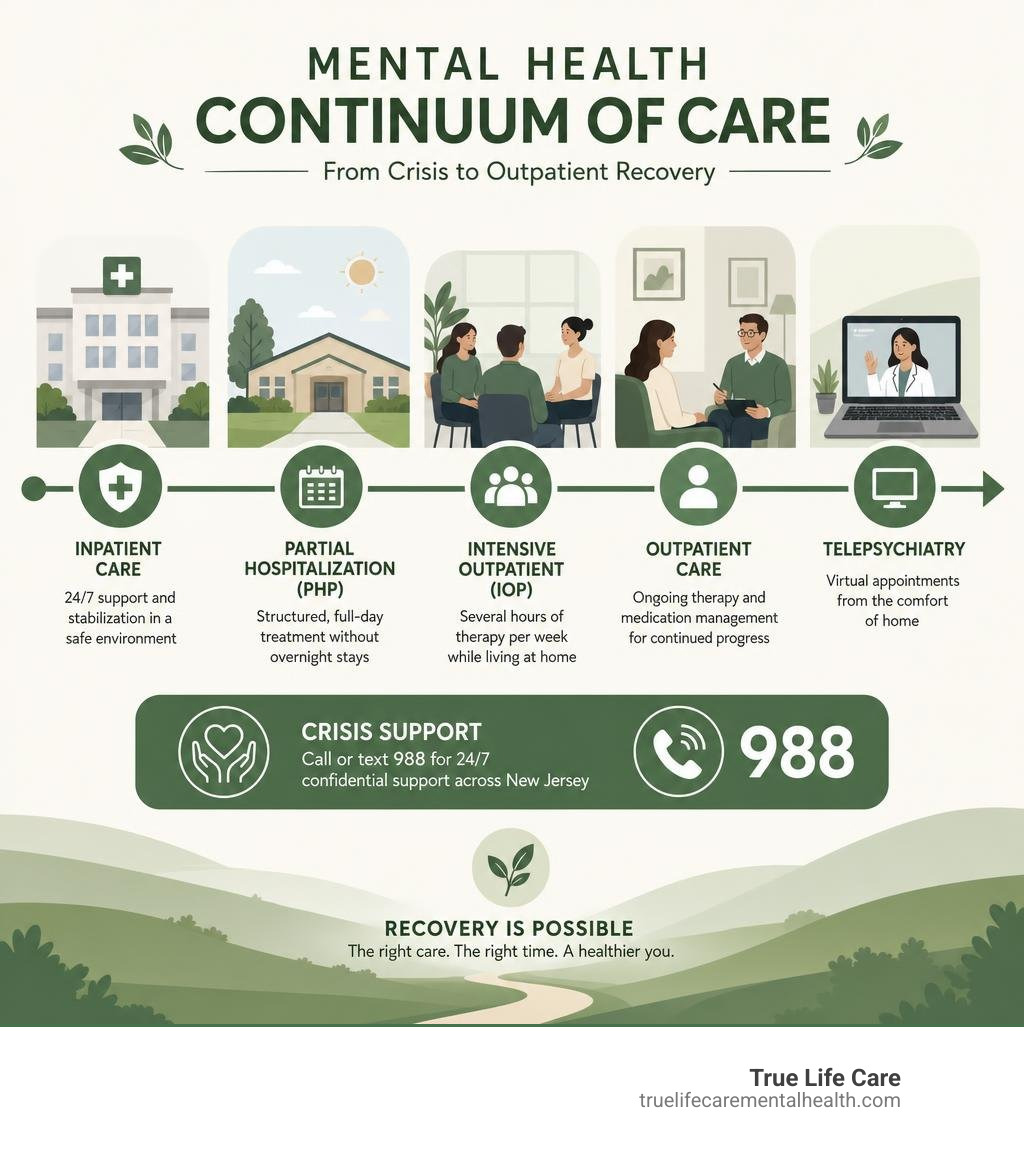
NJ psychiatric care spans a wide range of services — from inpatient hospitalization and partial hospitalization programs (PHP) to intensive outpatient programs (IOP), standard outpatient therapy, and telepsychiatry. Here is a quick breakdown of what is available and who it is for:
- Inpatient care — 24/7 supervised treatment for acute psychiatric crises, including conditions like schizophrenia, severe depression, and psychosis
- Partial Hospitalization Programs (PHP) — structured, full-day treatment without overnight stays; ideal for those stepping down from inpatient care
- Intensive Outpatient Programs (IOP) — several hours of therapy per week, including group therapy, while living at home
- Standard outpatient care — regular appointments with psychiatrists, psychologists, or therapists for ongoing medication management and talk therapy
- Telepsychiatry — virtual psychiatric appointments via HIPAA-compliant video platforms, available from home
- Crisis resources — call or text 988 for 24/7 confidential support across New Jersey
If you are an adult in New Jersey navigating mental health challenges — whether that is depression, anxiety, schizophrenia, PTSD, or a co-occurring disorder — the sheer number of options can feel overwhelming before you even begin to heal.
New Jersey has one of the most extensive behavioral health systems on the East Coast. The state operates four psychiatric hospitals with a combined capacity of over 1,400 beds. Alongside those, hundreds of private providers, community clinics, and integrated behavioral health centers serve residents across every county — from Morris County and Middlesex County to Monmouth County and beyond.
But a large system does not always mean an easy system to navigate. Knowing the difference between a psychiatrist and a therapist, understanding what level of care fits your situation, or simply figuring out whether your PPO plan will be accepted — these are real barriers that stop people from getting help.
This guide cuts through the noise. Whether you are looking for group therapy, crisis intervention, depression treatment, or long-term support for a complex condition like schizophrenia, you will find clear, practical information to help you take the next step.
True Life Care serves residents across New Jersey, including those in Monmouth County at our Matawan, NJ location. We are an out-of-network provider and accept PPO plans, offering personalized psychiatric care built around your recovery.
Nj psychiatric care helpful reading:
Understanding the Spectrum of NJ Psychiatric Care
When seeking nj psychiatric care, it is helpful to visualize treatment as a dynamic spectrum rather than a single, static destination. Mental health needs are fluid and fluctuate over time. A person might require intensive, round-the-clock clinical supervision during a severe psychiatric crisis, but as they stabilize, they transition to less restrictive programs that allow them to rebuild their daily routines, return to work, and reconnect with their families.
New Jersey offers a robust, highly integrated continuum of care designed to meet you exactly where you are in your recovery journey. This comprehensive range includes acute inpatient care, partial hospitalization programs (PHP), intensive outpatient programs (IOP), standard outpatient therapy, and modern telepsychiatry. A key, evidence-based component across almost all of these levels is group therapy. Healing alongside peers who share similar struggles reduces the profound isolation that often accompanies mental illness, builds essential social and interpersonal skills, and provides real-time feedback in a supportive, clinician-led environment.
To help you navigate your choices and understand the clinical pathways available, we have compiled a detailed guide to the primary psychiatric care options in New Jersey, highlighting how they differ in intensity, structure, and clinical focus. For a deeper look at hospital-based options, you can read our guide on Inpatient Psychiatric Hospitals in New Jersey Everything You Need to Know.
| Level of Care | Hours of Treatment | Overnight Stay? | Primary Focus | Best Suited For |
|---|---|---|---|---|
| Inpatient Care | 24/7 continuous supervision | Yes | Acute stabilization, crisis management, safety | Immediate danger to self/others, severe psychosis, acute mania |
| Partial Hospitalization (PHP) | 5–6 hours per day, 5 days/week | No | Intensive structured therapy, medication adjustment, daily support | Transitioning from inpatient care, severe depression, high-level dysfunction |
| Intensive Outpatient (IOP) | 3 hours per day, 3–4 days/week | No | Skill-building, group therapy, maintaining daily life | Moderate to severe symptoms, transitioning from PHP, ongoing recovery |
| Outpatient Care | 1–2 hours per week/month | No | Ongoing therapy, periodic medication management | Mild to moderate symptoms, long-term maintenance and wellness |
Inpatient vs. Outpatient NJ Psychiatric Care
The most fundamental division in psychiatric care is between inpatient and outpatient services. Understanding this distinction is crucial for determining the appropriate level of clinical intervention required for yourself or a loved one.
Inpatient psychiatric care is designed strictly for acute stabilization. When an individual is experiencing a severe mental health crisis — such as active suicidal ideation, severe psychosis, extreme manic episodes, or an inability to care for their basic physical needs — inpatient care provides a safe, locked, and highly monitored environment. The primary clinical focus is entirely on safety, rapid diagnostic assessment, and immediate medication management. Treatment is highly structured and includes daily evaluations by attending psychiatrists, 24/7 nursing care, and brief individual and group therapy sessions. To learn more about what to expect during a crisis admission, read about Acute Psychiatric Inpatient Care.
Outpatient psychiatric care, on the other hand, takes place while you continue to live at home, go to work, attend school, and participate in family life. It is highly flexible and designed to integrate seamlessly into your daily routine. Outpatient services include regular individual therapy sessions, psychiatric evaluations, and medication management appointments. This level of care is ideal for managing chronic conditions, preventing relapses, and fostering long-term personal growth and emotional resilience.
Partial Hospitalization and Intensive Outpatient Programs
For many individuals, the gap between acute inpatient care and standard outpatient therapy is too wide, often leading to readmissions or incomplete recovery. That is where transitional, intermediate programs like Partial Hospitalization Programs (PHP) and Intensive Outpatient Programs (IOP) play a vital role.
- Partial Hospitalization Programs (PHP): Often referred to as “day treatment,” PHP operates as a critical clinical bridge. Patients spend five to six hours a day, five days a week, at a therapeutic facility, participating in intensive individual therapy, group therapy, and medical evaluation. At the end of the day, they return home. This structure provides a high level of clinical support and medical oversight while allowing patients to practice their newly acquired coping skills in the real world every evening.
- Intensive Outpatient Programs (IOP): IOP is a step down from PHP, offering greater flexibility for individuals who are stabilizing but still require structured support. It typically involves nine to twelve hours of therapy per week, split across three or four days. Because sessions are often scheduled in the morning or evening, patients can maintain part-time work, attend school, or manage household responsibilities.
Both PHP and IOP rely heavily on group therapy as a vehicle for healing. In a group setting, participants learn that they are not alone in their struggles. They share coping strategies, practice communication skills, and build a community of mutual support. If you are looking for structured, community-based care in central New Jersey, learn more about our options for Psychiatric Treatment Middlesex County.
Key Conditions Treated by New Jersey Specialists
New Jersey’s psychiatric specialists are equipped to treat a comprehensive range of behavioral and mental health conditions. While some clinics focus on general mental wellness, others specialize in complex, chronic psychiatric disorders that require highly specialized, multi-disciplinary intervention.
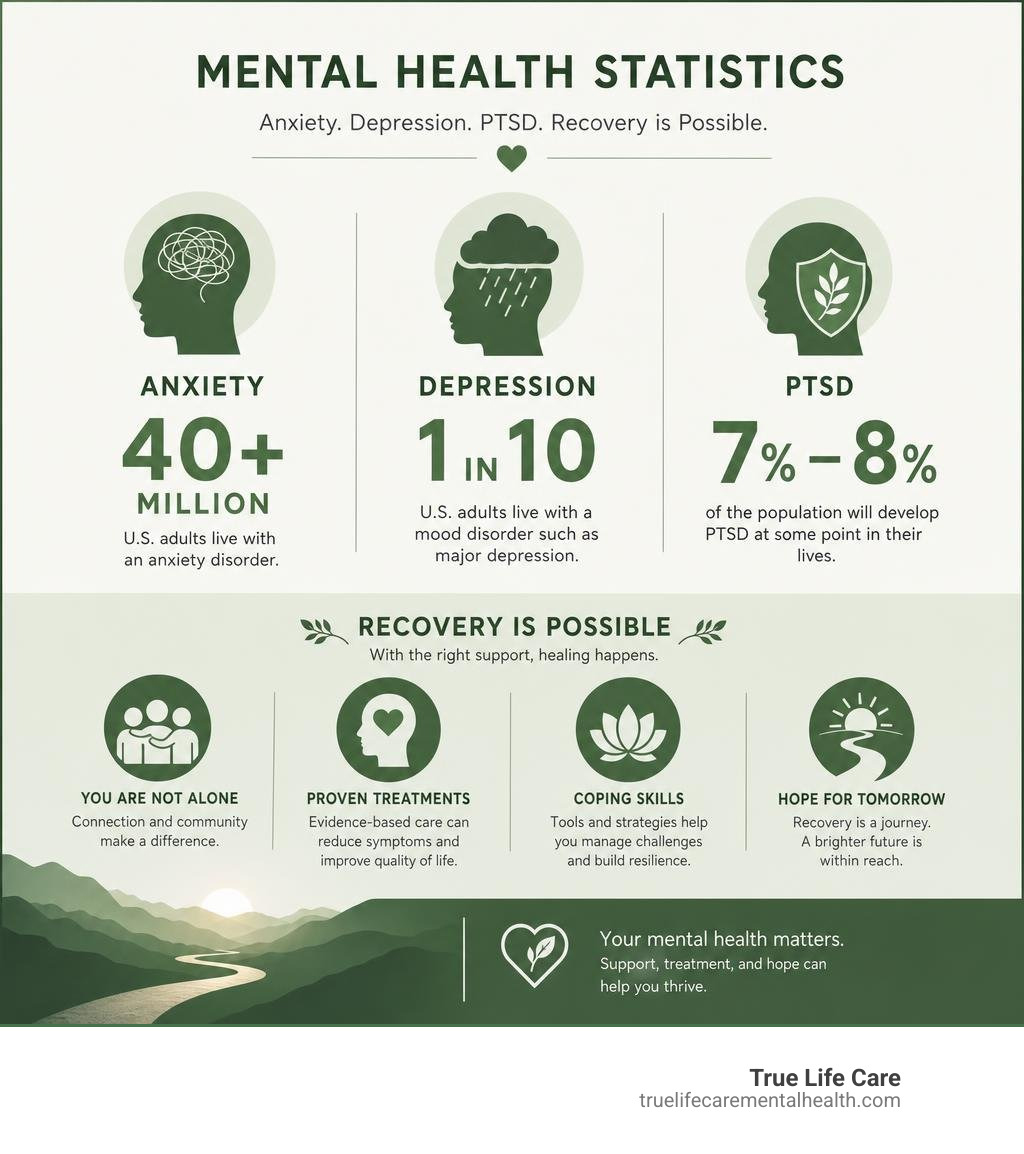
Across the United States, mental health challenges are incredibly common. For instance, over 40 million American adults live with an anxiety disorder, and nearly 1 in 10 live with a mood disorder such as major depression or bipolar disorder. Additionally, approximately 7% to 8% of the population will develop Post-Traumatic Stress Disorder (PTSD) at some point in their lives.
When treating these conditions, New Jersey psychiatrists combine evidence-based medication management with psychotherapy, lifestyle adjustments, and intensive group support.

Depression Treatment and Mood Disorders
Mood disorders, including major depressive disorder and bipolar disorder, can disrupt every area of a person’s life, from their physical health and sleep patterns to their relationships and career.
Depression is far more than just feeling sad; it is a persistent state of low energy, hopelessness, cognitive difficulties, and loss of interest in activities that can last for weeks, months, or years. Bipolar disorder introduces dramatic shifts in energy, activity levels, and mood, cycling between debilitating depression and periods of high-energy mania or hypomania.
Effective treatment for mood disorders typically involves a combination of:
- Evidence-Based Medication: Antidepressants, mood stabilizers, or atypical antipsychotics tailored to the individual’s unique biology and genetic profile.
- Psychotherapy: Cognitive Behavioral Therapy (CBT) and Dialectical Behavior Therapy (DBT) to help identify negative thought patterns, build emotional regulation, and develop healthy distress tolerance skills.
- Group Therapy: Connecting with others who understand the unique weight of depression or the unpredictability of bipolar cycles. Group therapy provides a safe space to share struggles without fear of judgment.
For those experiencing severe, treatment-resistant depression, a structured inpatient or intensive outpatient environment may be necessary to safely adjust medications and provide daily support. You can explore our comprehensive Inpatient Psychiatric Care Depression Guide for a detailed look at intensive depression treatment.
Schizophrenia and Complex Psychiatric Conditions
Schizophrenia and other psychotic disorders are complex, chronic conditions that require highly specialized psychiatric care. Schizophrenia affects how a person thinks, feels, and behaves, often causing them to seem out of touch with reality.
Symptoms are generally divided into two categories:
- Positive Symptoms: Hallucinations (hearing voices or seeing things that aren’t there), delusions (firmly held false beliefs), and disorganized thinking or speech.
- Negative Symptoms: Social withdrawal, lack of motivation, flattened emotional expression, and difficulty planning or sustaining activities.
Treating schizophrenia requires a comprehensive, multi-disciplinary approach. Antipsychotic medications are the cornerstone of treatment, helping to manage positive symptoms and prevent relapses. However, medication alone is rarely enough to achieve full functional recovery.
At True Life Care, we emphasize the power of holistic healing for complex conditions. Cognitive Behavioral Therapy for Psychosis (CBT-p) helps individuals understand and manage their hallucinations or delusional thoughts. Social support, vocational training, and group therapy are equally vital. Group therapy helps individuals with schizophrenia practice social skills, combat the isolation caused by negative symptoms, and build a reliable support network in a structured, compassionate environment.
Navigating Psychiatric Emergencies and Crisis Resources in NJ
A psychiatric emergency can happen to anyone, at any time. Whether it is a sudden onset of severe psychosis, an overwhelming panic attack, a deep depressive episode accompanied by suicidal thoughts, or a severe substance use crisis, knowing where to turn can save a life.
If you or a loved one is in immediate danger, you do not have to navigate it alone. New Jersey has a well-established network of emergency screening services and crisis resources designed to provide rapid, compassionate, and professional help. For a detailed guide on navigating these situations, see our resource on Emergency Mental Health Services in New Jersey Get Help Now.
Emergency Screening and Immediate Support
When a mental health crisis escalates to a point where safety is compromised, New Jersey residents can access designated psychiatric emergency screening centers. These centers are located in hospitals across the state and are staffed by licensed mental health professionals who can evaluate the individual, provide immediate crisis intervention, and recommend the appropriate level of care.
To find a screening center in your area, you can review our curated list of the Top 10 Psychiatric Emergency Screening Locations in NJ.
In addition to physical screening locations, immediate, confidential support is available 24/7 through the following hotlines:
- The 988 Suicide & Crisis Lifeline: You can call or text 988 from any phone to connect with a trained crisis counselor. This service is free, confidential, and available for anyone experiencing suicidal thoughts, mental health distress, or substance use emergencies.
- NJ MentalHealthCares: Funded by the New Jersey Division of Mental Health and Addiction Services, this helpline provides emotional support, information, and referrals. You can reach them at (866) 202-HELP (4357) from 8:00 AM to 8:00 PM daily.
State Psychiatric Resources vs. Community-Based Care
New Jersey’s public mental health system is divided into state-operated psychiatric hospitals and community-based care networks. Understanding how they differ can help you navigate the system more effectively.
- State Psychiatric Hospitals: The New Jersey Division of Mental Health and Addiction Services operates four state psychiatric hospitals, including Trenton Psychiatric Hospital (a 400-bed facility founded by mental health pioneer Dorothea Dix) and Ancora Psychiatric Hospital (a 600-bed facility on a 680-acre campus in southern NJ). These state-run hospitals focus on long-term psychiatric care, forensic evaluations, and specialized geriatric or dual-diagnosis treatment for patients who require extended stabilization before they can safely return to the community.
- Community-Based Care: Community-based clinics, private practices, and Certified Community Behavioral Health Clinics (CCBHCs) focus on keeping patients integrated within their local communities. These providers offer outpatient therapy, medication management, PHP, and IOP. The goal of community-based care is to prevent hospitalization through early intervention, daily support, and robust relapse prevention planning.
How to Choose and Prepare for Your Provider
Finding the right mental health professional is a highly personal process. The quality of the relationship between you and your provider—often called the therapeutic alliance—is one of the strongest predictors of successful treatment.
Because the mental health field uses many different titles and credentials, it is easy to get confused. Let’s break down who does what, how to verify credentials, and how to get ready for your first appointment.

Finding the Right NJ Psychiatric Care Specialist
When searching for a specialist, the first step is understanding the professional roles:
- Psychiatrists: Medical doctors (MD or DO) who have completed medical school and a four-year residency in psychiatry. Because they are medical doctors, they can diagnose complex mental illnesses, conduct physical exams, order lab work, and prescribe medications.
- Psychiatric Nurse Practitioners (PMHNPs): Advanced practice registered nurses with specialized training in mental health. Like psychiatrists, they can diagnose conditions, conduct evaluations, and manage psychiatric medications.
- Psychologists: Professionals who hold a doctoral degree (PhD or PsyD) in psychology. They specialize in psychological testing, diagnostics, and talk therapy, but in New Jersey, they do not prescribe medication.
- Therapists, Counselors, and Social Workers (LCSW, LPC, LMFT): Licensed professionals who provide talk therapy, behavioral interventions, and coping strategies. They are excellent partners for addressing life transitions, relationship issues, trauma, and daily stressors.
To find a provider, start by asking for referrals from your primary care physician, trusted friends, or local county health departments.
If you are wondering whether your specific symptoms warrant a medical evaluation, read our guide on Should You Go to a Psychiatrist.
When evaluating providers, remember to verify their credentials (for instance, checking if a psychiatrist is board-certified by the American Board of Psychiatry and Neurology). You should also consider logistics like location, telehealth availability, and insurance.
True Life Care is an out-of-network provider. We accept PPO plans, allowing us to focus entirely on delivering highly personalized, evidence-based care without the clinical constraints often imposed by in-network limitations. This out-of-network model ensures that your treatment plan is dictated solely by your clinical needs and recovery goals.
Preparing for Your First Psychiatric Assessment
Your initial psychiatric evaluation will typically last between 45 and 60 minutes. This is a collaborative conversation designed to understand your history and outline a path forward.
To get the most out of your first visit, it helps to prepare a few things in advance:
- Your Medical and Psychiatric History: Write down any past mental health diagnoses, hospitalizations, or previous treatments (including what worked and what didn’t).
- A Comprehensive Medication List: Include all current prescriptions, over-the-counter medications, vitamins, and supplements, along with dosages.
- A Symptoms List: Note what symptoms you are experiencing, when they started, how severe they are, and how they affect your daily routine.
- Your Goals: Think about what you want to achieve through treatment, whether that is reducing anxiety, improving sleep, or finding stability.
It is also highly beneficial to prepare a list of questions for your provider. To help you get started, we have compiled a list of Typical Questions to Ask in Your First Psychiatrist Visit.
Frequently Asked Questions about NJ Psychiatric Care
What is the difference between a psychiatrist and a psychologist in NJ?
The primary difference lies in their education, training, and scope of practice. Psychiatrists are medical doctors (MD or DO) who can prescribe medication, manage complex drug interactions, and perform medical evaluations. Psychologists hold a doctoral degree (PhD or PsyD) and focus primarily on talk therapy, behavioral interventions, and comprehensive psychological testing.
How does telepsychiatry work in New Jersey?
Telepsychiatry allows you to meet with your psychiatric provider via secure, HIPAA-compliant video conferencing software. During a virtual visit, your provider can conduct evaluations, discuss your progress, adjust medications, and send prescriptions directly to your local pharmacy.
While telepsychiatry offers incredible convenience and accessibility, it does have limitations. Certain controlled substances cannot be prescribed without periodic in-person evaluations, and telepsychiatry is generally not suitable for acute psychiatric emergencies.
What county-level mental health resources are available in NJ?
Every county in New Jersey maintains a dedicated division of mental health or human services designed to connect residents with local clinics, support groups, and funding resources. You can explore county-specific directories and programs by visiting their official pages:
- Hunterdon County Mental Health Services
- Mercer County Division of Mental Health
- Middlesex County Mental Health Administration
- Morris County Mental Health Services
- Mental Health Center of Passaic
- Sussex County Mental Health Services
Conclusion
Seeking nj psychiatric care is a profound act of courage. Mental health challenges can make you feel isolated, but you do not have to walk this path alone.
At True Life Care, we believe in a holistic, patient-centered approach to mental health. We combine expert psychiatric medication management with evidence-based psychotherapy, structured programs (including PHP and IOP), and supportive group therapy. Our goal is not just symptom reduction, but long-term healing, recovery, and well-being.
For residents of Monmouth County, our Matawan, NJ location offers a peaceful, supportive environment designed for healing. We are an out-of-network provider and accept PPO plans, ensuring you receive the high-quality, personalized attention you deserve without unnecessary administrative delays.
If you are ready to take the first step toward a brighter, more stable future, explore our Psychiatric Care in Monmouth County NJ page or Begin Your Healing Journey with True Life Care today. We are here to support you every step of the way.