
Is Bipolar Disorder Treatment in Monmouth County, NJ Right for You?
Bipolar Disorder Treatment Monmouth County NJ is available through several levels of care — and finding the right fit can make a real difference in long-term stability.
Here is a quick overview of what to know:
| What You Need to Know | Key Details |
|---|---|
| Who it’s for | Adults experiencing mood episodes, depression, mania, or co-occurring disorders |
| Where in Monmouth County | True Life Care serves Monmouth County residents at its Matawan, NJ location |
| Levels of care | PHP (Partial Hospitalization), IOP (Intensive Outpatient) |
| Core therapies | CBT, DBT, group therapy, medication management |
| Insurance | Out-of-network provider accepting PPO plans |
| Crisis support | Call 988 for mental health crises, 911 for immediate danger |
Bipolar disorder is not just intense mood swings. It is a medical condition that causes distinct episodes of mania or hypomania and depression — episodes that can disrupt sleep, relationships, work, and daily functioning.
Many people spend years searching for answers. They seek help during a depressive episode, get treated for depression alone, and never quite feel stable. That is because bipolar disorder requires a different approach than depression-only care — one that focuses on mood stabilization, not just lifting low moods.
The good news? With the right treatment plan, most people with bipolar disorder can build genuine stability and live full, meaningful lives.
True Life Care’s Matawan, NJ location works with Monmouth County residents navigating bipolar disorder, depression, schizophrenia, and co-occurring conditions — including psychiatric emergencies. The team uses evidence-based, personalized care with group therapy at the center of the healing process.
Below, we walk through 10 clear signs that structured bipolar disorder treatment may be the right next step for you.
Handy Bipolar Disorder Treatment Monmouth County NJ terms:
- Mental Health Treatment Morris County New Jersey
- Psychiatric Evaluation Services in Monmouth County NJ
- mental health services in Monmouth county new jersey
Understanding the Spectrum of Mood Disorders
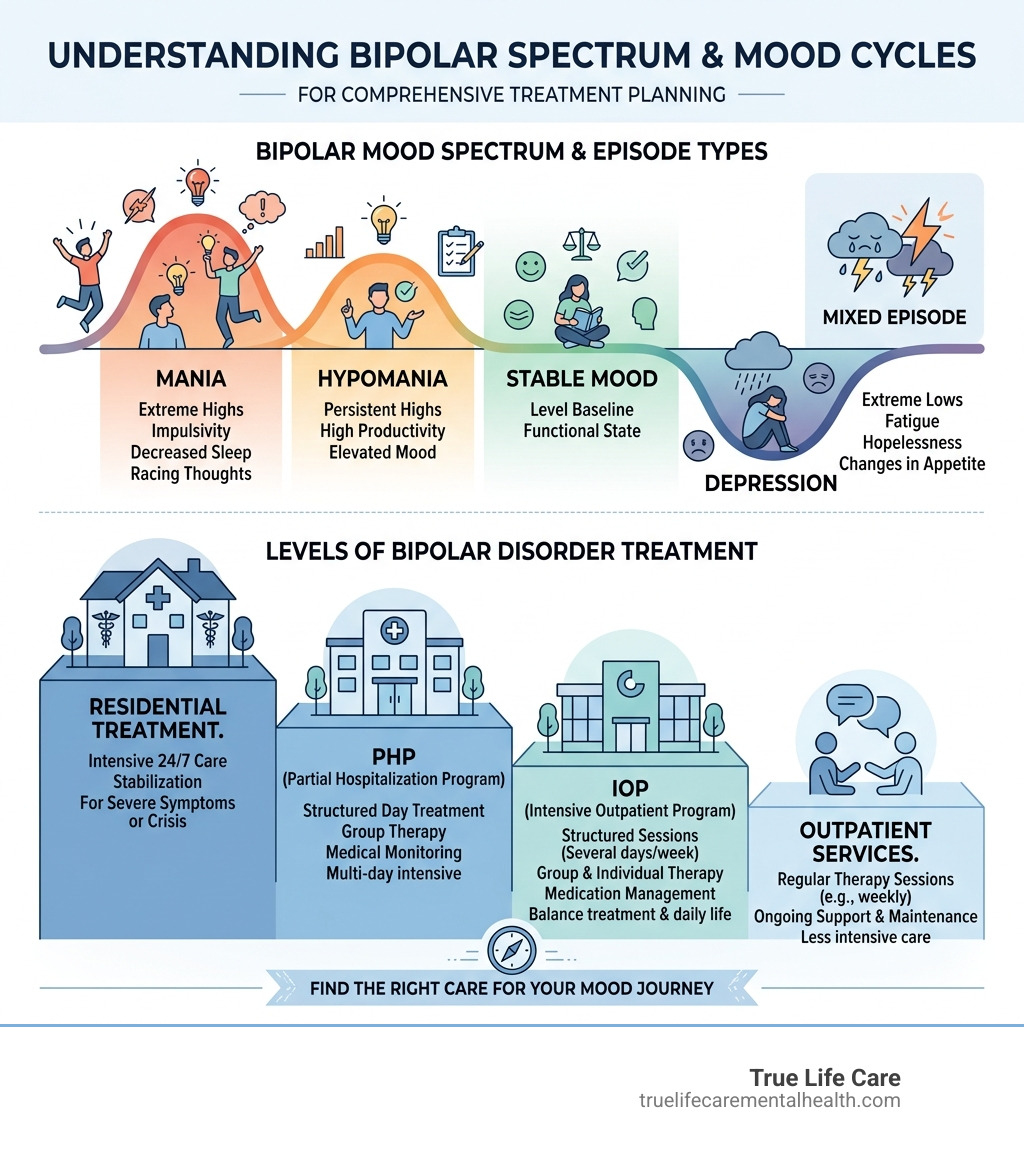
Navigating mental health can sometimes feel like trying to read a map in a different language. When it comes to bipolar disorder, the “spectrum” is wide, and understanding where you or a loved one falls on it is the first step toward finding peace. It is not a one-size-fits-all diagnosis; rather, it is a collection of experiences that vary in intensity and duration.
Bipolar I Disorder
This is often what people think of when they hear the term “manic depression.” Bipolar I involves at least one manic episode that lasts for at least seven days, or is so severe that the person requires immediate hospital care. While major depressive episodes are very common in Bipolar I, they aren’t technically required for the diagnosis. However, most people cycle between these extreme highs and profound lows. You can learn more about Bipolar Disorder & Mood Disorders | RWJBarnabas Health NJ to see how these cycles are clinically defined.
Bipolar II Disorder
Bipolar II is frequently misunderstood as a “milder” version of Bipolar I, but that is a bit of a misnomer. While the “highs” (called hypomania) are less extreme than full-blown mania, the depressive episodes in Bipolar II are often longer-lasting and more frequent. Because hypomania can sometimes feel like a burst of productivity or high energy, many people don’t realize it’s part of a disorder until the subsequent “crash” into depression happens. For those needing more intensive stabilization during these shifts, exploring inpatient bipolar rehab can provide a safety net.
Cyclothymic Disorder
Think of cyclothymia as a more chronic, though less intense, version of the others. It involves periods of hypomanic symptoms and periods of depressive symptoms lasting for at least two years (one year for children and teens). While the symptoms don’t meet the full diagnostic requirements for a hypomanic or depressive episode, the “rollercoaster” effect still causes significant distress and impairment in daily life.
Defining Mania vs. Hypomania
The distinction between mania and hypomania is crucial for accurate diagnosis. Mania is a period of at least one week where an individual feels “on top of the world,” often accompanied by grandiosity, a decreased need for sleep, and impulsive behaviors like massive buying sprees or risky investments. It may even include psychosis (hallucinations or delusions). Hypomania, on the other hand, lasts at least four days and is less likely to cause severe functional impairment or require hospitalization, but it is still a distinct departure from an individual’s normal mood.
10 Signs You Need Bipolar Disorder Treatment Monmouth County NJ

Knowing when to reach out for help is a sign of strength, not a failure. In April 2026, we are seeing more people than ever in Monmouth County taking charge of their mental health. If you are noticing these ten signs, it might be time to look into Bipolar Disorder Treatment Monmouth County NJ.
- Sleep Disruption as a Trigger: One of the most common red flags is a sudden change in sleep. If you find you can go days with only two or three hours of sleep and still feel “wired” or full of energy, this is a hallmark of a manic or hypomanic phase. Conversely, sleeping 12+ hours a day and still feeling exhausted is a sign of the depressive phase.
- Uncharacteristic Impulsivity: Are you suddenly making life-altering decisions without a second thought? This could look like quitting a job, spending thousands of dollars you don’t have, or engaging in risky physical or sexual behavior that feels out of character.
- Pressured Speech and Racing Thoughts: If your friends or family mention that they can’t get a word in edgewise, or if your mind feels like a television flipping through channels at high speed, you may be experiencing a “speeding up” of the brain associated with bipolar disorder.
- The “Productive” Trap: Many people miss their diagnosis because hypomania feels good at first. You might feel more creative, social, and energetic. However, if these phases are always followed by a crushing depression, the “productivity” is actually part of a cycle that needs stabilization.
- Functional Impairment: When your mood shifts start making it impossible to keep up with work, school, or family obligations, it is a clear sign that professional intervention is needed.
- Co-occurring Substance Use: It is very common for individuals with undiagnosed bipolar disorder to “self-medicate” with alcohol or drugs to either calm down a manic phase or lift a depressive one. True stability requires treating both the mood disorder and the substance use simultaneously.
- Psychiatric Emergencies: If you are experiencing thoughts of self-harm, suicide, or if you are losing touch with reality (psychosis), this is a psychiatric emergency. Our Matawan, NJ location is equipped to help Monmouth County residents navigate these crises and find a path to safety.
- The Failure of Standard Antidepressants: If you’ve been treated for “regular” depression but found that antidepressants made you feel agitated, jittery, or even more unstable, it may be because the underlying condition is actually bipolar disorder.
- Intense Irritability: Mania doesn’t always feel like “happiness.” For many, it manifests as extreme irritability, agitation, and “short-fused” anger that damages relationships.
- Family History and Genetics: Research shows that bipolar disorder tends to run in families. If you have a first-degree relative with the condition and are experiencing mood swings, a professional evaluation is highly recommended.
For more local insights, check out Bipolar Disorder Counseling Monmouth County NJ and our guide on Finding Bipolar Disorder Therapy In Nj.
Identifying the Need for Bipolar Disorder Treatment Monmouth County NJ
Getting an accurate diagnosis is the “North Star” of recovery. In Monmouth County, we focus on diagnostic clarity. This means looking beyond a simple checklist. We look at your history of mood episodes, your sleep patterns, and how your symptoms have impacted your life over time.
One helpful tool is mood tracking. By keeping a journal or using an app to record your daily energy levels and sleep, you provide a psychiatrist with a clear picture of your cycles. We also take into account the genetic components of the disorder. Since family history is a primary risk factor, understanding your lineage can help us tailor a treatment plan that works for your specific biology. For a broader look at local resources, the Monmouth County Mental Health Guide is an excellent starting point.
Evidence-Based Modalities for Healing and Stability
At True Life Care, we don’t believe in “quick fixes.” We believe in building a foundation of stability that lasts. This is achieved through a combination of evidence-based therapies and expert psychiatric care.
Group Therapy: The Power of Shared Experience
We place a heavy emphasis on group therapy. Why? Because bipolar disorder can be incredibly isolating. Sitting in a room with others who truly “get it”—who understand what it’s like to wake up and not know which version of themselves will be there—is profoundly healing. Group sessions at our Matawan NJ location focus on skill-building, processing emotions, and fostering a sense of community.
CBT and DBT
Cognitive Behavioral Therapy (CBT) helps you identify the thought patterns that lead to mood shifts and provides practical tools to “re-wire” those responses. Dialectical Behavior Therapy (DBT) is particularly effective for mood disorders, as it teaches distress tolerance, emotional regulation, and mindfulness—essential skills for someone navigating the peaks and valleys of bipolar disorder.
Schizophrenia and Depression Treatment
Bipolar disorder often shares symptoms with other conditions. Sometimes, severe mania can look like schizophrenia due to the presence of psychosis. Similarly, the “low” phases are indistinguishable from major depressive disorder. Our clinicians are experts in differential diagnosis, ensuring that if you are seeking depression treatment or help for schizophrenia, you receive the specific care required for those conditions. You can find more targeted advice in our 5 Effective Tips For Depression Treatment In Monmouth County Nj.
Medication Management and Relapse Prevention
For the vast majority of people with bipolar disorder, medication is a necessary component of stability. This isn’t about “numbing” your personality; it’s about leveling the playing field so your brain can function effectively. We offer expert Psychiatric Care In Monmouth County Nj to manage mood stabilizers, antipsychotics, or other medications that prevent the extreme shifts that lead to relapse.
Accessing Specialized Bipolar Disorder Treatment Monmouth County NJ
Our Matawan, NJ location is specifically designed to be a haven for Monmouth County residents. We offer a holistic healing environment where we treat the whole person, not just a set of symptoms. This means looking at your diet, your exercise, your stress levels, and your support system. By combining these holistic elements with rigorous evidence-based models, we help our clients achieve long-term wellness. If you’re ready to take the next step, our Bipolar Disorder Treatment Center New Jersey page offers more details on our specific programs.
Navigating Levels of Care and Insurance Options

One of the most confusing parts of seeking help is figuring out what level of care you need. At True Life Care, we offer flexible programs that bridge the gap between traditional weekly therapy and full-time hospitalization.
Partial Hospitalization Program (PHP)
Our PHP is a high-intensity program where you spend the majority of your day with us (typically 5 days a week, 25-30 hours total) while still returning home in the evening. This is ideal for those who need significant stabilization but do not require 24/7 supervision. It includes intensive group therapy, individual sessions, and frequent medication management.
Intensive Outpatient Program (IOP)
The IOP is a step down from PHP, usually meeting 3 days a week for about 9-15 hours total. This level of care is perfect for those who are beginning to find stability and are ready to start reintegrating into work or school while still having a strong therapeutic safety net. You can read more in our guide to Iop Programs In Monmouth County Nj.
Insurance and Accessibility
We understand that the logistics of treatment can be stressful. To make it easier:
- Out-of-Network Provider: True Life Care is an out-of-network provider.
- PPO Plans: We accept PPO insurance plans, which often provide significant coverage for our PHP and IOP services.
- Personalized Guidance: Our team can help you navigate the “fine print” of your insurance to ensure you understand your benefits before you begin.
For a comprehensive look at how to choose the right path, see our Mental Health Treatment Program Monmouth County Nj Guide.
Frequently Asked Questions about Bipolar Disorder
Is bipolar disorder the same as “mood swings”?
This is perhaps the most common question we hear. The short answer is: No. Everyone has mood swings. You might feel “down” because of a rainy day or “up” because you got a promotion. However, bipolar episodes are much more intense and disruptive. They last for days or weeks at a time and involve clear, measurable shifts in sleep patterns, energy levels, and thinking speed. A true bipolar episode changes your ability to function in a way that “normal” mood swings do not. If you are in the northern part of the state, Bipolar Disorder Therapists in Sussex County, NJ can offer additional perspectives on this distinction.
Can someone have bipolar disorder without obvious mania?
Yes, absolutely. This is the hallmark of Bipolar II. In these cases, the “highs” are hypomanic—they are subtle. You might just feel like you’re having a really good week where you’re extra social and getting a lot done. Because these symptoms aren’t “scary” or overtly destructive like full mania, they are often missed. Many people are misdiagnosed with “unipolar” depression for years before the hypomanic patterns are identified. For those in the Morris area, Bipolar Disorder Therapy in Morristown, NJ provides excellent resources on identifying these subtle shifts.
How do local providers handle co-occurring disorders?
In Monmouth County, we take an integrated treatment approach. If someone is struggling with both bipolar disorder and substance use, you cannot treat one without the other. If you stop the drinking but don’t stabilize the mood, the person will likely return to drinking to cope with the next manic or depressive episode. We treat both simultaneously, providing dual diagnosis care that addresses the biological, psychological, and social aspects of both conditions. For more on this, check out our tips on choosing a bipolar treatment center.
Conclusion
Stability is not a destination; it is a way of living. For Monmouth County residents, that way of living is within reach. At True Life Care, our Matawan, NJ location is dedicated to providing the expert psychiatric care and therapeutic support needed to navigate the complexities of bipolar disorder.
Whether you are dealing with a psychiatric emergency or looking for a long-term IOP or PHP program to maintain your wellness, we are here to help. As an out-of-network provider accepting PPO plans, we strive to make high-quality, evidence-based care accessible to our community.
You don’t have to ride the rollercoaster alone. There is a community of people in Matawan ready to walk alongside you, and a team of experts ready to help you find your “level ground.” If you’re exploring options across the state, you might also find our review of Top Mental Health Treatment Options in Morris County NJ helpful.
Ready to start your journey? Reach out to us today. Your future self will thank you.