
Why Bipolar Disorder Therapy in New Jersey Matters
Bipolar Disorder Therapy in New Jersey offers specialized care for a complex mental health condition affecting millions of Americans. If you’re searching for help in New Jersey, here’s what you need to know:
Quick Guide to Bipolar Therapy in NJ:
- Types of Treatment Available: Medication management (mood stabilizers, lithium), Cognitive Behavioral Therapy (CBT), Dialectical Behavior Therapy (DBT), and Interpersonal and Social Rhythm Therapy (IPSRT)
- Levels of Care: Partial Hospitalization Programs (PHP), Intensive Outpatient Programs (IOP), and standard outpatient therapy
- Getting Help Fast: Call 988 for crisis support, NJ Hopeline at 855-654-6735, or contact local screening centers
- Insurance Coverage: Most major insurances, Medicare, and Medicaid typically cover bipolar treatment in New Jersey
- Support Resources: DBSA New Jersey operates peer support groups across Sussex County, Bridgewater, Wayne, Flemington, Freehold, Montclair, and many other locations
One week you’re full of ideas, staying up late, and taking on everything. Then, without warning, it crashes. You’re tired, foggy, and withdrawn. This dramatic shift between emotional highs and lows is the hallmark of bipolar disorder—a lifelong psychiatric condition characterized by extreme mood swings between mania and depression.
Bipolar disorder often begins between the ages of 15 and 24, and research shows that 21.7% to 59% of people with bipolar disorder also develop substance use disorders, making integrated treatment essential. The condition results from a complex mix of genetic predisposition, neurochemical imbalances, and environmental factors—not personal weakness or lifestyle choices.
New Jersey offers comprehensive treatment options combining medication, evidence-based psychotherapy, and holistic approaches. With the right support, many people with bipolar disorder live full, healthy, and stable lives.
Understanding Bipolar Disorder in New Jersey
When we talk about Bipolar Disorder Therapy in New Jersey, we first have to understand the landscape of the disorder itself. It isn’t just “moodiness.” It is a brain disorder that causes unusual shifts in mood, energy, and activity levels. These aren’t the typical ups and downs most people experience; they are intense, often disruptive, and can last for weeks or months at a time.
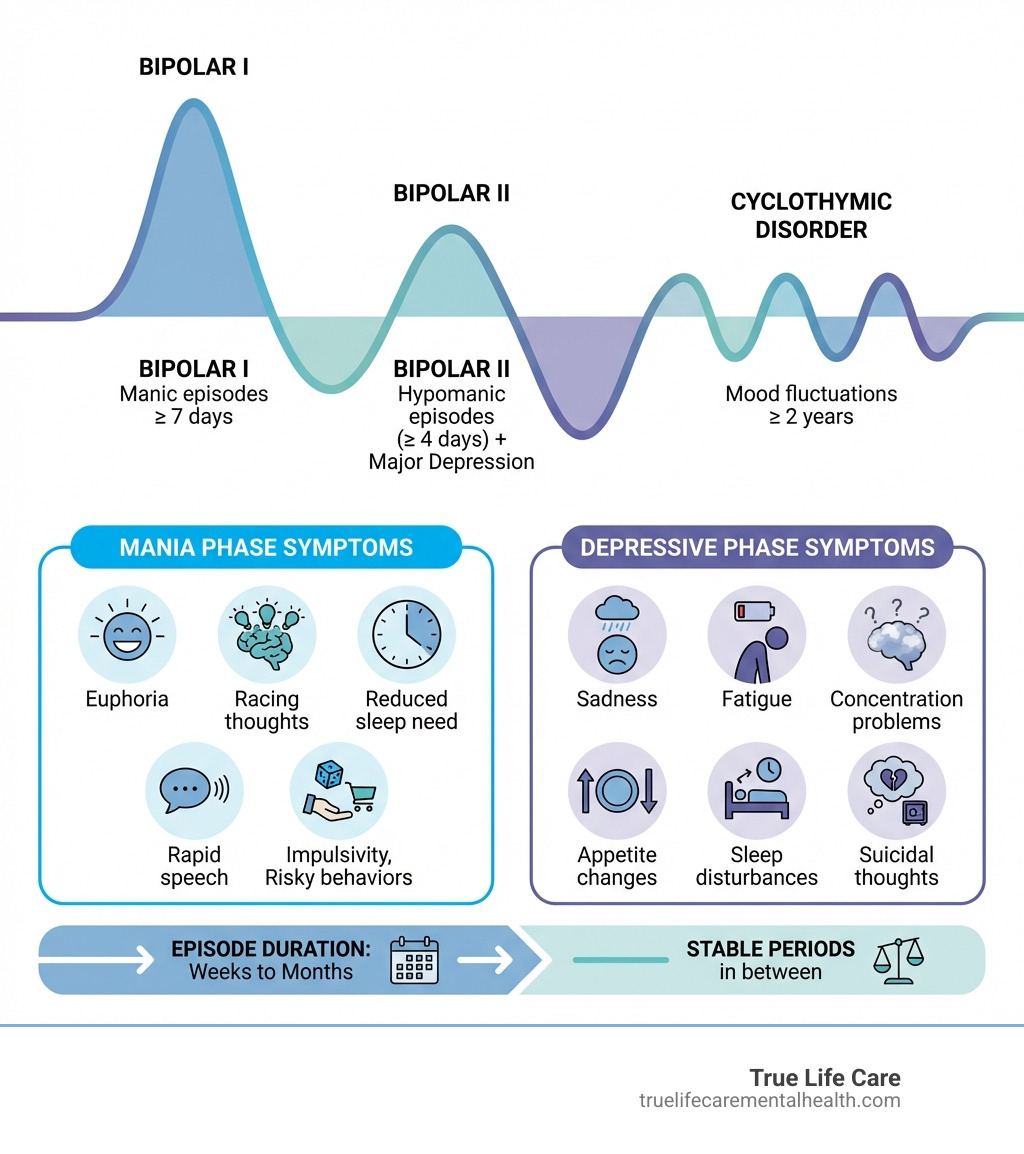
In our New Jersey communities—from the busy streets of Clifton to the quiet corners of Hunterdon County—thousands of individuals steer these cycles. The disorder is generally categorized into three main types:
- Bipolar I: This is characterized by manic episodes that last at least seven days, or by manic symptoms that are so severe that the person needs immediate hospital care. Usually, depressive episodes occur as well, typically lasting at least two weeks.
- Bipolar II: This is defined by a pattern of depressive episodes and hypomanic episodes, but not the full-blown manic episodes that are typical of Bipolar I. Don’t be fooled by the name; the depression in Bipolar II can be just as debilitating as in Bipolar I.
- Cyclothymic Disorder: Think of this as a milder, more chronic form of the disorder. It involves periods of hypomanic symptoms as well as periods of depressive symptoms lasting for at least two years (one year in children and adolescents).
Mania Symptoms vs. Depressive Episodes
The “highs” of mania can feel like a superpower at first. You might experience euphoria, racing thoughts, and a decreased need for sleep. You might find yourself talking a mile a minute or taking risks you normally wouldn’t. However, this often leads to a “crash.” The depressive side brings profound sadness, fatigue, concentration problems, and, in some cases, suicidal thoughts.

Causes and Diagnosis of Bipolar Disorder
What causes someone in Morris County or Passaic County to develop this condition? The truth is, there isn’t one single cause. It’s a bit like a puzzle. Research suggests a combination of factors:
- Genetic Predisposition: If a family member has bipolar disorder, your risk is higher. It’s one of the most heritable mental health conditions.
- Neurochemical Imbalances: Our brains use chemicals called neurotransmitters to send messages. In people with bipolar disorder, these chemicals (like dopamine and serotonin) don’t always stay in balance.
- Environmental Triggers: High stress, trauma, or significant life changes can trigger an episode in someone who is already biologically predisposed.
- Biological Brain Differences: Studies on biological causes of mood disorders show that the physical structure and function of the brain—specifically areas like the amygdala—may differ in those with the disorder.
The Path to Diagnosis
Diagnosis in New Jersey typically starts with a thorough psychiatric evaluation. A provider will look at your medical history and use the DSM-5 criteria to determine if your symptoms match the diagnostic requirements for bipolar disorder. This process often includes:
- Physical Exams and Lab Tests: To rule out other issues, like thyroid problems, that can mimic mood swings.
- Mood Charting: Keeping a daily record of your moods, sleep patterns, and energy levels to help your doctor see the cycles.
If you are currently looking for help, choosing a bipolar treatment center is a vital first step. For those in crisis or requiring high-level stabilization, inpatient bipolar disorder rehab provides a safe, structured environment to begin the journey toward balance.
Evidence-Based Bipolar Disorder Therapy in New Jersey
Once a diagnosis is made, the goal shifts to stability. We believe that a “one-size-fits-all” approach doesn’t work. Instead, we focus on a combination of medication management and evidence-based psychotherapy.
Medication Management is often the foundation. This might include:
- Lithium: Often called the “gold standard,” it helps reduce the frequency and severity of both manic and depressive episodes.
- Mood Stabilizers: Medications like lamotrigine or oxcarbazepine help regulate the “swings.”
- Antipsychotics: Sometimes used to help manage severe manic symptoms.
However, medication is only half the battle. Psychotherapy provides the tools to manage the disorder day-to-day. At a bipolar disorder treatment center in New Jersey, you might encounter these specific therapies:
- Cognitive Behavioral Therapy (CBT): Cognitive Behavioral Therapy (CBT) helps you identify negative thinking patterns and replace them with healthy behaviors.
- Dialectical Behavior Therapy (DBT): Dialectical Behavior Therapy (DBT) is excellent for emotional regulation and learning how to handle distress without spiraling.
- Interpersonal and Social Rhythm Therapy (IPSRT): This focuses on stabilizing daily routines—like sleeping, eating, and exercising—because disruptions in these rhythms can trigger mood episodes.
Specialized Bipolar Disorder Therapy in New Jersey Programs
For many, standard once-a-week therapy isn’t enough to maintain stability. New Jersey offers higher levels of outpatient care that allow you to receive intensive treatment while still living at home:
- Partial Hospitalization Program (PHP): Our partial hospitalization program typically runs five days a week and provides several hours of therapy and medical supervision each day. It’s a great step-down from inpatient care.
- Intensive Outpatient Program (IOP): An intensive outpatient program for mental health offers more flexibility, usually meeting for 3 hours a day, a few days a week. This allows you to maintain work or school commitments in places like Mercer County or Middlesex County while still getting the support you need.
Holistic Approaches to Bipolar Disorder Therapy in New Jersey
We know that healing involves the whole person—mind, body, and spirit. That’s why we integrate holistic practices into our programs:
- Art Therapy: Art therapy allows for emotional expression when words aren’t enough.
- EMDR Therapy: For those whose bipolar disorder is complicated by trauma, EMDR therapy can help process painful memories.
- Mindfulness and Yoga: These practices help ground the nervous system and improve focus.
- Nutritional Counseling: What you eat affects your brain chemistry. Proper nutrition supports overall mood stability.
Managing Co-occurring Disorders and Dual Diagnosis
It is incredibly common for bipolar disorder to walk hand-in-hand with other challenges. In fact, bipolar and addiction statistics indicate that over half of those with the condition will struggle with a substance use disorder at some point.
Why does this happen? Often, it’s a form of self-medication. Someone in a manic phase might use alcohol to try and “come down,” or someone in a deep depression might use stimulants to find the energy to get through the day. Unfortunately, substances only make the mood cycles more extreme and harder to treat.
This is why Dual Diagnosis treatment is so critical. You cannot treat the addiction and ignore the bipolar disorder, or vice versa. Dual diagnosis treatment centers in NJ provide integrated care where both conditions are addressed simultaneously by a team of experts. This includes trauma-informed care to address the underlying reasons why someone might have turned to substances in the first place.
Accessing Support and Crisis Resources in NJ
If you or a loved one is in the middle of a crisis, you don’t have to wait for an appointment. New Jersey has a robust network of emergency resources.
Immediate Help:
- 988 Suicide & Crisis Lifeline: Call or text 988 anytime for immediate support.
- NJ Hopeline: Call 855-654-6735 for state-specific crisis intervention.
- County Crisis Centers: For a psychiatric emergency, you can go to your county crisis center or the nearest hospital emergency room.
- Peer Recovery WarmLine: For non-emergencies where you just need to talk to someone who “gets it,” call the Peer Recovery WarmLine at 877-292-5588.
Local Support Groups and Community Resources
Beyond clinical therapy, peer support is a game-changer. DBSA New Jersey (Depression and Bipolar Support Alliance) is a fantastic organization that provides a caring environment for people to discuss their challenges and successes. They offer both in-person and virtual support meetings across the state:
- North Jersey: Groups meet in Sussex County, Wayne (Passaic County), and Montclair (Essex County).
- Central Jersey: Meetings are available in Bridgewater (Somerset County), Flemington (Hunterdon County), and Metuchen (Middlesex County).
- South Jersey: You can find resources in places like Magnolia (Camden County).
Connecting with these DBSA Alliance resources helps reduce the isolation that often comes with a bipolar diagnosis. You can also find top mental health professionals in New Jersey through our network to ensure you are getting the highest quality clinical care.
Frequently Asked Questions about Bipolar Treatment
How is bipolar disorder diagnosed in New Jersey?
In New Jersey, diagnosis is performed by licensed mental health professionals, usually psychiatrists or psychiatric nurse practitioners. They conduct a comprehensive psychiatric evaluation, review your medical history, and use the DSM-5 criteria. In some cases, they may refer you to local screening centers if an immediate safety assessment is needed.
What is the most effective therapy for bipolar disorder?
Most experts agree that a combination therapy approach is most effective. This typically involves medication management (like mood stabilizers) paired with psychotherapy (like CBT or IPSRT). The medication stabilizes the biological “floor and ceiling” of your moods, while therapy gives you the skills to steer life within those boundaries.
Does insurance cover bipolar therapy in NJ?
Yes! Most major insurance providers, as well as Medicare and Medicaid, are required to cover mental health services, including bipolar disorder treatment. At True Life Care Mental Health, we recommend a thorough insurance verification process to understand your specific benefits, copays, and coverage levels for programs like PHP or IOP.
Conclusion: Your Path to Stability
Bipolar disorder is a lifelong journey, but it is not a journey you have to take alone. Whether you are in Boonton, Fair Lawn, or Princeton, there is a community of professionals and peers ready to support you.
At True Life Care Mental Health, we pride ourselves on offering personalized, evidence-based care that looks at the whole person. Our holistic approach and flexible mental health programs New Jersey—including PHP and IOP—are designed to empower you for long-term recovery.
Stability isn’t just about the absence of symptoms; it’s about regaining your life, your relationships, and your sense of purpose. If you’re ready to take that first step, we are here to walk the path with you.