
Inpatient Schizophrenia Treatment in NJ
When You Need Inpatient Schizophrenia Treatment in New Jersey
Inpatient schizophrenia treatment New Jersey is the highest level of psychiatric care available, designed for people experiencing severe symptoms that require 24/7 supervision and immediate stabilization.
Quick answer — here’s what you need to know:
- What it is: A short-term, hospital-based program focused on crisis stabilization, medication management, and safety
- Who it’s for: Adults (and sometimes adolescents) experiencing acute psychosis, hallucinations, delusions, or risk of harm to themselves or others
- Where to get it in NJ: Accredited psychiatric hospitals and specialized medical centers offer inpatient psychiatric programs across the state
- How to access it: Call a facility’s 24/7 admissions line, visit an emergency room, or contact the NJ Suicide & Crisis Lifeline at 988
- Insurance: Most NJ inpatient facilities accept Medicare, Medicaid, and private insurance
Schizophrenia is a serious, chronic condition. It affects how a person thinks, feels, and experiences reality. For many people, symptoms like hallucinations, delusions, and disorganized thinking can become so severe that outpatient care simply isn’t enough.
That’s when inpatient treatment becomes necessary.
New Jersey has a network of accredited psychiatric facilities that provide specialized inpatient care. These programs focus on getting people stable, safe, and ready to continue recovery — without losing sight of their dignity and quality of life.
About 100,000 adolescents and young adults in the U.S. experience their first signs of psychosis every year, with peak onset between ages 15 and 25. Early, intensive treatment can make a real difference in long-term outcomes.
This guide covers everything you need to know — from choosing a facility and navigating admissions to understanding what happens after discharge.
Inpatient schizophrenia treatment New Jersey terms to know:
- Schizophrenia recovery guide
- Bipolar Disorder Therapy in New Jersey
- Psychiatric Care in Monmouth County NJ
- Psychiatric emergency screening in New Jersey
Understanding Inpatient Schizophrenia Treatment in New Jersey
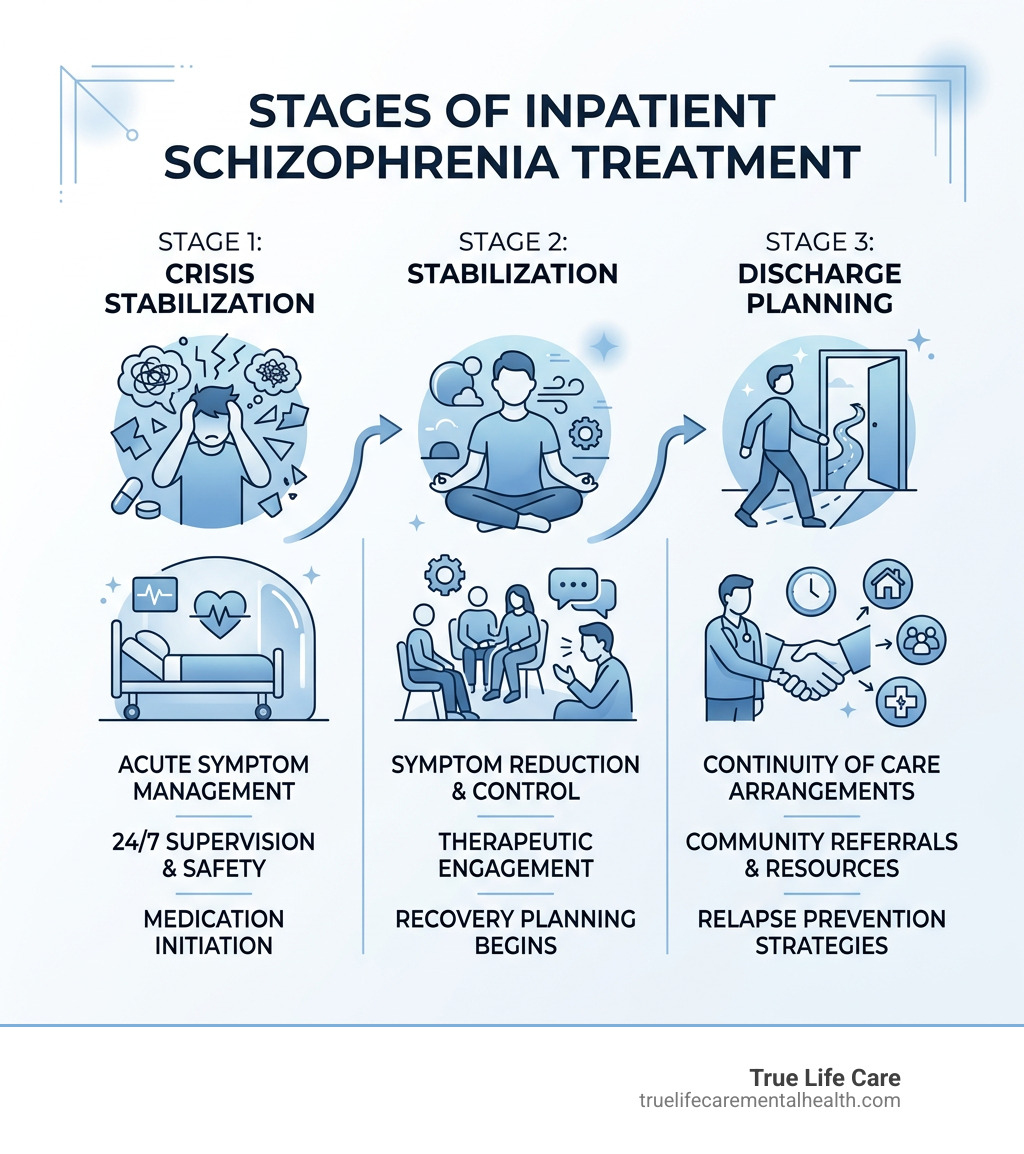
When we talk about inpatient schizophrenia treatment New Jersey, we are referring to a highly structured environment where safety is the number one priority. Inpatient care isn’t a “forever” solution; it is an intensive, short-term intervention designed to manage an acute crisis. In these settings, individuals receive 24/7 medical and psychiatric supervision to ensure they are safe from self-harm and that their symptoms are brought under control quickly.
The primary goal of an inpatient stay is stabilization. For someone experiencing a break from reality, the world can feel terrifying and disorganized. A modern medical facility in NJ provides a “controlled” environment where external stressors are minimized, allowing the brain to begin healing. This process involves close monitoring of behavioral health and a heavy emphasis on finding the right medication balance. For a deeper look at how these programs fit into the broader landscape, you can check out this essential guide to schizophrenia treatment in NJ.
When is Inpatient Care Necessary?
It can be difficult for families to know exactly when to make the call for hospitalization. Generally, inpatient care becomes necessary when the individual’s safety or the safety of those around them is at risk. This often manifests as:
- Risk of Self-Harm or Violence: If a person is expressing suicidal thoughts or acting on command hallucinations (voices telling them to hurt themselves or others).
- Acute Psychosis: Severe hallucinations or delusions that prevent the person from understanding what is real.
- Functional Decline: An inability to perform basic self-care, such as eating, bathing, or sleeping, due to disorganized thinking.
- Medication Non-Compliance: When a person stops taking their prescribed antipsychotics and their symptoms spiral out of control.
- Anosognosia: This is a clinical term for when a person is unaware they have a mental illness and rejects all voluntary help.
Understanding the different roles of psychiatrists is helpful here, as they are the medical doctors who will oversee the pharmacological side of stabilization during these acute episodes.
Specialized Inpatient Schizophrenia Treatment New Jersey Programs
Not every case of schizophrenia looks the same, which is why New Jersey facilities often offer specialized tracks.
- First-Episode Psychosis: For young adults (ages 15-35) experiencing their first break, programs like Coordinated Specialty Care (CSC) focus on rapid intervention to change the long-term trajectory of the illness.
- Geriatric Care: Older adults with schizophrenia often have complex medical needs or co-occurring dementia. Specialized facilities offer dedicated geriatric psychiatric programs to address these unique challenges.
- Co-occurring Disorders: It is very common for individuals with schizophrenia to struggle with substance use. Dual diagnosis programs treat both the psychosis and the addiction simultaneously.
- Schizoaffective Disorder Support: For those who experience both schizophrenia symptoms and mood disorder symptoms (like mania or depression), specialized schizoaffective disorder support is available to stabilize both aspects of the condition.
Therapeutic Approaches and Multidisciplinary Support
Inpatient care is much more than just a bed and a locked door. It is a collaborative effort involving a team of experts. When a patient is admitted for inpatient schizophrenia treatment New Jersey, they aren’t just seeing a doctor once a day; they are immersed in a therapeutic environment designed to tackle the illness from every angle.
The multidisciplinary team typically includes:
- Psychiatrists: To manage complex medication regimens.
- Psychiatric Nurses: Who provide 24/7 monitoring and care.
- Social Workers & Case Managers: To handle family communication and discharge planning.
- Creative Arts Therapists: Using music or art to reach patients who may have difficulty with verbal communication.
- Dieticians & Pharmacists: To ensure physical health and medication safety.
Evidence-Based Therapies in NJ Facilities
While medication is the cornerstone of treating schizophrenia, therapy provides the tools for long-term management. During an inpatient treatment stay, patients participate in various evidence-based modalities:
- Cognitive Behavioral Therapy (CBT): Helps patients identify and manage delusional thoughts or “voices.”
- Family Psychoeducation: We believe that families are an essential part of the recovery team. Educating loved ones about the illness reduces stress and prevents relapse.
- Music and Art Therapy: These are particularly effective in specialized NJ units, helping patients express emotions when they feel “blocked.”
- Occupational and Vocational Support: Helping patients regain the skills needed for daily living, from personal hygiene to basic social interactions.
- Recreational Groups: Activities that promote social reintegration and physical wellness.
The Role of the Care Team in Inpatient Schizophrenia Treatment New Jersey
The care team’s job is to look at the “whole person.” This starts with a thorough intake that includes a physical health check and dietary assessment. Because schizophrenia can often be accompanied by other medical issues, having full-time physicians available for non-acute medical issues is a hallmark of high-quality NJ care.
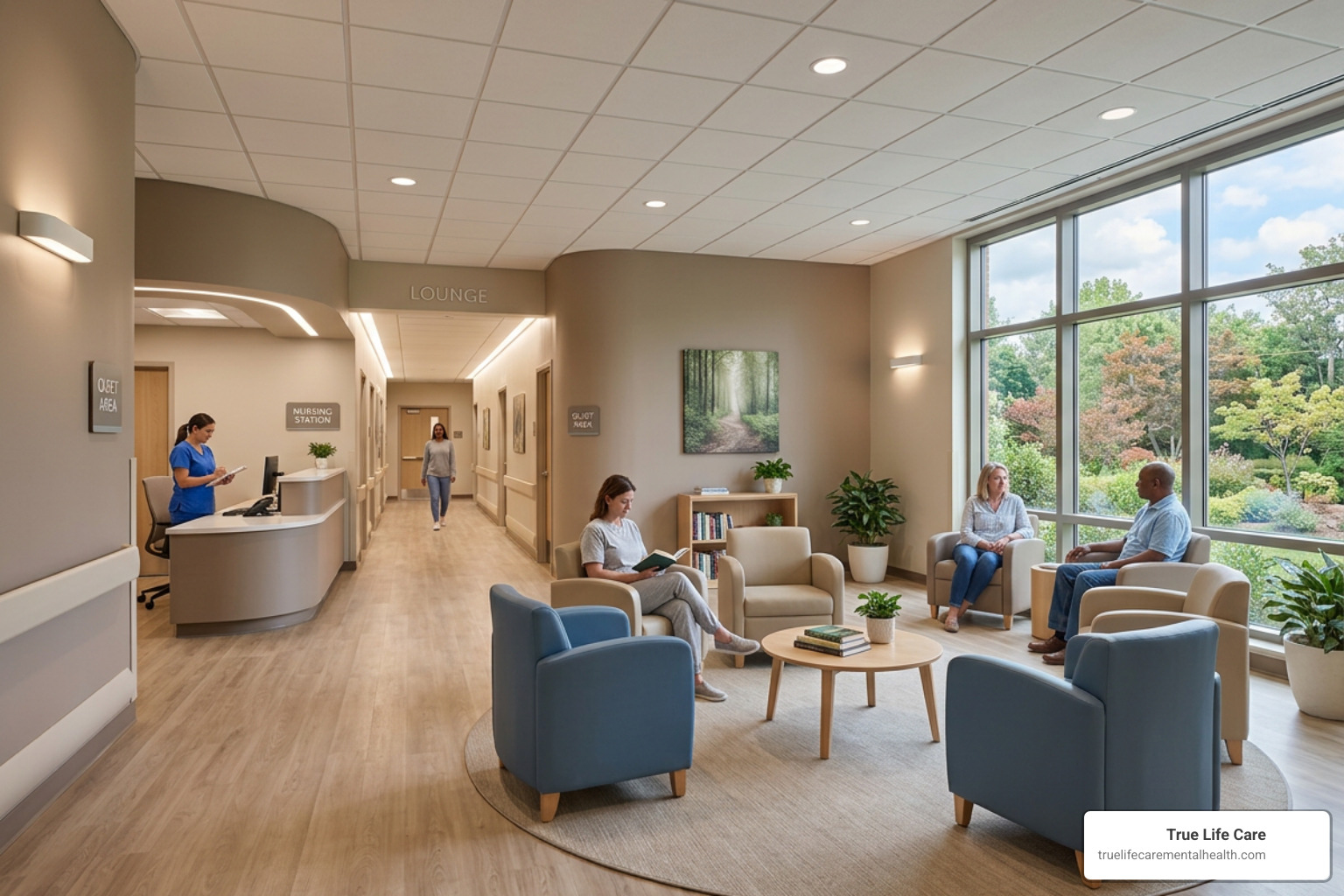
Nursing staff play a critical role in de-escalation. Using “mini-environments” like serenity lounges or quiet areas, they can help a patient manage overstimulation without resorting to restrictive measures. This trauma-informed approach respects the patient’s dignity while maintaining a safe environment.
Navigating Admissions and Insurance in NJ
Entering a psychiatric hospital can be a confusing process, especially during a crisis. In New Jersey, admissions generally fall into two categories: voluntary and involuntary.
| Feature | Voluntary Admission | Involuntary Admission |
|---|---|---|
| Consent | Patient agrees to treatment. | Patient is admitted against their will due to safety risks. |
| Process | Direct referral or ER visit. | Requires two clinical certificates and a court order. |
| Legal Rights | Can request discharge (though may be held for evaluation). | A court hearing is typically scheduled within 20 days. |
| Goal | Proactive stabilization. | Crisis intervention for immediate safety. |
Most admissions begin at a county-designated screening center or a local emergency room. If you are exploring mental health rehab options, it’s important to know that the initial inpatient phase is strictly for stabilization. Once a person is stable, they may transition to a residential or outpatient program.
Insurance and Financial Planning
One of the biggest concerns for families is how to pay for care. The good news is that most major inpatient facilities in New Jersey accept a wide range of insurance:
- Medicare and Medicaid: Widely accepted at state-licensed psychiatric hospitals.
- Private Insurance: Most commercial plans cover inpatient psychiatric stabilization, though they may require “precertification” (approval from the insurance company that the stay is medically necessary).
- Financial Counseling: Many NJ hospitals offer counselors to help families navigate billing, sliding scale fees, or state-funded programs for those without insurance.
Crisis Intervention and Emergency Services
If you are in the middle of a mental health emergency right now, do not wait for an appointment. New Jersey has a robust crisis response system.
- 988 Lifeline: This is the national Suicide & Crisis Lifeline. Calling or texting 988 will connect you with a trained counselor who can help de-escalate the situation and direct you to local NJ resources.
- Mobile Crisis Units: Some NJ counties offer mobile teams that can come to your home to evaluate the situation and determine if hospitalization is needed.
- Psychiatric Screening Centers: Every county in New Jersey has a designated screening center (often located within a hospital ER) that is open 24/7. These centers are the “gatekeepers” for involuntary inpatient care.
- Safety Planning: Before a crisis hits, we recommend working with a provider to create a safety plan that includes emergency contacts and the location of the nearest screening center.
Discharge Planning and Long-Term Recovery
Stabilization is just the first step. The real work of recovery often happens after the hospital stay. In New Jersey, discharge planning begins almost the moment a patient is admitted. The goal is to ensure a “warm handoff” to the next level of care.
A typical schizophrenia recovery guide will include several steps post-discharge:
- Partial Hospitalization Program (PHP): A “day program” where the patient receives intensive therapy during the day but returns home at night.
- Intensive Outpatient Program (IOP): A step down from PHP, usually involving therapy a few times a week.
- Supportive Housing: For those who cannot live independently, NJ offers residential programs that provide varying levels of supervision.
- Relapse Prevention: This involves ongoing medication management and learning to recognize “early warning signs” of a new episode.
- Community Reintegration: Connecting the patient with vocational rehab or peer support groups to help them find purpose and social connection.
Frequently Asked Questions about Schizophrenia Care
How long is a typical inpatient stay for schizophrenia?
Inpatient stays are generally brief, focusing on acute stabilization. Most stays last anywhere from 5 to 14 days. The goal is to get the patient to a point where they are no longer a danger to themselves or others and can safely participate in lower levels of care like a PHP or IOP.
Can family members visit during inpatient treatment?
Yes, though hours and rules vary by facility. Most NJ units encourage family involvement because it is vital for long-term success. However, during the first 24-48 hours, visitation might be restricted to allow the patient to stabilize. Always call the facility’s main desk to confirm visiting hours and any “authorized visitor” lists.
What items are allowed in a NJ psychiatric unit?
For safety reasons, psychiatric units have strict rules. Generally, you should bring:
- Several changes of comfortable, “string-free” clothing (no shoelaces, belts, or hoodies with drawstrings).
- Slip-on shoes.
- Basic toiletries in plastic containers (no glass or aerosols).
- A list of current medications.
Items like cell phones, chargers, jewelry, and sharp objects are usually prohibited and will be kept in a secure locker until discharge.
Conclusion
Schizophrenia is a marathon, not a sprint. While the need for inpatient schizophrenia treatment New Jersey often arises during the darkest moments, it is important to remember that these facilities are designed to bring back the light. They provide the safety, expert medical care, and intensive therapy needed to turn a crisis into a turning point.
At True Life Care Mental Health, we understand the complexities of this journey. While we focus on empowering individuals through our Mental Health Programs New Jersey, we recognize that the foundation of recovery is often built in the structured environment of inpatient care. By combining evidence-based treatments with a holistic, compassionate approach, our goal is to support sustainable health and long-term well-being for every person we serve across Bergen, Passaic, Warren, and our many other NJ locations.
If you or a loved one is struggling, help is available 24/7. Whether it’s through a crisis hotline, a local screening center, or a specialized treatment program, you don’t have to face schizophrenia alone. Recovery is possible, and it starts with taking that first step toward safety.