Finding Help for Depression in Union County, New Jersey

Depression Treatment in Union County New Jersey offers multiple pathways to recovery, from evidence-based clinical therapies to peer-led community support groups. Whether you’re experiencing your first depressive episode or managing ongoing symptoms, Union County provides access to professional care, crisis services, and compassionate support.
Quick Access to Depression Treatment Resources:
| Service Type | What You Get | How to Access |
|---|---|---|
| Crisis Support | Immediate help for mental health emergencies | Call 988 or text 988 Suicide Prevention Lifeline |
| Outpatient Therapy | CBT, DBT, EMDR, and medication management | Contact local centers for intake appointments |
| Peer Support Groups | Free meetings led by people with lived experience | DBSA Union County meets 2nd and 4th Tuesdays at 7:30 PM |
| Emergency Services | 24-hour psychiatric screening and mobile crisis response | Call 908-994-7131 or visit hospital emergency rooms |
| General Help | Resource navigation and service connections | Dial 2-1-1 for comprehensive guidance |
Depression affects thousands of residents across Union County, New Jersey communities like Elizabeth, Union, Westfield, Cranford, and Plainfield. The good news? You don’t have to face it alone.
Local resources range from evidence-based clinical programs offering Cognitive Behavioral Therapy and medication management to free peer-led support groups where you can share experiences with others who understand. Union County also provides mobile crisis teams, urgent mental health care, and specialized services for co-occurring substance use disorders.
The first step toward recovery starts with understanding your options. Some people benefit most from structured outpatient therapy with licensed professionals. Others find strength in community support groups. Many discover that combining both approaches creates the strongest foundation for healing.
“Taking the first step towards better mental health can feel overwhelming,” but Union County’s network of providers, hospitals, community organizations, and peer support services exists specifically to make that journey more manageable.
This guide walks you through the complete landscape of depression treatment available in Union County—from recognizing symptoms and accessing professional evaluations to finding the right therapy approach and connecting with ongoing community support.
Glossary for Depression Treatment in Union County New Jersey:
- Depression Treatment in New Jersey
- Depression Treatment in Somerset County NJ
- Major Depressive Disorder Treatment in New Jersey
Symptoms and Evaluation for Depression
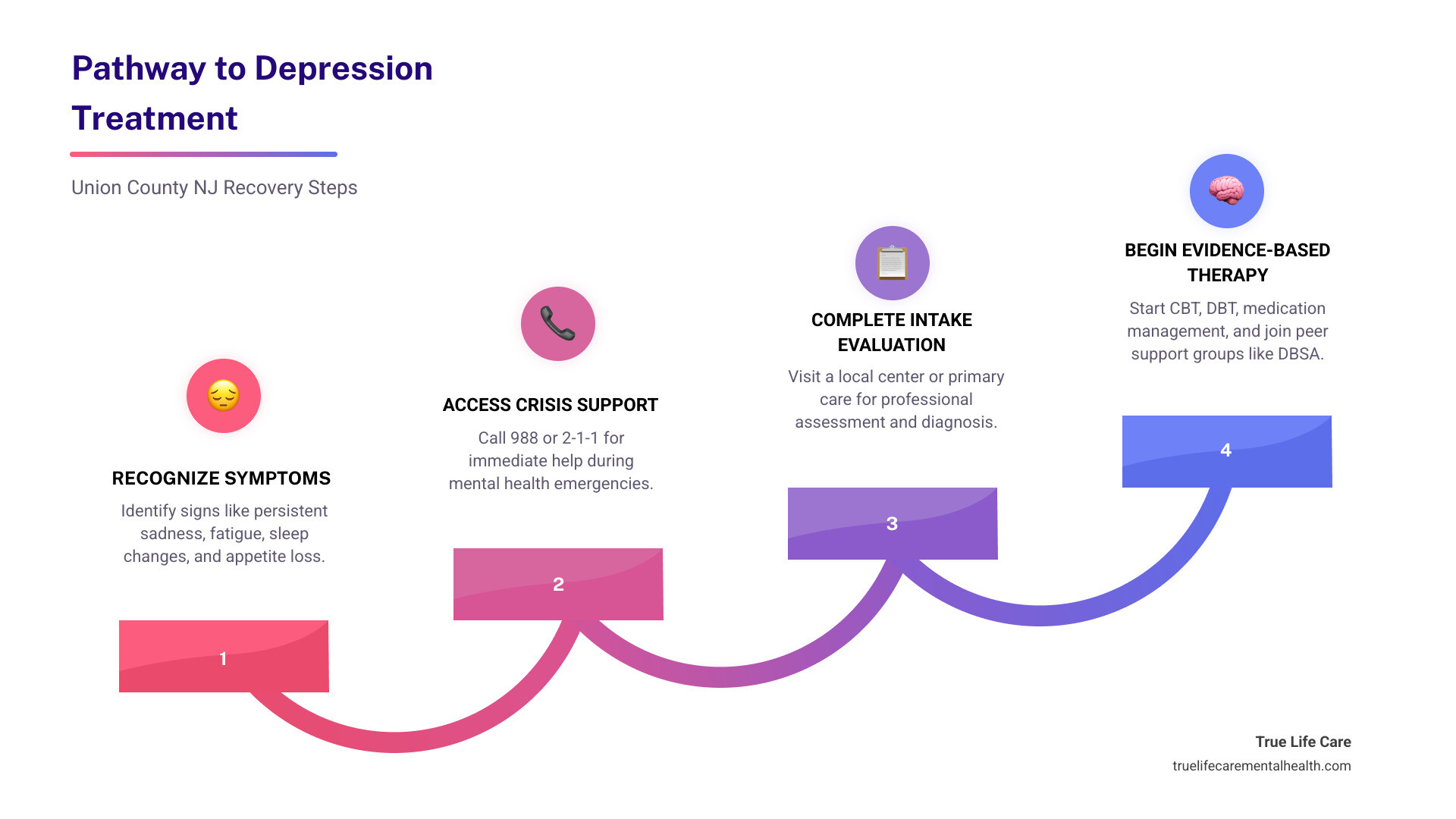
Recognizing depression is the first hurdle. In Union County, local health resources describe depression not just as “feeling blue,” but as a persistent medical condition that affects how you feel, think, and handle daily activities. Common symptoms include:
- Persistent Sadness: A “heavy” feeling or emptiness that doesn’t go away.
- Fatigue: Feeling exhausted even after a full night’s sleep; a total lack of energy.
- Sleep Changes: Insomnia or sleeping too much (hypersomnia).
- Appetite Loss or Weight Changes: Significant changes in eating habits.
- Loss of Interest: No longer enjoying hobbies, social outings, or work.
It is also vital to distinguish between different presentations of the disorder. For instance, understanding high-functioning depression is crucial for residents who may still be “checking the boxes” of daily life—going to work in Elizabeth or taking the kids to Kawameeh Park—while internally struggling with profound hopelessness.
Mania and Bipolar Disorder
Sometimes, depression is one half of a larger cycle. In Union County support resources, symptoms of mania are often discussed alongside depression to help residents identify Bipolar Disorder. Mania may involve racing thoughts, decreased need for sleep, and impulsive behavior. If you experience these “highs” followed by deep “lows,” a specialized evaluation is necessary.
Professional Evaluation
Before starting Depression Treatment in Union County New Jersey, a professional evaluation is the gold standard. Local resources recommend consulting a psychiatrist or a licensed clinician for a comprehensive psychiatric assessment. This often involves:
- Clinical Interview: Discussing your history and current struggles.
- Symptom Screening: Using standardized tools to measure the severity of depression.
- Medical Review: Ensuring that physical issues (like thyroid problems) aren’t mimicking depression.
For those in immediate need of screening, the scientific research on NJ mental health screening provides a roadmap to county-designated screening centers that offer 24/7 evaluations.
Professional Depression Treatment in Union County New Jersey
Clinical intake is the doorway to healing. When we begin working with an individual, we focus on diagnostic tools that move beyond a simple “yes or no” diagnosis. We look at symptom tracking and the development of personalized goals. Whether you are seeking help for yourself or a loved one, these effective tips for MDD treatment can help you maximize the benefits of your clinical sessions.
Evidence-Based Clinical Therapies and Levels of Care

When it comes to Depression Treatment in Union County New Jersey, evidence-based care means using methods that have been scientifically proven to work. Union County providers offer a sophisticated array of “talk therapies” and medical interventions.
Common Therapeutic Modalities
- Cognitive Behavioral Therapy (CBT): This is the most widely used therapy for depression. It helps you identify and change negative thought patterns that lead to depressive feelings.
- Dialectical Behavioral Therapy (DBT): Originally designed for intense emotional regulation, DBT is highly effective for those with chronic depression or suicidal ideation.
- EMDR Therapy: Eye Movement Desensitization and Reprocessing (EMDR) is used when depression is rooted in past trauma or PTSD.
- Acceptance & Commitment Therapy (ACT): Focuses on accepting what is out of your control and committing to actions that improve your life.
Medication Management and Evaluations
For many, therapy is most effective when combined with medication. Licensed psychiatrists in Union County provide medication management, ensuring that antidepressants or mood stabilizers are working effectively with minimal side effects. Neuropsychic evaluations may also be used to get a deeper look at brain function and how it relates to your mental health.
Levels of Care: PHP and IOP
Not everyone needs the same intensity of treatment. We often recommend specific programs based on the severity of the symptoms:
- Partial Hospitalization Program (PHP): This is a structured, day-long program for those who need intensive support but want to return home at night. You can learn how a partial hospitalization program helps you heal by providing a “middle ground” between inpatient stays and traditional outpatient therapy.
- Intensive Outpatient Program (IOP): For those who need more than once-a-week therapy but have work or family commitments, an IOP offers several hours of therapy a few days a week. Discover how an intensive outpatient program helps you heal through group support and skill-building.
Accessing Local Depression Treatment in Union County New Jersey
Union County residents have access to a robust network of outpatient counseling centers and urgent care facilities. For those dealing with “dual diagnosis”—where depression exists alongside alcohol or drug use—specialized co-occurring disorder programs are available. These programs treat both conditions simultaneously, which is essential for long-term sobriety and mental wellness. For a broader look at the state-wide landscape, refer to this guide to depression treatment in NJ.
Community Support Groups and Local Resources
Clinical therapy is vital, but community connection is the “secret sauce” of long-term recovery. Union County is home to some of the most active peer-led support networks in New Jersey.
Peer-Led Support: DBSA and NAMI
The Depression and Bipolar Support Alliance (DBSA) Union County is a cornerstone resource. These groups are free, non-clinical, and led by “peers”—people who have lived experience with mood disorders.
- DBSA Cranford Meetings: These currently meet on the second and fourth Tuesdays of each month from 7:30 PM to 9:00 PM. They are held at St. Michael’s Parish Center, 40 Alden Street, Cranford, NJ 07016.
- Online Support: Many groups have shifted to or added online options, allowing you to join a meeting from the comfort of your home in Westfield or Summit.
Crisis and Emergency Resources
If you or a loved one are in immediate danger, Union County offers several 24/7 lifelines:
- 988 Lifeline: Call or text 988 for the National Suicide Prevention Lifeline.
- NJ Hopeline: Call 855-654-6735 for state-specific support.
- Mobile Community Outreach: Call 908-994-7131 for 24-hour psychiatric emergency services. This team can provide mobile response and stabilization for those in crisis.
- Peer Recovery WarmLine: If you just need to talk to someone who understands before things reach a crisis level, the WarmLine is an excellent resource.
- 2-1-1 Helpline: Dial 2-1-1 for help navigating the complex web of social services, including housing, food, and mental health referrals.
Specialized Services
Community-based organizations play a massive role in the county, offering everything from homeless outreach (PATH) to justice-involved services and intensive case management (PACT). These programs are continuously expanding to better serve the mental health needs of the community.
Frequently Asked Questions about Depression Treatment in Union County New Jersey
Where can I find local support groups?
Local support groups are hosted at community centers, churches, and hospitals throughout the county. The DBSA Union County affiliate is one of the most prominent, meeting in Cranford. Additionally, NAMI Union County offers education and support for both individuals and their families. Many of these groups offer both in-person and online “hybrid” formats to ensure everyone can attend regardless of their schedule or transportation situation.
What crisis services are available in Union County?
Union County has a dedicated Psychiatric Emergency Screening Service (PESS). You can access 24-hour emergency psychiatric services by calling 908-994-7131. For children and families, PerformCare (877-652-7624) provides mobile response and stabilization. Of course, the 988 Suicide & Crisis Lifeline is always available via call or text.
How can I start treatment at a local center?
Most local treatment centers make it easy to start:
- Online Intake: Visit the provider’s website and fill out a secure contact or intake form.
- Phone Consultation: A coordinator will usually call you to discuss your goals and match you with a therapist.
- Insurance Verification: Most centers will help you determine what your plan covers.
- Clinical Evaluation: Your first session will be a deep dive into your history to create a custom roadmap for your recovery.
Conclusion
Recovery from depression isn’t a straight line, but in Union County, you have a safety net designed to catch you at every turn. From the high-level clinical expertise of evidence-based therapies like CBT and DBT to the warm, welcoming environment of a DBSA peer support meeting in Cranford, the resources for Depression Treatment in Union County New Jersey are comprehensive and compassionate.
At True Life Care Mental Health, we believe in a holistic approach. We know that treating depression requires more than just a prescription; it requires a community, a plan, and a commitment to long-term well-being. Whether you are seeking the structure of a PHP or the flexibility of an IOP, our goal is to empower you to take back control of your life.
If you are ready to move from just surviving to truly thriving, now is the time to reach out. Your journey to wellness is personal, but you don’t have to walk the path alone. Start your journey with depression treatment in New Jersey today and discover the support that is waiting for you right here in our community.