
Medically Reviewed by a Dr. Hossain Licensed Mental Health Professional sychotherapy, particularly trauma-focused modalities Medical Director
Living with Post-Traumatic Stress Disorder (PTSD) can feel like your mind is constantly replaying an event you wish you could leave behind. Flashbacks, nightmares, anxiety, emotional numbness, and avoiding certain places or situations can interfere with work, relationships, and daily life.
The encouraging news is that PTSD is one of the most treatable mental health conditions when the right evidence-based therapies are used. Modern trauma treatment goes beyond simply talking about what happened. Today’s approaches help people process traumatic memories, regulate emotions, and rebuild a sense of safety.
If you’ve recently started recognizing symptoms of trauma, it’s helpful to first understand the warning signs. Our guide on PTSD Symptoms Checklist: When Trauma Requires Professional Treatment explains how to recognize PTSD symptoms and when it’s time to seek professional help.
Likewise, if you’re unsure whether your symptoms are caused by trauma or an anxiety disorder, our guide PTSD vs. Anxiety: Understanding the Differences and Finding the Right Treatment explains how mental health professionals distinguish between these conditions.
Does Therapy Really Work for PTSD?
Yes.
According to the National Center for PTSD (U.S. Department of Veterans Affairs), trauma-focused psychotherapies are considered the first-line treatment for PTSD because they consistently reduce symptoms and improve long-term recovery outcomes.
Research shows that many individuals experience significant improvement when they receive structured, evidence-based PTSD treatment rather than trying to manage symptoms alone.
The key is choosing the right therapy based on your symptoms, history, and treatment goals.
Why There Isn’t One “Best” PTSD Therapy
Many people ask:
- Which therapy works best for PTSD?
- Is CBT better than EMDR?
- Does DBT help trauma?
- Do I need medication and therapy?
The answer depends on several factors, including:
- The type of trauma experienced
- How long symptoms have been present
- Co-occurring anxiety or depression
- Emotional regulation difficulties
- Previous treatment experiences
- Daily functioning
Rather than using a one-size-fits-all approach, experienced clinicians create personalized treatment plans that combine therapies when appropriate.
Comparing the Most Effective PTSD Therapies
| Therapy | Best For | Primary Goal |
|---|---|---|
| Cognitive Behavioral Therapy (CBT) | Negative thinking patterns | Change unhelpful thoughts and behaviors |
| Dialectical Behavior Therapy (DBT) | Emotional dysregulation | Build coping and emotional regulation skills |
| EMDR | Distressing traumatic memories | Reduce emotional impact of trauma |
| Trauma-Informed Therapy | All trauma survivors | Create safety and individualized healing |
| Acceptance and Commitment Therapy (ACT) | Avoidance and emotional struggle | Increase psychological flexibility |
Each therapy addresses PTSD differently, which is why treatment plans often include more than one approach.

Cognitive Behavioral Therapy (CBT)
CBT is one of the most extensively researched treatments for PTSD and remains a cornerstone of trauma recovery.
Many people with PTSD develop beliefs such as:
- “I’m never safe.”
- “The trauma was my fault.”
- “I can’t trust anyone.”
- “I’ll never feel normal again.”
CBT helps identify these patterns and replace them with healthier, more realistic perspectives.
CBT Can Help You:
- Reduce intrusive thoughts
- Challenge trauma-related beliefs
- Decrease avoidance behaviors
- Improve coping skills
- Manage anxiety and depression
- Rebuild confidence
Real-Life Example
After surviving a serious car accident, Michael stopped driving altogether because he believed every trip would end in another crash.
Through CBT, he gradually challenged these fears, practiced coping strategies, and regained confidence behind the wheel.
Dialectical Behavior Therapy (DBT)
While CBT focuses on thoughts, DBT emphasizes managing intense emotions.
PTSD often causes:
- Emotional outbursts
- Difficulty calming down
- Relationship conflicts
- Self-destructive coping behaviors
- Feeling emotionally overwhelmed
DBT teaches practical skills to help individuals respond to emotional distress more effectively.
DBT Skills Include
- Mindfulness
- Distress tolerance
- Emotional regulation
- Interpersonal effectiveness
These skills are especially helpful for individuals whose PTSD is accompanied by anxiety, depression, or difficulty managing emotions.
Eye Movement Desensitization and Reprocessing (EMDR)
EMDR is one of the most recognized trauma therapies available today.
Unlike traditional talk therapy, EMDR helps the brain process traumatic memories so they become less emotionally overwhelming over time.
During EMDR sessions, individuals recall traumatic experiences while engaging in guided bilateral stimulation, such as following hand movements or alternating sounds.
The goal is not to erase memories but to reduce the distress associated with them.
EMDR May Help Reduce
- Flashbacks
- Nightmares
- Emotional distress
- Trauma triggers
- Negative self-beliefs
Many people report that memories become less vivid and less emotionally intense after completing treatment.
Trauma-Informed Care: The Foundation of PTSD Treatment
One of the biggest misconceptions about trauma therapy is that every session involves reliving painful experiences.
In reality, effective trauma treatment begins by creating a sense of safety.
Trauma-informed care recognizes that trauma affects how people think, feel, and respond to stress.
Instead of asking:
“What’s wrong with you?”
Trauma-informed clinicians ask:
“What happened to you?”
This shift helps reduce shame and builds trust throughout the healing process.
Trauma-informed care also emphasizes:
- Emotional safety
- Respect
- Collaboration
- Choice
- Cultural sensitivity
- Personalized treatment planning
These principles can improve engagement and help individuals feel more comfortable participating in therapy.

Which Therapy Is Right for You?
There is no universal answer.
The most appropriate therapy depends on:
| Symptom | Therapy Often Recommended |
|---|---|
| Intrusive thoughts | CBT |
| Flashbacks | EMDR |
| Emotional dysregulation | DBT |
| Avoidance | ACT or CBT |
| Complex trauma | Trauma-informed integrated treatment |
| PTSD with anxiety | Combination of CBT and DBT |
Many individuals achieve the best results through a personalized treatment plan that combines multiple evidence-based therapies rather than relying on a single approach.
Acceptance and Commitment Therapy (ACT)
Acceptance and Commitment Therapy (ACT) is another evidence-based approach that can be highly effective for individuals living with PTSD. Instead of trying to eliminate painful thoughts or memories, ACT helps people develop healthier ways of responding to them.
The goal is to reduce the struggle against difficult emotions while helping individuals move toward a meaningful and fulfilling life.
ACT Helps Individuals:
- Accept difficult emotions without avoidance
- Reduce psychological distress
- Develop mindfulness skills
- Build resilience after trauma
- Focus on personal values rather than fear
For many trauma survivors, ACT complements CBT or DBT by teaching long-term emotional flexibility.
Does PTSD Always Require Medication?
No.
Medication is not required for everyone with PTSD, and many people recover through therapy alone. However, medication may be recommended when symptoms are severe or significantly interfere with daily functioning.
A psychiatrist may recommend medication to help manage symptoms such as:
- Persistent anxiety
- Depression
- Panic attacks
- Sleep disturbances
- Nightmares
- Hypervigilance
Some commonly prescribed medications include:
| Medication Type | Purpose |
|---|---|
| SSRIs | Reduce anxiety and depression symptoms |
| SNRIs | Improve mood and reduce anxiety |
| Sleep medications (when appropriate) | Help manage insomnia |
| Other medications | Used based on individual clinical needs |
Medication should always be prescribed and monitored by a qualified medical professional. It is generally most effective when combined with evidence-based psychotherapy rather than used as a standalone treatment.
How Long Does PTSD Therapy Take?
One of the most common questions people ask is:
“How long will it take before I start feeling better?”
The answer depends on several factors, including:
- The type of trauma experienced
- How long symptoms have been present
- Whether there are co-occurring mental health conditions
- Consistency in attending treatment
- Individual treatment goals
General Recovery Timeline
| Treatment Stage | What to Expect |
| Weeks 1–2 | Assessment, treatment planning, building trust with your therapist |
| Weeks 3–6 | Learning coping skills and emotional regulation techniques |
| Months 2–4 | Gradual reduction in symptoms and improved daily functioning |
| Months 4–6 | Increased confidence, healthier coping, and reduced avoidance |
| Long-Term | Ongoing recovery, relapse prevention, and emotional resilience |
Recovery is not linear. Some weeks feel easier than others, and occasional setbacks are a normal part of the healing process.
When Is Outpatient Therapy Enough?
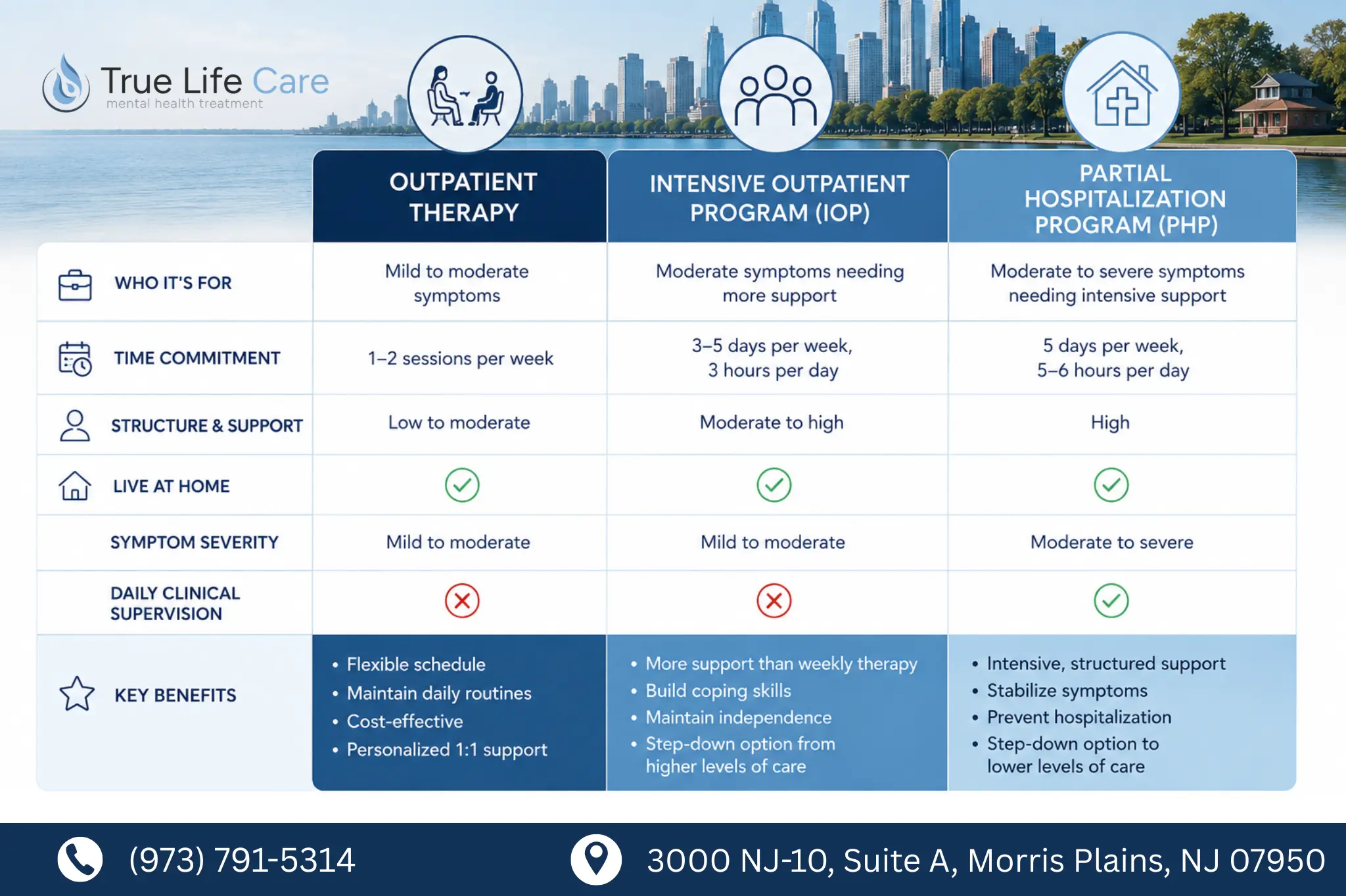
Many individuals with mild to moderate PTSD symptoms benefit from traditional outpatient therapy.
Outpatient care may be appropriate if you:
- Can maintain work or school responsibilities
- Have a stable home environment
- Experience manageable symptoms
- Do not require daily clinical supervision
For those needing additional support, a higher level of care may provide better outcomes.
When Should You Consider an Intensive Outpatient Program (IOP)?
If PTSD symptoms begin interfering with your ability to function, an Intensive Outpatient Program (IOP) can offer more structured care than weekly therapy.
An IOP typically includes multiple therapy sessions each week while allowing individuals to continue living at home.
It may be appropriate if you experience:
- Frequent panic attacks
- Increasing avoidance behaviors
- Difficulty maintaining employment
- Relationship challenges
- Persistent anxiety despite outpatient treatment
Learn more about True Life Care’s Intensive Outpatient Program
When Is a Partial Hospitalization Program (PHP) Recommended?
A Partial Hospitalization Program (PHP) provides intensive treatment during the day while allowing individuals to return home in the evenings.
PHP may be recommended when:
- Symptoms are significantly affecting daily life
- Weekly therapy is no longer sufficient
- Emotional distress is becoming difficult to manage
- More comprehensive support is needed
Explore our Partial Hospitalization Program.
When Inpatient Treatment May Be the Best Option
Some individuals require short-term inpatient mental health care to stabilize symptoms in a safe and structured environment.
Inpatient treatment may be appropriate if someone is experiencing:
- Severe emotional distress
- Inability to care for themselves
- Significant functional impairment
- A mental health crisis requiring 24-hour support
Learn more about inpatient mental health treatment:
PTSD Treatment Comparison
| Treatment | Best For | Evidence Level |
| CBT | Trauma-related thoughts and behaviors | Very Strong |
| DBT | Emotional regulation and coping skills | Strong |
| EMDR | Processing traumatic memories | Very Strong |
| ACT | Psychological flexibility and acceptance | Strong |
| Trauma-Informed Therapy | Personalized trauma recovery | Essential Foundation |
| Medication Management | Moderate to severe symptoms | Often Combined with Therapy |
Clinical guidelines consistently recommend trauma-focused psychotherapy as the first-line treatment for PTSD, with medication considered when clinically appropriate.
Myths vs. Facts About PTSD Therapy
| Myth | Fact |
| Therapy means reliving trauma repeatedly. | Modern trauma therapy focuses on safety, coping skills, and gradual healing. |
| PTSD only affects veterans. | Anyone who experiences trauma can develop PTSD. |
| Medication alone cures PTSD. | Medication may reduce symptoms, but therapy addresses the underlying effects of trauma. |
| Healing should happen quickly. | Recovery takes time and varies from person to person. |
| Asking for help is a sign of weakness. | Seeking treatment is a proactive step toward recovery and long-term well-being. |
Frequently Asked Questions
Q Which therapy is considered the best for PTSD?
There is no single therapy that works best for everyone. CBT, EMDR, DBT, ACT, and trauma-informed therapy all have strong evidence supporting their effectiveness. The best treatment depends on your symptoms, history, and personal needs.
Q Is EMDR better than CBT?
Neither therapy is universally better. Some individuals respond well to CBT, while others benefit more from EMDR or a combination of approaches.
Q Can PTSD be treated without medication?
Yes. Many individuals experience significant improvement through psychotherapy alone. Medication may be recommended when symptoms are severe or when additional symptom management is needed.
Q How do I know which level of treatment I need?
A comprehensive mental health assessment can determine whether outpatient therapy, an Intensive Outpatient Program (IOP), a Partial Hospitalization Program (PHP), or inpatient care is most appropriate.
Q Can PTSD improve years after trauma?
Yes. Even if symptoms began months or years after the traumatic event, evidence-based treatment can still be highly effective.
Continue Learning About PTSD
If you’re still trying to understand whether your symptoms may be related to trauma, start with our guide:
PTSD Symptoms Checklist: When Trauma Requires Professional Treatment
If you’re unsure whether you’re experiencing PTSD or an anxiety disorder, our comparison guide can help you understand the differences:
PTSD vs. Anxiety: Understanding the Differences and Finding the Right Treatment
For individuals ready to begin recovery, learn more about our specialized PTSD treatment services:
Begin Your Recovery with True Life Care Mental Health
Trauma affects every person differently, but healing is possible with the right support.
At True Life Care Mental Health, we provide personalized, evidence-based treatment plans designed to address PTSD, trauma-related disorders, anxiety, and co-occurring mental health conditions. Our experienced clinical team works closely with each individual to recommend the most appropriate therapies and level of care based on their unique needs.
Whether you’re looking for outpatient therapy, intensive treatment, or comprehensive trauma-focused care, we’re here to help you take the next step toward recovery.
Contact True Life Care Mental Health
📞 Call: (973) 354-5878
📍 Visit Our Facilities:
https://truelifecarementalhealth.com/our-facilities/
📝 Verify Your Insurance:
https://truelifecarementalhealth.com/verify-insurance/
You don’t have to navigate PTSD alone. Reaching out today could be the first step toward lasting healing, improved relationships, and a healthier future.