
Dual diagnosis workbook pdf: Ultimate 2026 Recovery
Why a Dual Diagnosis Workbook PDF Can Transform Your Recovery
A dual diagnosis workbook pdf is a structured, self-guided resource designed to help individuals with co-occurring mental health and substance use disorders understand their conditions, develop coping skills, and create a concrete recovery plan. These workbooks typically include self-assessments, educational readings, exercises for relapse prevention, communication skill-building, and tools for managing stress and medication.
Many excellent workbooks are available, often for free from reputable sources like government health organizations and universities. They provide comprehensive exercises for everything from relapse prevention and stress management to self-reflection on the interconnection between mental health and substance use. Some focus on specific curriculum-based approaches with mindfulness and cognitive restructuring tools, while others are designed to support family members and loved ones.
If you’re among the 17.5 million adults in the United States living with co-occurring mental illness and substance use disorder, you already know how challenging it can feel to steer two complex conditions at once. The good news? You don’t have to figure it all out alone.
Dual diagnosis workbooks offer a practical, structured path forward. Unlike generic self-help materials, these specialized resources are designed specifically for people managing both mental health issues and addiction simultaneously. They provide concrete exercises, checklists, and strategies that you can work through at your own pace—whether you’re in treatment, working with a therapist, or taking steps toward recovery on your own.
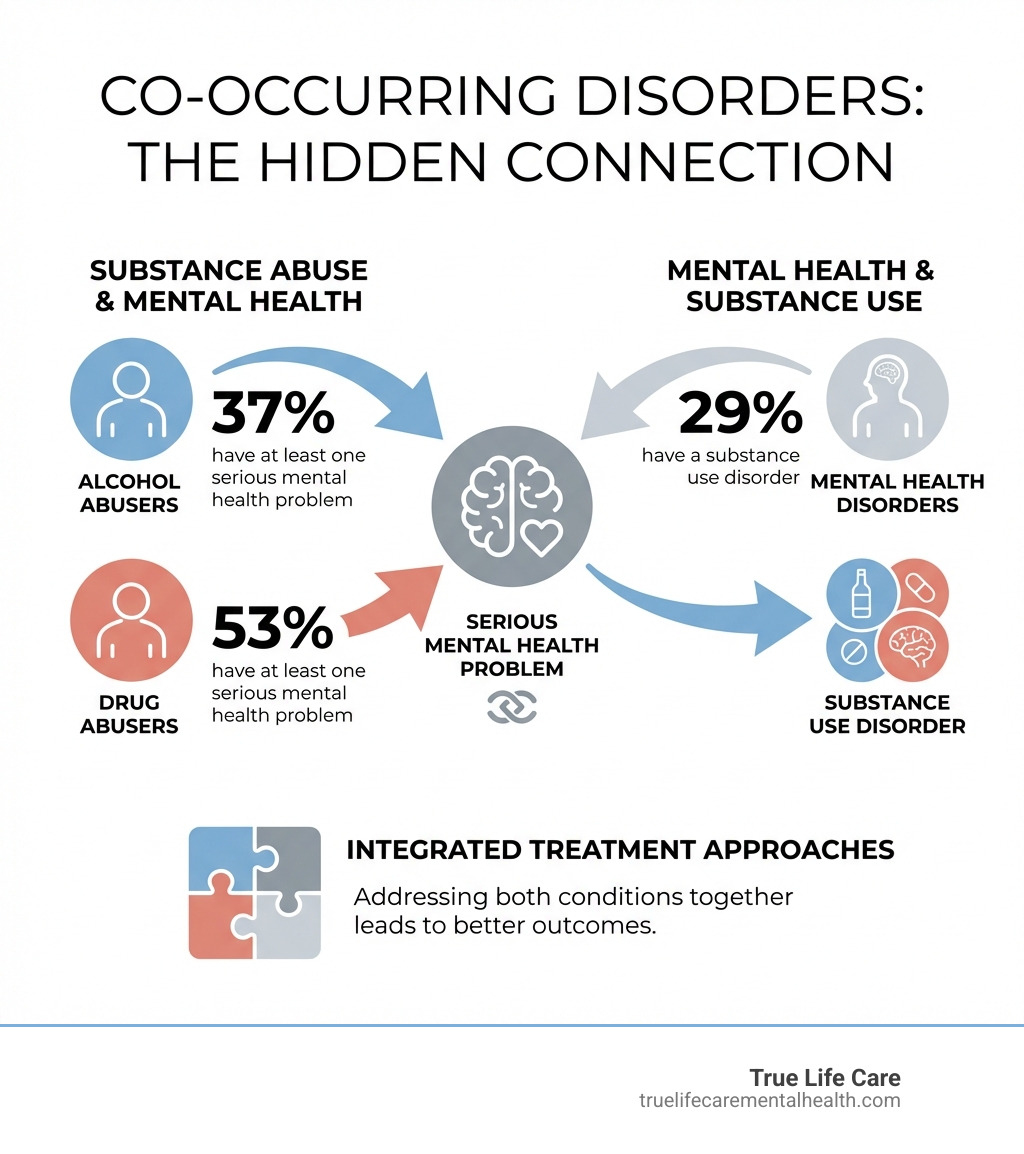
Research shows that integrated treatment addressing both conditions together leads to better outcomes than treating each separately. That’s exactly what these workbooks do: they help you see how your mental health and substance use affect each other, identify your personal triggers, and build real skills for managing both.
Understanding Dual Diagnosis and the Role of Workbooks
When mental health issues and substance use disorders occur together, it’s known as dual diagnosis or co-occurring disorders. This complex interplay means that each condition can exacerbate the other, making recovery more challenging if not addressed holistically. For instance, a person with an anxiety disorder might use alcohol to cope, while heavy alcohol use can worsen anxiety symptoms. This is why integrated treatment, which addresses both conditions simultaneously, is so crucial.
Unfortunately, separate treatment approaches often fall short. We’ve seen situations where individuals are treated for substance abuse, only to have underlying mental health issues trigger a relapse. Conversely, treating mental health without addressing substance use can be equally ineffective. As one person in recovery observed, some counselors can “treat you like you’re inferior, like you don’t know what you need,” highlighting the need for a more integrated and empathetic approach.
This is where a dual diagnosis workbook pdf becomes a powerful bridge to recovery. These resources help foster self-awareness, providing a structured path to understand the intricate relationship between substance use and mental health. They equip individuals with coping skills, supporting professional therapy and empowering personal recovery journeys. By working through these guides, we can build a strong foundation for lasting well-being.
What is a Dual Diagnosis Workbook?
At its core, a dual diagnosis workbook is a comprehensive, self-guided tool designed to help individuals steer the complexities of co-occurring disorders. Think of it as your personal guide through the recovery process, packed with:
- Self-guided exercises: These interactive activities encourage introspection and skill-building. For example, many workbooks include exercises for relapse prevention, coping with stress, and structured problem-solving methods that guide you from identifying a problem to assessing your solution.
- Checklists: Handy lists help you identify personal triggers, stress indicators, or even potential medication side effects, making it easier to track and manage your journey.
- Educational readings: These sections provide vital psychoeducation, helping you understand mental illnesses like depression, anxiety, or bipolar disorder, and how they interact with substance use.
- Group therapy tools: Many workbooks are designed to be used in conjunction with group sessions, fostering a supportive environment for shared learning and discussion.
These components combine to offer a structured path to recovery, emphasizing practical application and skill development that you can integrate into your daily life.
Why Are They Important for Recovery?
Workbooks are an invaluable part of the recovery toolkit for several key reasons:
- Fosters self-awareness: By completing exercises like a personal timeline worksheet, you can map out when your psychiatric and substance abuse problems began and how they relate to life events. This helps you recognize patterns and triggers, leading to greater self-understanding.
- Provides concrete strategies: Instead of just talking about coping, these workbooks give you actionable steps. Whether it’s a stress worksheet to plan how to manage work criticism or a problem-solving guide to tackle a transportation issue, they move you from theory to practice.
- Supports professional therapy: While self-guided, these workbooks are often used in conjunction with therapy, providing a framework for discussions with your therapist or peer support specialist. Our integrated approach at True Life Care Mental Health, for instance, perfectly complements the structured learning offered by these resources.
- Empowers individuals: The very act of working through a dual diagnosis workbook pdf empowers you. It puts the tools for change directly into your hands, fostering a sense of control and agency over your recovery journey.
- Tracks progress: Worksheets and checklists allow you to monitor your growth over time, celebrating successes and identifying areas that need more attention. Some workbooks include tracking graphs to visually monitor behavioral changes, which is a great example of this.
- Complements True Life Care’s integrated approach: Our holistic, evidence-based programs in New Jersey and NYC are designed to provide comprehensive care. Workbooks align perfectly with our philosophy, offering structured guidance that reinforces the skills and insights gained in therapy.

Key Components of a Dual Diagnosis Workbook PDF
A well-designed dual diagnosis workbook pdf is more than just a collection of papers; it’s a carefully curated curriculum for healing. These resources often draw on evidence-based practices and principles, such as Dual Recovery Therapy (DRT) and Illness Management and Recovery (IMR), to provide a comprehensive roadmap for individuals with co-occurring disorders.
Here are some common and crucial sections you’ll find:
- Psychoeducation: Understanding the nature of dual diagnosis, specific mental illnesses, and the effects of substances.
- Self-Assessment & Goal Setting: Tools to identify personal challenges, strengths, and define recovery objectives.
- Skill-Building Exercises: Practical activities for coping, communication, and problem-solving.
- Relapse Prevention: Strategies for identifying triggers, warning signs, and developing safety plans.
- Medication Management: Education on psychiatric medications and managing side effects.
- Life Skills Development: Guidance on practical aspects like money management, self-advocacy, and community living.
- Support System Improvement: Tools for building healthy relationships and navigating support groups.
Self-Assessment and Goal Setting Tools
Before we can move forward, we need to understand where we are and where we want to go. Dual diagnosis workbooks excel at providing tools for this crucial first step:
- Timeline Worksheets: These exercises help us map out the onset and progression of our psychiatric, interpersonal, and substance abuse problems. Visualizing these timelines can reveal powerful insights into how these issues are interconnected.
- Personal Life Problem Areas: This tool encourages us to identify specific areas of our lives—such as relationships, employment, or finances—that are being impacted by our co-occurring disorders. By pinpointing these, we can prioritize and target our recovery efforts.
- Readiness to Change Rulers: Many workbooks use tools such as a readiness ruler, which helps us assess our motivation and confidence for making specific changes. This acknowledges that recovery is a personal journey, and we might be at different stages for different aspects of our lives.
- Decisional Balance Exercises: This type of exercise helps us weigh the pros and cons of a particular behavior, like substance use, versus the benefits and costs of changing that behavior. It’s a powerful way to clarify our motivation and understand any ambivalence we might feel.
These tools are not just about identifying problems; they’re about understanding our personal history and setting clear, actionable recovery goals that resonate with our individual needs and aspirations.
Developing Coping Strategies and Relapse Prevention Plans
One of the most vital aspects of any dual diagnosis workbook pdf is its focus on developing robust coping strategies and a personalized relapse prevention plan. We know that triggers and stressors are an inevitable part of life, but we can learn to steer them effectively.
- Stress management worksheets: These exercises help us identify our personal sources of stress, from daily hassles to major life events. Workbooks offer checklists to pinpoint stressors and then guides us in developing strategies such as scheduling relaxation time, building a support system, or engaging in physical activity.
- Problem-solving tools: Structured approaches provide a clear method for tackling challenges. For example, if we’re struggling to get to a new job on time without a car, these tools help us brainstorm solutions like exploring public transport or asking for a different shift by breaking the process into steps: describe the problem, identify goals, brainstorm solutions, and evaluate responses.
- Anger management exercises: Anger is a common emotion that can lead to relapse. Workbooks help us identify anger triggers and develop healthier, controlled responses, such as communicating assertively or engaging in physical release. Many highlight methods for recognizing and expressing anger constructively.
- Identifying triggers and warning signs: Workbooks provide structured ways to identify both internal triggers (like certain emotions or thoughts) and external triggers (like specific people, places, or situations). They may emphasize identifying “mooring lines” – behaviors that keep us tethered to sobriety – and recognizing “drug use justification” as a process that can lead to relapse.
- Creating a relapse prevention plan; Safe coping strategies: We are guided to create a detailed plan that outlines our personal warning signs, along with specific, safe coping strategies to use when those signs appear. This might include contacting a sponsor, attending a meeting, or engaging in a pre-planned healthy activity. A good plan helps identify triggers, like an old drinking buddy, and outlines a response, such as involving a sponsor to stay focused on recovery.
Understanding Mental Illness and Medication
A crucial part of managing dual diagnosis is gaining a clear understanding of mental illnesses and how medication can play a role in our recovery. A comprehensive dual diagnosis workbook pdf acts as a vital educational resource:

- Education on specific disorders: Workbooks provide accessible information on a range of mental health conditions commonly co-occurring with substance use, such as depression, bipolar disorder, generalized anxiety disorder (GAD), panic disorder, social phobia, obsessive-compulsive disorder (OCD), post-traumatic stress disorder (PTSD), and even more complex conditions like borderline personality disorder or schizophrenia. This education is important for both individuals and their support systems.
- Medication side effect checklists: Many individuals with dual diagnosis rely on psychiatric medications to manage their mental health symptoms. Workbooks often include checklists to help us track potential medication side effects, empowering us to discuss these effectively with our healthcare providers. This proactive approach ensures that medication remains a supportive tool, not a source of new challenges.
- Advocating with healthcare providers: By becoming more knowledgeable about our conditions and treatment, we are better equipped to advocate for ourselves within the healthcare system. This means asking informed questions, expressing concerns, and actively participating in treatment decisions, ensuring our care plan is truly personalized and effective.
Building Communication and Community Living Skills
Recovery extends beyond managing symptoms; it’s about rebuilding a fulfilling life within the community. Dual diagnosis workbooks provide practical guidance for developing essential life skills.
- Elements of good communication; Assertiveness training: Effective communication is vital for healthy relationships and self-advocacy. Workbooks often outline the elements of good and poor communication, helping us identify areas for improvement. They also frequently emphasize assertiveness training, teaching us to express our needs and feelings respectfully, rather than being passive or aggressive. This is key for building supportive relationships and setting healthy boundaries.
- Navigating support groups: Workbooks often include sections dedicated to understanding and engaging with 12-step programs like AA/NA, as well as other support groups like SMART Recovery or NAMI. They explain the steps, principles, and common lexicon, helping us feel more comfortable and prepared to join these communities of shared experience.
- Money management tips; Self-advocacy skills; Preparing for community transition: For many, recovery involves re-learning or strengthening practical life skills. Workbooks often address community living skills, offering tips for budgeting, managing finances, ensuring personal safety, and self-advocacy in various situations. These skills are crucial for a smooth and successful transition back into the community, fostering independence and confidence.
How to Effectively Use a Dual Diagnosis Workbook
A dual diagnosis workbook pdf is a powerful tool, but its effectiveness is maximized when used thoughtfully and consistently. While they are designed for self-guided work, integrating them into a broader treatment plan often yields the best results.
- Working with a therapist: For individuals in New Jersey and NYC, utilizing a workbook alongside sessions with a therapist at True Life Care Mental Health can provide invaluable structure and accountability. Your therapist can help you interpret exercises, process difficult emotions that arise, and tailor the content to your specific needs.
- Peer support specialists: Many integrated treatment programs highlight the role of peer support specialists who meet weekly with individuals to review workbook materials. These specialists offer unique insights from their own lived experience, providing guidance and encouragement.
- Group therapy settings: Many workbooks are specifically designed for group environments. This allows for shared learning, mutual support, and the opportunity to practice new skills in a safe, facilitated setting.
- Individual reflection: Even without formal support, consistent individual reflection is key. Dedicate specific time to work through the exercises honestly.
- Consistency is key: Recovery is a marathon, not a sprint. Regular engagement with the workbook, even for short periods, builds momentum and reinforces learning.
- Honesty with oneself: The most profound insights come from genuine self-assessment. Be honest in your responses, even when it’s uncomfortable.
- How dual diagnosis impacts individuals and families: Workbooks often address the broader impact of co-occurring disorders, not just on the individual but also on their loved ones. This helps individuals understand the ripple effects and encourages family involvement in the recovery process, which is a cornerstone of our holistic approach at True Life Care.
Integrating Workbook Exercises into Daily Life
The true power of a dual diagnosis workbook pdf lies in its ability to translate theoretical knowledge into practical, real-world application. It’s not enough to just complete the exercises; we must actively integrate them into our daily routines.
- Scheduling time for exercises: Just as you schedule appointments, make time for your workbook. Many resources emphasize the importance of scheduling for recovery, noting that “your schedule is your structure” and helps prevent impulsive, high-risk behavior.
- Applying communication skills in relationships: Use the insights from communication exercises to improve interactions with family, friends, and colleagues. Practice “I” statements, active listening, and assertiveness in real-time conversations.
- Using stress management techniques in real-time: When you feel stress building, recall the coping strategies you practiced in your workbook. For example, if your workbook suggested deep breathing or a quick walk, implement it immediately rather than letting stress escalate.
- Practicing mindfulness daily: Many workbooks introduce mindfulness techniques. Integrate these into your day by taking moments to observe, describe, and participate in experiences non-judgmentally, helping you manage urges and cravings.
The Role of Support Systems
Recovery from dual diagnosis is rarely a solitary journey. Workbooks consistently highlight the indispensable role of a strong support system.
- Sharing progress with a sponsor or therapist: Regularly discussing your workbook insights and challenges with a trusted sponsor or therapist can provide crucial feedback, encouragement, and accountability.
- Using worksheets in family therapy: For families impacted by dual diagnosis, incorporating workbook concepts into family therapy sessions can open lines of communication and foster mutual understanding. Our programs at True Life Care Mental Health in New Jersey and NYC encourage family involvement as part of our holistic treatment model.
- Building a network of supportive people: Workbooks often guide us in identifying who is supportive, neutral, or destructive in our lives. They encourage us to expand our social support by joining groups with shared interests and to decrease contact with negative influences.
- Decreasing contact with destructive influences: This might involve setting boundaries with people who enable substance use or avoiding places that trigger cravings. Being “smart” by avoiding triggers is often more effective than relying solely on willpower.
- Understanding the value of a treatment center: For many, a comprehensive treatment center like True Life Care provides the integrated care and structured environment needed to truly engage with workbook materials and build a lasting foundation for recovery.
Frequently Asked Questions about Dual Diagnosis Workbooks
Can I use a dual diagnosis workbook on my own?
Yes, many dual diagnosis workbook pdf resources are designed to be self-guided, offering exercises and educational content that you can work through independently. This allows for personal reflection and learning at your own pace, empowering you to take an active role in your recovery.
However, while independent work can be beneficial, we strongly recommend using these workbooks in conjunction with professional guidance. A therapist or counselor can help you:
- Maximize effectiveness: They can help you understand complex concepts, interpret your responses, and apply the strategies more effectively to your unique situation.
- Avoid misinterpretation: Some topics, especially those related to mental health symptoms or medication, can be nuanced. Professional guidance ensures you correctly understand the information and avoid self-diagnosing or misapplying strategies.
- Provide accountability and support: Working with a professional or in a group setting offers a crucial layer of support and accountability that can be difficult to maintain on your own, especially during challenging moments in recovery.
For individuals seeking comprehensive care in New Jersey, programs like those at True Life Care Mental Health offer the ideal environment to integrate workbook use with expert therapy.
What is Dual Recovery Therapy (DRT) and how is it used in workbooks?
Dual Recovery Therapy (DRT) is an integrated treatment approach specifically designed to address the complex interplay of co-occurring addiction and mental illness. Unlike traditional methods that might treat these conditions separately, DRT recognizes their interrelationship, aiming to address both simultaneously for more effective and sustainable recovery.
DRT principles are often integrated into workbooks. Here’s how:
- Integrated treatment approach: Workbooks that incorporate DRT emphasize that mental health and substance use problems are deeply connected and must be treated together. This means exercises will prompt you to consider how one affects the other.
- Addressing addiction and mental illness together: DRT-informed exercises guide you through understanding how your mental health symptoms might trigger substance use, and how substance use, in turn, can worsen your mental health. Tools like timeline worksheets and decisional balance exercises are prime examples, helping you see these connections.
- DRT principles: These workbooks often include readings and discussions on core DRT principles, such as accepting that recovery is a process, developing coping skills, and building a supportive network.
- Change plans: A key component of DRT is developing personalized change plans. Workbooks will guide you through creating these plans, outlining specific steps to manage cravings, cope with mental health symptoms, and reinforce positive behaviors, such as a plan to call a friend or sponsor to avoid relapse.
By weaving DRT principles throughout the exercises, workbooks provide a structured and integrated pathway to understanding and managing co-occurring disorders.
Where can I find a free dual diagnosis workbook pdf?
Finding a reliable and free dual diagnosis workbook pdf can be a great starting point for your recovery journey. We recommend looking to trusted sources to ensure the quality and accuracy of the information:
- University resources: Many universities with strong psychology or addiction studies departments offer free resources or links to reputable workbooks.
- Government health organizations: Organizations like the Substance Abuse and Mental Health Services Administration often provide free publications and resources on dual diagnosis. Many well-regarded workbooks are supported by grants from such organizations.
- Non-profit mental health organizations: Advocacy groups and non-profits dedicated to mental health and addiction may offer free workbooks or links to them. For example, you might find resources through organizations focused on mental wellness in New Jersey.
- Online treatment and recovery platforms: Websites dedicated to addiction and mental health recovery often provide free downloadable workbooks and resources.
Always vet the sources to ensure they are reputable and provide evidence-based information. While free resources are valuable, they complement, rather than replace, professional treatment.
Take the Next Step in Your Recovery Journey
Navigating dual diagnosis is a challenging, yet profoundly rewarding journey. As we’ve explored, a dual diagnosis workbook pdf can be an incredibly vital tool, offering structured guidance, promoting self-awareness, and equipping you with practical coping strategies. The power of these structured resources, whether used independently or as part of a comprehensive treatment plan, lies in their ability to empower you to actively participate in your own healing.
Recovery is not just possible; it’s a path many have successfully walked. While workbooks provide an excellent foundation, professional, integrated treatment is often the key to open uping lasting well-being. At True Life Care Mental Health, we understand the complexities of co-occurring disorders. Our personalized, evidence-based programs in New Jersey and NYC, including PHP and IOP, offer a holistic approach with expert psychiatric care. We are dedicated to empowering individuals for long-term recovery and well-being.
If you or a loved one are struggling with dual diagnosis, don’t hesitate to seek the support you deserve. Take the next step today and find out how our integrated approach can guide you toward a healthier, more fulfilling life.