
Depression Is More Common in Bergen County Than You Think
Depression treatment in Bergen County NJ is available through a range of evidence-based programs — from outpatient therapy and medication management to intensive programs, advanced clinical interventions, and holistic care.
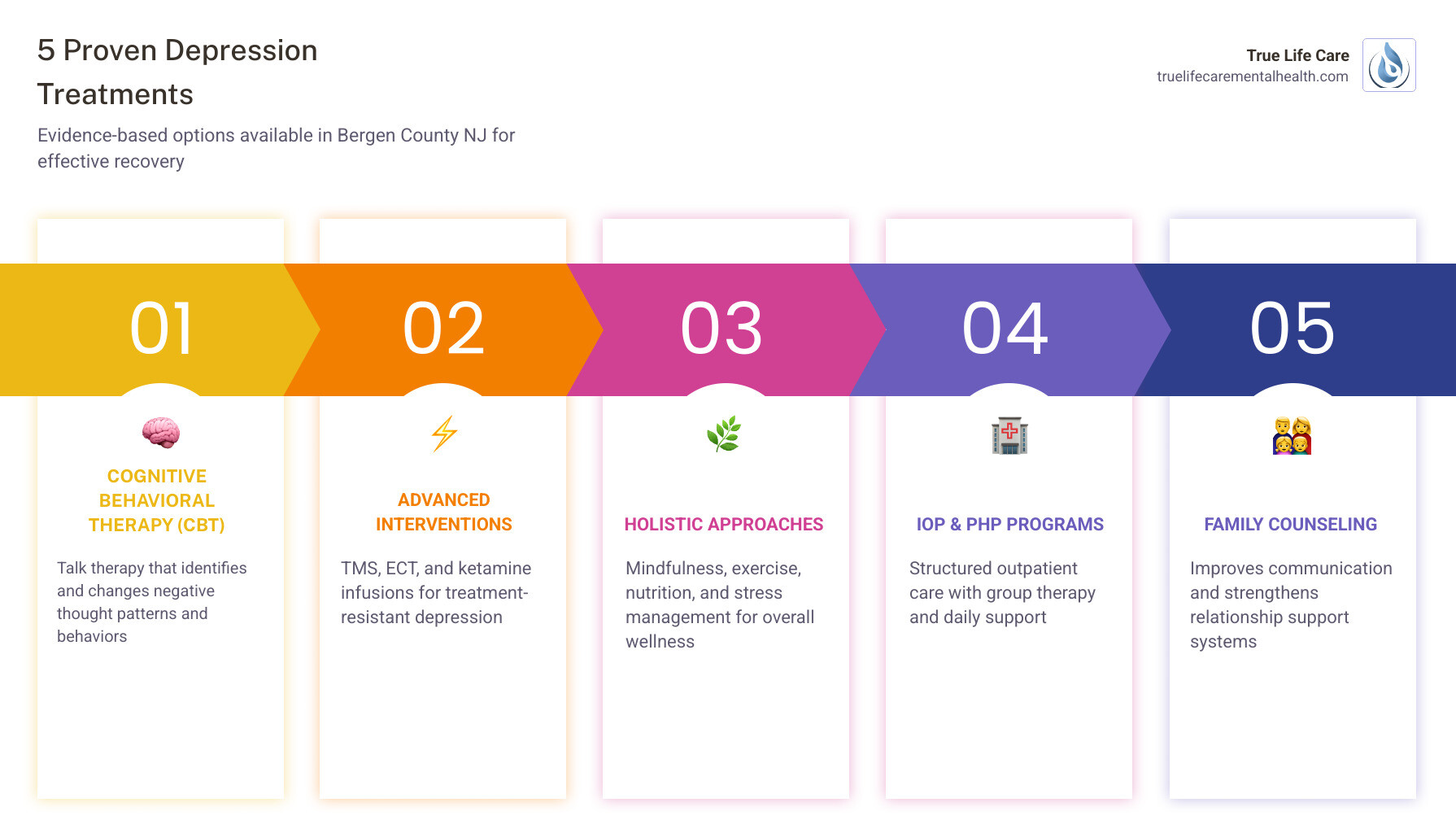
Here is a quick overview of the best depression treatment options in Bergen County:
- Cognitive Behavioral Therapy (CBT) – Talk therapy that changes negative thought patterns
- Advanced Clinical Interventions – TMS, ECT, and ketamine for treatment-resistant depression
- Holistic and Lifestyle-Based Approaches – Mindfulness, exercise, nutrition, and stress management
- Intensive Outpatient (IOP) and Partial Hospitalization (PHP) – Structured programs that fit around daily life
- Family and Interpersonal Counseling – Therapy that strengthens relationships and support systems
Depression is not a sign of weakness. It is one of the most common mental health conditions in the country. An estimated 21 million adults in the United States have experienced at least one major depressive episode. That is roughly 7 out of every 100 adults in any given year.
Women, young adults ages 18 to 25, and people of color face an even higher risk.
The good news? Depression is highly treatable. With the right support and the right program, recovery is absolutely possible.
Bergen County has a growing network of mental health providers offering everything from weekly therapy to intensive structured programs. Whether your symptoms are mild or severe, there is a level of care designed for where you are right now.
Key terms for Depression Treatment In Bergen County NJ:
- Depression Treatment in New Jersey
- Major Depressive Disorder Treatment in New Jersey
- Depression Treatment in Somerset County NJ
Understanding Depression Treatment in Bergen County NJ
Living in a area like Bergen County—with its proximity to NYC, demanding careers, and busy suburban schedules—can sometimes mask the symptoms of a serious mood disorder. You might find yourself waking up, going to work in Paramus or Fair Lawn, answering texts, and checking off your to-do list, all while feeling an internal “flatness” or emotional numbness.
In New Jersey, the prevalence of depression mirrors national trends, but local factors like seasonal changes and high-pressure environments can exacerbate symptoms. Research shows that certain groups are at a higher risk, including women, people of color, and young adults. For many in the 18–25 age bracket, transitions from school to the workforce can trigger significant depressive episodes.

To find the right Depression Treatment In Bergen County NJ, it is helpful to first understand what you are facing. Depression isn’t a “one-size-fits-all” diagnosis. By exploring the spectrum and understanding different types of depression, we can better target the treatment:
- Major Depressive Disorder (MDD): Involves a period of at least two weeks where you experience a depressed mood or loss of interest in activities, often accompanied by changes in sleep, appetite, and energy levels.
- Dysthymia (Persistent Depressive Disorder): A chronic, milder form of depression that lasts for two years or more. While less acute than MDD, it can feel like a heavy cloud that never truly lifts.
- Seasonal Affective Disorder (SAD): Very common in the Northeast, SAD is triggered by the loss of sunlight in the fall and winter. Residents in Bergen County often notice a significant drop in mood as the days get shorter.
The first step in any journey toward wellness is a clinical assessment. A professional diagnostic evaluation ensures that your treatment plan is based on your specific history, genetics, and life experiences rather than just a general label.
The 5 Best Evidence-Based Depression Treatments
When you begin looking for help, the sheer number of options can feel overwhelming. Should you see a therapist once a week? Do you need medication? Is a more intensive program necessary?
We believe in matching the level of care to the severity of the symptoms. For some, depression recovery involves outpatient treatment programs that provide flexibility. For others, a more structured environment is needed to stabilize their mood.
| Level of Care | Intensity | Best For |
|---|---|---|
| Standard Outpatient | 1 hour/week | Mild symptoms, maintenance, and long-term growth. |
| Intensive Outpatient (IOP) | 9–15 hours/week | Moderate symptoms where daily structure is needed but you still live at home. |
| Partial Hospitalization (PHP) | 20+ hours/week | Severe symptoms requiring full-day support without an overnight stay. |
Regardless of the level of care, the best treatments are rooted in scientific research on Cognitive Behavioral Therapy and other evidence-based modalities. A combination of psychotherapy and medication management is often the “gold standard” for achieving lasting results.
1. Cognitive Behavioral Therapy (CBT) for Depression Treatment in Bergen County NJ
If you’ve ever felt like your brain is stuck in a loop of “I’m not good enough” or “Nothing will ever change,” CBT is designed for you. CBT is a solution-focused approach that helps you recognize how your thoughts influence your feelings and behaviors.
In our Depression Treatment New Jersey Guide, we highlight CBT as a foundational tool because it provides practical skills. Instead of just talking about the past, you learn to:
- Identify Triggers: Understand what situations lead to a dip in mood.
- Challenge Thought Patterns: Replace “all-or-nothing” thinking with more balanced perspectives.
- Behavioral Activation: Gently reintroduce activities that used to bring joy, even when your motivation is low.
CBT is highly effective because it empowers you to become your own therapist over time. By changing the way you process information, you can fundamentally alter your emotional state.
2. Advanced Clinical Interventions (TMS, ECT, and Ketamine)
Sometimes, traditional therapy and standard medications aren’t enough. If you have tried multiple antidepressants without success, you may be experiencing signs of treatment-resistant depression. In these cases, Bergen County residents have access to cutting-edge medical interventions.
- TMS (Transcranial Magnetic Stimulation): A non-invasive procedure that uses magnetic fields to stimulate nerve cells in the brain regions involved in mood control.
- ECT (Electroconvulsive Therapy): Often used for severe, life-threatening depression, ECT has been modernized to be a safe and highly effective way to provide rapid relief.
- Ketamine Infusion Therapy: A newer breakthrough that works on different neurotransmitters (glutamate) than traditional SSRIs, often providing relief within hours or days for those in deep despair.
These treatments focus on neuroplasticity—the brain’s ability to rewire itself. A psychiatric consultation can help determine if these advanced options are the right step for your treatment-resistant depression.
3. Holistic and Lifestyle-Based Approaches
We believe that Depression Treatment In Bergen County NJ should address the whole person—body, mind, and spirit. Depression isn’t just “in your head”; it impacts your physical energy, your sleep, and your immune system.
Integrating holistic practices into a clinical plan can significantly boost recovery rates. These include:
- Mindfulness and Meditation: Learning to stay present reduces the rumination that often fuels depression.
- Exercise: Physical activity releases endorphins and has been shown in some studies to be as effective as mild antidepressants for some individuals.
- Light Therapy: Especially for those in areas like Oradell or Englewood Cliffs during the winter, using a specialized light box can help regulate the body’s internal clock.
- Nutrition: What we eat affects our gut health, which is directly linked to serotonin production.
By combining yoga, stress management, and integrative wellness with traditional therapy, we create a more resilient foundation for long-term health.
4. Intensive Outpatient (IOP) and Partial Hospitalization (PHP)
For many people, weekly therapy isn’t enough to break the cycle of a major depressive episode, but they aren’t in a position to go to a residential “rehab” for months. This is where Intensive Outpatient Programs (IOP) and Partial Hospitalization Programs (PHP) come in.
These programs offer:
- Structured Support: You spend several hours a day, several days a week, in a therapeutic environment.
- Peer Support: Group therapy helps you realize you are not alone. Hearing others share similar struggles in Bergen County can be incredibly healing.
- Daily Routine: Depression often destroys structure. These programs help you rebuild a healthy daily rhythm while you still go home to your own bed at night.
If you are unsure which level is right, comparing a Partial Hospitalization Program vs IOP with a clinical professional can help you find the balance between intensive care and maintaining your life responsibilities.
5. Specialized Family and Interpersonal Counseling
Depression doesn’t just affect the individual; it affects the entire family system. Whether it is a teen struggling with depression or a parent who has become withdrawn, the strain on relationships can be immense.
Research on the outcomes of family therapy shows that when the support system is involved, the individual’s chances of long-term recovery improve significantly. Interpersonal counseling focuses on:
- Communication Skills: Learning how to express needs without conflict.
- Relationship Dynamics: Identifying patterns that might be contributing to stress or isolation.
- Conflict Resolution: Addressing the “elephants in the room” that often exacerbate depressive symptoms.
Choosing the Right Level of Care and Therapist
Finding the right “fit” is perhaps the most important part of the journey. The therapeutic alliance—the bond of trust between you and your provider—is a major predictor of success.
When looking for a therapist or center in Bergen County, consider:
- Clinical Expertise: Do they specialize in your specific type of depression?
- Cultural Competence: Do they understand your background and identity?
- Telehealth vs. In-Person: Many Bergen County residents prefer the convenience of telehealth for busy workdays, while others find in-person sessions in towns like Paramus or Fair Lawn more grounding.
Knowing how to find a therapist who aligns with your goals is the first step toward reclaiming your life.
Accessing Depression Treatment in Bergen County NJ
Accessibility is key. We want to ensure that getting help is as seamless as possible. Most professional centers in the area, including those serving Paramus, Oradell, and Englewood Cliffs, offer:
- Insurance Coverage: Many programs accept major insurance providers (Aetna, Cigna, BCBS) or offer out-of-network options.
- Early Intervention: The sooner you reach out, the easier it is to prevent a mild episode from becoming a crisis. This is especially true for depression in young adults.
- Flexible Scheduling: Whether it’s a morning PHP or an evening IOP, treatment should fit into your life, not replace it.
Crisis Resources and Immediate Help in New Jersey
If you or a loved one are experiencing thoughts of self-harm or are in the midst of a severe emotional emergency, please do not wait. While outpatient centers are great for long-term healing, a crisis requires immediate stabilization.
Immediate Resources:
- 988 Suicide & Crisis Lifeline: Call or text 988 anytime for confidential support.
- Bergen County Psychiatric Emergency Help: Call (201) 262-HELP (4357) for 24/7 assistance.
- NJ Children’s System of Care: (877) 652-7624 for youth crisis response.
Crisis centers provide a specialized alternative to the ER, offering stabilization and safety planning in a more supportive environment.
Frequently Asked Questions about Depression Treatment
How do I know if my sadness is actually clinical depression?
Sadness or grief usually comes in waves and is often tied to a specific event. Clinical depression is a persistent low mood that lasts two weeks or longer and interferes with your ability to function at work, in relationships, or in your hobbies. If you feel “numb” or have lost interest in things you used to love, it is time to seek an assessment.
Is medication always necessary for treating depression?
Not always. Many people with mild to moderate depression find significant relief through therapy (like CBT) and lifestyle changes alone. However, for moderate to severe depression, a combination of medication and therapy often yields the best and fastest results.
Does insurance typically cover PHP or IOP programs in Bergen County?
Yes, most major insurance plans cover Intensive Outpatient and Partial Hospitalization programs because they are considered medically necessary levels of care. Many facilities will perform a free insurance verification for you before you begin treatment.
Conclusion
At True Life Care Mental Health, we know that the road to recovery isn’t always a straight line. But with a personalized, holistic approach that combines the best of evidence-based science with compassionate, human-centered care, you can find your way back to yourself.
Whether you are looking for Depression Treatment in New Jersey for the first time or are seeking advanced help for a long-standing struggle, we are here to support your long-term well-being. You don’t have to carry this weight alone—Bergen County has the resources, and we have the expertise to help you heal.