
Admission Criteria and Clinical Necessity for Mood Disorders
When navigating a mental health crisis, understanding when intensive medical support is required can feel overwhelming. Inpatient mood disorder treatment is reserved for individuals experiencing acute, severe symptoms that render outpatient care unsafe or ineffective. Clinical decision-making centers on stabilizing urgent distress while maintaining patient dignity and safety. For a comprehensive overview of how residential stabilization supports individuals with severe major depressive disorder, review our Inpatient Psychiatric Care Depression Guide.
Admission Criteria for Inpatient Mood Disorder Treatment
Determining medical necessity for acute psychiatric hospitalization follows strict clinical guidelines established by medical boards and healthcare payers, as detailed in standard Inpatient Psychiatric Admission Guidelines. Admission is appropriate when an individual requires 24-hour medical supervision due to one or more of the following clinical indicators:
- Imminent Danger to Self or Others: Active suicidal ideation with a plan and intent, self-mutilation risk, or aggressive behavior occurring within a recent 72-hour window.
- Gross Impairment and Functional Collapse: An inability to perform basic activities of daily living (ADLs), such as eating, personal hygiene, or basic self-care, due to severe depression, catatonia, or extreme psychomotor retardation.
- Severe Mania or Psychotic Features: Acute bipolar manic episodes featuring dangerous impulsivity, severe disorganization, or command hallucinations directing harm to self or others.
- Failure of Outpatient Interventions: Progressive clinical worsening despite active participation in intensive outpatient programs or partial hospitalization settings.
The overarching requirement for inpatient level of care is the need for continuous psychiatric nursing and active treatment under direct physician supervision.
Handling Psychiatric Emergencies in Monmouth County
A mental health crisis requires a rapid, calm response. We take pride in assisting during psychiatric emergencies and helping Monmouth County residents at the Matawan, NJ location find immediate support and safety.
When an acute psychiatric emergency occurs in Central Jersey, local access to immediate medical evaluation is critical. Emergency stabilization protocols involve:
- Immediate Triage and Safety Assessment: Evaluating active risk factor scores, medical stability, and immediate containment needs.
- Psychiatric Risk Evaluation: Establishing the underlying biological and psychological drivers of the crisis.
- Medical Clearance: Conducting laboratory tests and medical screens to rule out underlying physiological causes of sudden cognitive or mood shifts.
- Initiation of Continuous Monitoring: Moving the individual into a secure, structured milieu with skilled psychiatric nursing care.
Key Components of Effective Inpatient Mood Disorder Treatment
An effective inpatient treatment program is far more than a safe holding environment; it is an active, structured clinical process designed to foster deep healing. Patients participate in a coordinated, multi-modal treatment schedule engineered to interrupt acute psychological crises.

Evidence-Based Therapy and Group Healing
A foundational pillar of residential and intensive psychiatric programs is structured peer support. Group therapy offers a unique healing environment where individuals recognize they are not alone in their struggles. Within a supportive group setting, clinicians deliver targeted, evidence-based psychotherapies:
- Cognitive Behavioral Therapy (CBT): Identifies and restructures distorted cognitive patterns that fuel severe depression and hopelessness.
- Dialectical Behavior Therapy (DBT): Teaches concrete skills in distress tolerance, emotion regulation, and mindfulness to manage intense affect.
- High-Frequency Psychotherapy: Delivering therapeutic sessions multiple times per week—rather than traditional single weekly outpatient visits—significantly speeds up symptom reduction and stabilizes acute mood fluctuations.
To learn more about how daily structured schedules support recovery, read our guide on Inpatient Care for Depression 101.
Comprehensive Psychiatric and Medical Evaluation
During acute psychiatric stays, daily physician evaluations and around-the-clock monitoring ensure that medical regimens are carefully tailored to each individual’s unique needs. Clinical teams closely track medication response, side effects, and bio-behavioral markers.
Inpatient evaluations also focus on diagnostic refinement. Mood disorders frequently co-occur with complex psychiatric conditions, such as schizophrenia, anxiety disorders, personality disorders, or substance use disorders. According to the multicenter OASIS-D Study on Hospitalized Depression, 46.2% of hospitalized depressed adults present with psychiatric comorbidities, including 18.9% with co-occurring substance use disorders. Addressing these overlapping conditions during acute hospitalization is vital for long-term recovery.
Clinical Efficacy and Evidence for Intensive Residential Programs
Empirical research strongly supports the clinical effectiveness of intensive residential and high-dosage psychotherapeutic programs for treating severe, persistent mood conditions.
Treatment Effectiveness for Chronic and Severe Depression
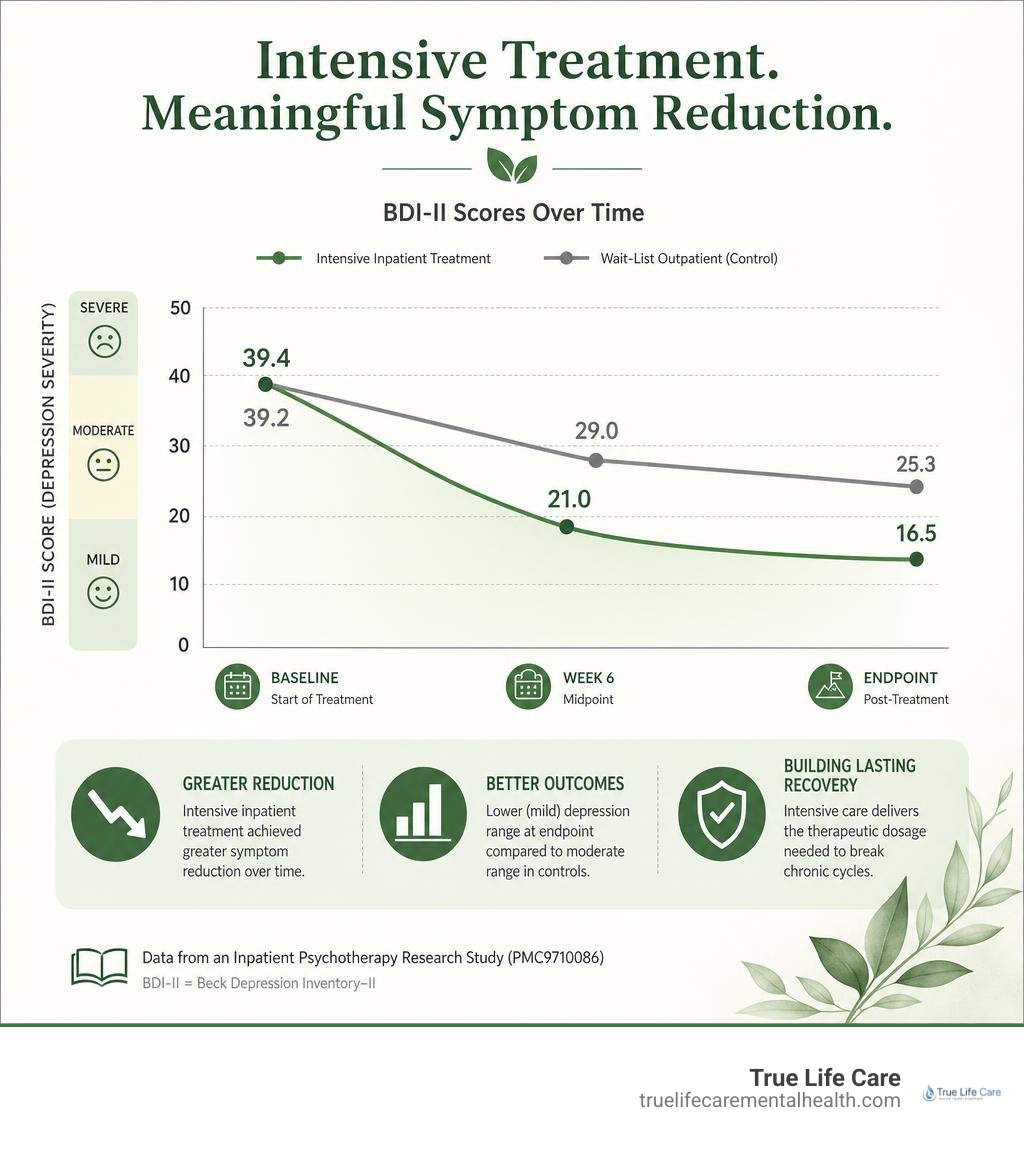
Patients with chronic depression often endure decades of recurring symptoms, higher rates of psychiatric comorbidity, and multiple unsuccessful treatment attempts. Empirical data published in an Inpatient Psychotherapy Research Study demonstrates that an intensive inpatient psychotherapy program yields a large between-group effect size (d = 0.9) compared to standard wait-list outpatient controls for chronic depression.
Prior to intensive treatment, patients in the study experienced severe depressive symptoms. Following high-frequency therapeutic intervention, treatment group scores dropped into the lower mild depression range on the Beck Depression Inventory-II (BDI-II) (M = 16.5), whereas wait-list patients remained in the higher moderate depression range (M = 25.3). Given that approximately 40% to 50% of individuals experience relapse after an initial depressive episode, intensive inpatient care provides the therapeutic dosage necessary to break chronic cycles and prevent future recurrence. Specialized care options are also critical for complex conditions, as explored in our guide on Inpatient Bipolar Disorder Rehab.
Comparing Outpatient Care and Inpatient Mood Disorder Treatment
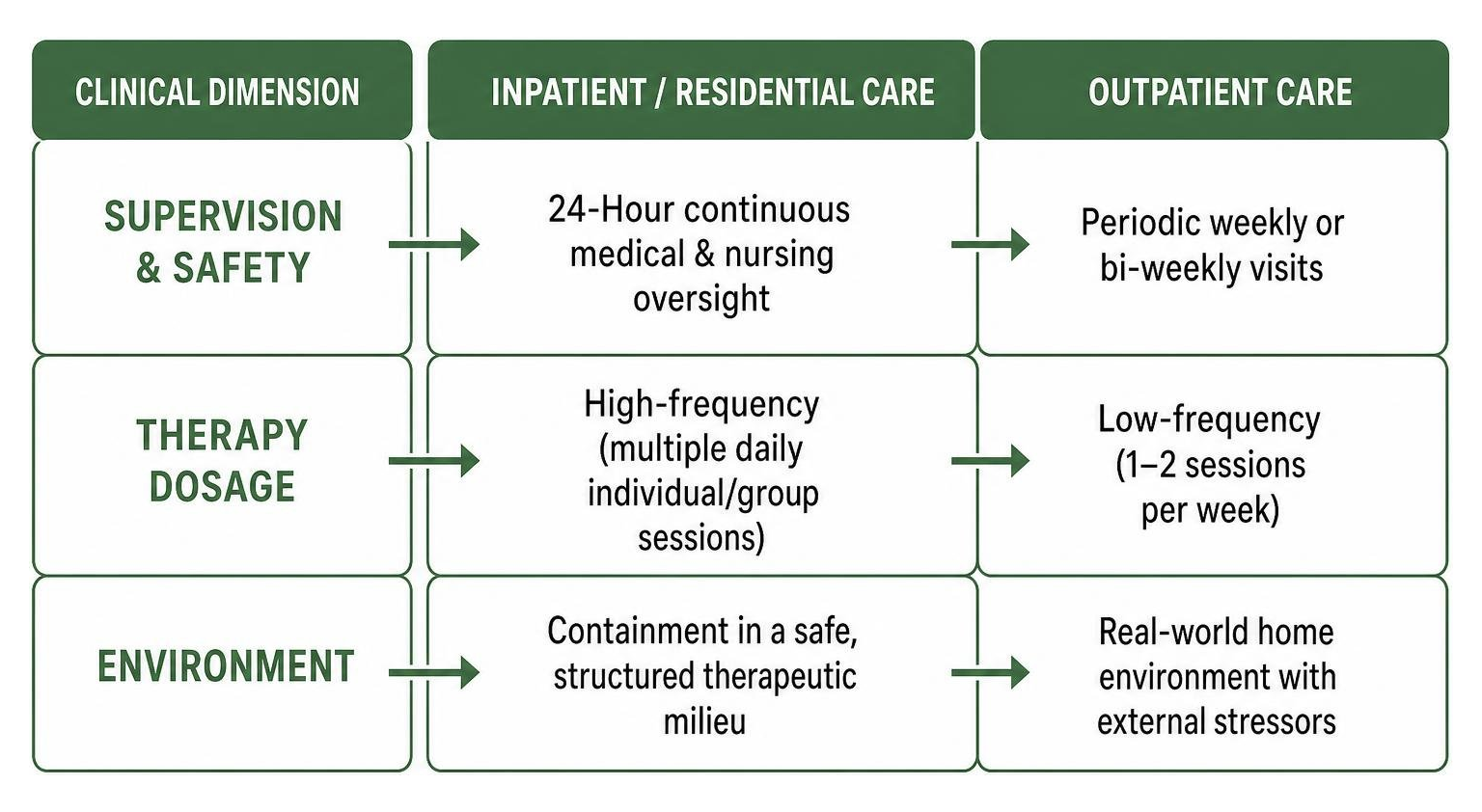
Choosing the right level of mental health care depends on symptom severity, immediate safety risks, and functional capabilities. Standard weekly outpatient therapy is often insufficient for severe, treatment-resistant depression or acute mania. Research indicates that increasing session frequency from once weekly to twice or more per week yields a moderate effect size improvement (d = 0.45) in depression recovery.
| Clinical Dimension | Inpatient / Residential Care | Outpatient Care |
|---|---|---|
| Supervision & Safety | 24-Hour continuous medical & nursing oversight | Periodic weekly or bi-weekly visits |
| Therapy Dosage | High-frequency (multiple daily individual/group sessions) | Low-frequency (1–2 sessions per week) |
| Environment | Containment in a safe, structured therapeutic milieu | Real-world home environment with external stressors |
| Medical Oversight | Daily physician reviews & rapid medication adjustment | Monthly or bi-monthly psychiatric consultations |
| Clinical Indication | Acute crisis, active suicidality, severe functional decline | Mild-to-moderate symptoms, stable safety profile |
Discharge Criteria, Transition Planning, and Step-Down Care
Inpatient stabilization is an initial step in a broader continuum of care. From the moment of admission, clinical teams begin crafting a comprehensive discharge plan to ensure sustained recovery and prevent hospital readmission.

Standard Protocols for Discharge Readiness
Discharge planning follows clear regulatory guidelines and clinical criteria. An individual is ready for transition from acute hospitalization when:
- Imminent suicidal or homicidal risk has resolved.
- Severe manic symptoms, acute psychosis, or gross disorganization have stabilized.
- The patient can safely manage daily self-care and adhere to medication regimens.
- A thorough safety plan and community support network have been established.
Standard clinical protocols require scheduling an outpatient behavioral health follow-up appointment within 7 days of discharge. Early follow-up care drastically reduces post-discharge relapse rates and ensures a smooth transition back into daily life. Learn more about stabilization protocols in our article on Acute Psychiatric Inpatient Care.
Step-Down Care Options and Insurance Coverage
To bridge the gap between round-the-clock hospitalization and independent living, step-down care offers structured, flexible recovery options. Programs such as Partial Hospitalization Programs (PHP) and Intensive Outpatient Programs (IOP) provide multi-hour group therapy, individual counseling, and psychiatric oversight while allowing patients to return home in the evenings.
When coordinating step-down care or residential mental health treatment, understanding financial logistics is essential. True Life Care is an out-of-network provider and accepts PPO plans, working directly with policyholders to maximize their insurance benefits. For detailed information regarding coverage policies, consult our overview of Insurance Coverage Guidance.
Frequently Asked Questions About Inpatient Care
What qualifies a person for inpatient mood disorder hospitalization?
Inpatient psychiatric admission requires evidence that an acute psychiatric illness causes imminent danger to self or others (such as active suicidality or severe self-harm occurring within 72 hours), gross functional impairment, command hallucinations, or a complete collapse of outpatient safety measures.
How long does an average inpatient stay last for depression or bipolar disorder?
The duration of an acute psychiatric stay varies based on individual clinical progress and medical necessity. Large-scale multicenter inpatient studies show a median acute hospitalization stay of 31 days. However, length of stay is always tailored to symptom stabilization, safety, and step-down readiness.
What happens during step-down transition planning after discharge?
Discharge planning begins upon admission. It involves formulating a detailed safety plan, coordinating medication management, involving family members, and arranging step-down care—such as Partial Hospitalization (PHP) or Intensive Outpatient Programs (IOP). Standard clinical guidelines mandate an outpatient follow-up appointment within 7 days of discharge.
Conclusion

Navigating severe depression, bipolar disorder, schizophrenia, or an acute psychiatric crisis requires specialized, compassionate, expert care. Inpatient mood disorder treatment provides the critical foundation for rapid stabilization, safety containment, and clinical assessment when outpatient measures are no longer enough.
At True Life Care, our holistic approach combines flexible programs (PHP, IOP) with expert psychiatric care. We are dedicated to assisting during psychiatric emergencies and helping Monmouth County residents at the Matawan, NJ location regain stability and long-term well-being. Our facility is an out-of-network provider and accepts PPO plans, simplifying access to high-quality care. Explore our comprehensive services for Inpatient Mental Health Treatment in NJ and take the first step toward lasting healing today.