
What Is Acute Psychiatric Inpatient Care — and Do You Need It?
Acute psychiatric inpatient care is a structured, 24-hour level of mental health treatment designed for individuals experiencing a psychiatric crisis that cannot be safely managed in an outpatient or community setting. It provides intensive monitoring, stabilization, and evidence-based treatment within a secure clinical environment.
Quick answer for those in crisis or researching options:
- Who it’s for: Adults experiencing suicidal ideation, acute psychosis, severe depression, manic episodes, or dangerous behavior toward themselves or others
- What it involves: Round-the-clock supervision, psychiatric evaluation, medication management, group therapy, and coordinated discharge planning
- How long it lasts: Typically 5–21 days depending on diagnosis and stabilization progress
- When it’s necessary: When symptoms are severe enough that lower levels of care — like outpatient therapy or an intensive outpatient program — are no longer sufficient to keep someone safe
- What comes next: Step-down services such as partial hospitalization, intensive outpatient programs, or ongoing community mental health support
In 2021, over 41.7 million U.S. adults received some form of mental health treatment — yet for a significant portion of those individuals, the severity of their symptoms required care far beyond a weekly therapy appointment. One in three young adults aged 18–25 experience a mental illness, and one in ten face a serious mental illness that can escalate into a genuine psychiatric emergency.
For Monmouth County residents and those throughout New Jersey, knowing where to turn during a psychiatric emergency — and understanding what acute inpatient care actually involves — can be the difference between crisis and recovery. At True Life Care’s Matawan, NJ location, we work with adults navigating exactly these situations, offering inpatient-level psychiatric care as an out-of-network provider that accepts PPO plans.
This guide breaks down everything you need to know: from admission criteria and therapeutic interventions, to staffing standards, discharge planning, and how inpatient care connects to the broader mental health system.
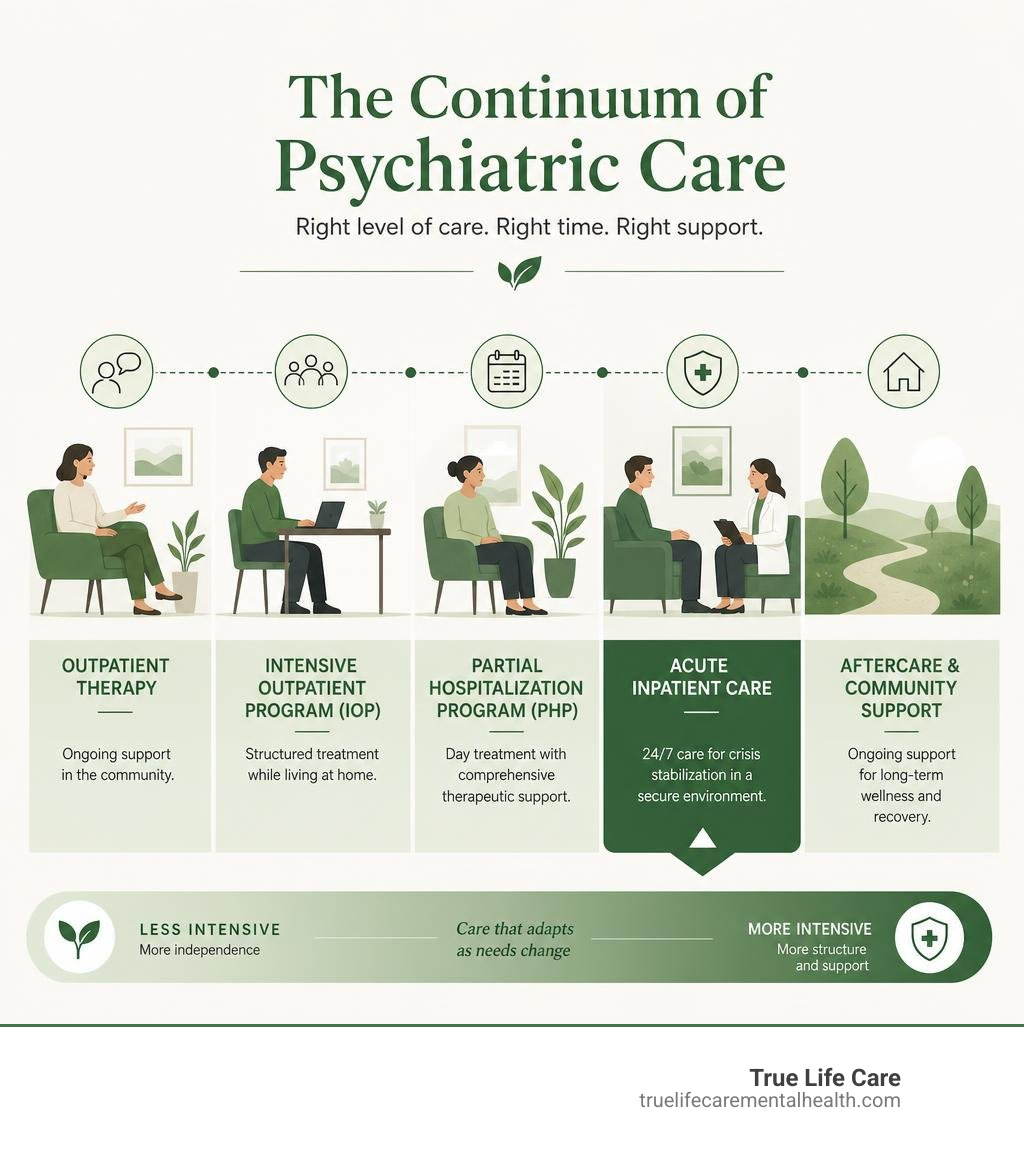
Understanding Acute Psychiatric Inpatient Care
When a mental health crisis peaks, standard outpatient interventions may no longer provide the structural support needed to keep a person safe. This is where acute psychiatric inpatient care steps in. Operating as a critical safety net within the behavioral healthcare continuum, an acute psychiatric unit is a highly specialized, locked, and secure medical environment. Its primary objective is not long-term institutionalization, but rapid clinical crisis stabilization.
By providing 24/7 monitoring, these units eliminate immediate safety risks, such as self-harm, suicidal actions, or severe neglect of basic physical needs. In an acute setting, patient safety is the foundational pillar upon which all other therapeutic interventions are built. The environment is meticulously designed to reduce external stressors and sensory overload, establishing a safe, predictable, and healing environment.
Psychiatric emergencies require immediate, high-intensity medical and clinical attention. Whether an individual is experiencing a severe manic episode, profound depressive withdrawal, or an acute break from reality, our goals during an acute stay remain clear:
- Perform rapid, comprehensive physical and psychiatric diagnostics.
- Establish behavioral and pharmacological control of acute, disabling symptoms.
- Initiate a multidisciplinary recovery plan.
- Bridge the patient toward a safer, lower level of structured care, such as our comprehensive options for Inpatient Behavioral Health.
When is Acute Psychiatric Inpatient Care Medically Necessary?
Medical necessity is the clinical benchmark used by physicians, psychiatrists, and insurance providers to determine if a patient requires 24-hour hospitalization. An individual meets the threshold for acute inpatient care when their emotional, cognitive, or behavioral symptoms present an imminent risk of harm to themselves or others, or when their functional impairment is so severe that they cannot survive safely in the community.
Common clinical presentations that establish medical necessity include:
- Active Suicidal Ideation or Behavior: This includes specific suicidal plans, recent suicide attempts, or severe self-harming behaviors that cannot be controlled in a less restrictive setting.
- Acute Psychosis: Hallucinations, profound delusions, and highly disorganized thinking—frequently associated with severe schizophrenia—that impair a person’s ability to distinguish reality from psychosis and make safe decisions.
- Severe Depression: Depressive episodes so paralyzing that the individual experiences complete functional shutdown, marked by an inability to eat, drink, maintain basic hygiene, or communicate.
- Manic Episodes: Hyperactive, reckless, and impulsive behaviors associated with Bipolar I disorder that place the individual in physical, financial, or legal jeopardy.
During these severe episodes, specialized clinical environments, such as those detailed in our Inpatient Care for Depression 101 guide, provide the necessary intensive medical supervision to safely titrate medications and monitor vital signs.
General Inpatient Hospitalization vs. Psychiatric Intensive Care Services
While general acute psychiatric inpatient units provide a highly structured environment, some patients require an even higher level of security and clinical focus. This distinction separates general inpatient hospitalization from Psychiatric Intensive Care Services (PICS) or Psychiatric Intensive Care Units (PICU).
+---------------------------------------------------------------------------------+
| LEVELS OF ACUTE CARE |
+---------------------------------------------------------------------------------+
| |
|  [ General Inpatient Hospitalization ] |
|  - Staffing Ratio: Standard (e.g., 1:4 daytime nursing) |
|  - Milieu: Group-focused, structured schedules, open common areas |
|  - Patient Profile: Cooperative, stabilized risk, able to participate in groups |
| |
|  ^ |
|  |  Step-down / Escalation |
|  v |
| |
|  [ Psychiatric Intensive Care Services (PICS) ] |
|  - Staffing Ratio: Enhanced (1:1 or 1:2 observation) |
|  - Milieu: Low-stimulation, highly controlled, minimized sensory triggers |
|  - Patient Profile: Extreme agitation, high risk of violence, active psychosis  |
| |
+---------------------------------------------------------------------------------+
General inpatient care focuses on therapeutic programming, group participation, and collaborative treatment planning. However, if a patient exhibits extreme agitation, physical aggression, or highly unpredictable, dangerous behaviors, they may be transitioned to a psychiatric intensive care setting.
PICS exceeds general inpatient care by utilizing enhanced staffing ratios, specialized physical environments designed to minimize sensory triggers, and continuous, close-proximity clinical observation. According to research on Acute psychiatric care models, having a dedicated spectrum of acute services—ranging from standard emergency assessment to highly specialized intensive care units—significantly improves patient outcomes while minimizing the use of coercive measures like physical restraints or involuntary seclusion.
Clinical Protocols: Admission, Continued Stay, and Discharge
Navigating the clinical pathway of acute care requires strict adherence to standardized medical guidelines. From the moment an individual enters an emergency department or crisis center, their progress is continuously evaluated against rigorous criteria to ensure they receive the right level of care for the appropriate duration.
To understand how these clinical decisions are made, especially within the context of New Jersey’s healthcare system, you can explore our overview of 5 Things You Need to Know Before Inpatient Mental Health NJ.

Standard Admission Criteria for Acute Psychiatric Inpatient Care
The admission process is a comprehensive, multi-step evaluation that must take place immediately upon arrival at an acute facility. State and clinical guidelines dictate that both a thorough physical examination and a formal psychiatric evaluation must be completed within 24 hours of admission. This ensures that any co-occurring medical conditions (such as thyroid crises, drug toxicities, or neurological events) are identified and treated alongside the psychiatric emergency.
To meet the standard admission criteria, a patient must generally satisfy three core requirements:
- Psychiatric Diagnosis: The patient must display symptoms consistent with a DSM-5-TR psychiatric diagnosis (e.g., major depressive disorder, schizophrenia, bipolar disorder).
- Severity of Illness: The patient’s symptoms must present an immediate, documented risk of harm to self or others, or cause an inability to meet basic survival needs.
- Inadequacy of Lower Levels of Care: There must be clear clinical evidence that the patient’s needs cannot be safely or effectively met in a less restrictive environment, such as an outpatient clinic or intensive outpatient program (IOP).
For New Jersey residents, these protocols are aligned with the state-mandated New Jersey Mental Health Services and Standards, which govern how emergency receiving facilities assess, admit, and care for individuals during acute psychiatric crises.
Continued Stay and Discharge Indicators
Hospitalization is an active, day-by-day process. Once admitted, a patient does not simply wait out a pre-determined number of days. Instead, the treatment team conducts daily risk assessments and clinical evaluations to justify a “continued stay.”
Continued stay criteria require documented proof that:
- The acute psychiatric symptoms that prompted admission have not yet sufficiently resolved.
- An ongoing, active treatment plan is being executed that can only be provided in an inpatient setting.
- An imminent risk of regression or harm remains if the patient is discharged.
Conversely, discharge planning begins on the very first day of admission. A patient is considered ready for discharge when:
- Their acute symptoms have stabilized, and their overall functional impairment has diminished to a level manageable in the community.
- They no longer present an active, imminent risk of harm to themselves or others.
- A viable, structured aftercare plan has been established.
Effective discharge planning requires ongoing contact with the patient’s family, close friends, and outpatient providers. Transitioning a patient directly from an acute hospital bed to independent living without support is a major contributor to high readmission rates. Therefore, connecting patients to step-down programs—such as those highlighted in our guide to the Top Inpatient Mental Health Facilities in NJ to Consider—is an essential component of the discharge protocol.
Therapeutic Interventions and the Multidisciplinary Team
The true engine of recovery within an acute psychiatric unit is the multidisciplinary team. No single clinician can address the complex biological, psychological, and social dimensions of an acute mental health crisis. By combining diverse clinical perspectives, the team can craft a highly personalized, holistic treatment plan for each patient.
 +--------------------------+
 |  Attending Psychiatrist  |
 |  (Medical & Rx Oversight)|
 +-------------+------------+
 |
 +-----------------------+-----------------------+
 | | |
+-------+-------+ +-------+-------+ +-------+-------+
| Psychiatric   | |  Social Work  | | Recreational  |
|  Nurses & | | and | |  & Art/Music  |
|  Technicians  | | Case Managers | |  Therapists   |
| (24/7 Care &  | | (Discharge &  | | (Coping Skills|
| Milieu Safety)| | Aftercare) | | & Expression) |
+---------------+ +---------------+ +---------------+
The core multidisciplinary team consists of:
- Attending Psychiatrists: Lead the diagnostic process, manage pharmacological interventions, and oversee the medical safety of the patient.
- Psychiatric Registered Nurses (RNs) and Mental Health Technicians: Provide 24/7 care, administer medications, monitor vital signs, and maintain the safety and therapeutic structure of the ward environment.
- Licensed Social Workers and Case Managers: Conduct psychosocial assessments, facilitate family therapy and education, and coordinate the complex logistics of discharge and aftercare planning.
- Recreational and Creative Arts Therapists: Utilize music, art, and movement therapies to help patients process emotions, build coping skills, and manage stress without relying solely on verbal communication.
As detailed in research on the role of Multidisciplinary Teams in Psychiatric Care, collaborative communication among these diverse specialists dramatically reduces medication errors, improves clinical outcomes, and ensures a seamless transition back to community life.
Evidence-Based Therapies and Group Therapy
While medication is often necessary to stabilize acute chemical imbalances in the brain, it is only one part of a comprehensive treatment plan. Acute inpatient care integrates a robust schedule of evidence-based psychological therapies tailored to patients in crisis.
In particular, group therapy serves as the cornerstone of daily life on an acute unit. Group sessions provide a supportive space where patients realize they are not alone in their struggles, helping to break down the profound isolation that often accompanies severe mental illness. Group therapy sessions focus on:
- Cognitive Behavioral Therapy (CBT): Helping patients identify and reframe distorted, negative thought patterns that fuel severe depression and anxiety.
- Dialectical Behavior Therapy (DBT) Skills: Teaching distress tolerance, mindfulness, and emotional regulation techniques to manage intense emotional pain and prevent self-harm.
- Psychoeducation: Empowering patients with a deeper understanding of their diagnoses, the importance of medication adherence, and early warning signs of relapse.
- Specialized Modalities: For individuals experiencing severe illnesses like schizophrenia or treatment-resistant depression, specialized groups focus on cognitive remediation, reality testing, and symptom management.
These therapeutic groups foster a shared environment of healing, helping patients develop the practical coping mechanisms necessary to sustain long-term recovery. For a deeper look at how these therapies are structured for specific conditions, refer to our Inpatient Psychiatric Care Depression Guide.
Staffing Ratios and Quality Metrics
The safety and therapeutic quality of an acute psychiatric ward are directly tied to its staffing levels. Because patients in acute crises can exhibit unpredictable, high-risk behaviors, maintaining optimal nurse-to-patient ratios is critical to preventing injuries, reducing violence, and avoiding the use of restrictive interventions.
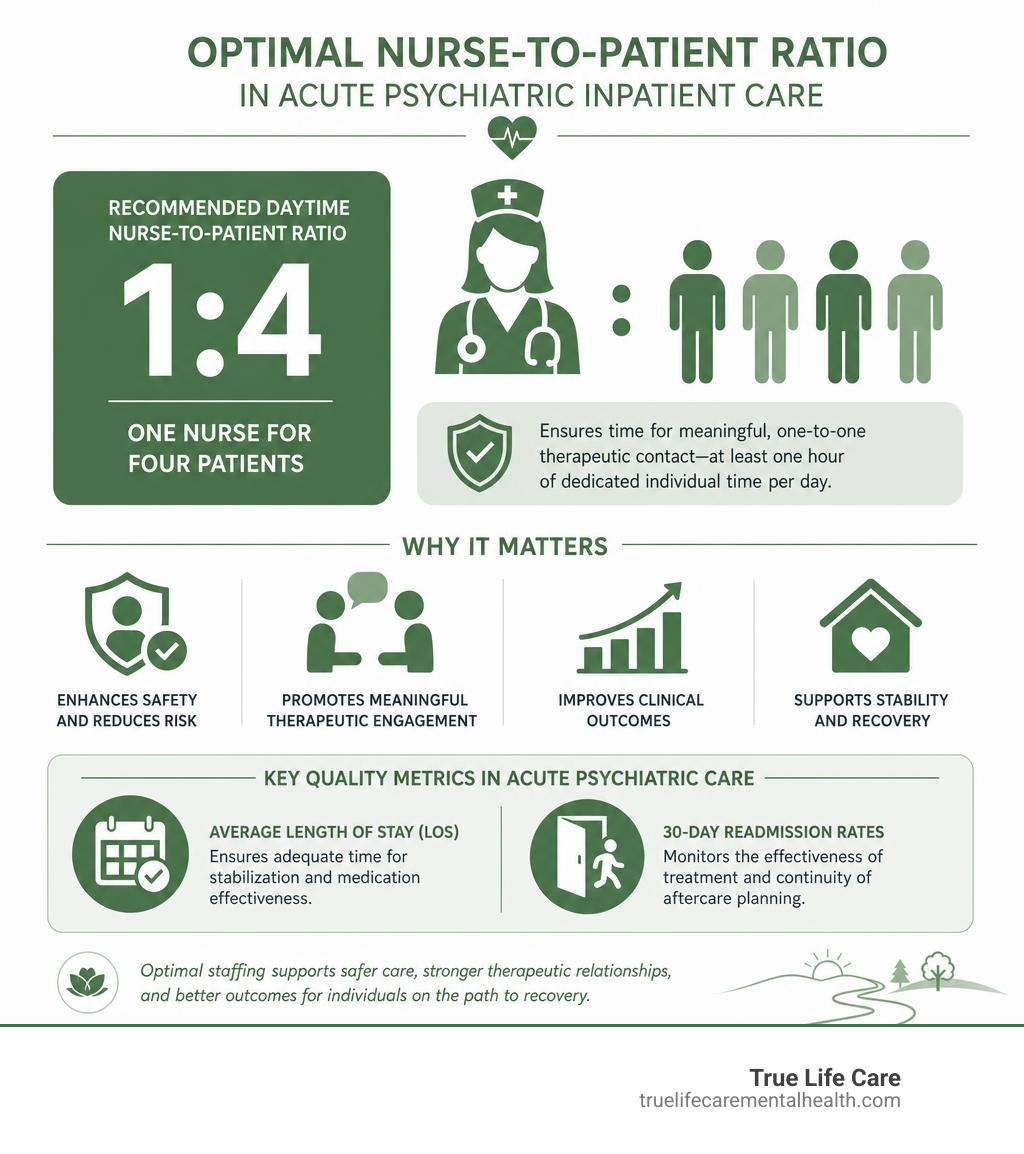
International expert consensus, such as the comprehensive study on optimal acute adult psychiatric inpatient care, strongly recommends a daytime nurse-to-patient ratio of 1:4 in acute adult psychiatric wards. This ratio ensures that nurses have sufficient time to engage in meaningful, one-to-one therapeutic contact with patients—ideally at least one hour of dedicated individual time per day—rather than merely administering medications and managing paperwork.
In addition to staffing ratios, healthcare systems monitor several key quality metrics to evaluate the performance of acute psychiatric units:
- Average Length of Stay (LoS): While the goal is rapid stabilization, stays must be long enough to ensure clinical stability. For example, the median length of stay for schizophrenia-spectrum disorders in acute care is 21 days, reflecting the time required for antipsychotic medications to reach therapeutic levels.
- 30-Day Readmission Rates: A high rate of patients returning to the hospital within 30 days of discharge often points to premature discharge or gaps in community-based aftercare coordination.
- Patient-Reported Outcomes and Satisfaction: Evaluating the patient’s perspective on their care, their feelings of safety, and the respect shown to them by staff is increasingly recognized as a vital measure of overall service quality.
Systemic Factors: Bed Availability and Deinstitutionalization
To fully understand the landscape of acute psychiatric care in June 2026, we must look at the broader systemic forces that shape how these services are delivered. The availability of acute psychiatric beds is directly influenced by decades of historical policy, specifically the “deinstitutionalization” movement that began in the mid-20th century. While the goal of moving patients out of isolated, long-term state asylums and into supportive community settings was compassionate, the funding and infrastructure for community mental health services have often lagged far behind the need.
This imbalance has led to severe psychiatric bed shortages across the globe and within our local New Jersey communities. When a region lacks an adequate number of acute inpatient beds, individuals in crisis often experience “psychiatric boarding”—spending days in chaotic emergency departments waiting for an open psychiatric bed. This delays critical treatment and strains hospital resources.

To address these challenges, organizations like the Directory of Morris County Mental Health Services work to coordinate local resources and provide immediate alternatives to hospitalization. However, systemic bed shortages remain a pressing issue.
The table below illustrates how psychiatric bed availability varies internationally, highlighting the gap between actual bed numbers and expert-recommended standards:
| Region / Country | Psychiatric Beds per 100,000 Population | Expert Consensus / Recommended Standard | Status & Impact |
|---|---|---|---|
| High-Income Countries (OECD Median) | 64 beds | 60 – 68 beds | Generally adequate, though distribution issues exist. |
| Hong Kong | 49 beds | 60 – 68 beds | Substantial shortage; leads to shorter stays and higher outpatient pressure. |
| United States (Average) | ~21 beds | 50 beds (Minimum target) | Severe shortage; results in emergency department boarding and crisis-driven care. |
This bed deficit underscores the urgent need for integrated care models. When acute inpatient beds are limited, community-based mental health services must be robust enough to prevent crises before they occur and support individuals immediately after they are discharged.
Frequently Asked Questions About Acute Psychiatric Care
What is the average length of stay in an acute psychiatric unit?
The average length of stay in an acute psychiatric unit is highly individualized and depends primarily on the patient’s diagnosis, the severity of their symptoms, and how quickly they achieve clinical stabilization.
- Short-Term Stabilization: For acute crises, such as severe panic, suicidal ideation without a plan, or mild depressive episodes, a stay may last between 5 to 10 days.
- Severe and Complex Conditions: For schizophrenia-spectrum disorders, severe manic episodes, or complex co-occurring substance use disorders, the median length of stay is typically 21 days. This longer duration is clinically necessary to safely adjust medications, monitor for side effects, and establish a stable therapeutic baseline before discharge.
How do community mental health services support transition after discharge?
Community mental health services are the essential bridge that prevents the “revolving door” of psychiatric hospitalization. Transitioning directly from 24/7 clinical supervision to independent living can be overwhelming, making structured step-down care vital for sustained recovery.
Key community support models include:
- Partial Care / Partial Hospitalization Programs (PHP): Patients attend structured therapy, group sessions, and medical evaluations for 5–6 hours a day, 5 days a week, while returning home each evening.
- Intensive Outpatient Programs (IOP): A step down from PHP, typically involving 3 hours of therapy, 3 to 4 days a week, allowing individuals to gradually reintegrate into work, school, or family life.
- Outpatient Case Management: Case managers assist with coordinating medication refills, securing stable housing, and connecting patients to local support groups.
For residents in New Jersey, programs like the Adult Partial Care | Middlesex County NJ services offer excellent examples of highly structured, community-based step-down care designed to support long-term recovery and prevent relapse.
Does insurance cover acute psychiatric inpatient hospitalization?
Yes, most commercial health insurance plans provide coverage for acute psychiatric inpatient hospitalization, as mental health care is classified as an essential health benefit under federal guidelines. However, navigating insurance requirements during a crisis can be complex.
- Pre-Authorization: Most insurance companies require “prior authorization” or a clinical review within 24 to 48 hours of admission to verify that the stay meets their specific medical necessity criteria.
- PPO Plans and Out-of-Network Providers: Many specialized psychiatric facilities operate as out-of-network providers. If you carry a Preferred Provider Organization (PPO) plan, you typically have out-of-network benefits that cover a significant portion of acute care, though you may be responsible for deductibles or co-insurance.
- Coverage Details: To understand your specific benefits, copays, and out-of-pocket maximums, we recommend reading our detailed guide on Insurance Coverage for Inpatient Mental Health Treatment.
Conclusion
Acute psychiatric inpatient care is a vital, life-saving intervention designed to bring stability, safety, and hope to individuals navigating their darkest mental health crises. By combining 24/7 medical monitoring, evidence-based psychotherapies, and a dedicated multidisciplinary team, acute care settings lay the foundation for long-term recovery.
At True Life Care, we understand that a psychiatric emergency can feel overwhelming for both the individual and their family. Our mission is to provide compassionate, high-quality, and evidence-based care when you need it most.
For Monmouth County residents, our Matawan, NJ location stands ready to assist during psychiatric emergencies, offering a secure, therapeutic environment focused on healing, group therapy, and specialized treatment for complex conditions like schizophrenia and severe depression. As an out-of-network provider, we accept PPO plans to help make your transition into care as smooth and stress-free as possible.
If you or a loved one is experiencing a mental health crisis and needs structured, compassionate support to begin the healing process, please reach out to us today. Explore our specialized Inpatient Treatment Options to learn how we can support your journey toward lasting wellness.