
When Mental Health Crisis Reaches a Breaking Point: What Inpatient Behavioral Health Really Means
Inpatient behavioral health is a form of intensive, 24-hour psychiatric care provided in a secure hospital or clinical setting for people experiencing severe mental health symptoms that cannot be safely managed at home or through regular outpatient appointments.
Here’s what you need to know at a glance:
- Who it’s for: Adults and adolescents experiencing psychiatric crises — including suicidal thoughts, severe depression, psychosis, or acute trauma responses
- What it involves: Round-the-clock clinical monitoring, medication management, group therapy, individual counseling, and structured daily programming
- How long it lasts: Typically about one week for adults; up to two weeks for children, adolescents, or older adults
- What comes next: A personalized discharge plan connecting you to step-down care such as a Partial Hospitalization Program (PHP) or Intensive Outpatient Program (IOP)
- Who provides care: A multidisciplinary team including psychiatrists, nurses, licensed therapists, and social workers
Right now, approximately 1 in 5 adults in the United States is living with a mental illness. Yet many people still don’t know what to expect from inpatient care — or whether it’s the right level of support for their situation.
That uncertainty can be paralyzing, especially in a crisis. If you or someone you love in Monmouth County or the surrounding New Jersey area is struggling, understanding what inpatient behavioral health actually looks like can make it far easier to take that first step.
This guide walks you through everything — from what happens on day one to how recovery unfolds long after discharge. True Life Care’s facility in Matawan, NJ works with PPO insurance plans as an out-of-network provider, and our team is here to help you navigate every part of the process.
Key terms for inpatient behavioral health:
- inpatient care for depression
- inpatient psychiatric care for depression
- inpatient programs for bipolar disorder
Understanding Inpatient Behavioral Health Services

When we talk about inpatient behavioral health, we are referring to the highest level of psychiatric care available. It is often the first line of defense during a mental health crisis. In these moments, the priority is not just long-term therapy, but immediate safety and stabilization. By providing 24-hour clinical monitoring, we ensure that individuals in acute distress have a safe place to land.
The necessity of crisis intervention cannot be overstated. When someone is at risk of harming themselves or others, or when their symptoms have become so severe that they can no longer perform basic daily tasks, a controlled environment is essential. This rapid stabilization allows the brain and body to begin healing away from the stressors of everyday life. You can learn more about these mental health treatments in New Jersey and how they serve as a foundation for recovery.
Defining the Inpatient Setting
An inpatient unit is a short-term, intensive care environment. Think of it like a “psychiatric ICU.” These are secure therapeutic units designed to minimize distractions and maximize safety. Within this setting, we utilize a multidisciplinary team approach. This means your care isn’t just managed by one person; it’s a collaboration between board-certified psychiatrists, specialized psychiatric nurses, licensed clinical therapists, and social workers.
The role of psychiatric nursing is particularly vital here, as they provide the round-the-clock support and medication monitoring that makes stabilization possible. By maintaining a controlled, therapeutic environment, we can focus entirely on the patient’s immediate clinical needs.
Who Benefits from Inpatient Care?
Inpatient care is specifically designed for those experiencing acute distress. This includes individuals struggling with:
- Active suicidal ideation or recent self-harm attempts.
- Severe aggression or hostility toward others.
- Active psychosis (hallucinations or delusions).
- Severe symptoms of depression or mania that prevent self-care.
When traditional outpatient therapy or weekly office visits are no longer sufficient to keep a person safe or stable, it’s time to consider a higher level of care. Before you make a decision, it’s helpful to review these 5 things you need to know before inpatient mental health in NJ.
Conditions Treated and Therapeutic Approaches

In April 2026, the landscape of behavioral health has moved toward a more holistic, trauma-informed approach. At True Life Care, we believe that healing happens through community. While medications are often necessary for stabilization, the “work” of recovery frequently takes place in group settings where patients can realize they are not alone.
We implement evidence-based protocols and trauma-informed care models, such as the Sanctuary Model. This approach shifts the clinical question from “What is wrong with you?” to “What has happened to you?” This perspective fosters a sense of safety and empowerment, which is crucial for long-term recovery.
Specialized Care for Schizophrenia and Psychosis
Managing complex thought disorders requires a high level of expertise. For those dealing with auditory or visual hallucinations or a complete break from reality, inpatient behavioral health provides the necessary medication stabilization to restore reality testing.
Our goal is to help patients manage these symptoms so they can return to a functional life. We focus on education, helping individuals understand their diagnosis and the importance of medication adherence. For residents in our area, finding the best inpatient schizophrenia treatments in NJ means accessing a team that understands the nuances of these conditions.
Intensive Depression and Bipolar Treatment
For those dealing with treatment-resistant major depression or the extreme highs and lows of bipolar disorder, inpatient care offers a chance to reset. We use advanced mood stabilization techniques to manage acute mania and help lift the heavy fog of suicidal depression.
If you are looking for specific guidance, our inpatient psychiatric care depression guide and our resources on inpatient bipolar disorder rehab provide deeper insights into these specialized tracks.
Addressing PTSD and Co-occurring Disorders
Trauma often lies at the root of many behavioral health challenges. Our trauma recovery pathways are designed to help patients process their experiences in a safe, supportive environment. Furthermore, many individuals face “dual diagnosis” challenges—where mental health issues are coupled with substance use.
In these cases, we provide integrated treatment, which may include medical detoxification to manage withdrawal symptoms safely while simultaneously addressing the underlying psychiatric condition. This is a core component of inpatient treatment for PTSD and is available at specialized inpatient PTSD rehab centers.
The Inpatient Experience: Daily Life and Evaluation
What does a stay actually look like? It is highly structured. Structure provides a sense of predictability and safety that is often missing during a mental health crisis.
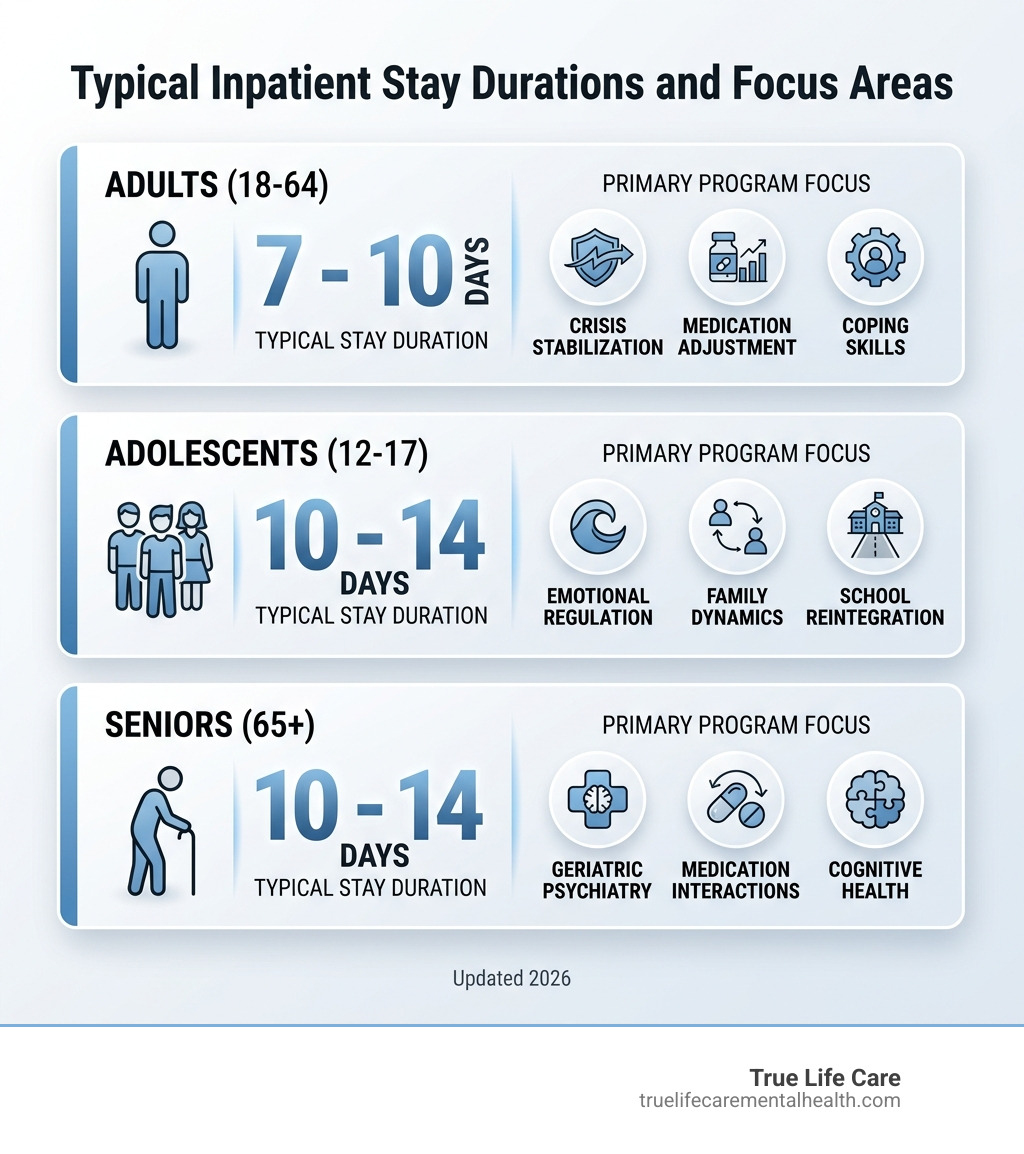
| Patient Group | Typical Stay Duration | Primary Program Focus |
|---|---|---|
| Adults (18-64) | 7 – 10 Days | Crisis stabilization, medication adjustment, coping skills |
| Adolescents (12-17) | 10 – 14 Days | Emotional regulation, family dynamics, school reintegration |
| Seniors (65+) | 10 – 14 Days | Geriatric psychiatry, medication interactions, cognitive health |
A Typical Day in Inpatient Behavioral Health
A day in an inpatient unit usually begins early and is packed with therapeutic activities. A typical schedule might look like this:
- 7:00 AM – 8:30 AM: Breakfast and morning medications.
- 9:00 AM – 12:00 PM: Group therapy sessions (CBT, DBT, or psychoeducation).
- 12:00 PM – 1:00 PM: Lunch.
- 1:00 PM – 3:00 PM: Expressive therapies (art, music, or movement therapy).
- 3:00 PM – 5:00 PM: Individual counseling or family meetings.
- 5:00 PM – 6:00 PM: Dinner.
- 6:00 PM – 8:00 PM: Evening group or recreational activity.
- 9:00 PM: Nightly reflection and rest.
Group therapy is the central pillar of this experience. It allows patients to practice social skills and build empathy in a safe environment. While it can be challenging, many find it to be the most rewarding part of their stay. For a more personal look at these programs, read about the 10 hard lessons learned about inpatient bipolar programs.
The Admission and Evaluation Process
Admissions often begin in a moment of emergency. Whether you enter through an Emergency Department or a direct referral, the process starts with a thorough screening. This involves a clinical interview, a physical examination to rule out underlying medical issues, and a comprehensive psychological assessment.
In New Jersey, there are specific psychiatric emergency screening locations that can help facilitate this process. Once admitted, our team creates a personalized care plan tailored to your specific diagnostic needs.
Planning for Recovery: Discharge and Aftercare

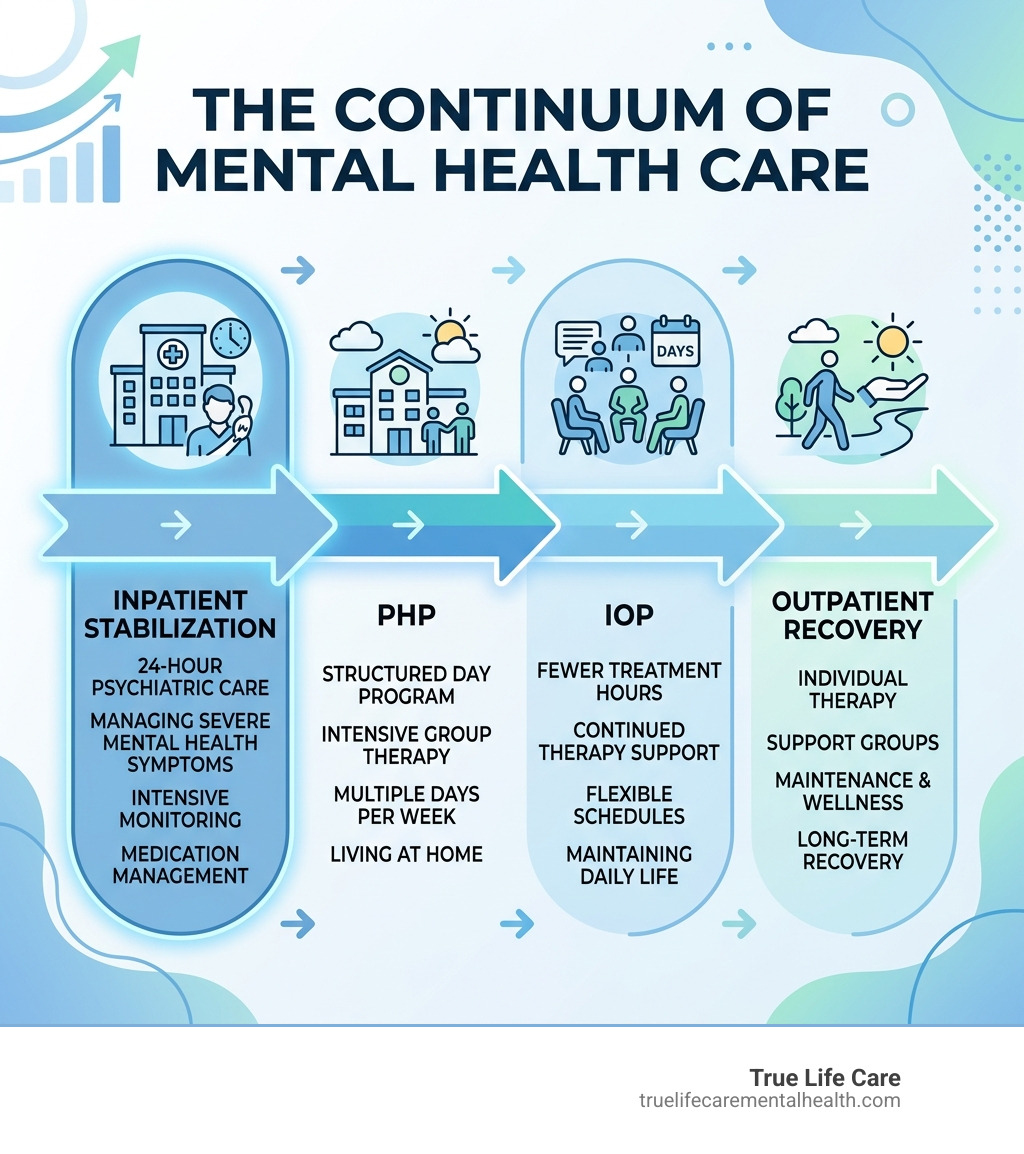
Discharge planning doesn’t start on your last day—it starts on your first. The goal of inpatient behavioral health is to stabilize you so that you can continue your healing in a less intensive setting. A successful recovery depends on a seamless “continuum of care.”
Transitioning from Inpatient Behavioral Health to Outpatient Care
Most patients do not go straight from the hospital back to their “normal” life without support. Instead, they “step down” to programs that provide structure during the day while allowing them to sleep at home.
- Partial Hospitalization Program (PHP): Typically 20+ hours of treatment per week.
- Intensive Outpatient Program (IOP): Typically 9-15 hours of treatment per week.
Understanding the difference between outpatient and inpatient care is key to choosing the right next step for your journey.
The Role of Family in Long-Term Healing
We believe that mental health doesn’t just affect the individual; it affects the whole family. Family involvement through therapy sessions and education can significantly improve long-term outcomes. We encourage family visits and active participation in discharge planning to ensure the home environment is prepared for the patient’s return. For more on this, see our guide on inpatient care for depression.
Navigating Admissions, Insurance, and Emergencies in New Jersey

If you are in Monmouth County or the surrounding areas like Middlesex, Mercer, or Ocean County, help is close by. True Life Care is located in Matawan, NJ, and we are dedicated to serving our local community with expert psychiatric care.
Insurance Coverage and Provider Status
Navigating insurance is often the most stressful part of seeking help. At True Life Care, we aim to make this as transparent as possible.
- Provider Status: We are an out-of-network provider.
- Accepted Plans: We accept PPO plans.
- The Process: Our team can help you with the pre-authorization process to ensure you maximize your benefits.
For a detailed breakdown, check out our page on insurance coverage for inpatient mental health.
Finding Local Support in Monmouth County
Whether you are in Matawan, Clifton, or Montville, knowing your local resources is vital. We provide immediate assistance for psychiatric emergencies and can guide you toward the right level of care. If you are looking for the top inpatient mental health facilities in NJ, our team is ready to assist you.
Frequently Asked Questions about Inpatient Care
How long is the typical stay in an inpatient behavioral health unit?
The average stay for an adult is approximately 7 to 10 days. For adolescents or seniors, it is often closer to two weeks. However, these are just averages; the actual length of your stay depends on your clinical progress and whether you have met your stabilization goals.
What items are allowed during an inpatient stay?
Safety is our number one priority. We recommend bringing:
- Comfortable, loose-fitting clothing (without drawstrings or belts).
- Basic toiletries in plastic containers (no glass or aerosols).
- Slip-on shoes. Items like cell phones, chargers, jewelry, and sharp objects are typically restricted to maintain a safe environment for everyone.
Is family involvement required during treatment?
While not strictly “required,” it is highly encouraged. Family therapy sessions help bridge the gap between hospital life and home life. Building a solid support system is one of the best ways to ensure long-term success after discharge.
How does group therapy help during an inpatient stay?
Group therapy is powerful because it breaks the isolation that mental illness often creates. By sharing experiences with others who are facing similar challenges, patients learn new coping skills and practice social interactions in a non-judgmental, therapeutic space.
Conclusion
At True Life Care, our commitment is to a holistic, personalized approach to healing. Whether you are battling schizophrenia, severe depression, or the aftermath of trauma, we provide a path to recovery right here in Monmouth County. We believe that a mental health crisis isn’t the end of the story—it’s the beginning of a new chapter of wellness.
If you or a loved one needs help, don’t wait. Start your journey to healing today with a team that puts your recovery first.
External Resources for Further Reading: