
Depression Is Treatable — And Help Is Close By in Mercer County, NJ
Depression treatment in Mercer County New Jersey is more accessible than many people realize, with a range of local options from outpatient therapy to intensive programs designed to fit your life.
Here is a quick overview of what is available:
- Outpatient therapy – Weekly individual or group counseling for mild to moderate depression
- Intensive Outpatient Programs (IOP) – Structured care, typically 3 days per week, 3 hours per day
- Partial Hospitalization Programs (PHP) – Daily structured treatment without overnight stays
- Medication management – Psychiatric evaluation and ongoing prescriber support
- Crisis services – Immediate help available through local and statewide hotlines
- Peer support groups – Free community resources like NAMI Mercer’s Empathy Network
Depression is one of the most common mental health conditions in the country. Over 1.1 million adults in New Jersey live with a mental health condition — yet more than half never receive any treatment.
In Mercer County alone, with a population of nearly 390,000, the gap between people who need help and people who get it is significant. And the consequences are real: suicide was the 12th leading cause of death among New Jerseyans in 2020.
If you or someone you love is struggling, you are not alone — and you do not have to figure this out by yourself.
This guide walks you through everything you need to know about getting depression treatment in Mercer County: symptoms to watch for, types of programs available, local providers, insurance options, and how to take your first step toward feeling better.
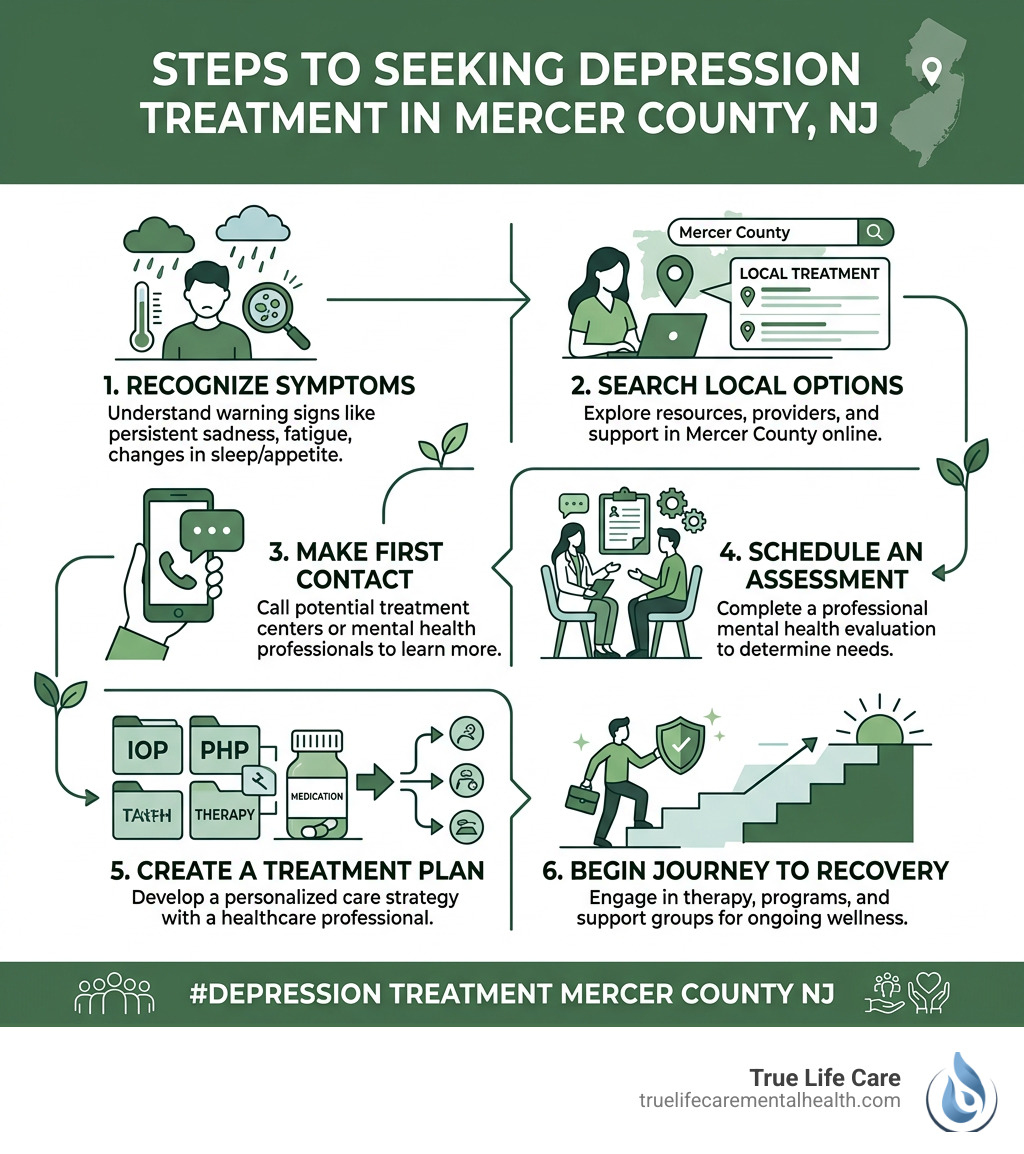
**Depression Treatment In Mercer County New Jersey ** word guide:
- Depression Treatment in New Jersey
- Major Depressive Disorder Treatment in New Jersey
- Depression Treatment in Somerset County NJ
Understanding Depression: Symptoms and Diagnosis

When we talk about Major Depressive Disorder (MDD), we aren’t just talking about having a “bad day.” It is a clinical condition that fundamentally changes how you think, feel, and handle daily activities. According to the National Institute of Mental Health, more than 1 in 5 adults in the United States experience some form of mental illness each year. In a place as busy as Mercer County, from the halls of Princeton to the neighborhoods of Hamilton, these numbers represent our friends, family, and coworkers.
Recognizing the Symptoms
Depression shows up differently for everyone. Some people feel a heavy sadness, while others describe it as a total lack of feeling. Common symptoms include:
- Emotional Toll: Persistent feelings of hopelessness, worthlessness, or excessive guilt.
- Physical Fatigue: Waking up and feeling like the only thing you look forward to is going back to bed. This includes insomnia or oversleeping.
- Cognitive Fog: Difficulty concentrating, making decisions, or remembering details.
- Loss of Interest: No longer enjoying hobbies, social outings, or time with family.
- Irritability: Especially in men, depression often manifests as anger or a “short fuse” rather than sadness.
Sometimes, standard treatments don’t seem to make a dent. If you’ve tried two or more antidepressants without success, you may be seeing signs of treatment-resistant depression, which requires a more specialized approach.
The Path to Diagnosis
In Mercer County, a diagnosis typically starts with a clinical evaluation. Providers often use tools like the PHQ-9 (Patient Health Questionnaire) to measure the severity of your symptoms. For a diagnosis of clinical depression, symptoms must generally persist for at least two weeks and represent a change from your previous level of functioning. It is also important to remember that depression isn’t one-size-fits-all; exploring the spectrum of depression helps clinicians determine if you are dealing with Persistent Depressive Disorder, Seasonal Affective Disorder, or Postpartum Depression.
Levels of Care for Depression Treatment In Mercer County New Jersey
Choosing the right level of care is like finding the right dose of medicine—it needs to be strong enough to work but flexible enough to fit your life. Mercer County offers a full spectrum of services.
Partial Hospitalization Program (PHP)
A PHP is the most intensive form of outpatient care. It is designed for those who need significant support but do not require 24/7 supervision in a hospital. You spend the majority of your day (usually 5 days a week) in a therapeutic environment and return home in the evening. This allows you to stay connected to your family while receiving hospital-level clinical care. Understanding how a PHP helps you heal is vital if you are currently struggling to function in your daily life.
Intensive Outpatient Program (IOP)
If you need more than a once-a-week therapy session but still need to work or attend school, an IOP is often the “sweet spot.” Most IOPs in the area involve meeting three times a week for about three hours per session. The benefits of IOP for depression include the ability to practice new coping skills in real-time while maintaining your routine.
Traditional Outpatient Counseling
This is what most people think of as “therapy.” It involves weekly or bi-weekly sessions with a licensed counselor. It is excellent for maintaining progress or managing milder symptoms.
Comparing Your Options
| Feature | Outpatient Counseling | Intensive Outpatient (IOP) | Partial Hospitalization (PHP) |
|---|---|---|---|
| Hours per week | 1–2 hours | 9–15 hours | 20–30 hours |
| Duration | Ongoing | 8–12 weeks | 2–4 weeks |
| Living Situation | Home | Home | Home |
| Best For | Mild symptoms/Maintenance | Moderate to severe symptoms | High-risk/Severe dysfunction |
For a deeper dive into what is available locally, check out our guide on mental health treatment resources in Mercer County.
Evidence-Based and Holistic Therapy Options
We believe that Depression Treatment In Mercer County New Jersey should address the whole person—mind, body, and spirit.
Evidence-Based Therapies
- Cognitive Behavioral Therapy (CBT): This is the gold standard for depression. It helps you identify negative thought patterns and replace them with healthier, more realistic ones. You can learn more in our depression treatment in New Jersey guide.
- Dialectical Behavior Therapy (DBT): Originally developed for borderline personality disorder, DBT is incredibly effective for depression, especially for those who struggle with intense emotions or suicidal ideation. It focuses on mindfulness, distress tolerance, and emotional regulation.
- Medication Management: For many, therapy alone isn’t enough. Psychiatrists in Mercer County can help find the right balance of SSRIs, SNRIs, or other medications. It’s important to weigh the pros and cons of antidepressants with a professional to ensure the benefits outweigh the side effects.
Holistic and Complementary Care
According to Mental Health America, integrating holistic practices can significantly improve outcomes. Many local programs now incorporate:
- Yoga and Mindfulness: To help ground the body and reduce the physical tension associated with depression.
- Art Therapy: Providing a non-verbal outlet for complex emotions.
- Exercise and Nutrition: Addressing the physical foundations of mental wellness.
Specialized Depression Treatment In Mercer County New Jersey for Diverse Groups
Depression doesn’t discriminate, but it does affect different groups in unique ways.
- Adolescents and Young Adults: School refusal, social media pressure, and developmental changes make depression in young adults a growing concern in Mercer County.
- Perinatal and Postpartum Support: New mothers often feel ashamed of their struggles. Knowing the 10 signs of postpartum depression can be life-saving. We offer specialized postpartum depression resources to help moms get back to themselves.
- Spanish-Speaking Services: Cultural competence is key. Several facilities in the Trenton and Princeton areas offer bilingual counseling to ensure language is never a barrier to care.
- Men’s Mental Health: Men often mask depression with anger or overworking. Understanding why depression in men often goes undiagnosed is the first step toward reaching out.
Accessing Local Resources and Support Systems
You don’t have to wait for a clinical appointment to find support. Mercer County has a robust network of community resources.
NAMI Mercer
NAMI (National Alliance on Mental Illness) Mercer is a powerhouse of peer support. Located in Hamilton, they offer:
- The Empathy Network: A weekly peer-led support group specifically for those living with depression.
- Just Parents: A confidential space for parents and caregivers of children (ages 0-24) struggling with mental health.
- Family-to-Family: An 8-week course that helps families understand and support their loved ones. You can find meeting times and registration links on the NAMI Mercer website.
Crisis Intervention and Immediate Help
If you are in immediate danger or experiencing suicidal thoughts, please do not wait. NJ suicide statistics show the urgency of reaching out.
- 988 Suicide & Crisis Lifeline: Call or text 988 anytime.
- Early Intervention Support Services (EISS): Often called “mental health urgent care,” EISS provides rapid access to therapy and psychiatric medication for people in crisis, helping them avoid the emergency room.
Choosing the Right Depression Treatment In Mercer County New Jersey
When you are depressed, even making a phone call can feel like climbing a mountain. Here is a checklist to make the process easier:
- Insurance Verification: Most private insurances (Aetna, Cigna, Horizon, United) cover IOP and PHP. Many local providers also accept Medicaid and Medicare.
- Accreditation: Look for the “Gold Seal” from The Joint Commission, which ensures the facility meets high safety and quality standards.
- Staff Qualifications: Ensure you are being seen by Licensed Clinical Social Workers (LCSWs), Licensed Professional Counselors (LPCs), and Board-Certified Psychiatrists.
- Individualized Plans: Avoid “cookie-cutter” programs. Your treatment should be tailored to your specific symptoms and life goals.
- Location: Whether you are in Princeton, East Windsor, or Robbinsville, choose a location that won’t add “commute stress” to your recovery.
If you are wondering, “Should I go to rehab for depression?” the answer depends on the severity of your symptoms and whether you are safe at home.
Frequently Asked Questions about Depression Treatment
How long does a typical depression treatment program last?
For standard outpatient therapy, it can last as long as you find it helpful. For more intensive programs like IOP or PHP, the average stay is 8 to 12 weeks, though this is always based on your individual progress.
Does insurance cover the cost of intensive outpatient programs in NJ?
Yes, most major insurance plans cover IOP and PHP because they are considered “medically necessary” levels of care. Some facilities also offer sliding scale fees for those who are uninsured or underinsured.
How can I access immediate crisis help in Mercer County?
You can call 988 for the national lifeline or contact Mercer County’s designated screening center. For non-emergency but urgent needs, Early Intervention Support Services (EISS) can often see you within 24 to 48 hours.
Conclusion
Recovery from depression is not a straight line, but it is possible. Whether you are dealing with high-functioning depression or a severe episode that has made it impossible to get out of bed, there is a level of care in Mercer County designed for you.
At True Life Care Mental Health, we specialize in providing that bridge from “just getting by” to truly thriving. We offer personalized, evidence-based programs like PHP and IOP that empower you to take back your life. You don’t have to carry this weight alone. Reach out today to explore the top depression treatment in New Jersey and start your journey toward well-being.