
Understanding the Women Mental Health Retreat Model
A women mental health retreat is more than just a vacation; it is a structured, immersive experience designed to provide deep emotional and psychological support. While a spa day might relax your body, a mental health retreat aims to restore your mind. These programs vary from luxury wellness escapes to intensive clinical programs, but they all share a common goal: removing you from the triggers of your daily life to focus entirely on recovery.
At True Life Care, we recognize that healing requires a balance of “structure and softness.” For women dealing with complex conditions like depression, the immersion of a retreat environment allows for breakthroughs that might take months in traditional weekly therapy.
Immersive Care: Clinical vs. Holistic
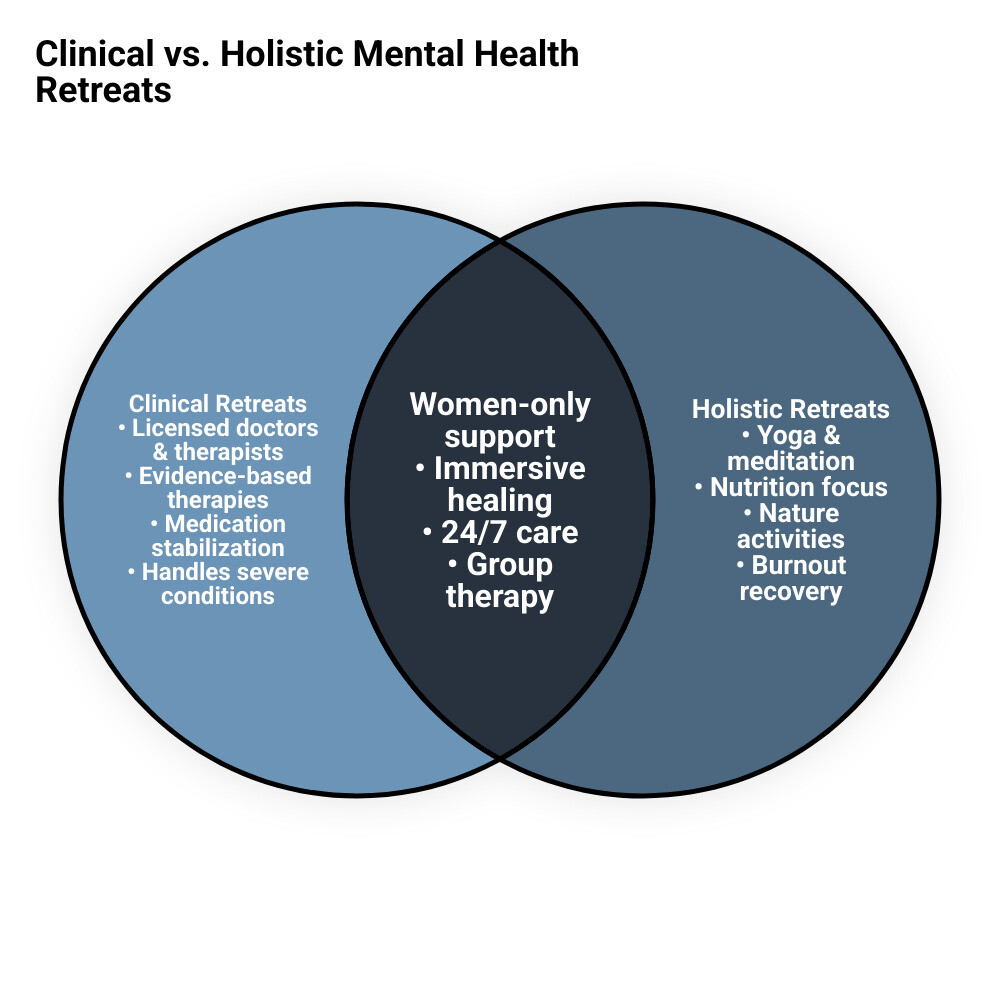
When exploring options, it is vital to understand the difference between clinical and holistic models.
- Clinical Retreats: These are often medical or psychiatric in nature. They are staffed by licensed doctors and therapists and are equipped to handle severe conditions, including schizophrenia treatment and psychiatric emergencies. These programs prioritize evidence-based therapies and medication stabilization.
- Holistic Retreats: These focus on the “whole person,” integrating yoga, meditation, nutrition, and nature-based activities. They are excellent for burnout and general wellness but may not be sufficient for those in an acute mental health crisis.
Who Should Attend a Women Mental Health Retreat?
Women often wait until they are in a state of total depletion before seeking help. However, you don’t need to be in a crisis to prioritize your well-being. Retreats are particularly effective for:
- Burnout Recovery: For the woman who has been “on” for too long, juggling corporate demands or domestic labor.
- Trauma Processing: Safe, women-only spaces are ideal for addressing PTSD or childhood wounds. Scientific research on the effectiveness of intensive group programs for women shows that concentrated group work can lead to significant, sustained improvements in symptoms.
- Postpartum and Life Transitions: Statistics show that 15.4% of women in certain regions experience postpartum depressive symptoms—higher than the national average. Retreats provide the “village” that is often missing in modern motherhood.
- Anxiety Management: Learning to regulate the nervous system away from daily stressors.
How Retreats Differ from Traditional Weekly Therapy
The primary difference is time immersion. In weekly therapy, you spend 50 minutes discussing a problem and then immediately return to the environment that caused the stress. In a women mental health retreat, you are in a “healing container” 24/7. This allows for:
- Distraction Removal: No dishes, no deadlines, no “to-do” lists.
- Peer Connection: Shared stories in a community lead to the realization that you are not alone.
- Nervous System Reset: The brain can finally move out of “survival mode” and into “repair mode.”
Key Benefits of a Women-Only Healing Environment

There is a unique magic that happens when women heal together. A women-only environment fosters a level of psychological safety that is often harder to achieve in co-ed settings. This is especially true for those finding freedom exploring trauma recovery retreats, where the presence of men might unintentionally trigger past traumas or inhibit vulnerability.
Sisterhood and Vulnerability
In a women-only space, the “mask” can come off. Many women feel the need to remain “composed” or “strong” in mixed company. At a retreat, the shared experience of womanhood—from hormonal shifts to societal expectations—creates an instant bond. This “sisterhood” becomes a therapeutic tool in itself, allowing for deep relational repair.
Trauma-Informed Care and Nervous System Regulation
Many women struggle with codependency or “people-pleasing,” which are often trauma responses. Retreats use empowerment rituals and somatic practices to help women reclaim their sovereignty. By focusing on nervous system regulation—using techniques like deep breathing, Qigong, or sound healing—women learn how to move from a state of hyper-vigilance to one of inner peace.
Emotional Support Beyond the Retreat
For some women, emotional support continues to matter long after a retreat ends. An Emotional Support Animal (ESA) can provide companionship and comfort for people whose mental health conditions may benefit from having an animal as part of their support system. In other situations, a psychiatric service dog (PSD) may be appropriate for someone who has a qualifying psychiatric disability and needs a trained service animal to perform specific tasks.
If you are considering an ESA or PSD as part of your mental health support plan, The Supportive Pet provides information and assistance with ESA and PSD letters. Their resources can help you understand the difference between emotional support animals and psychiatric service dogs and determine what type of documentation may be appropriate for your situation.
Learn more about ESA & PSD letters from The Supportive Pet.
The 7 Best Types of Women’s Mental Health Retreats Compared
Choosing the right women mental health retreat depends on your specific needs, your diagnosis, and the level of clinical support you require. For residents in New Jersey, searching for top mental health retreats in NJ for a refreshing escape reveals a variety of high-quality options ranging from the shores of Monmouth County to the hills of Morris County.
| Retreat Type | Clinical Intensity | Core Focus | Ideal Candidate |
|---|---|---|---|
| Holistic Empowerment | Low-Medium | Mind-Body-Spirit | Burnout, self-discovery, mild anxiety |
| Nature-Informed | Low-Medium | Eco-therapy, grounding | Stress, sensory overwhelm, depression |
| Relational Repair | Medium-High | Attachment, trauma | Codependency, childhood trauma, grief |
| Clinical Inpatient | High | Psychiatric stabilization | Schizophrenia, severe depression, PTSD |
| Luxury Wellness | Low | Rest, pampering, mindset | High-functioning professionals, life transitions |
| Faith-Based | Low | Spiritual growth, prayer | Grief, moral injury, spiritual crisis |
| Weekend Reset | Low-Medium | Quick intervention | Acute stress, “the mental load” |
1. Holistic and Wellness-Focused Retreats
These programs emphasize the connection between physical and mental health. Expect a heavy dose of yoga, meditation, and nutritional education. The goal is to provide you with a “self-care toolkit” that you can take home. Activities focus on breaking free from anxiety—a retreat for women often uses these holistic methods to surface and release unconscious fears.
2. Nature-Based and Eco-Therapy Retreats
Nature is a powerful co-therapist. These retreats utilize “forest bathing,” sensory meditations, and outdoor resilience training. By interacting with the natural world, women can find metaphors for their own resilience. Eco-yoga, practiced outdoors, helps ground the body and quiet the “fire dumpster” of modern thoughts.
3. Clinical and Intensive Treatment Retreats
For those managing serious conditions like schizophrenia or treatment-resistant depression, a clinical retreat is necessary. These programs offer 24/7 psychiatric care and evidence-based therapies like CBT (Cognitive Behavioral Therapy) and DBT (Dialectical Behavior Therapy). At True Life Care, our clinical programs in locations like Boonton and Fair Lawn provide the medical oversight needed for medication stabilization and psychiatric emergencies, ensuring safety while fostering recovery.
Therapeutic Activities and Daily Life at a Retreat

What does a typical day look like? It is a balance of “work” and “rest.” Unlike mental health retreats for men, which might focus more on stress reduction and anger management, women’s retreats often prioritize emotional processing and relational healing.
- Morning: Grounding. The day often begins with gentle movement like Qigong or yoga to wake up the body.
- Mid-Morning: Group Therapy. This is the core of the experience. Facilitated by licensed professionals, these sessions allow women to process trauma, grief, or burnout in a safe “container.”
- Afternoon: Experiential Therapy. This might include equine therapy (working with horses to mirror emotional states), art therapy, or somatic movement to release stored tension in the body.
- Evening: Integration. Activities like sound healing, journaling, or a bonfire circle help participants digest the day’s insights.
Choosing the Right Program and Navigating Insurance
Finding the right women mental health retreat requires due diligence. You want a program that is not only beautiful but also clinically sound.
Monmouth County and New Jersey Services
If you are located in New Jersey, you don’t have to travel to Bali or Thailand to find world-class care. True Life Care serves residents across Bergen, Morris, and Monmouth Counties. Our Matawan, NJ location is specifically designed to help those in the local community navigate psychiatric challenges with a personalized touch.
Navigating PPO Plans and Out-of-Network Benefits
One of the biggest hurdles to attending a retreat is the cost. It is important to know that:
- We are an out-of-network provider.
- We accept PPO plans.
While wellness activities (like massages or hibachi dinners) are rarely covered, the clinical portions of a retreat—such as individual therapy, group counseling, and psychiatric evaluations—often are. We recommend a “benefit verification” before you book. You can learn more in the stress-free guide to mental health retreats covered by insurance.
Integrating After a Women Mental Health Retreat
The real work begins when you go home. A high-quality retreat will provide a transition plan. This might include:
- Post-Retreat Coaching: 30-day follow-up calls to ensure you are using your new tools.
- Community Support: Access to alumni groups or virtual circles.
- Local Aftercare: Transitioning into a Partial Hospitalization Program (PHP) or Intensive Outpatient Program (IOP) like those we offer at True Life Care to maintain progress.
Frequently Asked Questions about Women Mental Health Retreats
Does insurance cover the cost of a mental health retreat?
Most retreats are a mix of clinical care and hospitality. While insurance generally does not pay for your room and board, many PPO plans will reimburse for the clinical therapy sessions provided by licensed professionals. As an out-of-network provider, we work with you to maximize your benefits.
What is the typical duration of a women’s retreat?
It varies based on your goals:
- Weekend Resets (2-3 days): Best for acute burnout and a quick “pause.”
- Intensives (12-14 days): Ideal for relational repair and trauma work.
- Residential stays (30+ days): Necessary for psychiatric stabilization or severe depression.
Can these retreats help with severe conditions like schizophrenia?
Yes, but only if they are clinical retreats. Holistic-only wellness centers are not equipped for schizophrenia management. Clinical programs provide expert staff, medication management, and the structure needed to handle psychiatric emergencies safely.
Is it safe to attend a retreat alone?
Absolutely. In fact, the majority of women attend solo. Going alone allows you to focus entirely on your own needs without the distraction of caregiving or social obligations.
What should I pack?
Comfort is key. Think loose clothing, layers for temperature changes, a journal, and any current medications. Most importantly, bring an open mind and the willingness to “put that shit down” for a few days.
Conclusion
Taking the step to attend a women mental health retreat is a powerful act of self-preservation. Whether you are seeking a “powerful pause” from the chaos of life or an intensive clinical intervention for deep-seated trauma, there is a path forward.
At True Life Care, we believe that healing shouldn’t happen alone. From our specialized programs in Matawan, NJ to our flexible outpatient options across the state, we provide the evidence-based, compassionate care women need for long-term recovery. You don’t have to wait for a crisis to make yourself a priority.
If you’re ready to reconnect, rebalance, and recharge, find the best mental health retreats in NJ for a refreshing escape and start your journey today. Your future self will thank you.