
When You Need More Than Outpatient Care: A Guide to Inpatient Psychiatric Hospitals in New Jersey
Finding the right inpatient psychiatric hospital in New Jersey can feel overwhelming — especially when you or someone you love is in the middle of a severe mental health crisis. During these critical moments, understanding the clinical landscape, the legal frameworks of admission, and the pathways to long-term recovery is essential. Whether you are dealing with severe clinical depression, a first psychotic episode, schizophrenia, or a complex co-occurring substance use disorder, New Jersey offers a range of inpatient psychiatric options across both state-run and private facilities.
Inpatient psychiatric care is designed to provide immediate, round-the-clock medical and therapeutic intervention. It serves as a vital safety net when outpatient therapies are no longer sufficient to keep an individual safe or stable. The primary objective of an inpatient stay is acute stabilization: managing severe symptoms, adjusting medications under close medical supervision, and establishing a safe foundation so the individual can transition to less restrictive levels of care.
Here’s a comprehensive overview of the main types of inpatient psychiatric care available in New Jersey:
- State-operated hospitals — Greystone Park (506 beds), Ancora (515 federally certified beds), Trenton Psychiatric Hospital (400 beds), and Ann Klein Forensic Center (200 beds), serving civilly committed adults and forensic populations requiring long-term psychiatric rehabilitation.
- Private inpatient psychiatric hospitals — Specialized facilities that offer acute stabilization for adults, adolescents, and geriatric populations, focusing on rapid crisis resolution and short-term therapeutic intervention.
- Specialty units — Dedicated clinical environments focusing on forensic psychiatry, geriatric psychiatry, dual diagnosis (mental illness combined with developmental disabilities or substance use disorders), and specialized adolescent programs.
- Step-down programs — Partial Hospitalization Programs (PHP) and Intensive Outpatient Programs (IOP) designed to support patients transitioning out of inpatient care back into their communities.
The New Jersey Department of Health operates four dedicated inpatient psychiatric hospitals focused on wellness, recovery, and community reintegration. Private facilities add dozens of additional options, each with distinct clinical programs, accreditations, and populations served. Knowing the difference between these settings — and knowing which level of care fits your specific clinical situation — is the first step toward healing.
This guide walks you through everything you need to know: admission criteria, what to expect during a psychiatric emergency, specialized treatment programs for conditions like depression and schizophrenia, evidence-based group therapy approaches, discharge planning, visitation policies, insurance options, and more.
True Life Care, located in Matawan, NJ, serves residents across Monmouth County and beyond as an out-of-network provider accepting PPO plans. If you are trying to understand your options for inpatient psychiatric care in New Jersey — or exploring what comes next after a hospital stay — you are in the right place. We are dedicated to helping individuals bridge the gap between acute crisis stabilization and long-term, sustainable recovery.
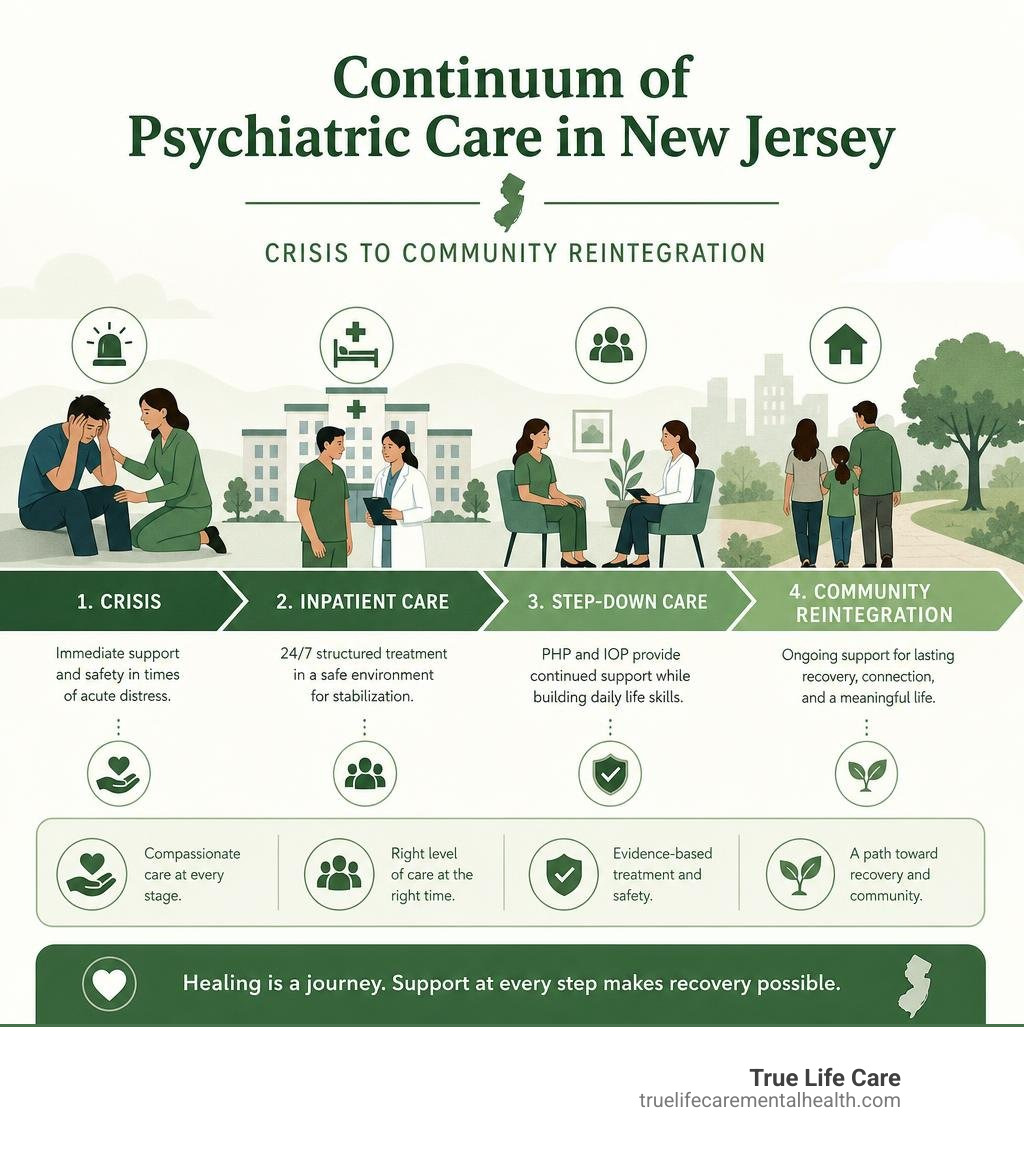
Understanding the Inpatient Psychiatric Hospital New Jersey Landscape
When seeking intensive psychiatric treatment, it helps to understand how the state’s mental health system is structured. New Jersey’s inpatient psychiatric network is divided into state-operated hospitals, county-run hospitals, and private acute care facilities. Each tier of this system serves a specific clinical population and operates under distinct regulatory guidelines.
State-operated facilities, overseen by the Division of Behavioral Health Services, focus primarily on long-term stabilization, civil commitments, and forensic cases. These include historical landmarks like the Department of Health | Integrated Health | Trenton Psychiatric Hospital , founded in the 1840s by mental health pioneer Dorothea Dix, and modern campus environments like Department of Health | Integrated Health | Greystone Park Psychiatric Hospital (506 beds) in Morris Plains, NJ. These institutions are designed for individuals who require extended psychiatric rehabilitation, often lasting months or even years, under court-ordered civil commitment.

Private psychiatric programs and acute stabilization centers, on the other hand, typically handle short-term, high-acuity crises. These private facilities are designed to stabilize individuals quickly and safely, usually within a few days to two weeks, before transitioning them to less restrictive levels of care. For those seeking a deeper look into the history, structure, and differences of these institutions, we recommend reading our resource on Exploring NJ Mental Institutions: A Guide.
Private Psychiatric Programs vs. Residential Treatment
It is common to confuse private acute psychiatric programs with residential treatment facilities. However, they serve entirely different purposes in the recovery continuum, and understanding these distinctions is crucial for selecting the appropriate level of clinical intervention:
- Private Acute Psychiatric Programs: These are highly clinical, locked hospital units designed for short-term crisis stabilization. They feature 24/7 medical monitoring, rapid medication adjustments, and strict safety protocols to manage acute dangers to self or others. The environment is highly structured, with constant nursing observation and daily psychiatric evaluations.
- Residential Treatment Centers: These offer a more open, home-like healing environment for individuals who are medically stable but require structured, long-term therapeutic support to manage chronic conditions. Patients in residential care work on skill-building, trauma resolution, and behavioral modifications over several weeks or months in a non-locked setting.
Many of these hospitals offer excellent career opportunities and APA-accredited psychology internships, which helps them maintain high standards of clinical excellence and integrate the latest evidence-based practices into their daily programming.
To help you visualize where these services fit, here is a comparison of the clinical settings available in New Jersey:
| Feature | Private Acute Psychiatric Care | Residential Treatment | Intensive Outpatient Programs (IOP) |
|---|---|---|---|
| Primary Goal | Crisis stabilization & safety | Long-term healing & skill-building | Community reintegration & maintenance |
| Average Stay | 3 to 14 days | 30 to 90+ days | 6 to 12 weeks (part-time) |
| Locked Unit? | Yes, for patient safety | No, typically open campuses | No, outpatient-based |
| Medical Presence | 24/7 psychiatric & nursing care | Daily/weekly medical check-ins | Scheduled psychiatric appointments |
Choosing the Right Inpatient Psychiatric Hospital New Jersey for Long-Term Healing
Selecting an inpatient psychiatric hospital in New Jersey requires careful evaluation of safety, licensing, and patient care quality. To ensure your loved one receives the highest level of care, look for facilities that hold:
- Joint Commission Accreditation: This gold standard indicates compliance with rigorous national performance and safety standards, reflecting a commitment to continuous quality improvement.
- CMS Certification: Certification from the Centers for Medicare Services ensures the facility meets strict federal health, safety, and operational requirements.
- High Patient Satisfaction Scores: Patient feedback is a strong indicator of a hospital’s culture. For example, historical data from leading private providers in the region shows high marks, with patients consistently rating their treatment with dignity and respect at high levels.
Safety protocols, staff-to-patient ratios, and transparent complaint reporting are also vital. If you are researching your local options, we have compiled a curated list of the Top Inpatient Mental Health Facilities in NJ to Consider to help guide your family’s decision-making process.
Admission Criteria and Handling Psychiatric Emergencies
An admission to an inpatient psychiatric hospital in New Jersey is reserved for severe mental health crises where a person cannot be safely managed in an outpatient or residential setting. The clinical threshold for inpatient admission is high, focusing primarily on immediate safety and acute symptom management.
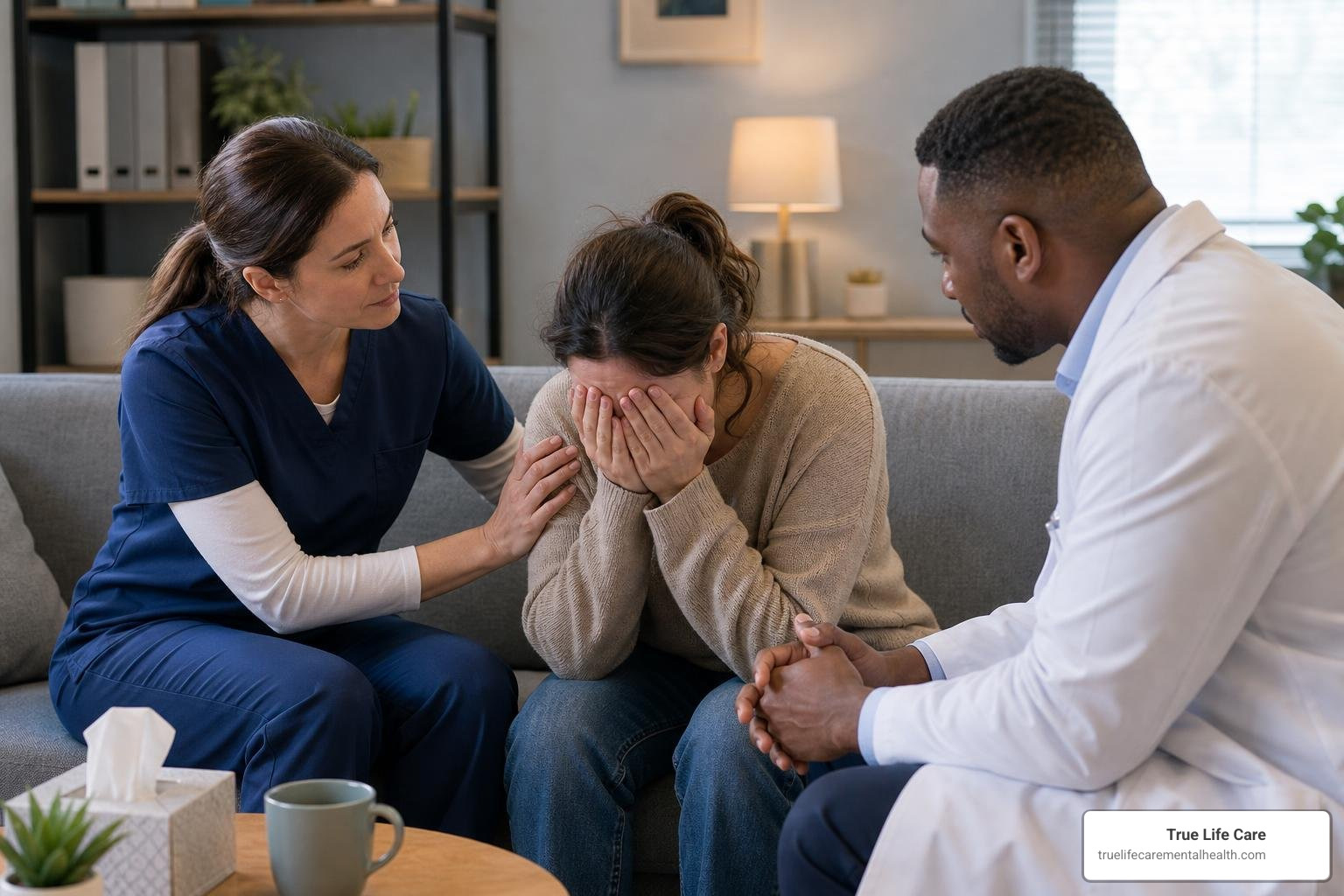
Psychiatric emergencies that warrant immediate inpatient evaluation include:
- Active suicidal ideation with a specific plan, intent, or recent self-harm attempt.
- Homicidal ideation, aggressive behavior, or threats that pose an immediate danger to others.
- Severe psychosis, command hallucinations, or delusions that severely impair reality testing and judgment.
- Grave disability, which is the complete inability to care for one’s basic physical needs (such as food, shelter, and hygiene) due to rapid psychiatric deterioration.
During a crisis, New Jersey residents can access immediate help through county-based screening centers. These centers are designated by the state to perform psychiatric evaluations and determine the appropriate level of care. For example, those in Mercer County can utilize the Emergency Mental Health Services | Capital Health Hospitals , while those in Sussex County can contact Resource Directory – Psychiatric Emergency Services at Newto .
If you are located in northern, southern, or western New Jersey, local county health departments and designated screening centers can provide localized crisis support, mobile response units, and emergency psychiatric evaluations.
At True Life Care, while we do not operate a locked inpatient ward, we work closely with local emergency screeners, hospitals, and families during psychiatric emergencies. We help transition individuals into appropriate acute care settings when safety is the primary concern, or we welcome them into our structured step-down programs at our Matawan, NJ location once they are stabilized. For a deeper understanding of how this clinical process works, read our breakdown of Acute Psychiatric Inpatient Care.
Navigating Voluntary vs. Involuntary Admission at an Inpatient Psychiatric Hospital New Jersey
The legal and clinical processes for psychiatric admissions in New Jersey fall under two distinct categories, each governed by state laws designed to protect patient rights while ensuring public and individual safety:
- Voluntary Admission: This occurs when an individual recognizes they need intensive help, agrees to treatment, and signs themselves into a psychiatric facility. While voluntary, patients cannot always leave immediately upon request; the clinical team may hold the patient temporarily for evaluation if they determine the individual remains an immediate danger to themselves or others.
- Involuntary Commitment: If an individual refuses treatment but presents an active threat to themselves, others, or property due to mental illness, they may be involuntarily committed. This process begins at a designated Short-Term Care Facility (STCF) or screening center. It requires evaluation by two independent mental health professionals (at least one of whom must be a psychiatrist) and a court order to maintain the hold beyond the initial emergency period.
For families facing these difficult circumstances, navigating these legal structures can feel heartbreaking and confusing. We offer compassionate advice on Forcing a Loved One Into a Psych Ward to help you understand your legal boundaries, rights, and the clinical steps involved. Additionally, we recommend reviewing these 5 Things You Need to Know Before Inpatient Mental Health NJ to prepare yourself and your family for the admission process.
Insurance Coverage and Out-of-Network PPO Plans
Navigating insurance during a mental health crisis adds unwanted stress. Many private acute psychiatric hospitals accept commercial insurance plans, though pre-authorization is almost always required before admission to ensure coverage.
True Life Care is an out-of-network provider and accepts PPO plans. We focus on providing premium, highly individualized care. Operating as an out-of-network provider allows us to deliver highly personalized treatment plans, flexible therapy schedules, and lower clinician-to-patient ratios without the strict limitations often imposed by in-network constraints. For a comprehensive guide on navigating your insurance benefits, check out our article on Insurance Coverage for Inpatient Mental Health Treatment.
Specialized Treatment Units: Schizophrenia, Depression, and Healing
Inpatient psychiatric hospitals are designed with specialized units to provide targeted, safe care for specific populations and diagnoses. Rather than placing all patients in a single unit, hospitals separate individuals based on age, acuity, and clinical needs to foster a safer and more therapeutic environment.

- Depression Treatment Units: These units focus on severe, treatment-resistant depression, major depressive episodes, and suicidal crises. The environment is designed to be quiet, reflective, and deeply supportive, offering intensive psychotherapy, medication adjustments, and close monitoring. To learn more about what these programs entail, read our Inpatient Care for Depression 101.
- Schizophrenia and Psychotic Disorder Units: These highly structured units provide low-stimulus environments to help patients experiencing active hallucinations, delusions, or disorganized thinking. Treatment emphasizes rapid stabilization through modern antipsychotic medication management, reality-testing support, and sensory regulation. For more information, explore The Best Inpatient Schizophrenia Treatments in NJ.
- Geriatric (Gero-Psychiatric) Units: Tailored for older adults, these units address late-onset psychiatric disorders, severe depression, and behavioral complications related to dementia, utilizing age-appropriate medical and therapeutic interventions.
- Forensic Units: Secured facilities, such as the Department of Health | Integrated Health | Ann Klein Forensic Center (a 200-bed facility), provide psychiatric care for individuals who are involved in the legal system, focusing on competency restoration and specialized psychiatric rehabilitation.
Evidence-Based Modalities and Group Therapy
Once a patient is stabilized, the daily routine of inpatient care centers around evidence-based therapeutic modalities. The cornerstone of this healing process is group therapy, which helps break the isolation that so often accompanies severe mental illness. Group therapy sessions allow patients to share experiences, practice coping mechanisms, and build interpersonal skills in a safe, moderated environment.
In addition to group sessions, clinical teams utilize:
- Cognitive Behavioral Therapy (CBT): To identify and restructure negative thought patterns and maladaptive behaviors.
- Dialectical Behavior Therapy (DBT): To build distress tolerance, mindfulness, interpersonal effectiveness, and emotion regulation skills.
- Co-Occurring Disorder Programs: For individuals dealing with a dual diagnosis of mental illness and substance use disorders, integrating psychiatric care with addiction recovery principles.
Length of Stay, Discharge Planning, and Community Reintegration
The average length of stay in an acute inpatient psychiatric hospital in New Jersey typically ranges from 3 to 10 days. The primary goal is crisis resolution and safety, not a long-term cure. Because of this, comprehensive discharge planning begins the very day a patient is admitted.
Licensed clinical social workers and dedicated discharge planners collaborate with the patient, their family, and outpatient providers to build a secure aftercare plan. This plan typically includes:
- Scheduled follow-up appointments with a psychiatrist and therapist within 7 days of discharge.
- Referrals to community support services, housing assistance, or peer support groups.
- Transitions to step-down programs, such as a Partial Hospitalization Program (PHP) or an Intensive Outpatient Program (IOP).
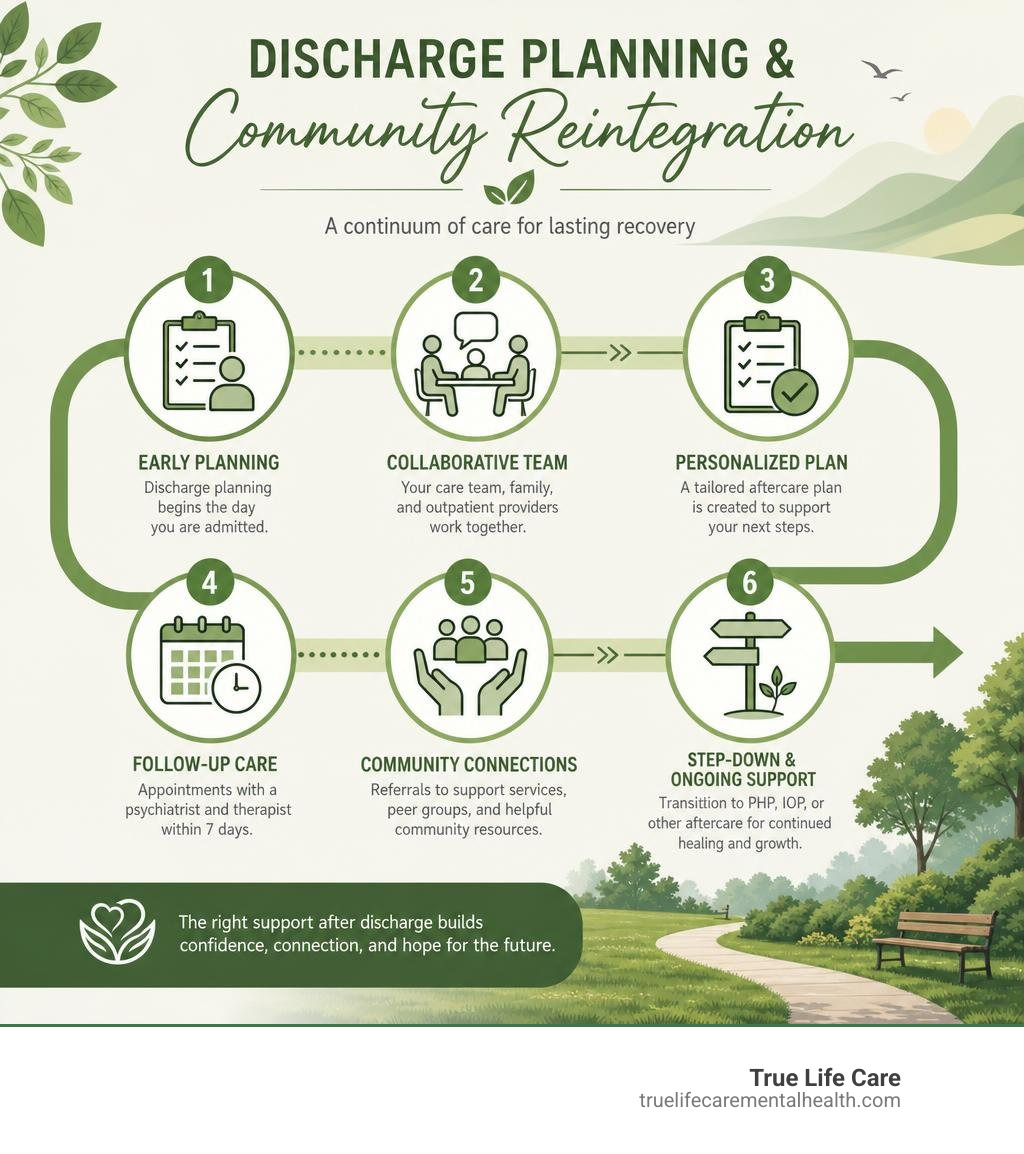
Transitioning directly from a locked hospital ward to normal daily life can be a jarring experience. Utilizing step-down services helps bridge this gap, allowing individuals to practice their coping skills in the real world while returning to a supportive therapeutic environment during the day. For a detailed comparison of these treatment tiers, read our resources on Short Term Residential Mental Health and IOP vs PHP vs Inpatient Treatment New Jersey.
If you are trying to decide which step-down setting is appropriate for you or your loved one, we also recommend reading Outpatient vs Inpatient Mental Health Care for Adults: What’s the Difference?.
Family Involvement, Visitation, and Support Resources
Family support is a critical component of successful psychiatric recovery. New Jersey psychiatric hospitals encourage family involvement through structured visitation, family therapy sessions, and educational resources.
- Visitation Policies: Most facilities offer scheduled in-person visitation hours, which must be arranged in advance to maintain unit safety. For families who live far away or cannot visit in person, virtual visitation options (such as Zoom or FaceTime calls) are widely available.
- Family Handbooks: State and private hospitals provide comprehensive family handbooks outlining unit rules, patient rights, and what to expect during treatment.
- Support Groups and Partnerships: Organizations like NAMI New Jersey (National Alliance on Mental Illness) partner with local hospitals to offer peer-led support groups, family education classes, and advocacy resources to help families navigate the recovery journey.
Frequently Asked Questions about Inpatient Psychiatric Care in NJ
What is the difference between voluntary and involuntary psychiatric admission in New Jersey?
A voluntary admission occurs when a patient consents to treatment and signs themselves into a psychiatric facility. An involuntary admission occurs when a patient is deemed a danger to themselves, others, or property due to mental illness and refuses to enter treatment. Involuntary admissions require evaluation by designated county screening centers and must be validated by a court order. Regardless of the admission type, all patients retain fundamental legal rights, including the right to legal representation during commitment hearings.
How long is the average stay at an inpatient psychiatric hospital in New Jersey?
The average length of stay at an acute inpatient psychiatric hospital in New Jersey is typically 3 to 10 days. This short duration is designed purely for acute stabilization, medication adjustment, and safety monitoring. Once a patient is no longer in immediate danger, they are discharged with a comprehensive aftercare plan, often stepping down to structured outpatient programs like a PHP or IOP to continue their healing.
Can I use my private PPO insurance plan for inpatient mental health treatment?
Yes, most private PPO insurance plans provide coverage for inpatient psychiatric care, though the exact coverage levels, copays, and deductibles depend on your specific policy. In almost all cases, the hospital must obtain pre-authorization from your insurance provider to confirm medical necessity before admission. True Life Care is an out-of-network provider and accepts PPO plans, allowing us to offer highly customized care for individuals transitioning out of inpatient hospital stays.
What is the role of a step-down program after inpatient psychiatric hospitalization?
A step-down program, such as a Partial Hospitalization Program (PHP) or Intensive Outpatient Program (IOP), serves as a transitional bridge between 24/7 inpatient care and independent living. These programs offer intensive, multi-hour therapeutic support during the day while allowing patients to return home at night. This structure helps individuals practice their newly acquired coping mechanisms in real-world settings while maintaining a strong clinical safety net.
Conclusion
Navigating psychiatric crises is never easy, but you do not have to walk this path alone. New Jersey’s inpatient psychiatric hospitals provide the essential, lifesaving crisis stabilization needed during life’s most difficult moments. These facilities focus on immediate safety, medical management, and acute symptom reduction.
Once that immediate crisis is resolved, the real journey of long-term healing begins. At True Life Care, located in Matawan, NJ, we specialize in providing personalized, holistic recovery programs for residents across Monmouth County and surrounding areas. As an out-of-network provider accepting PPO plans, we design flexible, intensive outpatient programs (PHP and IOP) that act as the perfect step-down from inpatient hospitalization, ensuring you or your loved one transitions smoothly back into a fulfilling, independent life.
If you are ready to learn more about how we can support your transition to long-term wellness, explore our specialized Mental Health Treatments New Jersey / Inpatient Treatment step-down resources today.