
When Mental Health Reaches a Crisis Point: What Behavioral Inpatient Services Can Do
Behavioral inpatient services are one of the most intensive and effective levels of mental health care available — providing 24-hour psychiatric support, crisis stabilization, and structured treatment for people who can no longer be safely managed in an everyday setting.
Here is a quick overview of what behavioral inpatient services are and who they are designed for:
What are behavioral inpatient services?
- Round-the-clock psychiatric care in a structured, supervised facility
- Designed for adults experiencing acute mental health crises, including suicidal ideation, psychosis, severe depression, or psychiatric emergencies
- Treatment typically includes medication management, group therapy, individual therapy, and discharge planning
- Average length of stay is approximately 6.9 days, though many programs run 7-10 days depending on individual progress
- Available through voluntary admission or, in some cases, involuntary holds when safety is at risk
Who are they for?
- Adults with conditions like schizophrenia, bipolar disorder, major depression, PTSD, or co-occurring substance use disorders
- Individuals whose symptoms have become too severe or unsafe to manage at home or in outpatient care
- People in New Jersey, including Monmouth County residents near the True Life Care location in Matawan, NJ, who need immediate, structured psychiatric support
Mental health crises do not follow a schedule. According to national data, there were approximately 1.4 million inpatient stays in U.S. community hospitals in 2022 with a principal diagnosis of a mental health or substance use disorder — accounting for over 6% of all hospital stays that year. That is a significant portion of the population turning to inpatient care when other options are not enough.
If you or someone you love is struggling, understanding what behavioral inpatient services offer — and how they work — can make all the difference in getting the right help at the right time.
True Life Care is an out-of-network provider that accepts PPO plans, helping New Jersey residents access the level of care they need without unnecessary delays.
Explore more about behavioral inpatient services:
Understanding Behavioral Inpatient Services
When we talk about inpatient behavioral health, we are referring to a highly specialized, secure, and supportive environment designed to address acute psychiatric crises. It is a level of care that provides 24-hour medical supervision, structured therapeutic programming, and immediate access to a multidisciplinary clinical team.
Unlike standard outpatient therapy, where a person visits a therapist once or twice a week, inpatient care is an immersive, round-the-clock experience. It is specifically designed to manage psychiatric emergencies—situations where an individual’s mental health symptoms have deteriorated to the point that they pose an immediate risk to themselves or others, or they are rendered unable to care for their basic physical needs.
At the core of these services is a thorough clinical assessment. Upon arrival, every patient undergoes a comprehensive evaluation by our multidisciplinary team, which typically includes board-certified psychiatrists, psychiatric nurses, licensed clinical social workers, therapists, and behavioral health technicians. This ensures that the root causes of the crisis are identified and a highly customized treatment plan is established immediately.
For those residing in New Jersey, having local access to structured inpatient psychiatric care is essential. Facilities located throughout Bergen County, Morris County, and Monmouth County provide a vital safety net for individuals when they are at their most vulnerable.
Who Benefits from Behavioral Inpatient Services?
Inpatient care is not a one-size-fits-all solution, nor is it the starting point for mild or moderate mental health challenges. Instead, it is reserved for severe, acute, or treatment-resistant psychiatric conditions.
The primary diagnoses and symptoms that typically lead to an inpatient stay include:
- Schizophrenia and Acute Psychosis: Individuals experiencing active hallucinations, profound delusions, disorganized thinking, or a severe break from reality require immediate stabilization in a secure setting.
- Severe Depression: When major depressive disorder manifests as severe vegetative symptoms, profound hopelessness, or active suicidal ideation with a plan or intent, immediate intervention is required. Learn more through our Inpatient Psychiatric Care Depression Guide.
- Bipolar Disorder (Manic Episodes): Acute mania can lead to highly risky behavior, extreme sleep deprivation, grandiose delusions, and poor impulse control, all of which require swift pharmacological stabilization.
- Severe Post-Traumatic Stress Disorder (PTSD): When trauma symptoms result in severe dissociative states, extreme panic, or self-destructive behaviors, specialized care is necessary. Explore options such as Inpatient Treatment for PTSD.
- Co-Occurring Dual Diagnoses: Individuals struggling with a primary psychiatric disorder alongside an active, severe substance use disorder often require inpatient care to safely manage withdrawal symptoms while stabilizing their mental health.
Inpatient Care vs. Outpatient Programs
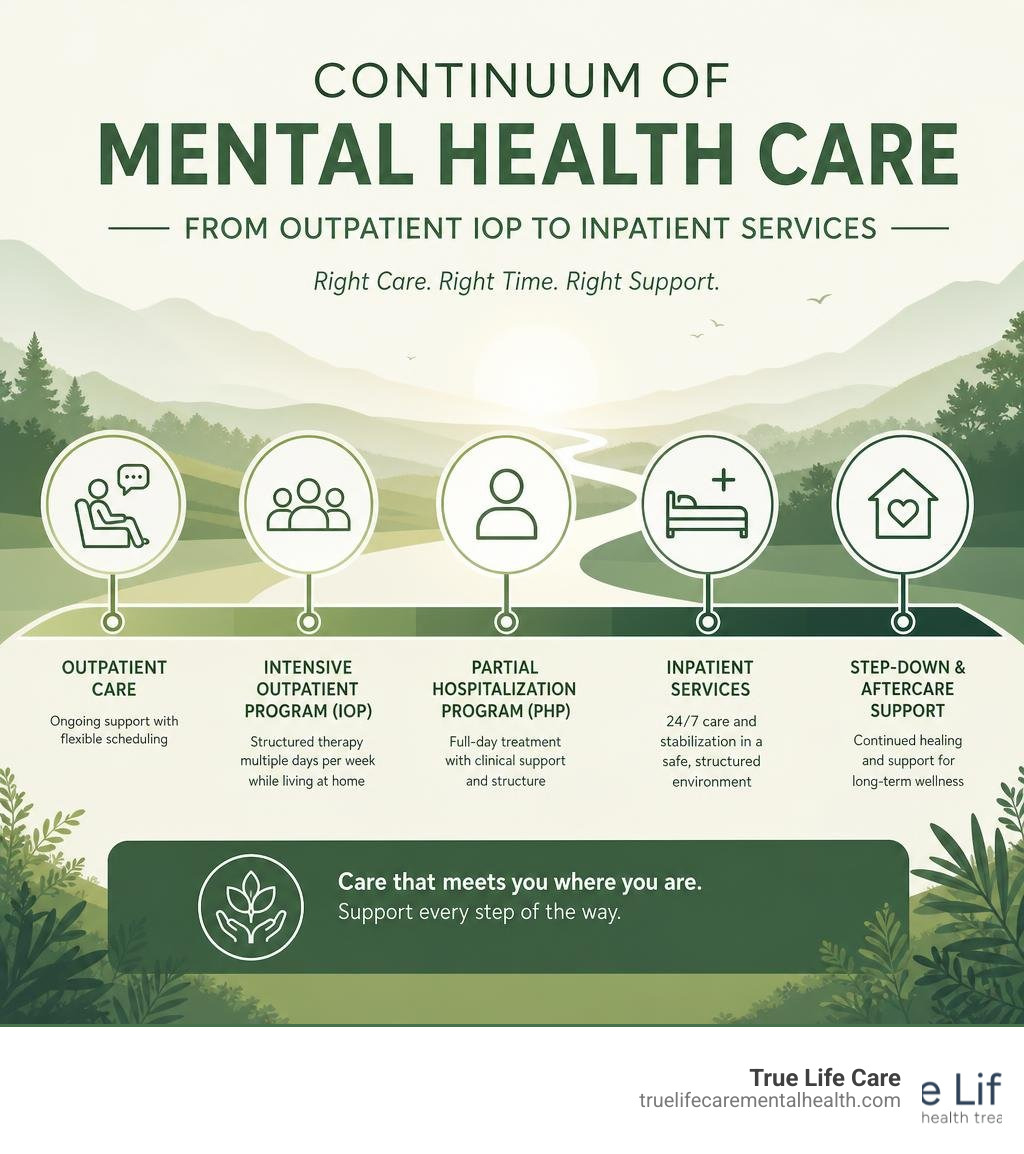
To understand where behavioral inpatient services fit into the broader healthcare landscape, it helps to compare them to other levels of care. The mental health treatment continuum is structured around “clinical intensity” and the level of daily supervision required.

Below is a detailed comparison of the different levels of care, helping you understand how inpatient services differ from Partial Hospitalization Programs (PHP) and Intensive Outpatient Programs (IOP):
| Feature | Inpatient Behavioral Health | Partial Hospitalization (PHP) | Intensive Outpatient (IOP) |
|---|---|---|---|
| Supervision Level | 24/7 continuous medical & clinical monitoring | Daytime structured care (approx. 5-6 hours/day, 5 days/week) | Part-time structured care (approx. 3 hours/day, 3-4 days/week) |
| Living Arrangement | Residential/Hospital setting (overnight stay) | Patients return home or to sober living at night | Patients live at home and maintain work/school schedules |
| Primary Goal | Crisis stabilization, safety, and rapid medical management | Intensive therapy and skill-building without overnight hospitalization | Step-down care, practicing coping skills in real-world environments |
| Medical Presence | Daily psychiatrist visits, 24/7 nursing care | Regular psychiatric oversight, nursing staff available | Weekly or bi-weekly psychiatric medication management |
| Ideal Candidate | Individuals in active crisis, unsafe to themselves or others | Individuals with severe symptoms who have a stable, supportive home | Individuals with moderate symptoms needing more than weekly therapy |
At True Life Care, while we focus on empowering individuals through our flexible outpatient programs—such as our Partial Hospitalization Program (PHP) and Intensive Outpatient Program (IOP)—we work closely with premier inpatient providers to ensure that those requiring immediate, round-the-clock crisis stabilization get placed in the right environment. Understanding this transition is key to navigating the Top Inpatient Mental Health Facilities in NJ to Consider.
7 Key Benefits of Inpatient Mental Health Treatment
Deciding to enter an inpatient program can feel overwhelming, but it is often the most compassionate and effective choice during a severe mental health crisis. By stepping away from daily stressors and entering a dedicated therapeutic environment, individuals can focus entirely on healing and recovery.
Below, we detail the seven primary benefits of behavioral inpatient services.
1. Immediate Crisis Stabilization during Psychiatric Emergencies
When a psychiatric emergency strikes, safety is the absolute, non-negotiable priority. Acute distress—whether manifesting as severe suicidal intent, self-harming behaviors, or aggressive outbursts due to psychosis—requires immediate intervention.
Inpatient programs are uniquely equipped to handle these high-stakes situations. With 24/7 monitoring, trained psychiatric professionals are always on hand to de-escalate crises, prevent self-harm, and ensure a secure environment. This immediate safety net allows the individual to catch their breath, knowing they are in a place where they cannot easily hurt themselves or be hurt by external triggers.
Stabilization is the first step of the journey, laying the groundwork for all subsequent therapeutic interventions. For a deeper look into how this works, read about Acute Psychiatric Inpatient Care.
2. Intensive Group Therapy and Peer Support
One of the most profound aspects of inpatient healing is the realization that you are not alone. Mental illness thrives in isolation, making individuals feel as though no one else could possibly understand their pain.
Inpatient care dismantles this isolation through intensive group therapy, which serves as the cornerstone of daily treatment.

In these group settings, facilitated by licensed therapists, patients can:
- Share their experiences without fear of judgment or stigma.
- Gain unique insights from peers who are walking a similar path.
- Practice essential interpersonal and communication skills in a safe, controlled setting.
- Build a sense of community and mutual accountability that fosters long-term emotional resilience.
This peer connection is incredibly powerful, often serving as the catalyst that helps patients transition from a state of passive survival to active, hope-filled healing.
3. Comprehensive Medication Management
For many individuals experiencing an acute psychiatric crisis, finding the right balance of psychiatric medication is critical. However, outside of a hospital setting, adjusting psychiatric medications can be a slow, trial-and-error process that takes weeks or even months—often accompanied by uncomfortable side effects that lead to non-compliance.
During an inpatient stay, medication management is streamlined and highly supervised. Patients meet with a psychiatrist or psychiatric nurse practitioner daily (often up to six days a week) to monitor the efficacy of their pharmacotherapy.
Because nursing staff are present 24/7, they can observe the immediate effects of a new medication or dose adjustment in real-time. This allows for rapid, safe titrations and immediate management of any side effects, ensuring the patient achieves therapeutic stability far more quickly and safely than would be possible in an outpatient setting.
4. Specialized Care for Complex Conditions Like Schizophrenia and Depression
Complex mental health conditions require highly specialized, evidence-based interventions. Conditions like schizophrenia, bipolar disorder, and severe depression cannot be treated with generalized therapy alone; they require a deep understanding of neurobiology, cognitive restructuring, and trauma-informed care.
Inpatient programs provide specialized, dedicated units tailored to these distinct needs. For example, a patient struggling with schizophrenia will receive specialized care focused on reality testing, cognitive rehabilitation, and sensory regulation.
Conversely, someone admitted for severe depression will engage in intensive behavioral activation, cognitive behavioral therapy (CBT), and dialectical behavior therapy (DBT) protocols.
By matching the clinical expertise of the staff to the specific diagnosis of the patient, inpatient programs maximize the chances of rapid, meaningful recovery. For more specialized guides, check out Inpatient Care for Depression 101 and Inpatient Bipolar Disorder Rehab.
5. Safe, Structured, and Distraction-Free Environment
In the outside world, everyday life is filled with potential triggers: stressful jobs, strained family dynamics, financial pressures, and easy access to substances or other unhealthy coping mechanisms. When a person is in a fragile mental state, these distractions and triggers can make recovery feel impossible.
An inpatient facility acts as a sanctuary. It provides a highly structured daily routine that eliminates the chaos of the outside world.

Within this therapeutic milieu, patients follow a predictable schedule of:
- Nutritious meals and structured sleep cycles to restore physical health.
- Regular therapeutic sessions, educational groups, and recreational activities.
- Quiet, secure spaces designed for connection, reflection, and mindfulness.
By removing the noise of daily life, patients can channel 100% of their energy into their personal healing and stabilization.
6. Holistic and Multidisciplinary Treatment Approaches
True healing involves the whole person—body, mind, and spirit. Excellent inpatient programs recognize this by moving beyond basic medication and talk therapy to offer a rich tapestry of holistic and multidisciplinary treatments.
During a typical stay, a patient’s customized treatment plan may include:
- Evidence-Based Psychotherapies: Individual sessions utilizing Cognitive Behavioral Therapy (CBT), Dialectical Behavior Therapy (DBT), or Acceptance and Commitment Therapy (ACT).
- Expressive and Art Therapies: Utilizing music, art, and creative writing to help patients process complex emotions that are difficult to put into words.
- Recreational and Occupational Therapy: Group activities, physical exercise, and stress management workshops designed to rebuild daily living skills and physical wellness.
- Spiritual and Mindfulness Supports: Access to chaplain services, meditation groups, and calming sensory rooms equipped with smart tools to help patients find inner peace and emotional grounding.
7. Seamless Discharge Planning and Aftercare Coordination
An inpatient stay is not a permanent solution; it is a short-term intervention designed to stabilize a crisis. Therefore, the ultimate goal of inpatient care is to prepare the patient to safely transition back to their community.
To ensure this transition is successful, comprehensive discharge planning begins the very day a patient is admitted.
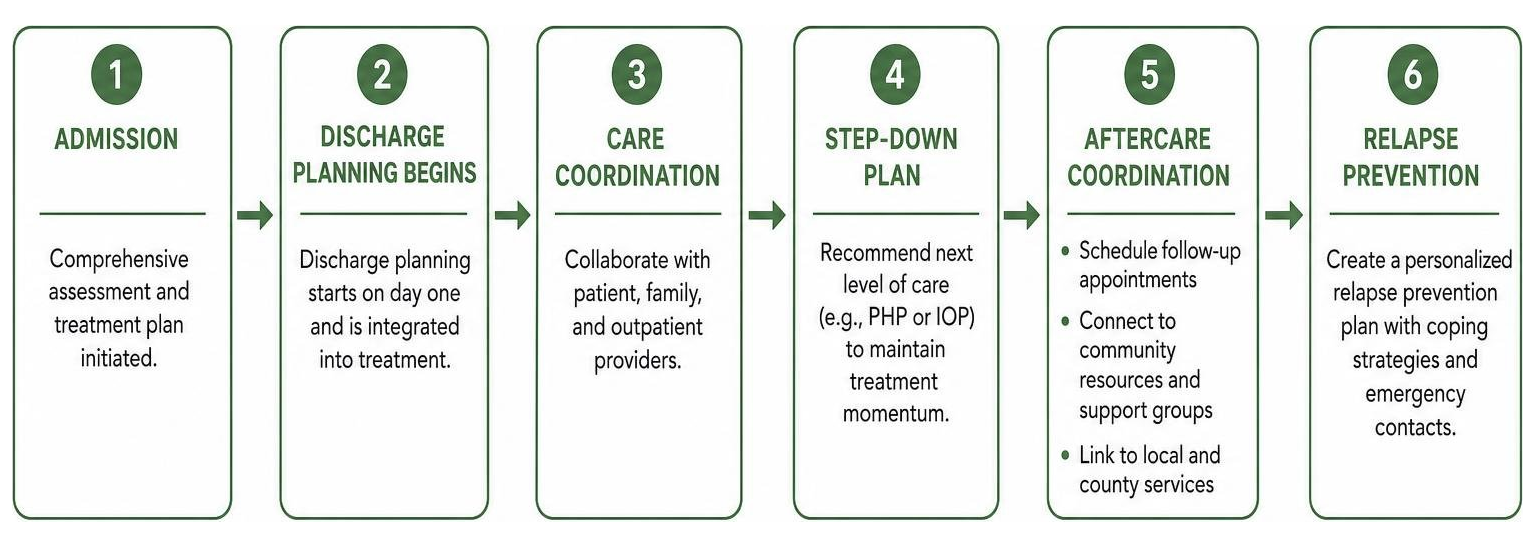
Our multidisciplinary case managers work closely with the patient, their family, and outpatient providers to coordinate a seamless transition. This planning typically includes:
- Scheduling follow-up psychiatric and therapy appointments within days of discharge.
- Recommending a step-down program, such as a Partial Hospitalization Program (PHP) or Intensive Outpatient Program (IOP), to maintain treatment momentum.
- Connecting the patient with local community resources, support groups, and county-level services, such as the Division of Mental Health | Mercer County, NJ .
- Creating a detailed relapse prevention plan, outlining specific coping strategies and emergency contacts.
By bridging the gap between inpatient stabilization and outpatient growth, we ensure that our patients are set up for sustainable, long-term wellness.
Navigating Admissions and Insurance
How to Access Behavioral Inpatient Services in New Jersey
Taking the first step toward inpatient care can feel daunting, but the admissions process is designed to be as straightforward and supportive as possible. In New Jersey, individuals can access inpatient care through several pathways:
- Voluntary Admission: This occurs when an individual recognizes they need intensive help and voluntarily agrees to enter an inpatient facility. They participate actively in their intake assessment and collaborate with the clinical team on their care plan.
- Involuntary Hold / Psychiatric Emergency: If an individual is in immediate danger of hurting themselves or others, or is gravely disabled due to a mental illness, they may be admitted under an involuntary hold (often initiated by emergency services, a screening center, or a physician). This is a temporary measure designed to ensure safety while a formal psychiatric evaluation is completed.
- Local Crisis Screening Centers: Every county in New Jersey has a designated psychiatric screening center available 24/7. For example, residents in Bergen, Morris, or Monmouth counties can visit their local emergency department or screening center for an immediate, no-cost psychiatric assessment to determine if inpatient care is clinically necessary.
If you are looking for detailed guidance on how this process works across the state, we recommend reading our resource on Inpatient Psychiatric Hospitals in New Jersey – Everything You Need to Know.
Insurance Coverage and Out-of-Network PPO Plans
One of the most common concerns families have when seeking acute mental health care is how they will pay for it. Fortunately, federal and state laws require health insurance companies to provide coverage for behavioral health treatments on par with physical health treatments.
At True Life Care, we want to make accessing care as stress-free as possible. We are an out-of-network provider and accept PPO plans.
When you contact us, our dedicated admissions team will:
- Conduct a quick, confidential insurance verification to determine your specific out-of-network mental health benefits.
- Explain your PPO plan’s deductibles, out-of-pocket maximums, and coverage rates clearly, with no hidden surprises.
- Help you coordinate with inpatient facilities and step-down programs to maximize your insurance benefits.
To prepare yourself or a loved one for this transition, review our guide on 5 Things You Need to Know Before Inpatient Mental Health NJ.
Frequently Asked Questions about Inpatient Mental Health Care
How long does a typical inpatient stay last?
Because the primary goal of inpatient care is rapid stabilization, stays are designed to be short-term. Nationally, the average length of stay for a mental health or substance use disorder hospitalization is 6.9 days. Most acute programs run between 7 and 10 days.
Once a patient is medically stable, no longer poses a danger to themselves or others, and has a safe discharge plan in place, they transition to a lower level of care, such as a Partial Hospitalization Program (PHP) or Intensive Outpatient Program (IOP).
Can family members visit during inpatient treatment?
Yes, family involvement is highly encouraged and is often a critical component of a successful recovery. While clinical units maintain specific, structured visitation hours to ensure a quiet, therapeutic environment, families are kept informed of their loved one’s progress.
Many programs integrate structured family therapy sessions into the weekly schedule, allowing families to heal together, learn about the patient’s condition, and actively participate in discharge and aftercare planning.
What is the difference between inpatient care and partial hospitalization (PHP)?
The primary differences lie in 24-hour supervision and residential status.
- Inpatient Care requires the patient to live at the facility 24/7 under continuous medical and psychiatric supervision. It is designed for acute crisis stabilization.
- Partial Hospitalization (PHP) is a day program. Patients attend intensive therapeutic programming for 5 to 6 hours a day, 5 days a week, but return to the comfort of their own homes or a supportive sober living environment in the evenings. PHP is an excellent option for individuals who are medically stable but still require highly structured, daily clinical support.
Conclusion
When a mental health crisis occurs, behavioral inpatient services provide the essential, life-saving foundation needed to stabilize, heal, and rebuild. By offering immediate psychiatric intervention, intensive group therapy, and a secure, distraction-free environment, these services help individuals navigate their darkest moments and find a hopeful path forward.
At True Life Care, we are committed to supporting New Jersey residents through every stage of their recovery journey. Located in Matawan, NJ, we proudly serve Monmouth County and surrounding areas, offering expert, evidence-based outpatient programs like PHP and IOP that serve as the perfect step-down option following an inpatient stay.
If you or a loved one is ready to take the next step toward lasting well-being, we invite you to learn more about our personalized inpatient and outpatient treatment options. Reach out to our compassionate team today — let us help you find your way back to a vibrant, healthy life.